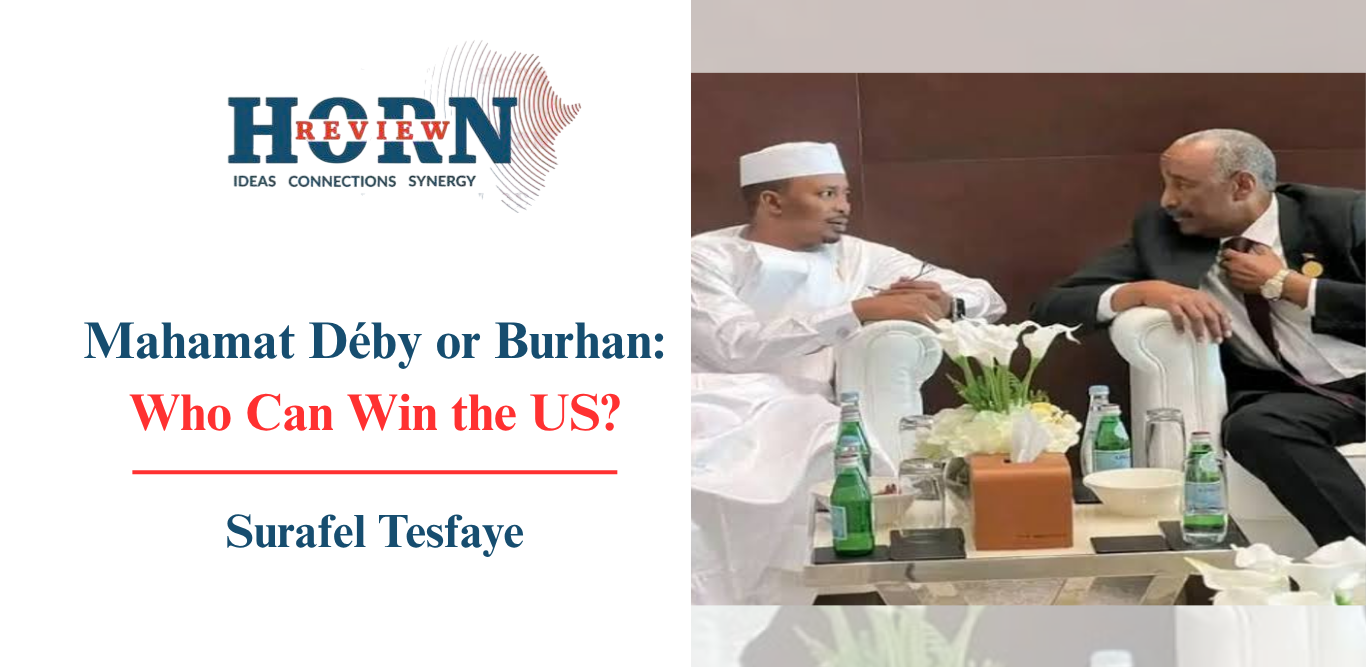
On August 20, 2026, Sudanese warplanes and drones pursued a vehicle convoy more than 100 kilometers inside Chadian territory and bombed it deep in the Ennedi-Est Province. The convoy had been arriving from Libya, and the attack marked a significant escalation in Sudan’s civil war. Chad’s military responded with a strong condemnation and placed its units on the highest alert level, signaling that it viewed the strike as a serious violation of its sovereignty. These cross-border attacks raise an important question about the shifting balance of power between the two leaders and their ability to secure international backing. One distinction is becoming increasingly clear: Mahamat Déby has spent years making diplomacy his primary instrument of statecraft, while Burhan continues to rely on military force. Déby has cultivated Washington through a deliberate strategy, and Burhan appears to have handed his rival an unexpected advantage through a single military miscalculation.
Eastern Chad has endured years of strain from the Sudanese war. Reports have long indicated that the region has served as a transit route for illicit weapons destined for Burhan’s rivals, but it has also been a place where Sudanese refugees find relief from the civil war. Two dimensions exist in one place, and one man has been playing both games. However, the recent attack adds a new dimension to the crisis. Refugee inflows have already stretched local resources to breaking point, and armed factions have moved freely across the porous border for years. For this reason, the US Senior Advisor for African Affairs expressed appreciation for Déby’s efforts to facilitate aid to Darfur and support Sudanese refugees. This is what deliberate diplomatic strategy looks like. The strike suggests that the SAF is willing to pursue its military objectives beyond Sudan’s borders regardless of the diplomatic consequences. This approach carries significant risks because attacking borderlands will not end the war; it will only complicate the conflict and give it a regional character that makes resolution even more difficult. The advisor expressed frustration by saying there is no reason to attack beyond Sudan. Burhan may have calculated that the strikes would disrupt RSF supply lines, but he appears to have underestimated the diplomatic price he would have to pay.
The United States condemned the aerial strikes inside Chad almost immediately. The condemnation aligned with Washington’s growing engagement with Déby, and as the US intervention came along, Déby secured a diplomatic win. As mentioned above this became clear from Massad Boulos’s speech, in which he expressed appreciation for Déby’s role in facilitating aid to Darfur and supporting Sudanese refugees. This appreciation carries strategic weight beyond humanitarian concerns. The arms embargo on Darfur now covers all of Sudan, so Déby’s humanitarian role gives him an advantage in shaping the narrative around his involvement. Mahamat Déby’s strategy of using Chad’s geographic position as a center for global powers’ interests is part of a broader balancing act. His decision to leave the ICC serves his interests for two main reasons. Since the US is actively campaigning against the ICC and views the institution with skepticism, his withdrawal can give him a diplomatic shield from Washington. The United States welcomed the move. Déby’s public reasoning for leaving the ICC cited bias against African nations, but the strategic thinking goes deeper. Aligning with the US is not the only goal; avoiding accountability for the Sudanese war is also a factor. More than a dozen countries are believed to be supplying arms to Sudan’s warring factions, and both sides have been accused of war crimes by the UN. Déby has faced similar accusations, so aligning with the US campaign against the ICC helps him shield himself from potential prosecution.
In July 2026, Chad announced its withdrawal from the International Criminal Court. The United States, which has long viewed the ICC with skepticism, welcomed the move. Massad Boulos, serving as Senior Advisor for Arab and African Affairs, praised Chad’s decision and has held phone call discussions with Déby. The convergence of interests between Washington and N’Djamena is clear. Déby understood that withdrawing from the ICC would align Chad with Washington’s broader position on the court, and he calculated that this alignment would secure diplomatic goodwill. It is important to note that Déby acted in his own interest rather than as a favor to the US. He recognized that the ICC has rarely prosecuted powerful states and that leaving the court would not significantly weaken the institution. He also understood that the US values partnerships with countries that share its strategic objectives, and he positioned Chad accordingly.
The result is a diplomatic alignment that now shapes how the international community responds to cross-border attacks. When SAF drones struck inside Chad, they attacked a state that has cultivated a strategic partnership with Washington. The US has an interest in maintaining its relationship with Déby’s government, which inclines it to frame Chad as the victim of aggression. This framing minimizes or ignores Chad’s alleged role in allowing its territory to be used as a transit route for weapons destined for the RSF. Burhan appears to have assumed that military pressure would achieve his objectives without significant diplomatic consequences, but this assumption has proven flawed. What he did not fully account for is the diplomatic cover that Chad now enjoys. Déby has positioned himself as a reliable partner in a volatile region, and this has given him leverage that Burhan cannot easily overcome. The strikes have drawn condemnation from both the United States and the African Union, unifying international actors against the SAF’s border operations. Rather than isolating the RSF, Burhan has managed to isolate himself.
The longer this continues, the more isolated the SAF becomes. Burhan faces a narrowing path forward. He can continue striking across the border and risk further diplomatic isolation, or he can pull back and allow the RSF supply lines to remain open. Neither option is desirable. The diplomatic cover Chad now enjoys makes it clear that the SAF cannot treat international borders as irrelevant without facing consequences that extend beyond the battlefield. The balance of power has shifted, and Déby has emerged as the one who understands how to play the geopolitical game. Burhan may be winning battles, but Déby is winning the diplomatic war. The US is not choosing sides in the Sudanese conflict, but it will respond to the strategic realities of the region. Chad has positioned itself as an indispensable partner, and Washington has responded accordingly. Burhan’s military strategy has failed to account for this diplomatic reality, and he is now paying the price. Déby, by contrast, has demonstrated that diplomatic positioning can be as effective as military force in securing international support and protecting national interests. The question of who can win the US is not about who is stronger on the battlefield but about who understands the diplomatic landscape better. For now, that answer appears to be Déby.
By Surafel Tesfaye, Researcher, Horn Review