
27
Aug
The Cost of losing Multilateralism for Africa
Multilateralism is weakening just as African states need it most. For the United States, China, Russia and Europe’s larger powers, the deterioration of international institutions is dangerous but manageable. These states possess alternatives: military power, reserve currencies, intelligence networks, technological dominance, large domestic markets and the ability to impose economic or political costs on weaker governments. Most African states possess far fewer instruments. Their influence consequently depends more heavily on international rules, institutions and collective numbers. A relatively small African country cannot compel a major power to change course through military deterrence or market power, but inside the United Nations General Assembly it possesses the same formal vote as every other member. International law offers mechanisms for challenging coercion, climate negotiations create space for vulnerable countries to demand financing, and multilateral peace operations distribute security costs that many individual governments could never sustain alone.
These institutions are unequal and frequently ineffective, yet power outside them is distributed even more unequally. Africa therefore faces an uncomfortable contradiction. Its governments devote enormous diplomatic energy to demanding reform of the international system while frequently engaging that system through separate national strategies. The African Group contains 54 UN member states, more than a quarter of the General Assembly. In principle, that is considerable diplomatic weight. In practice, its value declines whenever external powers can negotiate separately with individual capitals rather than confront a coordinated continental position.
The modern Africa plus one summit illustrates the problem. China convenes the Forum on China Africa Cooperation, while the United States, Russia, Turkey, Japan, India, the European Union and others have developed their own summit frameworks. These forums can produce genuine investment and useful political relationships, but their structure also exposes the imbalance in bargaining power. The 2024 FOCAC summit brought together China, 53 African countries and the African Union Commission, while numerous leaders simultaneously held separate bilateral meetings with Chinese officials on infrastructure, trade, energy, security and diplomatic cooperation.
The photograph is continental; much of the transaction remains national. This creates an obvious advantage for external powers. Rather than responding to a single African negotiating platform covering debt, minerals, climate finance or institutional reform, a foreign government can construct different bargains for different states. One government needs infrastructure. Another needs weapons. A third requires budget support. Another wants diplomatic recognition or market access. Bilateral concessions can therefore satisfy immediate national demands without requiring structural concessions to Africa as a whole.
African governments have their own reasons for accepting this arrangement. Bilateralism often produces faster political rewards than continental coordination. An administration facing an insurgency needs weapons now. A government confronting a foreign exchange shortage needs financing before the next budget cycle. A leadership preparing for an election may value a visible infrastructure project more than a theoretical improvement in Africa’s bargaining position several years later. The long term gains from collective action are dispersed across many states, while the benefits of a bilateral deal can be concentrated in one treasury and one political system. Fragmentation survives because its incentives are immediate.
The 2020 contest between Kenya and Djibouti for a nonpermanent Security Council seat demonstrated how quickly this dynamic can undermine African coordination. The AU process had already produced a preferred candidate. Kenya received 37 votes against Djibouti’s 13 and emerged with the continental endorsement. Djibouti nevertheless continued its international campaign, arguing that the selection process had been unfair. The dispute then moved to New York, where the rest of the world was effectively invited to choose between two African states after Africa’s own mechanism had supposedly settled the contest. Kenya eventually won the General Assembly ballot with 129 votes against Djibouti’s 62.
The episode exposed a basic institutional weakness. An endorsement mechanism has limited value if governments can ignore its outcome whenever they possess enough external relationships to continue campaigning. Competition between African states is unavoidable; the problem begins when the continent creates a mechanism to settle that competition and then cannot make the result politically consequential. External powers have little reason to treat African consensus as binding when African governments themselves demonstrate that it remains negotiable.
Security Council reform presents the same problem on a far larger scale. Africa’s formal position is remarkably unified. Through the Ezulwini Consensus and Sirte Declaration, the African Union demands at least two permanent seats with the full privileges enjoyed by existing permanent members, including the veto for as long as the veto survives, together with five nonpermanent African seats. The AU reaffirmed this position again in May 2026. The claim is compelling. Africa remains the only continent without permanent representation on the Security Council despite its demographic weight and the Council’s extensive involvement in African conflicts.
The harder question begins after reform: who occupies the seats? Nigeria can invoke its population, regional influence and peacekeeping history. South Africa can point to its diplomatic reach, economic weight and international profile. Egypt possesses its own demographic, strategic and historical claim. Other regional powers would resist any assumption that two states naturally inherit the right to speak permanently for the continent. The Ezulwini Consensus clearly defines what Africa wants from the international system, but the political architecture governing those seats remains unresolved.
Simply awarding permanent membership to two powerful African states could therefore reproduce hierarchy inside the continent. Africa would gain representation while most African countries would have little formal influence over what the new permanent members did with it. A stronger arrangement would treat the seats as African mandates exercised by states. The original African position already states that the African Union should determine which countries represent the continent. AU report on Africa’s Security Council position That principle could be developed into a system of long mandates, regional rotation and mandatory consultation on clearly defined Common African Positions. Ordinary Security Council business would still require national diplomatic discretion, but questions touching agreed continental interests would carry a stronger obligation to consult the African Group and relevant AU institutions.
Accountability is essential. A state enjoying continental backing for an international position should face political consequences if it repeatedly uses that position against an established African position. Future AU endorsements, committee leadership, nominations to international institutions and eligibility for subsequent continental mandates could become part of that calculation. This would stop short of creating a supranational African foreign ministry. It would simply establish that representing Africa internationally creates obligations to Africa.
The AU already has more enforcement authority than is sometimes acknowledged. Its Constitutive Act provides for sanctions against states that fail to meet financial obligations and allows political or economic measures against members that fail to comply with Union decisions and policies. Its democracy framework also permits suspension and sanctions after unconstitutional changes of government. The weakness lies less in the total absence of enforcement than in its uneven application. The AU has developed relatively recognizable consequences for coups, while violations of foreign policy coordination rarely produce comparable costs. Common positions can therefore be politically important without becoming binding diplomatic discipline.
Building such discipline is difficult because Africa is not a single geopolitical space. Colonial languages still influence administrative networks, elite relationships and diplomatic traditions across Francophone, Anglophone, Lusophone and Arabophone states, even as those older alignments become increasingly fluid. North African governments operate simultaneously within African, Mediterranean and Arab political systems. Egypt, Algeria and Morocco cannot separate African diplomacy from Middle Eastern and Mediterranean calculations. Regional powers also view integration through the prism of leadership. Nigeria’s weight shapes ECOWAS, South Africa carries disproportionate influence within SADC, while Ethiopia and Kenya have both sought substantial diplomatic roles in the Horn and Eastern Africa. Continental institutions therefore have to accommodate rivalry rather than assume that appeals to solidarity will erase it.
Western Sahara shows what happens when the continental position and national diplomacy separate. The Sahrawi Arab Democratic Republic remains a member of the African Union, while Morocco returned to the organization in 2017. Yet national recognition of the Sahrawi Republic has steadily declined. A 2026 assessment by the Institute for Security Studies estimated that only 18 AU members continued to maintain active recognition. The diplomatic dispute has genuine complexity, particularly because both Morocco and the Sahrawi Republic now sit inside the continental organization. The institutional lesson is nevertheless clear: a Common African Position loses bargaining force when member states know that departure from it carries little cost.
Security relationships in the Horn of Africa expose the same weakness in harder strategic terms. Djibouti hosts military facilities associated with the United States, China, France, Japan and other foreign powers. The United Arab Emirates used Eritrea’s Assab facilities during operations connected to the Yemen war, while other external actors have expanded military and security relationships throughout the region. The Institute for Security Studies has warned that this concentration of external military interests can import rivalries from outside Africa and weaken incentives to develop regional security mechanisms.
Each agreement has a national rationale. Djibouti monetizes an extraordinary geographic position at the entrance to the Red Sea. Governments confronting terrorism seek military assistance. States seeking infrastructure or diplomatic partners use ports and security access as bargaining assets. The regional consequences, however, extend beyond the government signing the agreement. American and Chinese military installations now operate in the same small strategic state, while rival Middle Eastern and Asian powers view the Horn through their own wider security competitions. African geography became part of external power projection before African institutions developed comparable mechanisms for regional consultation.
The minerals race could reproduce this pattern on an even larger economic scale. Africa possesses major deposits of cobalt, lithium, graphite, manganese, platinum group metals and other resources central to batteries, renewable energy systems, digital technologies and advanced manufacturing. The African Union’s Green Minerals Strategy, launched in 2025, explicitly calls for value addition at source, regional industrialization, local beneficiation and integrated supply chains rather than continued dependence on raw mineral exports. The strategic direction is already there. The difficulty is coordinating national implementation.
If mineral producing countries negotiate almost entirely separately, external investors retain the option of playing jurisdictions against one another. A government demanding domestic processing can be threatened with investment moving elsewhere. A country seeking higher royalties may confront a neighbouring producer offering lower costs. Competition for capital can then weaken the very conditions governments are trying to improve. The danger is that the global green transition reproduces the familiar commodity relationship in a new form: Africa supplies the indispensable raw material while refining, technology, manufacturing and most of the value accumulation occur elsewhere.
A continent wide mineral cartel would be difficult. Lithium, cobalt, copper and graphite do not behave like crude oil, and their markets differ greatly. Coordination does not require a cartel. Producer states could establish minimum continental expectations covering local processing, workforce development, environmental obligations, infrastructure, technology transfer and fiscal terms. Governments would remain free to compete for investment above that floor. What they would lose is the ability to attract investment principally by undercutting one another’s developmental conditions. Africa would then begin bargaining over how much industrial capacity accompanies access to its minerals rather than merely over how much capital enters the mine.
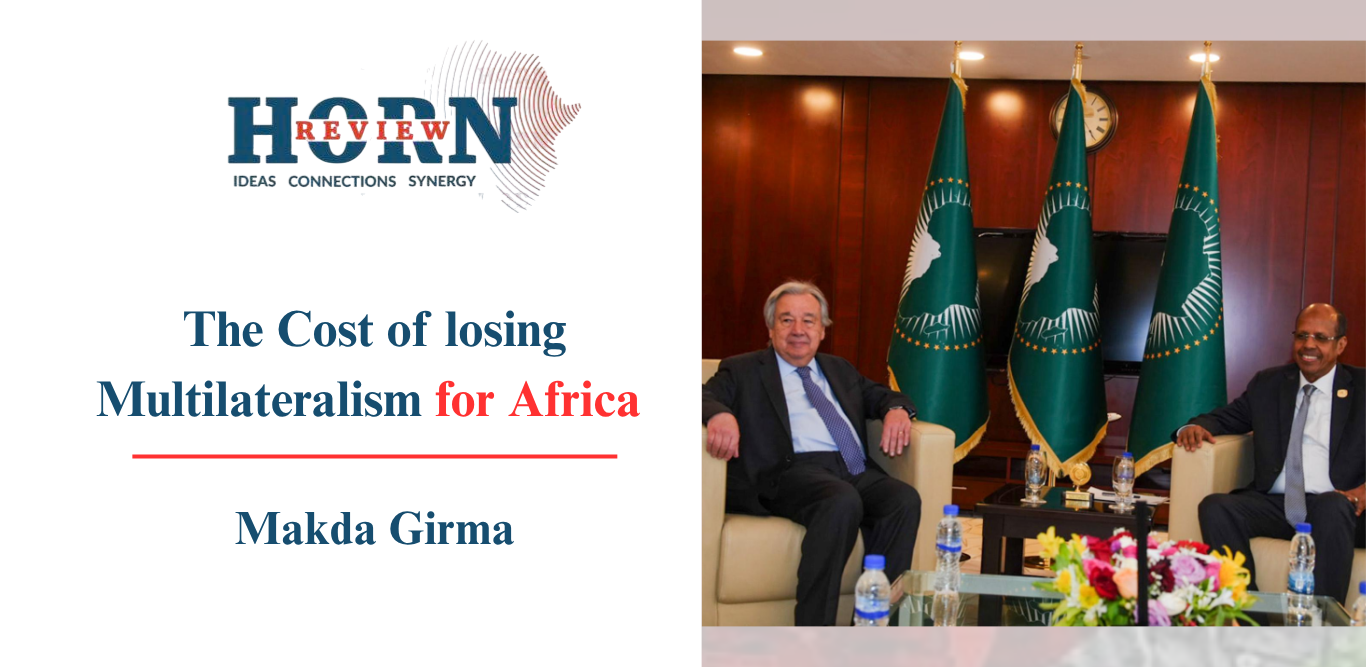
The approaching transition at the United Nations gives this broader argument immediate relevance. António Guterres’s second term ends on 31 December 2026, and the formal process of choosing his successor is already underway. The official field currently includes several candidates, among them two Africans: former Senegalese president Macky Sall, nominated by Burundi, and Ugandan diplomat Olara Otunnu, nominated by Uganda. Both have participated in the UN’s candidate process.
Africa has significant interests at stake in the transition. Security Council Resolution 2719 created a framework through which eligible AU led peace support operations can obtain UN assessed contributions on a case by case basis, with UN financing not exceeding 75 percent of the annual budget of an authorized operation. For African states that have spent decades demanding predictable financing for regional peace operations, this is a major institutional gain. It also depends on a UN system operating under intense financial and geopolitical pressure.
The African Group cannot choose the next Secretary General on its own. Article 97 of the UN Charter gives the Security Council the role of recommending a candidate before the General Assembly appoints that person, leaving the permanent members with enormous influence over the process. Yet formal control is not the only form of leverage. Fifty four coordinated General Assembly members constitute a substantial political constituency. African governments could collectively press candidates on the implementation of Resolution 2719, Security Council reform, climate and development financing, senior African representation within the Secretariat and the treatment of African priorities during institutional restructuring.
The existence of separate African candidates makes the moment particularly revealing. Competition between Macky Sall and Olara Otunnu is not inherently damaging; either candidate is entitled to make a case for the office. The larger question is whether African governments will accompany those candidacies with a common negotiating platform. A continent can fail to shape an election even while producing candidates for it. Personalities matter, but a coordinated set of demands would survive regardless of who eventually becomes Secretary General.
This is the distinction Africa increasingly needs to make across its foreign policy. Continental unity cannot mean forcing 54 UN member states to vote identically on every war, sanctions regime or diplomatic dispute. Their interests are too varied, and attempts to manufacture total uniformity would collapse quickly. Coordination should concentrate on a smaller set of questions where fragmentation directly reduces the bargaining position of nearly every African state: Security Council reform, financing for African peace operations, debt architecture, critical mineral rules, climate finance and representation within major international institutions.
On those issues, African governments should begin treating collective positions as assets with a price. A state receiving AU support for an international post should incur obligations to the coalition that delivered that support. A government seeking exemption from a Common African Position should have to explain the departure politically. Repeated defections should influence future continental endorsements. External powers would then confront a different incentive structure. Buying one government’s cooperation would no longer necessarily be enough to weaken the entire position.
Africa already possesses many of the assets required for greater influence: 54 UN votes, a population above 1.4 billion, strategic mineral resources, important maritime routes, expanding consumer markets and an African Union that has now entered the G20 as a permanent member. G20 membership The central weakness is the conversion of those assets into coordinated bargaining power.
Global governance reform will not arrive simply because Africa’s exclusion is historically unjust. Major powers rarely surrender institutional advantages because an argument is morally convincing. They compromise when preserving the existing arrangement becomes politically or economically more costly than changing it. African states therefore have to create leverage rather than wait for recognition.
The choice is increasingly stark. Fifty four states negotiating separately present outside powers with fifty four opportunities to exploit different needs, rivalries and vulnerabilities. The same states coordinating selectively around the interests they genuinely share would confront those powers with a different calculation. Africa does not need permanent diplomatic unanimity. It needs enough discipline to prevent short term bargains from repeatedly consuming long term power. Until that gap is closed, the continent will continue arriving at international negotiations with extraordinary demographic, economic and diplomatic assets and leaving with less influence than those assets should command.
By Makda Girma, Researcher, Horn Review

RELATED
Posts
27
Aug
Who Gets a Seat in Saudi Arabia’s Red Sea Security Order?
The recent intense fighting erupted at Sherarina near the...
27
Aug
Asymmetric Attrition in Hormuz: Decoding the Escalation Against State Energy Assets
The recent intense fighting erupted at Sherarina near the...
27
Aug
Egypt Skipped the Mecca Pact Because It Lacks the Leverage to Join
The recent intense fighting erupted at Sherarina near the...
27
Aug
How the Iran and Israel Conflict Recalibrates the Algeria-Morocco Structural Antagonism
The recent intense fighting erupted at Sherarina near the...
27
Aug
The Mecca Pact Claims Iran Isn't the Target, So Who Is?
The recent intense fighting erupted at Sherarina near the...
27
Aug
Deconstructing the Eastern Defence Pact and the Rise of the Sunni Colossi
The recent intense fighting erupted at Sherarina near the...
27
Aug
The Structural Logic of Türkiye–Israel Rivalry in a Fragmented Regional Order
The recent intense fighting erupted at Sherarina near the...
27
Aug
Turkiye’s Defence Diplomacy Amidst Middle Power Competition in the Horn
The recent intense fighting erupted at Sherarina near the...
27
Aug
Negotiating Navigation in the Bab el-Mandeb
The recent intense fighting erupted at Sherarina near the...
27
Aug
The US Needs a Stronger Vision for the Horn of Africa. Here Is Why.
The recent intense fighting erupted at Sherarina near the...