
Egypt Skipped the Mecca Pact Because It Lacks the Leverage to Join
Egypt’s continued absence from the Mecca collective-defense pact reflects a calculated refusal to resolve a structural ambiguity Cairo has long preserved. That ambiguity centers on the difference between a state that helps design regional security terms and a state that only consumes them. A state that helps design the terms contributes capabilities the others need and gains a corresponding voice in how the collective clause is triggered and used. A state that only receives the architecture’s protection trades autonomy for guarantees it did not help shape.
Somalia already occupies the second position, holding bilateral security arrangements with all three signatories while remaining outside the collective defense clause itself as a pure consumer of security whose role stops short of co-decision-making. Egypt’s material weight falls short of the first role on the terms currently offered, while its self-image as the Arab world’s senior security power makes formal acceptance of the second role intolerable. Remaining outside the treaty sustains the ambiguity and locks in a durable equilibrium that formal membership would collapse.
Egypt’s material weight, a large conventional army, control of the Suez Canal, and decades of accumulated diplomatic standing, falls short of Pakistan’s nuclear deterrent, Turkey’s expeditionary defense industry, and Saudi capital by enough to put the first position out of reach on the terms currently on offer. Egypt’s self-image as the Arab world’s senior security power makes the second position, the one Somalia already occupies, unacceptable to adopt formally, however closely Egypt already resembles it in practice. Staying outside the treaty text preserves ambiguity about which category Cairo belongs to. Signing would resolve that ambiguity, in the direction Egypt has spent the past year trying to avoid. Rashid Abdi mentioned 7 points why Egypt has not deiced to joing the pact yet.
Riyadh’s specific objections sharpen this picture. The Saudi sources who spoke to Middle East Eye framed their frustration as a reciprocity test that Egypt has recently and repeatedly failed. Saudi Arabia extended roughly twenty-five billion dollars in budget support after Sisi took power in 2013, an outlay Riyadh now regards as having purchased less loyalty than comparable spending has bought elsewhere. Egypt’s contribution to the war in Yemen is remembered in Riyadh as minimal, and the sharpest recent data point came in May 2026, when Egypt deployed Rafale fighter jets to Abu Dhabi in direct response to Iranian strikes on the UAE, a gesture it did not extend toward Saudi Arabia during the same war.
A former senior Saudi royal adviser told Middle East Eye that the kingdom’s leadership doubts Sisi’s loyalty outright, contrasting that doubt explicitly with Saudi confidence in Turkey and Pakistan. Riyadh is measuring behavior under fire, and the behavior it has observed points toward Abu Dhabi far more consistently than toward the kingdom that has financed Egypt for over a decade. A trilateral pact built around a functioning collective defense clause struggles to absorb a fourth member whose crisis behavior has already revealed where its practical loyalties sit.
Alongside the Saudi relationship sits a still more binding Emirati one, and the difference between the two forms of dependency runs deeper than sentiment. The thirty-five billion-dollar Ras El Hekma agreement, signed in February 2024, delivered twenty-four billion dollars in direct investment and converted eleven billion dollars of existing Emirati central bank deposits into equity, leaving the Egyptian state with a minority thirty-five percent stake in its own flagship coastal development and embedding Emirati capital inside the productive base of the Egyptian economy itself.
Saudi support since 2013 arrived largely as budget assistance and central bank deposits, a form of leverage that remains external to Egyptian sovereign assets and can be renegotiated or withdrawn on its own terms. Egypt’s choice between its two Gulf patrons is therefore a choice between a patron whose claims are reversible and one whose claims are now load bearing, a distinction that runs deeper than the symmetric balancing act it is often described as. Egypt also maintains a defense treaty with the UAE, so declining the Mecca pact preserves both relationships at once, while joining a Saudi-anchored framework that pointedly excludes Abu Dhabi, at a moment of visible estrangement between Riyadh and Abu Dhabi, would force Cairo to make explicit a hierarchy of loyalty it has so far kept comfortably implicit.
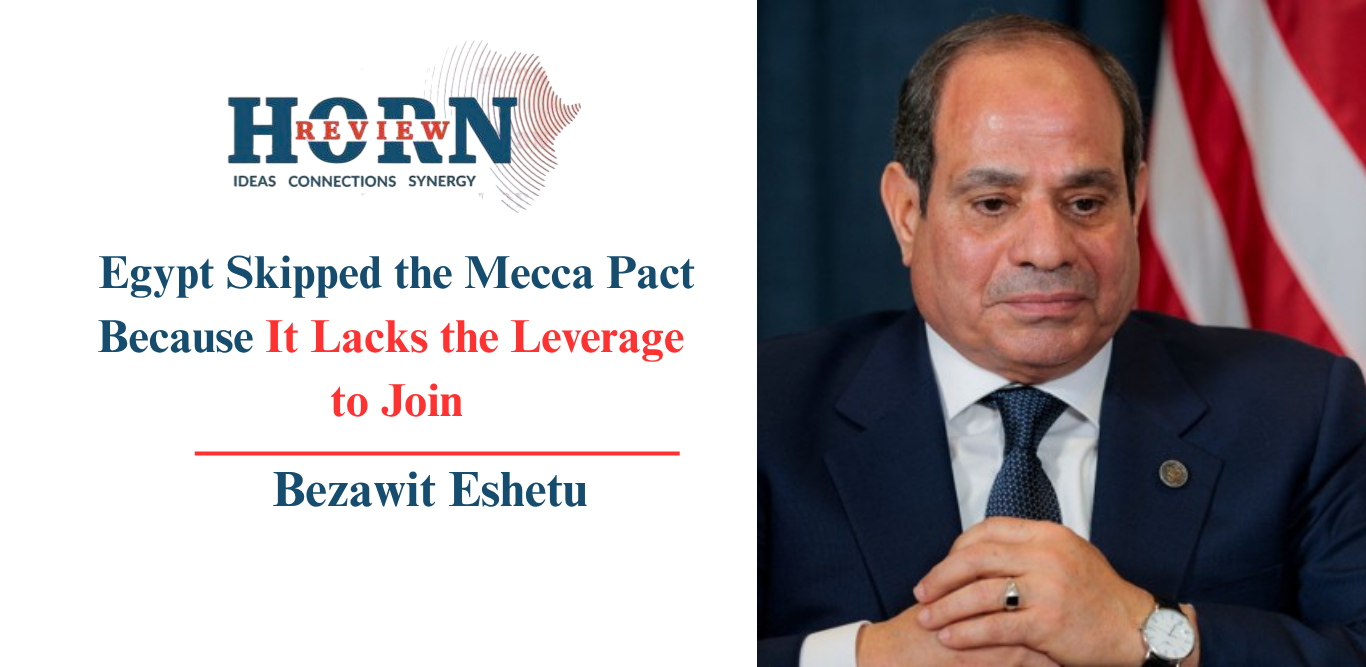
Egyptian Foreign Minister Badr Abdelatty, standing beside Turkish Foreign Minister Hakan Fidan, cited constitutional requirements to defer any decision on joining the Makkah Joint Defense Agreement. Article 152 of Egypt’s 2014 Constitution bars the president from declaring war or sending forces into combat abroad without prior consultation of the National Defense Council and a two-thirds majority in the House of Representatives. A binding mutual-defense clause of the type adopted by Saudi Arabia, Türkiye and Pakistan would place that process under a standing external trigger. Cairo’s insistence on legal and constitutional review signals that no Egyptian government will surrender control over the ultimate decision to commit troops.
After removing Mohamed Morsi, Abdel Fattah el-Sisi asked Egyptians for two years of patience and later promised that two further years would leave them surprised by the country’s transformation. He pledged economic recovery through megaprojects, expanded employment, and higher incomes for the poor. Those pledges have met persistent inflation, widespread food insecurity, and surveys in which nearly three-quarters of Egyptians describe the economy as bad or very bad while ranking it the country’s most urgent problem. Official unemployment has fallen, yet private-sector contraction, rising debt service, and higher poverty estimates leave a clear gap between early assurances and daily experience.
Foreign Minister Badr Abdelattyhas repeated that the matter requires careful legal and constitutional study, in Cairo, in El Alamein on 13 August, and in calls with Saudi and Pakistani counterparts, without producing a timetable or conclusion. The persistence of that language looks more like deliberate open-ended deferral than a temporary bureaucratic delay. Prolonged failure to deliver measurable household relief risks the same accumulation of economic grievance that helped end Hosni Mubarak’s rule, when living costs and perceived elite enrichment converged with street pressure until the military withdrew support.
Sisi’s government still draws credit for restoring order after 2011–2013. Yet public dissatisfaction with job creation, price control, and inequality remains sharp, and migration intentions among the young have risen. Binding Egypt more tightly into external defense obligations while domestic welfare expectations stay unmet could narrow the reservoir of patience cultivated since 2013. The constitutional review therefore buys time against both foreign partners and an internal public whose economic hopes remain largely unfulfilled.
Egypt’s relationship with Israel supplies the second, harder layer beneath the constitutional language. Egypt was the first Arab state to establish peace with Israel, and the 1979 treaty’s security annex, which zones and caps Egyptian force levels inside the Sinai Peninsula in more granular detail than any comparable Arab-Israeli agreement, still governs deployments there alongside intelligence cooperation and a flow of American military assistance that Egypt cannot easily replace. A binding mutual defense clause tying Cairo to Ankara, Riyadh, and Islamabad would be read in Washington and Jerusalem as a substantive break from the framework that has anchored Egyptian security policy for almost half a century, in a way that Egypt’s separate defense treaty with the UAE, which sits comfortably inside that same framework, has never been.
Egypt is simultaneously deepening commercial ties with India even as two of the Mecca pact’s three members, Turkey through its maritime disputes in the Eastern Mediterranean and Pakistan through its founding rivalry, hold interests that cut against New Delhi’s, leaving Cairo unwilling to be read as choosing between a bloc built around Turkey, Saudi Arabia, and Pakistan and one built, however informally, around Israel, the UAE, and India. Formal membership would collapse that studied neutrality into a single, legible choice.
Turkey, the pact’s third signatory, occupies a different analytical category from Saudi Arabia in Egyptian calculations, and the density of the bilateral relationship helps explain why Cairo feels no urgency to formalize anything further. Turkish firm Havelsan and Egypt’s state-owned Arab Organization for Industrialization began co-producing unmanned ground vehicles at the Kader Factory in March 2025 and added vertical takeoff drone production that August.
Presidents Sisi and Erdogan signed a military framework agreement in Cairo in February 2026, part of a package of deals reportedly worth around three hundred fifty million dollars, and the two militaries have since run joint air, naval, and special forces exercises at a pace unmatched in over a decade of estranged relations. Turkish state media has floated a maritime delimitation deal that could add roughly twenty-one thousand five hundred square kilometres to Egypt’s exclusive economic zone.
Every one of these arrangements is bilateral, calibrated, and reversible by Cairo alone, in sharp contrast with a multilateral collective defense clause that binds Egyptian decision making to choices made in three other capitals at once. Turkey needs Egypt’s Mediterranean coastline, its land border with Libya, and its control of the Rafah crossing more than Egypt needs a formal seat inside a pact whose core benefit, deterrence, Cairo already receives informally through the Regional Four consultative mechanism. That asymmetry gives Ankara little real leverage to force a decision Egypt has not already made.
As regional analyst Rashid Abdi has observed, the historical residue between Cairo and Ankara continues to raise the evidentiary bar Egypt applies to Turkey, even while the bilateral relationship advances in practical domains. Egyptian nationalist historiography has long framed Ottoman rule as an interruption of an older Arab-Egyptian civilizational trajectory, and the term neo-Ottomanism, now applied across the region to Erdoğan’s foreign policy, first emerged in Egyptian commentary decades before it entered wider Western or Turkish usage.
The 2013 rupture, after which Ankara continued to host Muslim Brotherhood figures Cairo considers hostile to its own government, left a wound recent enough that joint drone factories and revived strategic councils have not fully closed it. This residue functions today as a background condition shaping how much evidence Cairo requires before it will bind itself militarily to Ankara, and industrial cooperation, however substantial, has not yet supplied evidence of that particular kind.
Egypt’s hesitation over the Mecca agreement sits next to a separate and more active effort to build its own influence network across the Horn of Africa. The contrast is revealing. Rashid Abdi described the core contest years ago as a struggle over which country, Egypt or Ethiopia, would act as the main power in the region. That description has grown more accurate since Ethiopia completed the Grand Ethiopian Renaissance Dam.
Egypt protested the dam at the United Nations Security Council, yet nothing changed on the ground. Cairo now works to create a set of dependent relationships in Sudan, Eritrea, and Somalia that can pressure Ethiopia on the Nile. The pattern resembles the way Iran has built proxy groups to constrain Israel. The goal is straightforward: keep enough leverage over Ethiopia while stopping any other power from shutting Egypt out of Red Sea and Horn security matters.
The Saudi-Pakistan defense understanding already illustrated the emerging risk. Deal first took shape around Sudan, a country where Egypt had long claimed the leading role as the main Arab partner in limiting Ethiopian projects. Once Riyadh and Islamabad formalized their ties and began offering similar models to Eritrea, Egypt faced the real possibility of becoming a secondary player in a region it sees as essential to its survival. Egyptian and Saudi officials have worked since early 2026 to pull Eritrea into closer security cooperation based on the same Saudi-financed model used with Pakistan and Sudan.
Eritrean President Isaias Afwerki discussed deeper ties during a December 2025 visit to Saudi Arabia before meeting President Sisi in Cairo the following June. At the same time, Egypt keeps a separate security partnership with Sudan’s army against the Emirati-backed Rapid Support Forces. These steps outline a network designed to surround Ethiopia. Yet the fact that Saudi money and Pakistani military weight now support parts of that network places Cairo in a weaker position inside an arrangement it once expected to lead.
The problem is practical. Egypt is a l state trying to control three unstable partners whose internal politics and outside patrons make permanent control difficult. Managing Somalia, Sudan, and Eritrea as reliable clients demands money, attention, and pressure that Egypt’s own economic limits make harder to sustain. Turkey’s large military base in Mogadishu has already reduced Egyptian influence in Somalia. The result is a clear contradiction. Egypt asks Riyadh to help it act as the main power in one part of the Horn while refusing to accept secondary status under Riyadh in the wider defense framework.
That position works only if Egypt continues to see itself as the country that designs security arrangements rather than the one that joins arrangements designed by others. Once secondary status becomes normal, the network Cairo is building against Ethiopia risks turning into a set of relationships managed by someone else, leaving Egypt with less leverage exactly where the Nile and the Red Sea meet.
None of this point toward a fixed Egyptian position, since the calculations underlying it, Gulf liquidity needs, Israeli treaty obligations, Turkish industrial cooperation, rivalry with Ethiopia in the Horn, are all still moving. What it does point toward is a considerably more durable equilibrium than the language of pending technical review suggests. Egypt’s absence from Mecca is close to the most advantageous outcome available to Cairo given its current toolkit, since it preserves simultaneous access to Saudi, Emirati, Turkish, Israeli, and Indian relationships that formal membership would force into an explicit hierarchy.
Bezawit Eshetu, Researcher, Horn Review

RELATED
Posts
9
Oct
Could the Riyadh Airport Strike Reshape the Yemen Conflict?
A series of claimed missile and drone strikes on King...
8
Oct
The Makkah Pact and the Limits of Collective Defence
The Makkah Joint Defence Agreement rests on an ambitious...
28
Sep
Saudi-led Multinational Maritime Defence Coalition and the Changing Security of Bab el-Mandeb
On 2 September, the Saudi-led Multinational Maritime Defence Coalition...

28
Sep
The AI Disinformation War in the Horn and the Economics of Digital Conflict
In September, Marc Owen Jones, an Associate Professor of...
24
Sep
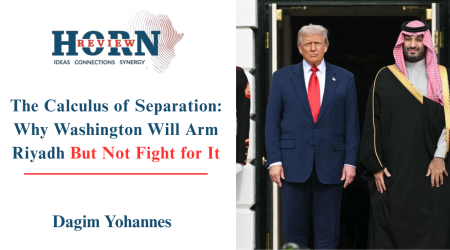
The Calculus of Separation: Why Washington Will Arm Riyadh But Not Fight for It
The episode reveals a distinction in the U.S.-Saudi security relationship...
21
Sep
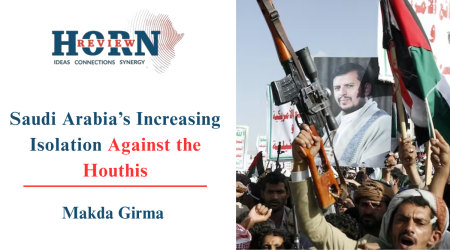
Saudi Arabia’s Increasing Isolation Against the Houthis
Saudi Arabia’s renewed confrontation with Yemen’s Houthis has exposed how...
21
Sep
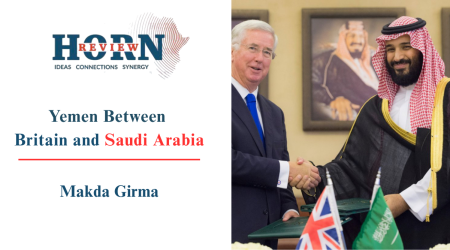
Yemen Between Britain and Saudi Arabia
The Houthi advance along Yemen’s Red Sea coast has exposed...
21
Sep
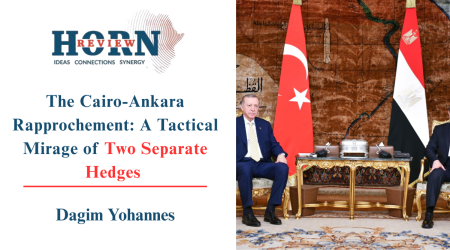
The Cairo-Ankara Rapprochement: A Tactical Mirage of Two Separate Hedges
The recent run of headlines out of Cairo and Ankara,...
20
Sep
The African Union Was Designed to Stand Outside Sudan's War
Every time Sudan's war comes up in public discussion, mentioning...
2
Sep
A Decade of Saudi Miscalculation in Yemen
On March 26, 2015, Mohammed bin Salman, then a thirty-year-old...