
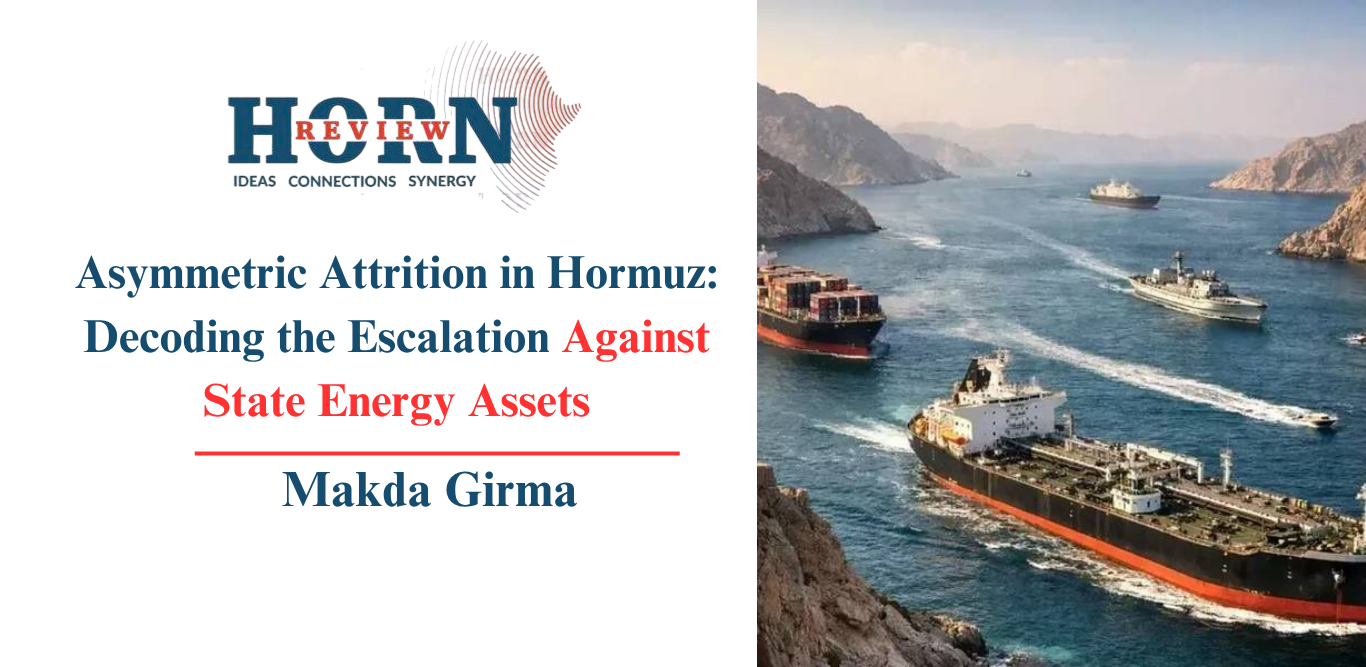
Asymmetric Attrition in Hormuz: Decoding the Escalation Against State Energy Assets
The attacks on ADNOC vessels in the Strait of Hormuz are beginning to look less like isolated acts of maritime harassment and more like an effort to alter the economics of Gulf shipping. By August 7, ADNOC had reported attacks on 15 of its vessels, with one crew member killed and 20 injured. More incidents followed. The pattern matters because ADNOC sits at the intersection of commerce and state power. Its tankers move oil and petroleum products, while the company itself remains a central part of Abu Dhabi’s economic structure. Hitting those vessels imposes costs on the UAE without requiring a direct attack on Emirati territory.
That is where much of the strategic value lies. A tanker does not have to sink for an attack to have an economic effect. It may be enough to make a voyage more expensive, harder to insure and more difficult to crew. Repetition amplifies the effect: freight costs climb, owners reconsider voyages, schedules become unreliable and naval forces are drawn into protecting traffic that would normally be commercial.
Hormuz has always been vulnerable because so much trade passes through such a narrow space. The present crisis has made that vulnerability visible in operational terms. The US Energy Information Administration estimates that crude oil and petroleum liquids moving through Hormuz fell from about 21.6 million barrels a day in the fourth quarter of 2025 to 4.9 million barrels a day in the second quarter of 2026. By mid August, traffic had deteriorated even further. Kpler data reported by Reuters showed only five commodity vessels crossing on August 15 and none the following day, compared with more than 130 daily vessel transits before the war. Hormuz can therefore remain geographically open while becoming unreliable enough to undermine the commerce that depends on it.
ADNOC is an obvious case study, though the problem is larger than the UAE. Saudi and Qatari shipping has also been affected. What has changed is the treatment of state connected commercial shipping. National oil companies occupy an unusual space: their vessels conduct ordinary commerce, but the companies themselves are closely tied to national revenue and state power. Repeated attacks narrow the practical distinction between commercial shipping and sovereign economic infrastructure.
The legal implications go further than broad references to freedom of navigation. Part III of the United Nations Convention on the Law of the Sea establishes the regime of transit passage through straits used for international navigation. The regime requires transit to remain continuous and expeditious and places limits on the ability of coastal states to obstruct it. In July, the International Maritime Organization reaffirmed that the right of transit passage through international straits should not be threatened, impeded, denied, hampered or suspended.
There is still a legal complication. Iran signed UNCLOS in 1982 but never ratified it, and its declaration on signature challenged the view that every element of transit passage reflected existing customary law. The United Nations Treaty Collection records Iran as a signatory rather than a ratifying party. Tehran has consequently maintained a narrower interpretation of its obligations than many maritime powers. This disagreement does not resolve the wider customary law question, but it explains why control of navigation in Hormuz has become part of the political contest itself.
The status of an individual tanker creates another problem. State ownership does not by itself turn a merchant vessel into a military target. The International Committee of the Red Cross notes that merchant ships become military objectives when they directly assist military action, for example through troop transport, intelligence activity or comparable military functions. Economic affiliation alone is a much broader standard. If a civilian vessel is targeted primarily because its owner is a national oil company, the boundary between civilian commerce and sovereign infrastructure starts to erode.
Modern shipping makes that boundary harder to police. A vessel serving ADNOC may be owned by one company, chartered by another, registered under a foreign flag, insured elsewhere and crewed by several nationalities. The consequences of an attack therefore spread rapidly beyond the UAE. When the ADNOC vessels Mombasa B and Al Bahyah were struck in July, an Indian seafarer was killed and six Indian and two Ukrainian crew members were injured.
That internationalizes what might otherwise appear to be a bilateral confrontation. Flag states can become involved through registration, labor exporting governments through their nationals, insurers through claims and banks through vessel financing. The ship may be connected economically to Abu Dhabi, but the consequences of striking it can reach several jurisdictions at once.
The shadow fleet makes this considerably more complicated. Sanctioned and opaque shipping networks already function under abnormal commercial conditions. Ownership may be difficult to trace, insurance may sit outside the conventional market and operators are accustomed to sanctions and legal exposure. Their willingness to enter a dangerous waterway can therefore be very different from that of mainstream carriers.
The early weeks of the conflict produced a striking example. Lloyd’s List found that roughly half of tankers and gas carriers above 10,000 deadweight tonnes that crossed Hormuz between March 1 and March 8 were part of the shadow fleet. At the same time, Washington continued trying to disrupt the networks carrying Iranian petroleum. In July the US had sanctioned more than 100 vessels linked to Iran’s shadow fleet since the beginning of 2026.
The result is a sanctions evasion paradox. Rising risk can push the most transparent operators out first. A mainstream carrier depends on recognized insurance, established financiers and predictable port access. Those relationships impose limits on the risks it can accept. A shadow operator already working outside much of that system has fewer conventional relationships to protect.
Hormuz could therefore become less transparent before it becomes empty. That would complicate sanctions enforcement and make maritime safety harder. Ships with unclear ownership, limited insurance and inconsistent tracking are more difficult to identify and monitor. The risk of collision, environmental damage and mistaken targeting also increases as the quality of information deteriorates.
The economic consequences extend far beyond the Gulf. Hormuz is frequently described as a Middle Eastern energy chokepoint, but the geography of its customers tells a different story. EIA data show that 84 percent of the crude oil and condensate and 83 percent of LNG that moved through Hormuz in 2024 went to Asian markets; China, India, Japan and South Korea alone accounted for 69 percent of crude and condensate flows.
For Japan and South Korea, disruption translates quickly into an energy security problem because both remain heavily dependent on imported fuels. China has a larger and more diversified energy system, but its exposure is enormous in absolute terms. The shock therefore travels east. Higher freight rates and insurance premiums become higher acquisition costs for refiners and utilities, which then feed into electricity, transportation and industrial production.
The reaction of Asian refiners during the crisis shows this process in practice. Japanese, South Korean and Taiwanese refiners have increased purchases of US and other non Gulf crude as Hormuz supplies became less reliable. Alternative oil exists, but replacing Gulf barrels can require longer voyages and higher premiums. The cost of disruption therefore survives even when physical shortages are avoided.
LNG presents a harder problem. Around one fifth of global LNG trade passed through Hormuz in 2024, primarily from Qatar. Crude can sometimes be redirected through an existing pipeline. LNG cannot. Natural gas must reach a liquefaction facility, be converted into LNG, loaded at specialized terminals and transported on purpose built carriers. Qatar cannot simply divert its LNG into the Saudi East West pipeline or the UAE’s crude pipeline to Fujairah.
This is why crude bypass figures can give an exaggerated impression of Gulf resilience. Saudi Arabia and the UAE have valuable alternatives, but those systems solve a specific problem. They move crude oil. They do not automatically replace the infrastructure needed for LNG, gasoline, diesel, jet fuel or LPG.
That distinction matters inside the GCC. Saudi Arabia can redirect some crude production toward the Red Sea. The UAE can use Fujairah to move part of Abu Dhabi’s crude without entering Hormuz. Qatar’s LNG terminals remain inside the Gulf. Kuwait also lacks an equivalent large scale bypass system. The same maritime disruption therefore places different governments on different economic timetables.
Those unequal vulnerabilities complicate collective Gulf security. A state that can redirect significant exports may be able to absorb months of disruption differently from one whose principal export infrastructure remains behind the Strait. Iran does not necessarily have to break GCC political solidarity outright. Persistent pressure can simply expose differences in how much economic pain each member can withstand.
China adds another layer. Beijing is one of the world’s largest consumers of Gulf energy and also maintains substantial economic relations with Iran. During the early stages of the conflict China had entered talks with Iran seeking safe passage for Chinese crude shipments and Qatari LNG.
By May, the issue had become more explicit. Some Chinese vessels were being permitted to transit Hormuz under an understanding concerning Iranian management procedures. The arrangement and its implementation have not always been consistent; Chinese vessels have also turned back despite reported assurances. Still, the possibility of differentiated treatment is strategically important.
A selectively accessible Hormuz is different from a closed Hormuz. If nationality, ownership or destination affects the likelihood of safe passage, control over the Strait can be used to discriminate among trading partners. Beijing could gain comparatively favorable access while remaining exposed to the broader instability of the region.
China’s leverage has limits. Its economic relationship with Iran gives it channels of influence, but Beijing has shown far less interest in taking responsibility for the military protection of Gulf shipping. That tension matters. China wants energy flows protected, yet the naval burden of protecting them continues to fall disproportionately on the United States and its partners.
The economics of that protection are unfavorable. Cheap drones have changed air and maritime defense because the weapon used to create a threat can cost far less than the system used to defeat it. CSIS estimates that Shahed type drones can cost roughly $20,000 to $50,000 each. Sophisticated naval interceptors can cost millions.
The most serious problem is not the comparison between the price of one drone and one missile. It is magazine depth. Ships carry limited numbers of interceptors. Manufacturing replacements takes time. The attacker decides when to launch, while the defender has to maintain surveillance and defensive readiness continuously. A navy can successfully intercept most incoming threats and still find itself losing the longer economic contest.
That makes lower cost defensive layers increasingly important. Electronic warfare, guns, interceptor drones and similar systems can deal with some cheaper threats while preserving scarce high performance missiles for cruise missiles, ballistic missiles and other systems that require them. The measure of success is therefore not simply how many threats are destroyed. It is whether that level of defense can be maintained without exhausting inventories or budgets.
Insurance produces a similar imbalance in the commercial sphere. In July some war risk insurers were advising shipowners to pause Hormuz voyages as premiums rose from roughly 2 percent toward 3 percent of vessel value, with the possibility of further increases. Earlier in the conflict, marine insurers had already begun cancelling war risk cover as attacks damaged vessels and left large numbers of ships stranded.
Insurance withdrawal matters because shipping finance depends on it. A bank may hesitate to finance an uninsured voyage. Traders can face higher collateral requirements. Charter contracts become harder to execute. Smaller carriers may decide that entering the Gulf no longer makes commercial sense.
This can polarize the shipping market. Large national oil companies can continue operating with state backing. Shadow fleet operators can continue because they already tolerate unconventional risk. Mainstream independent carriers are caught between them.
The government response has already begun. In March, the US International Development Finance Corporation announced a maritime reinsurance facility capable of covering approximately $20 billion in losses on a rolling basis. The program initially focused on hull, machinery and cargo coverage and was designed to work with private insurers.
That intervention is revealing. Once a government has to provide reinsurance so that ordinary merchant shipping can continue, the cost of the conflict has moved beyond the military arena.
A GCC backed war risk pool could use the same logic. Private firms would continue underwriting ordinary commercial exposure while sovereign backing covers catastrophic losses above a defined level. Eligibility could be linked to safety standards, tracking requirements and participation in protected transit procedures. Such a system would not remove the danger, but it could prevent insurance withdrawal from turning military disruption into a de facto commercial blockade.
Naval protection also needs more structure. Protecting vessels one at a time consumes ships, aircraft and surveillance capacity. Concentrating commercial movements into defined protection windows would allow those resources to be used more efficiently. The concept is no longer theoretical. The IMO has already published and coordinated guidance for vessel transit through Hormuz during the 2026 crisis.
A corridor system would still present difficult choices. AIS improves situational awareness but can expose vessel positions. Turning it off reduces public visibility but also makes identification and deconfliction harder. Rules should therefore be designed for specific threat conditions rather than assuming that either permanent broadcasting or permanent silence is inherently safer.
Alternative infrastructure needs the same degree of scrutiny. Fujairah is strategically valuable because it sits outside Hormuz, but increasing dependence on it also increases the consequences of disruption there. Storage, communications, loading capacity and power supplies need redundancy within the bypass system itself. Moving dependence from one concentrated chokepoint to another would provide only limited resilience.
Planning also needs to move beyond oil.
Hormuz carries container traffic, food, machinery, chemicals, fertilizers and other goods needed by Gulf economies. The same increase in insurance and freight costs affecting tankers therefore applies to civilian supply chains. The IMF estimates that roughly one third of internationally traded fertilizer moves through Hormuz and has warned that disruption could feed into global food prices.
The problem is particularly important for Gulf economies because they can be hit from both directions. Energy exports become harder to move while imported essentials become more expensive to bring in. The result is pressure on export revenue and domestic supply at the same time.
Water belongs in this calculation as well. Gulf desalination systems rely on electricity, specialized equipment and chemicals supported by international supply chains. Analysis of the Gulf’s water, food and energy infrastructure has highlighted how interruptions at ports can eventually affect the chemicals required to keep desalination facilities operating. A maritime campaign aimed at energy exports can therefore create vulnerabilities in sectors far removed from the tanker being attacked.
The global macroeconomic effects follow the same chain. Energy costs increase transportation and production expenses. Higher fertilizer prices feed into agriculture. Longer shipping routes raise freight rates. Financial conditions tighten as uncertainty rises. In its April 2026 adverse scenario, the IMF estimated that a deeper and longer disruption could reduce global growth to 2.5 percent while raising inflation to 5.4 percent. Those figures were a scenario rather than a forecast, but they show the scale through which a crisis in one narrow waterway can reach the wider global economy.
The policy response should therefore be built around actual dependencies rather than a general concept of energy security. Crude oil, LNG, refined fuels, fertilizers, food and desalination inputs face different constraints. Strategic reserves and alternative routes should reflect how easily each commodity can be replaced and how quickly new supply can reach the Gulf.
The GCC also needs a clearer approach to repeated attacks on civilian commercial infrastructure. One damaged ship may be treated as an isolated security incident. A sustained campaign involving numerous vessels and civilian casualties is different. The cumulative effect can reach strategic proportions even when no single incident produces the type of damage normally associated with a major interstate attack.
Governments could therefore establish clearer escalation indicators: repeated civilian deaths, attacks on vessels moving through declared protected corridors, attacks on rescue operations or sustained efforts to disable national export infrastructure. The point would be to make the consequences of continued coercion more predictable while avoiding an automatic military response to every incident.
Ultimately, the contest in Hormuz is about how much effort is required to sustain ordinary commerce. Every additional escort, insurance guarantee, rerouted cargo, delayed delivery and expensive interception raises that cost. Counting the number of damaged tankers only captures the visible part of the campaign. The more revealing measure is what has become necessary simply to complete a voyage. When a commercial tanker requires naval protection, sovereign insurance support, special routing, additional compensation for crews and continuous threat monitoring to perform a routine transit, the strategic environment has already changed.
Hormuz does not have to be sealed completely to become an effective instrument of coercion. Making passage expensive, selective and unpredictable can produce considerable leverage on its own.
By Makda Girma, Researcher, Horn Review

RELATED
Posts
9
Oct
Could the Riyadh Airport Strike Reshape the Yemen Conflict?
A series of claimed missile and drone strikes on King...
8
Oct
The Makkah Pact and the Limits of Collective Defence
The Makkah Joint Defence Agreement rests on an ambitious...
28
Sep
Saudi-led Multinational Maritime Defence Coalition and the Changing Security of Bab el-Mandeb
On 2 September, the Saudi-led Multinational Maritime Defence Coalition...
28
Sep
The AI Disinformation War in the Horn and the Economics of Digital Conflict
In September, Marc Owen Jones, an Associate Professor of...
24
Sep
The Calculus of Separation: Why Washington Will Arm Riyadh But Not Fight for It
The episode reveals a distinction in the U.S.-Saudi security relationship...
21
Sep
Saudi Arabia’s Increasing Isolation Against the Houthis
Saudi Arabia’s renewed confrontation with Yemen’s Houthis has exposed how...
21
Sep
Yemen Between Britain and Saudi Arabia
The Houthi advance along Yemen’s Red Sea coast has exposed...
21
Sep
The Cairo-Ankara Rapprochement: A Tactical Mirage of Two Separate Hedges
The recent run of headlines out of Cairo and Ankara,...
20
Sep
The African Union Was Designed to Stand Outside Sudan's War
Every time Sudan's war comes up in public discussion, mentioning...
2
Sep
A Decade of Saudi Miscalculation in Yemen
On March 26, 2015, Mohammed bin Salman, then a thirty-year-old...