The regional status previously shaped by the Shiite aligned militias and client states directed from a regional power has been eroded through successive military campaigns targeting its operational capacities. What is taking shape instead is a multipolar configuration under Sunni predominance wherein hard military power, advanced industrial capacity and political religious influence function as the principal levers of geopolitical authority. The central inquiry no longer concerns who will inherit the diminished regional assets of the previous order but rather which nations command the comprehensive strength required to mould this emergent environment.
The concept that influence from the Persian Gulf to the Mediterranean through proxies has been degraded. The fall of a key allied regime in late 2024 severed the principal land to a major proxy force in the Levant. Subsequent pressures on allied networks across multiple situations combined with direct conflict involving external powers in 2026 have further constrained operational depth .This constitutes a failure of the established deterrence doctrine. The series of successful operations against the leadership of the allied axis has forced a fundamental reassessment among the affected. The perception of being at the height of power projection capacity has given way to political sobering with the established deterrence policy now placed under scrutiny and debated controversially within the affected nation’s decision making circles.
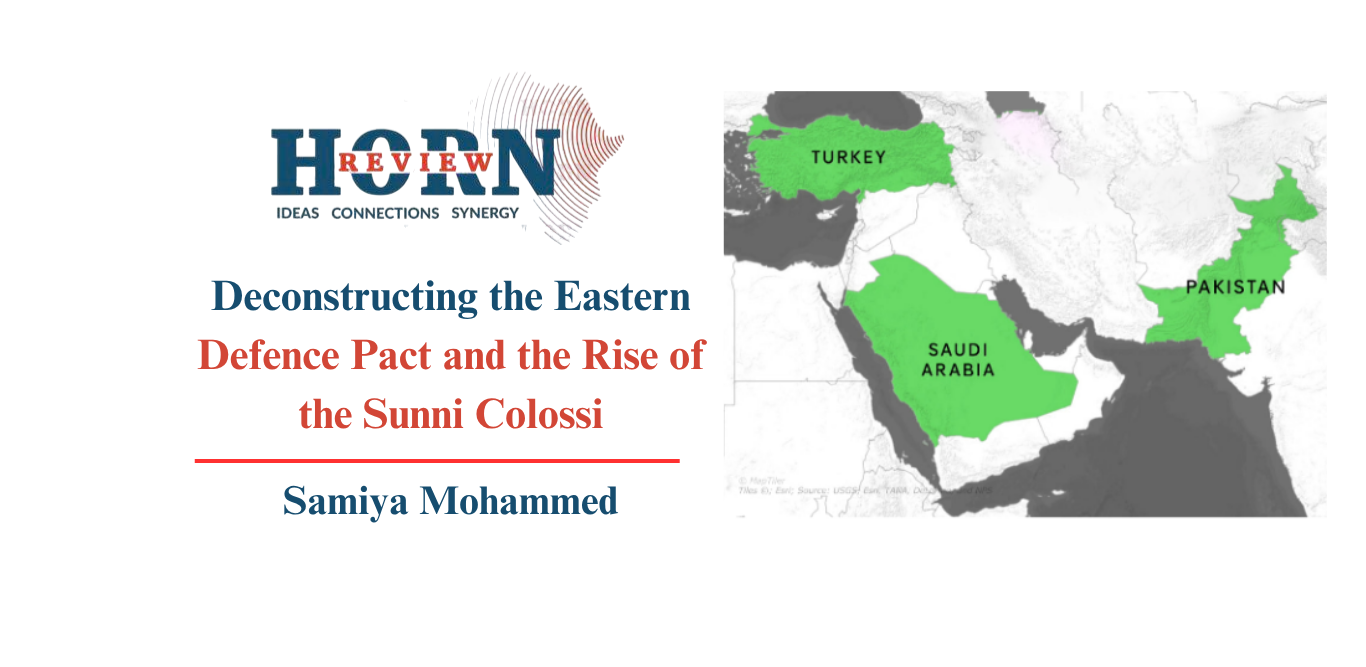
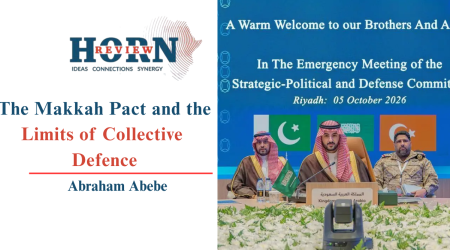
On 7 August 2026 the leaders of three Sunni powers Turkey, Saudi Arabia and Pakistan convened to sign a joint defence agreement that has already reshaped regional security. The pact stipulates that an armed attack against any one of the three shall be regarded as an attack against all establishing a collective defence framework unprecedented in its formal structure within the Islamic world. The agreement builds upon a prior bilateral mutual defence pact signed between two of the parties in 2025. The addition of the third power transforms what was a bilateral arrangement into a trilateral security structure with potentially far reaching implications. Officials have stressed that the pact is purely defensive in nature, open to other countries and not aimed at any specific state.
Comparisons to the North Atlantic Treaty Organisation’s Article 5 provision though it can be cautioned that the agreement remains for now a framework of political intent rather than a fully integrated military alliance. It lacks the integrated command structures, joint logistics and institutional machinery that define a battle tested alliance. The term NATO style is more a rhetorical label reflecting wariness regarding the first appearance of such collective defence provisions in the Islamic world.
The agreement brings together three powers with complementary yet distinct assets. One signatory possesses substantial financial resources derived from energy exports and another holds the distinction of being the only Muslim majority nation with a fully operational nuclear arsenal and the third maintaining the second largest army within the Atlantic alliance and a rapidly growing defence industrial base. The collective defence provision presents an evolution in regional security thinking. For decades the pattern involved individual security arrangements with extra regional powers. The new pact signals a shift toward indigenous collective security arrangements, driven in part by growing distrust of external security guarantees.
The core driver behind this arrangement is a fundamental questioning of the traditional security paradigm. Regional states have observed that reliance on external protection proved insufficient when real conflict materialised. Rather than receiving shielding, allied states watched security arrangements falter. This has left allies across the region questioning the reliability of dependencies for security prompting a turn toward self reliance and diversified partnerships. The agreement pushes Gulf capitals away from single pole dependence and toward a multi source balancing act. It provides one signatory with a fast track path from peripheral alliance member to core security structure in the Islamic world . While it establishes a collective framework against a rival it also risks provoking unpredictable countermeasures from the affected parties.
The data point regarding the limits of this new alignment emerged through reports that Egypt was invited to join the pact but declined. The distinction this makes is between regional security cooperation and a binding commitment to defend others. It is comfortable with the former but much more cautious about the latter. The invitation was extended with officials indicating a desire for eventual integration. However the refusal stems from that joining would place the invitee inside a politically charged alignment rather than simply expanding security cooperation. The distinction is between flexible security coordination where cooperation is primarily about information sharing and consultation and Article 5 style binding obligations that could entangle the invitee in defending others interests.
This helps explain the difference with other cooperative frameworks where the invitee has direct interests and cooperation focuses on specific operational domains rather than blanket commitments. The concern is that formal alliance membership would complicate relations with other regional actors including those with which the invitee maintains important economic and strategic relationships. The assessment that the pact is in practice more about one signatory’s security than the others exposes a larger limitation. It is difficult to imagine either of the other signatories becoming the principal military guarantor of the Gulf in a major regional conflict and this exposes the pact’s larger limitation which is the principal external power remains the indispensable security actor for the Gulf. Regional states can diversify their partnerships but they are not realistically replacing that external security framework.
The pact’s practical implementation remains untested with Similar agreements in the past have produced limited automatic military response. One signatory maintains close ties with the affected rival and has historically avoided direct conflict even after strikes on allied territory. Other remains within an Atlantic alliance with its own constraints and independent agenda. Financial resources can procure training, equipment, and political cover however they do not instantly create integrated, expeditionary forces capable of replacing the air and missile defence or power projection capabilities provided by the principal external power. Diversification of partners represents rational hedging after perceived unreliability and it does not constitute replacement of the fundamental securities.
The competing visions between regional powers also persist. The intense rivalry for leadership of the Sunni world while somewhat tempered by recent diplomatic efforts remains a barrier to a truly unified bloc. Furthermore the alignment of one signatory with an Atlantic alliance creates a dual identity. While membership provides unique leverage it also creates potential friction with new Sunni partners and historical adversaries.
Days after the signing, fires occurred at energy infrastructure facilities. The timing functions as a test and message saying paper pacts do not instantly harden soft targets or deter asymmetric attacks. Officials dismissed the agreement as a paper agreement that would not deliver security,echoing past reliance on external security providers. Whether direct orchestration or proxy action the incident highlights the gap between declarative collective defence and practical protection of critical infrastructure. Energy sites remain exposed and response speed and effectiveness of the new partners will be watched.
The current road points toward the emergence of a new structure. This coalescence of Sunni powers creates a formidable bloc that in theory combines financial resources, conventional and technological prowess, nuclear deterrence and demographic weight. This new axis is driven by converging interests with containing residual influence of a rival, countering assertive expansionism from other actors and stabilising the region on their own terms, free from over reliance on a less predictable external power. The era of the previous order is over replaced by a complex and multipolar where Sunni military might will dominate. Key states possess the scale, knowledge base and industrial capacity to not only shape the future of West Asia but also to challenge the existing powers.
The fundamental realignment is undeniable. However order is not a clean Sunni hegemonic succession or a functional Islamic alliance. It is a transitional contested configuration marked by overlapping rivalries, flexible alignments and continuous competition. The principal external power remains the indispensable hard security actor for the Gulf’s energy infrastructure. The diversification of partnerships is rational hedging and it is not replacement. The true importance of recent developments lies not in the creation of a new, cohesive Sunni bloc but in the demonstration that regional states are actively constructing alternative securities. Whether these prove durable in the face of the challenges they are designed to address remains the central question for the region’s future.
By Samiya Mohammed, Researcher, Horn Review