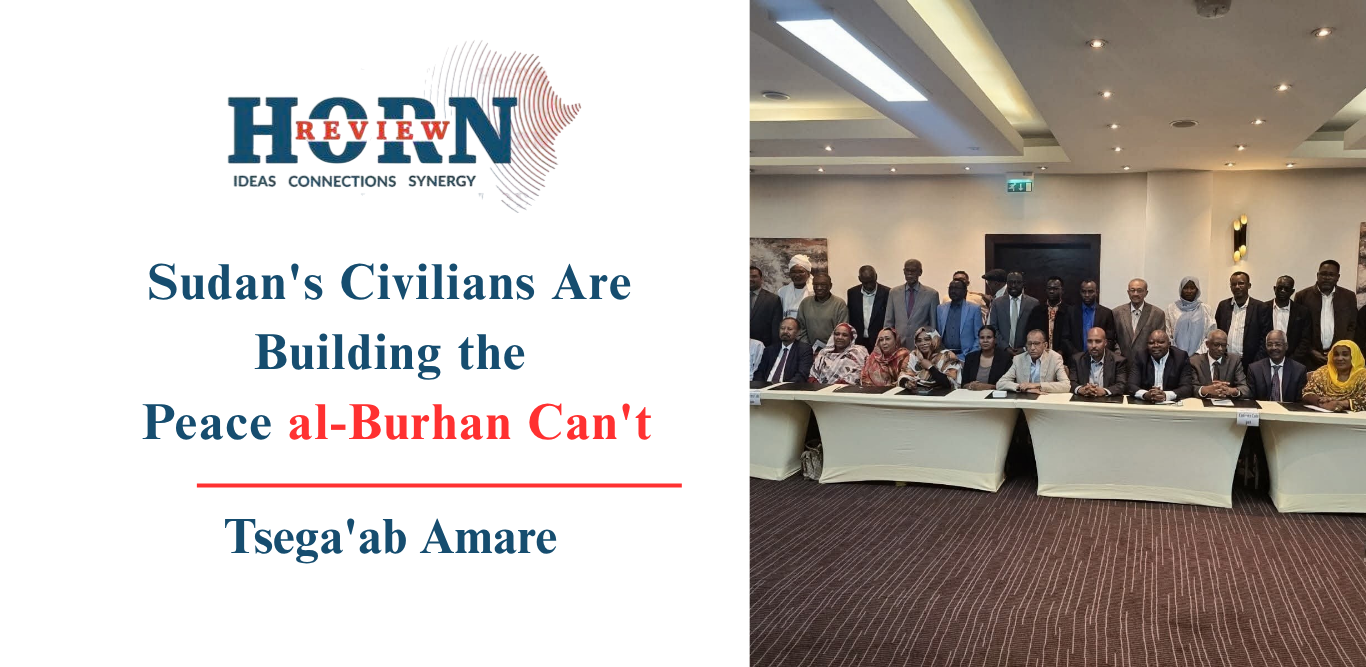
On 22 and 23 August, the Forces of the Sudanese Declaration of Principles, the Popular Congress Party, the Umma Party, women’s and youth networks, and a long list of academics and civil society figures signed a joint position paper rejecting al-Burhan’s call for a “Sudanese-Sudanese dialogue” and offering, in its place, a three-track alternative built around a ceasefire, humanitarian relief and a political process among equals: Sudan’s fractured opposition has rarely managed since 2019.
The timing lands roughly a week after reporting on al-Burhan’s own unannounced consultations with political blocs, Sufi leaders, native administrations and resistance committees, converging on an agenda he alone controls, and two days after an African Union Peace and Security Council delegation visited Khartoum, rejected “parallel entities” and foreign interference, and called the process “pivotal,” while still urging Port Sudan to make it more inclusive. Read as a diplomatic act rather than a communique, this document is a direct attempt to deny the de facto government of Port Sudan the one thing its dialogue strategy needs most, a widening claim to civilian ownership, at the very moment an AU delegation’s cautious language was already being read in Khartoum as a step toward exactly that.
Al-Buran’s strategy, which could be termed as consolidation dressed as dialogue, holds a history behind it. Omar al-Bashir ran a similar experiment between 2014 and 2016, a National Dialogue announced unilaterally, boycotted by most credible opposition and later assessed by the International Crisis Group as an exercise that produced legitimation on paper long after it had lost the room. al-Burhan’s version follows a familiar script: reversible inducements, among them the suspension rather than dismissal of prosecutions against Somoud-aligned figures including former Prime Minister Abdalla Hamdok, and a preparatory committee of unverified independence.
What makes this signing worth taking seriously is not just what it rejects, but two things it gets right. First, it reaches for the one formula that has historically held Sudan’s divergent civilian space together: unconditional exclusion of the dissolved National Congress Party and its Islamist apparatus. That is the same premise that put a wide and normally divided coalition, professional syndicates, resistance committees, and established parties, on the same side of the street in April 2019 and forced Bashir out.
The signatories span real ideological distance, from the Ansar-rooted Umma Party to the Popular Congress Party’s Islamist lineage, born of Hassan al-Turabi’s 1999 rupture with the NCP, to the more revolutionary character of the Declaration of Principles forces. What unites them is precisely what united the street six years ago. And it is a genuine precedent that Sudan’s civilian actors are right to reach for.
However, on its own, it is also an incomplete one. The 2019 coalition did not fail to remove Bashir. It failed afterward, in the power-sharing arrangement with the military and in the internal fragmentation of the Forces of Freedom and Change, a slow unraveling that ended in al-Burhan’s own October 2021 coup. Unity against exclusion has repeatedly proven a winning mobilizing formula in Sudan. It has not yet proven a winning governing one, and nothing here explains how its authors intend to stop the elite bargaining that hollowed out the last transition from repeating in the next one.
This gap, however, is one better closed at the negotiating table than pre-empted on paper, and it is worth returning to once the process itself is underway.
The architecture the paper proposes is more serious than the label “dialogue” suggests, and its most interesting choice is structural rather than rhetorical. The Quad’s September 2025 roadmap sequenced a three-month humanitarian truce ahead of a nine-month political transition. Some critics called this approach “calendar peace,” since it substituted dates for any real change in what fighting costs the belligerents. The Joint Position Paper however tries to break from that model, and insists its tracks move simultaneously.
That single choice corrects the flaw that has stalled nearly every prior Sudanese peace effort: a first phase that stalls and quietly cancels the second.
The second thing the paper gets right, and the more consequential one, is equal footing. Where the NCP formula explains why this coalition holds together, equal footing is what actually distinguishes the plan itself, aimed at status rather than sequencing. By confining the SAF and the RSF to the ceasefire and humanitarian tracks, and keeping both out of the political track except on matters that concern them directly, the paper strips each side of a story it wants to tell about itself. The SAF loses the posture of an incumbent government negotiating down an insurgency. The RSF, which has stood up its own courts and declared a rival administration in the territory it holds, loses the posture of a competing state. What remains, once both fictions are stripped away, is what each actually is: a belligerent in a civil war, with no claim to write the constitutional rules.
Underneath the procedural argument sits a more structural one, and it is the paper’s strongest claim. Sudan’s war is not a rivalry between two generals that a ceasefire and a reshuffled cabinet can resolve. It is the latest expression of a bargain the country has never closed, over who the state is for, how power moves between center and periphery, and what a security sector answerable to no civilian authority is allowed to become.
The RSF is not an aberration in that story; it is a direct product of it, a paramilitary force the state built for its own protection that has grown large enough to contest the state itself. The paper’s list of principal questions, government, religion and state, citizenship, dismantling the old regime’s structures, one professional army, transitional justice, land and displacement, the shape of a transitional constitution, amounts to an attempt to finally negotiate the settlement that 1956, the 1972 Addis Ababa Accord, the 2005 Comprehensive Peace Agreement and the fractured 2020 Juba Agreement all left open. Its insistence on binding outcomes, a declaration of principles, a full peace agreement, a transitional constitution, a defined mechanism for choosing a civilian authority, answers the reversibility built into al-Burhan’s own offer. Suspended prosecutions and eased media pressure are gestures the same authority that grants them can withdraw.
None of that however, resolves the problem the paper leaves for later. It says nothing about verification or enforcement, no monitoring architecture, no named consequence for violation, the same gap that has undone every ceasefire since Jeddah and the same flaw it identifies in al-Burhan’s own confidence-building measures.
The paper’s call to fuse the Quad, the Quintet and the Troika into one framework is its boldest idea and its least worked out. Sudan’s mediation landscape is fragmented for reasons rooted in Gulf rivalry as much as Sudanese politics: Saudi Arabia’s tilt toward the SAF, accusations against the UAE over arms reaching the RSF, Egypt’s own alignment with the SAF and a wider tangle of calculations over Red Sea security, gold, migration routes and the politics of Islamism that rarely line up across capitals. The document says almost nothing about the external financing sustaining both belligerents. Unifying the mediators without addressing what divides their patrons doesn’t seem sustainable.
Still, the document changes the diplomatic terrain in one concrete way. It gives the Quintet, the African Union and Western governments a dated civilian baseline to measure any Port Sudan-endorsed process against, at the exact moment some of them were leaning toward premature endorsement.
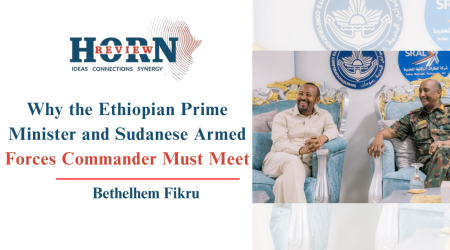
For Ethiopia, hosting this meeting extends an established mediating role. Ethiopia brokered the original 1972 Addis Ababa Agreement that first ended Sudan’s civil war, helped write the 1994 Declaration of Principles that eventually produced the 2005 Comprehensive Peace Agreement, and was the only country both Khartoum and Juba trusted to police the buffer zone in Abyei. When Sudan’s 2019 transition needed an outside broker, the African Union turned to Addis Ababa, not Cairo or Riyadh. That legacy, built on geography, AU headquarters, IGAD status, and an absence of sectarian stakes in Sudan’s internal fights, is Ethiopia’s actual comparative advantage as a mediator.
Sudan’s civilians have shown, twice now, that they can agree on what they refuse. That is a real achievement, but it is not yet a peace process. What would make it one is unglamorous: a monitoring body with a mandate to name violators, a timeline for extending the same accountability track for both the belligerents, the port Sudan defacto government to RSF-aligned political forces, and a single interlocutor authorized to actually negotiate once talks with the SAF and the RSF begin.
The 2019 coalition never built that machinery. It could specify what it rejected with clarity and force, yet it never established how its members would hold one another, or the guns, to the promises they made. Until the current civilian convergence closes that gap, its position paper will remain a powerful statement of refusal rather than a workable architecture for peace.
Tsega’ab Amare, Researcher, Horn Review