What Al-Burhan’s Internal Consultations Actually Signal
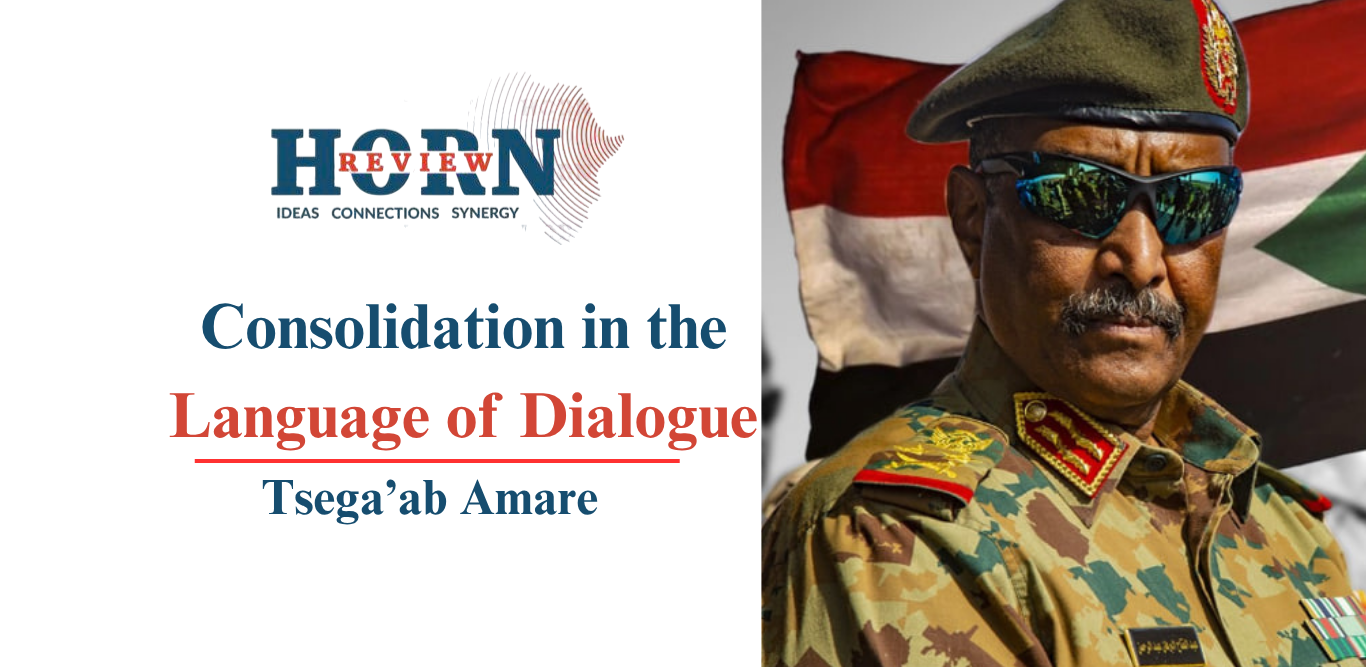
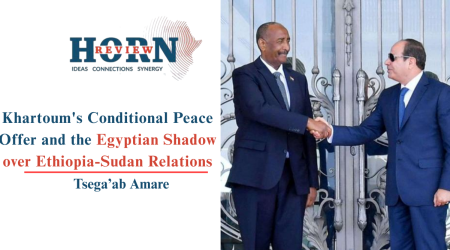
Over the past several weeks, General Abdel Fattah al-Burhan has held a series of unannounced, low-profile meetings with political blocs, Sufi leaders, tribal and native administration figures, resistance committees, academics and independent professionals. The stated purpose is to lay groundwork for a domestic Sudanese-Sudanese dialogue conference that could convene as early as August.
Reporting on the meetings, corroborated across Al Jazeera and Sudan Tribune, converges on a common set of particulars: proposals to suspend death-penalty prosecutions against opposition figures chiefly Somoud-aligned defendants including former Prime Minister Abdalla Hamdok who face charges of war crimes and undermining the constitution, a curbing of state media campaigns against political opponents, and an independent preparatory committee empowered to set the conference’s agenda, participants, venue and timing.
Al Jazeera’s report, sourced to anonymous political contacts, frames the consultations as having produced broad agreement on these steps. Sudan Tribune’s account, drawing on a Somoud official present at one meeting, tells a more contingent story: al-Burhan informed political figures in late July that he had reached out to Somoud leadership with concrete inducements, including lifting restrictions barring some alliance leaders from operating inside Sudan. Senior Somoud figures remain unpersuaded, associating the initiative with the military authorities who took power in the October 2021 coup, engagement under duress rather than endorsement.
The Quintet mechanism has run its own parallel consultations since an April Berlin conference and June 3–5 talks in Addis Ababa. The latest round of that track, opened July 29, reportedly failed to bridge differences over conference arrangements, and Somoud again did not attend. Two internationally watched processes are now underway simultaneously, one Port Sudan-led and domestic, one Quintet-sponsored and external a duplication that itself signals how contested ownership for the dialogue remains.
Regional patronage sits underneath both tracks, Saudi Arabia has hosted al-Burhan repeatedly in Jeddah through 2026, and Riyadh and Cairo have jointly pushed Port Sudan to accept an internationally backed roadmap. Sources with direct knowledge of the process, who described the interactions to Horn Review, say that backing extends further: Riyadh and Cairo have signaled support for the dialogue initiative itself, and contingency planning exists to convene the conference outside Sudan, potentially in Saudi Arabia, if civilian blocs continue resisting a Port Sudan-controlled venue.
The timing follows, by less than a month, a Port Sudan court’s decision to sentence RSF commander Mohamed Hamdan “Hemedti” Dagalo and fifteen senior RSF figures to death in absentia for war crimes and genocide tied to the 2023 killing of West Darfur’s governor. Regional coverage was candid about the verdict’s dual character: a judicial response to real atrocities, and a marker in a legitimacy race between the SAF rebuilding state institutions and the RSF that has built parallel courts and a self-declared Government of Peace and Unity. Read together, the sentencing and the dialogue push look like two fronts in one campaign judicial and political, to convert battlefield gains into durable legitimacy.
Al-Burhan has been explicit that the RSF’s Tasis coalition and the National Congress Party will not take part, framing eligibility around forces whose hands are, in his words, not stained with blood which his own record does not obviously satisfy. Independent of that framing, a separate civilian project has been building since December 2025: the Nairobi Declaration, signed by the Sudanese Congress Party, the National Umma Party, Somoud, and Abdel Wahid al-Nur’s Sudan Liberation Movement, among others. Al-Nur is a notable signatory his SLM-AW faction, which controls Jebel Marra in Darfur, has historically rejected top-down settlements, including the Doha and Juba agreements, making his participation in a joint civilian framework a departure worth tracking.
According to Horn Review source, al-Burhan’s outreach to Hamdok specifically functions in part as an attempt to fracture that Nairobi bloc both to extend the domestic dialogue’s reach into parts of northern and central Sudan where Somoud retains sympathy, and to lobby the African Union, the United States and the EU to recognize a SAF-led framework over the rival Nairobi track. The source characterized this, in their own assessment, as another legitimacy contest rather than a genuine opening. That reading is corroborated only indirectly: an AU Commissioner’s recent public endorsement of the government’s plan drew a sharp rebuke from Somoud, which accused the Commission of abandoning its neutrality evidence of exactly the kind of institutional pull the source described, even without confirming a deliberate strategy behind it.
Sudan has run something close to this experiment before. Bashir’s 2014–16 National Dialogue was announced unilaterally, boycotted by most opposition parties, and later assessed by the International Crisis Group as a top-down exercise lacking legitimacy; eighteen of twenty-one participating parties suspended involvement before it closed with a National Document that functioned as legitimation rather than transition. A new process convened under comparable conditions such as an incumbent authority setting terms, contested inclusion, unverified confidence-building promises inherits a real burden of proof.
That burden is compounded by reversibility. Suspending charges and easing media campaigns are measures the same authority that grants them can withdraw, and nothing in the reporting describes binding mechanisms either legal, institutional or international that would make reversal costly. Absent those, the steps become signals of intent not structural change.
For Ethiopia, the stakes are not abstract. The Sudan-Ethiopia border is a shared zone where developments on either side compound each other. Ethiopia hosts Sudanese refugees across Benishangul-Gumuz and Amhara amid a continuing flow of returnees, alongside deeper interests of a shared border and Blue Nile hydrological interdependence that make Sudanese fragility a direct Ethiopian concern. Renewed federal-Tigrayan clashes sent projectiles into refugee camps on the Sudanese side of the border in early August, wounding refugees already displaced once. A settlement that entrenches SAF primacy under a civilian veneer would do little to stabilize that border and would set a template, military victory dressed as national dialogue, that other regional militaries are positioned to notice.
What would move this from theater to substance is visible in the pattern already forming: an AU Commissioner willing to bless the process ahead of implementation, a Quintet track that stalled the same week al-Burhan’s own track claimed agreement and reported contingency planning to hold the conference on Saudi soil if Sudanese civilians won’t come to it inside Sudan. Each is a small bet that legitimacy can be assembled from outside pressure and inside inducement faster than it can be earned through follow-through. That bet has paid off for Sudanese authorities before Bashir’s National Document survived on paper long after the process that produced it lost the room. Whether this dialogue breaks that pattern or repeats it will be visible well before the conference itself convenes, in whether the preparatory committee, once named, answers to the people in it or to the man who convened them.
Absent those markers, the consultations now underway are best read not as the beginning of Sudan’s political transition but as its most recent attempt to make a military outcome look like one.
By Tsega’ab Amare, Researcher, Horn Review


Comment (1)
[…] strategy, which could be termed as consolidation dressed as dialogue, holds a history behind it. Omar al-Bashir ran a similar experiment between 2014 and 2016, a […]