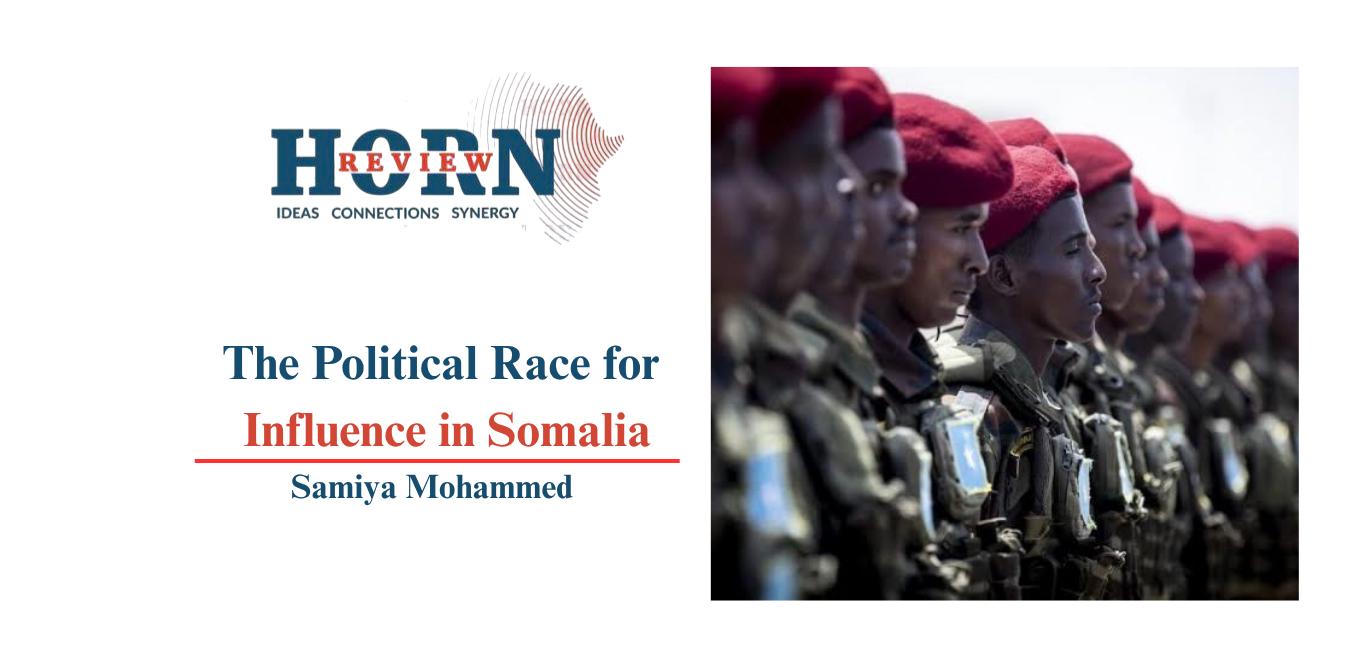
If Somalia has formally approached Turkey about assuming a greater role in the country’s security policy particularly as the African Union Support and Stabilization Mission in Somalia faces acute funding shortfalls, the implications would extend routine diplomatic engagement. Should such a request prove genuine and lead to a tangible arrangement it could mark the evolution in Somalia’s external security posture since the initial deployment of AU peacekeepers nearly two decades ago. It would also strongly suggest that Turkey is to become the preeminent external security actor in the Horn.
The United States has scaled back its financial backing for international stabilisation efforts, donor fatigue is evident and AUSSOM continues to be with persistent budgetary uncertainty. In this context Turkey appears to be one of the few external actors with both the stated political will and the established military presence to meaningfully expand its involvement. This possibility should not be viewed simply as a bilateral security agreement because it reflects a geopolitical realignment in which it is well positioned to capitalize on a void created by the gradual retreat of traditional Western partners and the weakening of multilateral peacekeeping mechanisms.
The prospective expansion of Turkey’s security role in Somalia rests on a foundation of prior investment and operational experience. Turkish personnel already operate within Somali defence structures, supply equipment, conduct intelligence exchanges and maintain a permanent logistics. In this light assuming additional responsibilities would not require building capacity from scratch but rather reallocating and scaling existing assets. This is not whether Turkey possesses the material means but whether the political will to absorb the associated liabilities will persist over the long term.
The evolution of Turkey’s role in Somalia reflects a sustained pattern of incremental engagement, wherein humanitarian initiatives preceded infrastructural investment which in turn facilitated defence collaboration. A more comprehensive security mandate would present the logical culmination of this sequence embedding Turkish institutions deeply within Somali state structures. The resulting influence over training, logistics, and operational planning would not only extend turkeys reach across the Horn of Africa but also render its partnership increasingly integral to Somali security over the long term.
As traditional contributors scale back their financial commitments and multilateral peace operations struggle with sustainability, Turkey faces diminished competition for a leading security role. This shift reflects divergences in appetite where some governments have grown wary of extended overseas deployments,turkey has demonstrated a sustained readiness to invest in regions where geopolitical returns are perceived to justify the outlay. Nevertheless the substitution of one external security provider for another raises a separate set of questions about whether such arrangements ultimately serve the enduring stability of the host state.
Somalia’s modern political experience offers reasons for caution regarding external security guarantees. Foreign military presences have typically provided a measure of stability without meaningfully altering the structural conditions that perpetuate conflict. They have frequently enabled the postponement of difficult domestic political settlements while offering only temporary reductions in violence. External military capabilities may degrade insurgent capacities but they cannot construct effective institutions, mediate political divisions or establish the administrative infrastructure required for sustainable statehood. The insurgency’s endurance is attributable to deeper factors like political fragmentation, communal rivalries, institutional weakness and the state’s limited authority outside central areas. These conditions are not amenable to resolution through military means regardless of the external actor involved.
Indeed foreign military interventions often create their own unintended consequences. Insurgent organizations have consistently exploited the presence of foreign forces as propaganda tools portraying governments as dependent upon outside powers rather than accountable to their own populations. This has been played by multiple phases of Somalia’s conflict regardless of whether foreign troops operated under African Union or other international mandates. There is little reason to assume Turkish forces would be immune from these realities. If Somalia relies upon Turkish military leadership to secure its territory, train its forces, conduct major operations and protect infrastructure the distinction between partnership and dependency becomes blurred and Whether or not such an outcome is intended perceptions matter in delicate political environments.
More over The prospect of an expanded external security role invites reflection on the meaning of sovereignty in practice. Sovereignty is realised through the capacity to maintain internal order without external dependence. When security provision becomes the domain of a foreign military presence, the operational content of sovereignty diminishes even as its formal expressions remain unchanged. A state may continue to exercise nominal authority over civilian affairs while security decisions become aligned with the priorities of its external guarantor.
Such concerns become even more important even in periodic discussions regarding Turkish security arrangements extending into the future. Regardless of the legal terminology employed agreements that institutionalize extensive foreign military influence over national security inevitably invite comparisons with protectorate style relationships. Even if both governments characterize such arrangements as partnerships, the imbalance of capabilities cannot be ignored. This does not imply that Turkey’s objectives are uniquely malign. Great powers have historically pursued influence through security partnerships because they generate tangible advantages. Military access, naval positioning, intelligence cooperation, diplomatic leverage, commercial opportunities and regional prestige all represent legitimate geopolitical interests.
An assessment must acknowledge Turkey’s substantial investments in Somalia’s reconstruction which span infrastructure, healthcare, education, humanitarian aid and military modernisation. This multidimensional engagement has produced outcomes that are not easily matched by external actors whose involvement has remained largely confined to security cooperation. At the same time the continuation and expansion of this presence is driven by considerations that extend development assistance.
Assuming broader responsibility for Somalia’s security would expose Turkish personnel, facilities, and economic assets to intensified attacks from Al-Shabaab and other militant actors. Maintaining a larger long term military deployment requires sustained financial resources, political commitment, and public support within Turkey. Every expansion of responsibility increases the potential costs of failure. Stabilizing Somalia remains one of the most complex security challenges on the African continent and no external power has demonstrated an ability to solve it through military means alone. Ultimately the central issue is not whether Turkey can temporarily strengthen Somalia’s security. It almost certainly can. The more important question is whether expanded Turkish involvement produces a genuinely self sufficient Somali state or just replaces multilateral dependency with bilateral dependency.
A realistic assessment suggests that the most probable outcome lies somewhere between these extremes. An immediate Turkish takeover of all security responsibilities appears unlikely given the operational, financial, and political complexities involved. However more plausible scenario involves an incremental expansion of Turkish advisory roles, military training, intelligence cooperation, naval operations and targeted counterterrorism support as AUSSOM gradually contracts. Such an approach could provide Somalia with valuable breathing space. However breathing space should not be mistaken for a permanent solution. No foreign military partnership regardless of competence can substitute for the difficult work of building accountable institutions, reconciling political divisions, strengthening governance and establishing security forces whose legitimacy derives primarily from Somali society rather than foreign sponsorship.
The current geopolitical moment undoubtedly favors Turkey. History suggests that foreign security umbrellas often outlast the crises that justified them. They stabilize governments but they frequently delay the emergence of self reliant states. If Somalia’s answer to the shortcomings of AUSSOM is simply to replace one external guarantor with another, the country risks exchanging one form of dependency for another. Turkey would gain a stronger presence in Africa. Somalia however may discover that changing punters is not the same as achieving sovereignty.
By Samiya Mohammed, Researcher, Horn Review