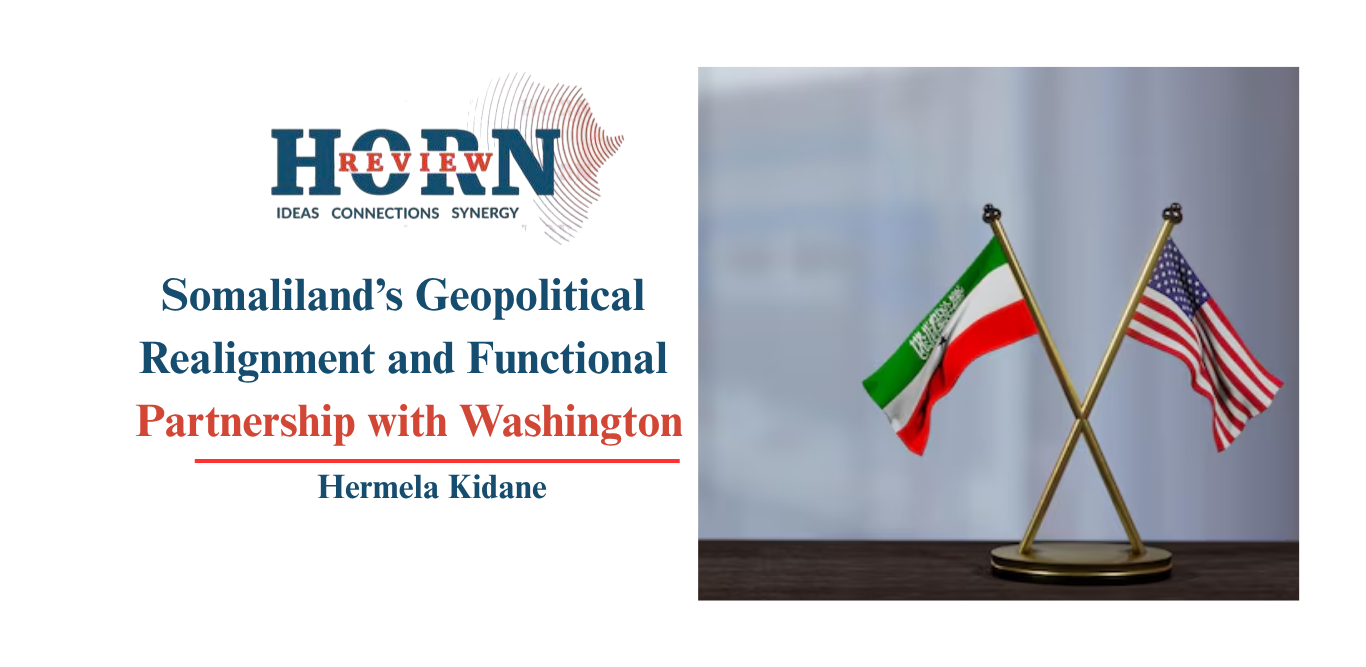
In the market place of global diplomacy where established states trade on sovereign recognition and military might the Republic of Somaliland arrives with a different currency and empirical statehood. Its latest lobbying campaign in Washington, D.C. orchestrated under President Abdirahman Irro is a proposition of decisive value. Somaliland is asking American policymakers to look past the brittle formalism of juridical recognition and see something rarer in the Horn which is a territory that governs itself effectively, holds competitive elections and controls its borders. This is statehood not as a legal status but as a lived demonstrable fact. To understand why this campaign might succeed where decades of quiet diplomacy have stalled it should be traced through the arc of historical U.S-Somaliland engagement weigh the analytical power of the Taiwan parallel and reckon with the Berbera sitting astride.
Somaliland’s journey since its 1991 declaration of independence has been defined by the construction of relative stability. Following the dissolution of the union with Somalia, Somaliland developed distinctive institutions including a constitution approved by referendum in 2001 and multiple peaceful transfers of power through competitive elections. This record is notable contrast to challenges in the Horn of Africa. Early U.S policy adhered to prevailing norms favoring the territorial integrity of recognized states. however operational realities fostered pragmatic channels. In the period following the September 11 attacks Somaliland’s consistent efforts against militant networks positioned it as a reliable actor in regional counterterrorism structures. These quiet engagements focused on intelligence sharing and coastal security established a foundation of functional cooperation grounded in shared interests rather than formal diplomatic status. The current lobbying effort builds upon this legacy seeking to formalize and expand practical collaboration.
A central element of Somaliland’s approach lies in its reference to the Taiwan precedent. Both present consolidated democratic polities exercising sovereign functions over defined territories. however operating without universal diplomatic recognition due to the claims of larger recognized states. The Taiwan Relations Act of 1979 provides a statutory mechanism for engagement across security, economic and diplomatic domains without altering formal sovereignty positions. This demonstrates the feasibility of substantive partnership calibrated to legal constraints while delivering tangible value. Somaliland’s advocacy advances a comparable pathway deepened security coordination, independent economic linkages and direct dialogue that acknowledge operational realities on the ground. Analyses of unrecognized states have highlighted such arrangements as innovative adaptations within the international system allowing de facto entities to contribute meaningfully to regional order.
The centerpiece of this proposition is the port of Berbera with direct access to the Bab el-Mandeb Strait. This facility supported by investments offers a deep water harbor and an airfield with one of Africa’s longest runways. In an era of maritime insecurity including disruptions from Houthi activities Berbera presents a stable logistical node for enhancing freedom of navigation, intelligence gathering and rapid response capabilities. Recent visits by senior U.S. Africa Command officials highlights growing interest in its operational potential. For U.S such access would complement existing arrangements in the region providing redundancy and flexibility in a critical maritime corridor. Somaliland’s offer aligns its locational advantages and governance record with U.S objectives in maritime security and countering transnational threats.
Historical U.S. engagement with Somaliland has consistently reflected appreciation for its contributions to stability. Congressional initiatives including the Republic of Somaliland Independence Act introduced in 2025 and provisions in foreign affairs legislation for enhanced cooperation signal bipartisan recognition of these assets. Somaliland’s maintenance of relations with Taiwan further aligns with broader efforts to foster partnerships among democratic actors. These elements collectively position the lobbying campaign as an extension of established patterns rather than a departure from them.
Formal diplomatic recognition in the immediate term faces structural hurdles grounded in international norms. The campaign appears oriented toward a more attainable outcome the institutionalization of a resilient non recognized partnership. Incremental steps expanded security dialogues, targeted economic initiatives and transparent military to military cooperation could generate a dense network of functional ties. This would reflect a convergence of interests where demonstrated capacity and geographic value inform policy calibration. Congressional support and executive branch engagements provide mechanisms to advance this path while preserving diplomatic equities.
The implications of deep U.S and Somaliland partnership extend to the Horn of Africa’s security infrastructure. Strengthened cooperation at Berbera would enhance resilience along essential sea lanes supporting counter piracy and counterterrorism objectives. It would embed a stable democratic partner more fully into regional structures potentially improving maritime domain awareness and response options. For Somaliland such ties promise accelerated development and reinforced institutional gains. Regionally the evolution could encourage constructive recalibrations including eventual direct negotiations between Somaliland and Somalia on practical matters of mutual concern.
This illustrates a lesson in contemporary rule de facto performance in governance and security can generate substantial leverage within the international system. In an environment shaped by great power competition and transnational challenges partnerships grounded in empirical realities and shared interests offer pathways to durable stability. Somaliland’s U.S initiative pursued with focus and clarity highlights the potential for peripheral actors to contribute substantively to global order when their capabilities align with the priorities of established powers. The context will depend on the continued alignment of these mutual interests and the steering of diplomatic nuances ahead.
By Hermela Kidane, Researcher, Horn Review