
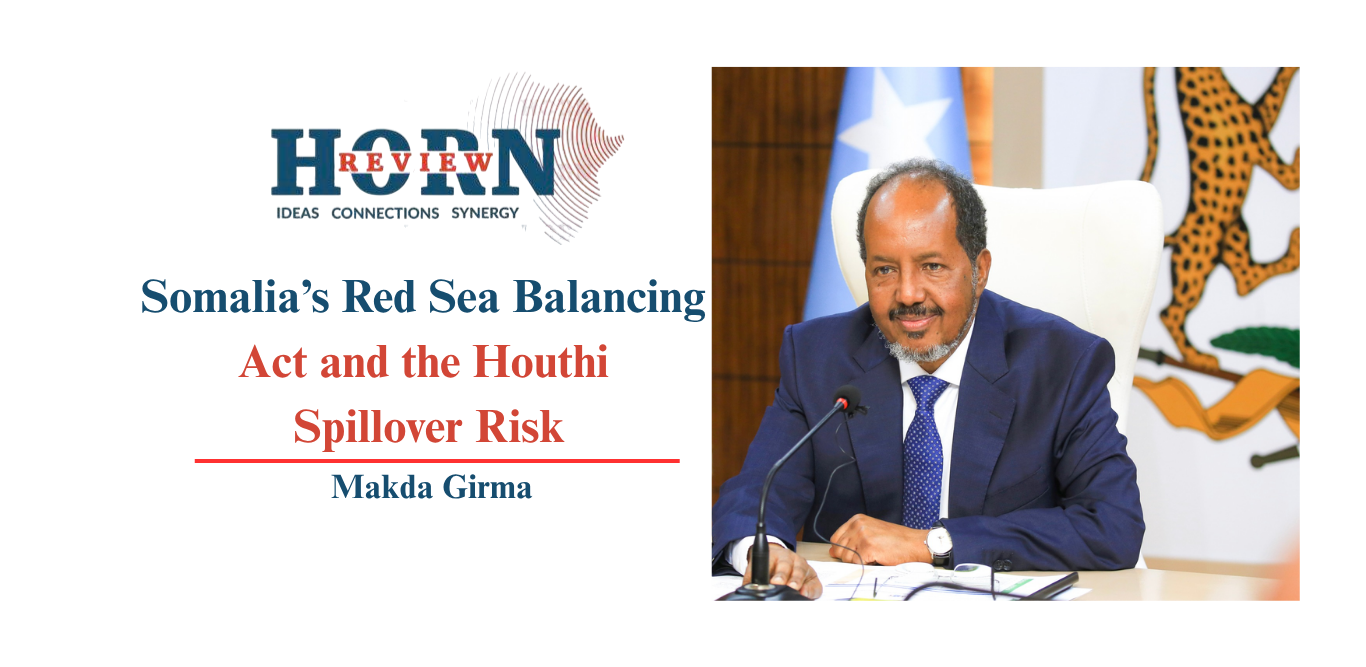
Somalia’s Red Sea Balancing Act and the Houthi Spillover Risk
Somalia’s exposure to the Red Sea crisis is not only a question of geography. It is a question of state survival, food security, maritime sovereignty, and regional alignment. The country sits along one of the most sensitive maritime corridors in the world, yet its economy remains deeply vulnerable to external shocks. Somalia imports all of its oil and most of its cereals, leaving the country exposed when conflict disrupts energy markets, food prices, and shipping routes. In June 2026, the World Food Programme warned that an additional 2.5 million Somalis could become unable to afford a basic food basket, while almost 60 percent of households may be unable to meet essential needs, up from 47% in 2025.
This is where the Red Sea crisis becomes a Somali domestic crisis. When global fuel prices rise, the effect moves through the entire economy. It raises the cost of transport, water trucking, generators, food distribution, market access, and humanitarian delivery. WFP’s Somalia emergency update says 6.5 million people are projected to face crisis levels of hunger or worse in 2026, while Middle East conflict has driven up food prices, sharply increased fuel costs, and disrupted humanitarian supply chains. For a country that depends heavily on imported food and energy, external disruption quickly becomes internal pressure.
Somalia’s export economy is also tied to Arab and Gulf markets, especially through livestock. Trade data shows that Somalia’s major export destinations include the United Arab Emirates, Oman, and Saudi Arabia, while Somalia’s livestock sector remains highly dependent on Gulf demand. This makes Somalia’s coast important not only to Mogadishu, but also to Gulf states whose economic and security interests are connected to shipping reliability, livestock trade, energy routes, and food security.
Against this background, Turkey’s role has become central. In 2024, Somalia and Turkey signed a defense and economic cooperation agreement under which Ankara would provide maritime security support to help Somalia defend its territorial waters. Turkey had already provided military training to Somalia for more than a decade and that the agreement aimed to help Somalia combat illegal and irregular activity in its waters. The arrangement is a ten year partnership in which Turkey would become a key partner in Somalia’s maritime security and law enforcement, including the reconstruction, equipping, and training of the Somali navy.
For Mogadishu, this is not simply a defense agreement. It is a sovereignty strategy. Somalia has long struggled with illegal fishing, piracy, terrorism, and weak maritime enforcement along Africa’s longest coastline. A 2026 Africa Defense Forum report says Somalia loses about 300 million dollars a year to illegal, unreported, and unregulated fishing, while terrorism, piracy, weak governance, and ineffective law enforcement continue to undermine coastal security. Turkey’s support therefore gives Somalia a state security partner at a moment when the Red Sea, Gulf of Aden, and Indian Ocean are becoming more militarized.
Turkey’s intervention also has a direct Ethiopia and Somaliland subtext. Somalia announced the Turkey defense deal after Ethiopia signed its January 2024 memorandum with Somaliland, which Mogadishu viewed as a violation of Somali sovereignty. This Turkey deal appeared aimed at deterring Ethiopia’s effort to gain access to the sea through Somaliland, and that Turkey would provide training and equipment to the Somali navy to protect Somali waters from terrorism, piracy, and foreign interference. In this sense, Turkey’s maritime role is not only about pirates and illegal fishing. It is also Mogadishu’s answer to Ethiopia’s naval ambitions and Somaliland’s external diplomacy.
Turkey’s military footprint gives this partnership added weight. This remains to be Turkey’s largest overseas military base in Mogadishu which was opened in 2017 and continues to train Somali military and police forces. The base, often known as Camp TURKSOM or Anatolia Barracks, has become a symbol of Ankara’s security role in Somalia. Turkey’s role combines training, maritime security, counterterrorism support, energy interests, and political backing.
Turkey is not the only major outside actor entering Somalia’s security space. Egypt and Eritrea have also become central to the new Nile Horn axis around Somalia. This development has become one of the most important regional shifts since the Ethiopia Somaliland memorandum. Egypt, locked in a long running dispute with Ethiopia over the Grand Ethiopian Renaissance Dam, has capitalized on the rift between Mogadishu and Addis Ababa. Reuters reported in August 2024 that Egypt sent weapons and ammunition to Somalia after signing a security pact with Mogadishu, and that Cairo had also offered troops for the new African Union mission in Somalia.
Egypt’s entry changes the meaning of Somalia’s security partnerships. Turkey gives Mogadishu a maritime and military shield. Egypt gives Mogadishu a diplomatic and military counterweight against Ethiopia. Eritrea adds another layer because it also has tense relations with Ethiopia and an interest in checking Addis Ababa’s regional ambitions. In October 2024, the leaders of Egypt, Eritrea, and Somalia agreed to strengthen cooperation for the Somali army to fight terrorism and protect Somalia’s land and sea borders. Reuters noted that this would unsettle Ethiopia and that Somalia’s dispute with Ethiopia had drawn Mogadishu closer to Egypt, which has its own dispute with Addis Ababa over the Nile dam.
This makes Somalia part of a wider Red Sea and Nile security theater. The country is no longer only a weak coastal state exposed to shipping disruption. It is becoming a chessboard for overlapping rivalries: Turkey’s expanding Red Sea role, Egypt’s confrontation with Ethiopia over the Nile, Somalia’s dispute with Somaliland, and Gulf competition over ports and influence. Mogadishu is actively using external partnerships to strengthen its bargaining position, but the growing number of actors makes it harder to keep counterterrorism, maritime security, and sovereignty disputes separate.
Somalia’s maritime space is also being pulled into a Houthi and Al Shabab risk environment. The Africa Center for Strategic Studies reported in 2025 that growing collaboration between Al Shabaab and the Houthis is increasing maritime and land based threats on both sides of the Gulf of Aden. It also noted that the Houthis had targeted more than 100 commercial vessels since November 2023 using drones, missiles, and small boats.
The most important point is the pathway. Al Shabab does not need to become a formal Houthi proxy for the relationship to matter. Even limited cooperation can shift the threat environment. Carnegie’s 2025 analysis argues that the Houthis have developed contacts with Al Shabab and Islamic State in Somalia to diversify supply chains, access more sophisticated weaponry, and affect maritime security in the Gulf of Aden and Bab el Mandeb. It also reports that Houthi representatives allegedly coordinated intelligence gathering and ship geolocation in northeastern Somalia in exchange for suicide drones and technical training.
This relationship creates an adaptive threat ecosystem. The Houthis benefit from Somali networks through mobility, smuggling corridors, local intelligence, and potential manpower. Al Shabaab benefits through weapons, training, and new revenue opportunities. The danger is not only ideological alignment, but practical cooperation across the Gulf of Aden.
Puntland is central to this ecosystem. Northern Somalia, especially coastal areas around Bosaso and Qandala, is repeatedly identified as important in the Yemen Somalia illicit maritime geography. Carnegie points to northeastern Somalia as a site of Houthi outreach and notes that Puntland security forces seized drones allegedly dispatched by Ansar Allah in August 2024. This makes Puntland important not only because of its coastline, but because of its political distance from Mogadishu.
That political distance is a major weakness in Somalia’s maritime strategy. Somalia’s federal architecture is deeply fractured, and maritime enforcement depends on cooperation between the federal government, federal member states, local security forces, clans, port authorities, and international partners. In March 2024, Puntland said it had withdrawn from Somalia’s federal system and would govern itself independently until disputed constitutional amendments were approved through a nationwide referendum. If Mogadishu signs a coast guard and maritime enforcement agreement with Turkey, but Puntland remains politically distant from the federal government, a unified coast guard strategy becomes difficult to execute.
This is the security gap that outside actors often underestimate. Somalia’s coastline cannot be secured from Mogadishu alone. A Turkish trained Somali navy may strengthen the federal state, but it cannot automatically resolve political disputes with Puntland or Somaliland. That internal fragmentation helps explain why smuggling, illegal fishing, piracy, and militant maritime movement remain persistent problems.
Houthi attacks have also coincided with renewed piracy activity off Somalia’s coast. In 2024, more than 20 attempted hijackings have occurred since November and that Somali pirate networks were taking advantage of the distraction caused by Houthi strikes farther north to return to piracy after years of dormancy. More recently, there was a suspected pirate hijacking of a fuel tanker off northeastern Somalia, between Hafun and Bandarbeyla in Puntland, raising renewed concern about sporadic piracy incidents.
Piracy, smuggling, Houthi attacks, and Al Shabab adaptation now overlap in the same maritime space. This overlap matters for counterterrorism planners and donors. The issue is not only whether pirates are formally linked to Al Shabaab. The issue is whether insecurity at sea creates revenue, mobility, and intelligence opportunities for armed actors on land.
This is where Gulf states and Iran enter the analysis. If the Houthis become more entrenched in the Horn of Africa through Somali networks, Gulf states will have to reassess their Somalia policy. Saudi Arabia, the UAE, Qatar, and Oman already view Somalia through ports, livestock, shipping, anti piracy, and Red Sea influence. A stronger Houthi presence across the Gulf of Aden would shift the issue from influence competition to direct security containment. Gulf states would have to look not only at who controls Berbera, Bosaso, or Mogadishu politically, but also at whether fragmented Somali coastlines could become transit zones, intelligence corridors, or launchpads for threats against shipping and energy routes.
Iran faces its own strategic calculation. A deeper Houthi footprint in Somalia could give Tehran indirect leverage across the Gulf of Aden and Bab el Mandeb. But visibility also creates exposure. A low visibility smuggling corridor can be useful. A visible Houthi Al Shabab axis could trigger a broader regional response from Gulf states, Turkey, the United States, and European security actors.
The AUSSOM funding crisis brings all of these dynamics together. AUSSOM became effective on January 1, 2025, replacing the previous African Union mission framework and receiving authorization through UN Security Council Resolution 2767. Yet the mission is already under financial strain. To further the strain in July 2026 the United States plans to prevent continued UN logistical support for AUSSOM from next year, a decision officials warned could threaten the nearly 12,000 strong mission. The mission relies on UN support for food, water, fuel, medical services, and troop transport.
The funding problem is geopolitical as well as financial. The latest African Union mission faces funding challenges and regional disagreements over troop contributors, with Somalia wanting Egyptian troops in the mission but not Ethiopian troops because of the Ethiopia Somaliland dispute and the Nile dam rivalry between Egypt and Ethiopia. In December 2024 Egypt had stated it would contribute troops to AUSSOM, as ties between Cairo and Mogadishu grew closer amid tensions with Ethiopia over Somaliland.
This complicates donor calculations. AUSSOM is supposed to be a counterterrorism mission against Al Shabab. But if Egyptian troops replace or sideline Ethiopian troops in Somalia, the mission risks being viewed through the lens of Egypt Ethiopia rivalry. A mission designed to stabilize Somalia could therefore become entangled in a regional contest between Cairo and Addis Ababa.
This helps explain the wider unease among donors. Washington’s diplomatic note criticized Somalia’s internal rivalries and political infighting, saying they undermine the fight against Al Shabab and ISIS. Donors do not only face a funding gap. They face a strategic dilemma over whether AUSSOM can remain focused on counterterrorism while Somalia’s security politics become increasingly regionalized.
For Mogadishu, the balancing act is becoming harder. Somalia wants Turkish maritime support, Egyptian backing against Ethiopia, Gulf investment, Western counterterrorism aid, African Union stabilization forces, and recognition of Somali sovereignty over Somaliland related disputes. But these goals do not always fit neatly together. Turkey strengthens Somalia’s maritime sovereignty. Egypt strengthens Somalia’s diplomatic hand against Ethiopia. Gulf states bring money, ports, and influence. Western donors bring counterterrorism support, but also conditions and frustration. Federal member states such as Puntland complicate national execution. Al Shabab exploits every gap.
The policy implication is clear. Somalia’s maritime security, food security, federal politics, and counterterrorism challenges can no longer be treated as separate files. A disruption in the Red Sea can raise Somali food prices. Higher fuel costs can weaken humanitarian delivery. Weak maritime control can support smuggling and piracy. Smuggling can strengthen Al Shabab. Al Shabab’s adaptation can complicate AUSSOM’s transition. Egypt’s entry can deter Ethiopia, but it can also regionalize Somalia’s security crisis. Puntland’s autonomy can expose the limits of Mogadishu’s maritime agreements. Gulf rivalries can either help stabilize the coast or deepen fragmentation.
Somalia is not only being affected by the Red Sea crisis. It is also trying to use the crisis to strengthen its own position. Mogadishu is working with Turkey for maritime security, with Egypt to balance Ethiopia, with Gulf states for economic ties, and with Western partners for counterterrorism support. But managing all of these relationships is becoming more difficult as the Red Sea and Gulf of Aden become more militarized.
By Makda Girma, Researcher, Horn Review

RELATED
Posts
7
Oct
“Decaffeinated Sovereignty”: Eritrea’s One-Way Street with Ethiopia
There is a peculiar contradiction at the heart of Eritrea’s...
7
Oct
Leaked Documents Allege Sudanese Army Weapons Pipeline to TPLF-Aligned Forces as Tigray War Reignites
Leaked documents alleging a Sudanese army weapons pipeline to TPLF-aligned...
7
Oct
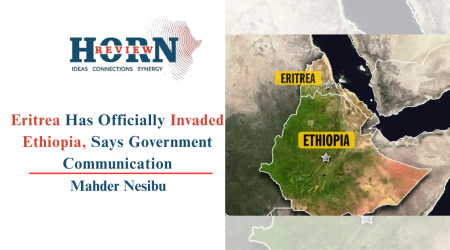
Eritrea Has Officially Invaded Ethiopia, Says Government Communication
Ethiopian Government Formally Condemns Eritrean Territorial Incursion as Its Forces...
7
Oct
Turkey, Somalia and the Transactional Reading of Alamein
The Alamein Declaration functions less as a coherent framework...
7
Oct
Somalia's Alamein Signature and the Costs of Diplomatic Alignment
The Alamein Declaration between Egypt, Sudan, Eritrea and Somalia...
6
Oct
Egypt's Nile for All, the Red Sea for Some - Except Ethiopia
The contradiction was laid out almost perfectly at El Alamein....
6
Oct
Isaias Afwerki has Long Wanted to Rule Ethiopia, Why He will Never
President Isaias Afwerki is among the most enduring figures in...
6
Oct
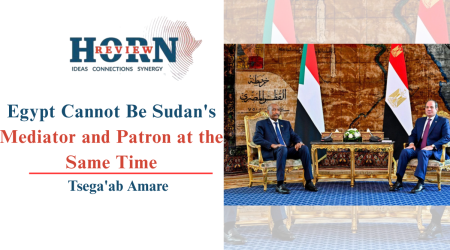
Egypt Cannot Be Sudan's Mediator and Patron at the Same Time
Abdel Fattah el-Sisi received Abdel Fattah al-Burhan in New...
6
Oct
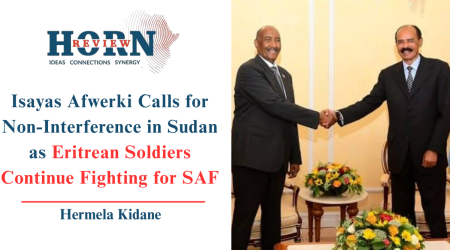
Afwerki Calls for Non-Interference in Sudan as Eritrean Soldiers Continue Fighting for SAF
At the New Alamein summit in October 2026 Eritrean...
6
Oct
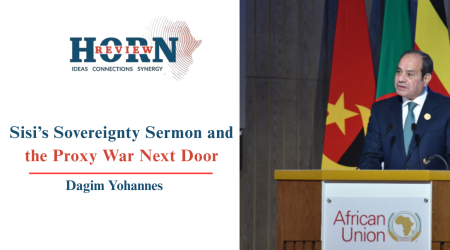
Sisi’s Sovereignty Sermon and the Proxy War Next Door
In New Alamein this past weekend, Egyptian President Abdel Fattah...