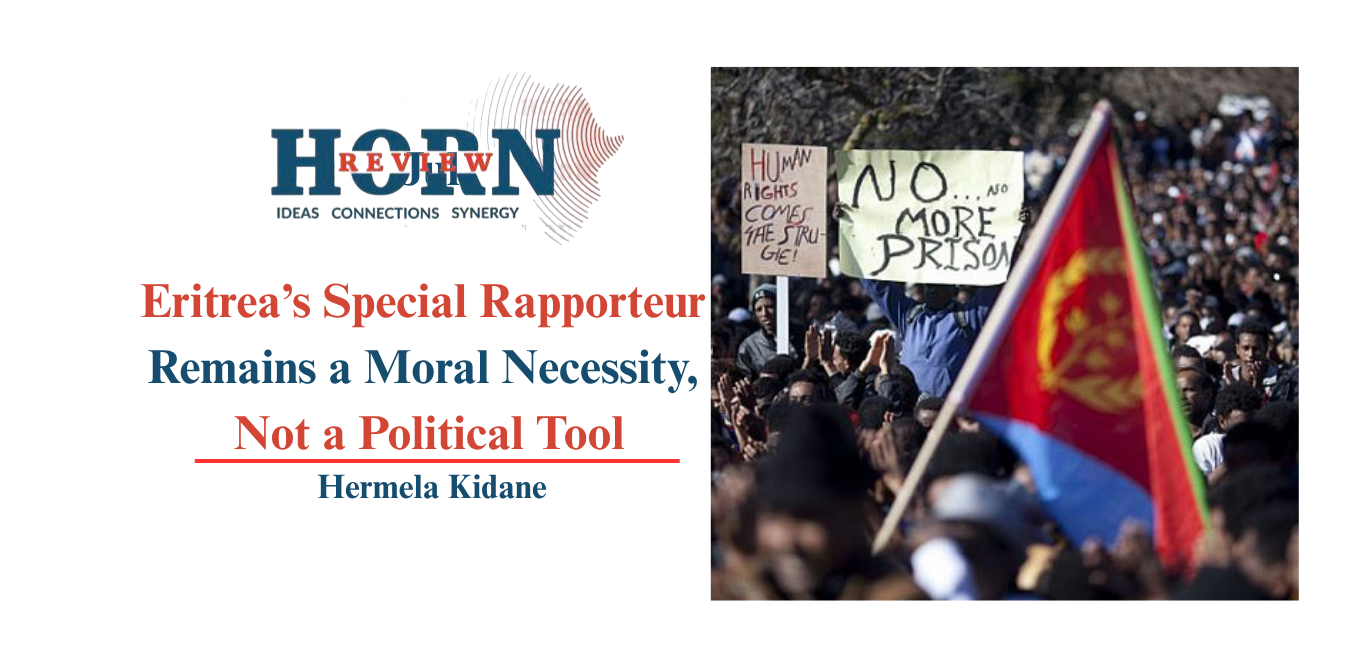
The renewal of the Special Rapporteur’s mandate on Eritrea invites a question that the persistence of international scrutiny reflects institutional habit or does it mirror an reality on the ground? Far of bureaucratic inertia the Human Rights Council’s decision to renew the mandate that the conditions which first necessitated independent oversight remain fundamentally unchanged. Year after year reporting on Eritrea reveals the same structural patterns indefinite national service that amounts to forced labor, widespread arbitrary detentions, enforced disappearances, routine torture and the systematic suppression of basic freedoms. These are not recycled accusations but documented continuities. UNHCR data consistently rank Eritrea among the world’s highest per capita producers of refugees with thousands of citizens fleeing each month across deserts and Mediterranean routes. This sustained human exodus written by Eritreans themselves with their feet stands as the most powerful and undeniable testimony to the intolerable conditions within the country.
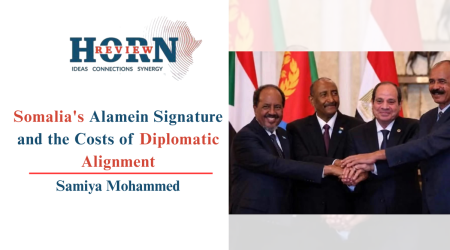
The renewal of the mandate with 23 votes in favor, 17 abstentions and six against including Burundi, China, Cuba, Egypt, India and Pakistan constitutes a necessary reaffirmation of independent oversight. These opposing votes warrant careful examination. While several states cited concerns over selectivity Egypt’s position stands out for its alignment with a strategy. Egypt has increasingly leveraged its partnership with Eritrea as an instrument to counter Ethiopia’s legitimate regional interests particularly in the Red Sea. This actions was evident in the 2024 trilateral agreement involving Egypt, Eritrea and Somalia which followed closely on the heels of Ethiopia’s diplomatic efforts to secure maritime access. By bolstering Eritrea’s stance and isolating Ethiopia, Egypt appears intent on using Eritrea as a proxy to contain Ethiopian influence rather than advancing genuine collective security for the Red Sea. Such Scheming highlights why sustained international monitoring remains essential to separate geopolitics from the urgent need for accountability on human rights.
The assertion that opposing votes defended cooperation rather than human rights inverts reality. Eritrea has rejected meaningful engagement for fourteen years, denying access to monitors, ignoring Universal Periodic Review recommendations and failing to implement reforms. Diaspora accounts from non supporters of President Isaias Afwerki describe a repressive apparatus featuring decades detentions without trial. A state declaring a mandate over after systematic non cooperation does not thereby invalidate the need for documentation it demonstrates why independent reporting remains essential. There is a clear distinction between defending human rights and weaponizing sovereignty as political language to evade scrutiny. Genuine cooperation would have rendered the mandate unnecessary long ago.
Foreign Minister Osman Saleh’s declaration that the debate is over exemplifies the defiance necessitating continued monitoring. Under international law Eritrea having joined the United Nations in 1993 cannot unilaterally dismiss mandates established by a subsidiary organ of the General Assembly. Sovereignty entails obligations under the Charter’s human rights provisions selective opt outs undermine the multilateral framework. Legal entitlement to dismissal does not exist. A state closing doors to dialogue cannot claim the process exhausted when it has refused entry.
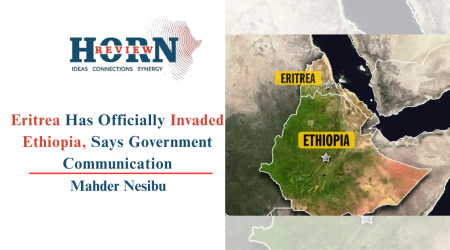
Since 2012 the mandate has addressed persistent violations even in shifting contexts precisely because abuses continue irrespective of alliances. Ethiopia’s maritime aspirations are diplomatic and legitimate for a nation of 135 million with a rapidly growing economy. Ethiopia has pursued negotiated access through mutual agreements consistent with UNCLOS transit rights for landlocked states. Claims of renewed maritime pressure distort Ethiopia’s measured position. Eritrean activists and analysts often frame it aggressively to manufacture pretexts while Eritrea endorses TPLF factions as proxies to destabilize Ethiopia and divert attention from Red Sea discussions. Eritrea’s history of contributing to Horn conflicts supporting factions in the 1998-2000 war, interventions in Djibouti, selective Al-Shabaab ties and current backing of Fano militants in Amhara establishes it as a net spoiler not victim.
Eritrea’s involvement in Sudan’s collapse is well documented including support for SAF through hosting leaders and logistical networks prolonging a war that has killed thousands and displaced millions. The 2024 trilateral agreement with Egypt and Somalia following Ethiopia’s Somaliland memorandum aimed to isolate Ethiopia and block legitimate port access rather than advance collective security. Eritrea’s refusal to join the 2020 Red Sea Council shows unilateralism at Bab-el-Mandeb. As the only littoral holdout combined with proxy activities, Eritrea exacerbates insecurity.
The European Union’s resolution properly balanced limited positive steps dialogue, training, releases with the need for sustained monitoring due to ongoing systemic violations. Cooperation does not preclude accountability when core issues persist. The mandate is not self perpetuating bureaucracy but a response to non engagement and unchanged realities. Claims of institutional self preservation lack evidence renewal reflects evidentiary demands not budgets or careers. Ethiopia’s support for the mandate aligns with its commitment to human rights norms and regional stability. Its Yes vote is not geopolitical scheming but recognition that accountability mechanisms benefit the Horn when abuses fuel instability, refugee flows and proxy conflicts. Ethiopia seeks sea access peacefully as an existential developmental necessity not a threat. Eritrea’s national service cannot be excused by external pressures international reports classify its indefinite, coercive nature militarizing education imposing sub subsistence conditions enabling abuse and punishing families as contemporary forced labor bordering on enslavement. The 2018 border opening triggered mass departures, revealing governance failures not external fabrication. No verifiable transformation justifies ending scrutiny development claims remain unverified without independent access.
Burundi’s vote against the mandate, despite Ethiopia’s warm bilateral ties reflects alignment among states wary of scrutiny rather than principled independence. Abstentions by many African states represent unfortunate hesitation not courage. Pan Africanism demands solidarity with peoples facing modern slavery like condition not regimes evading oversight. True sovereignty includes fulfilling human rights obligations outsourcing accountability weakens the continent. China, Cuba, India and Pakistan’s opposition advances shared resistance to mechanisms that could apply domestically. The Council’s credibility rests on addressing documented abuses not ignoring them for geopolitical convenience. Human rights language loses force when abused for pressure but here it documents real suffering. Eritrea’s caricature as perpetual victim ignores its agency in regional destabilization and domestic repression.
Targeted sanctions on officials overseeing the security apparatus, national service and detentions remain appropriate tools. Designed to impose costs on decision makers without broad civilian harm they signal that impunity has limits after fourteen years of defiance. In the absence of reforms they complement monitoring. The mandate’s renewal was the correct decision. It affirms that evidence of ongoing abuses refugee crises, political prisoners, forced labor outweighs narratives of politicization. For Ethiopia it supports a rules based order essential for peaceful diplomatic pursuit of maritime access and regional stability. Eritrea’s road is in genuine engagement, ending indefinite conscription, releasing detainees and ceasing proxy destabilization. Until then Geneva’s consistency reflects reality not repetition. It is clear that sustainable peace requires accountability alongside sovereignty not evasion.
By Hermela Kidane, Researcher, Horn Review