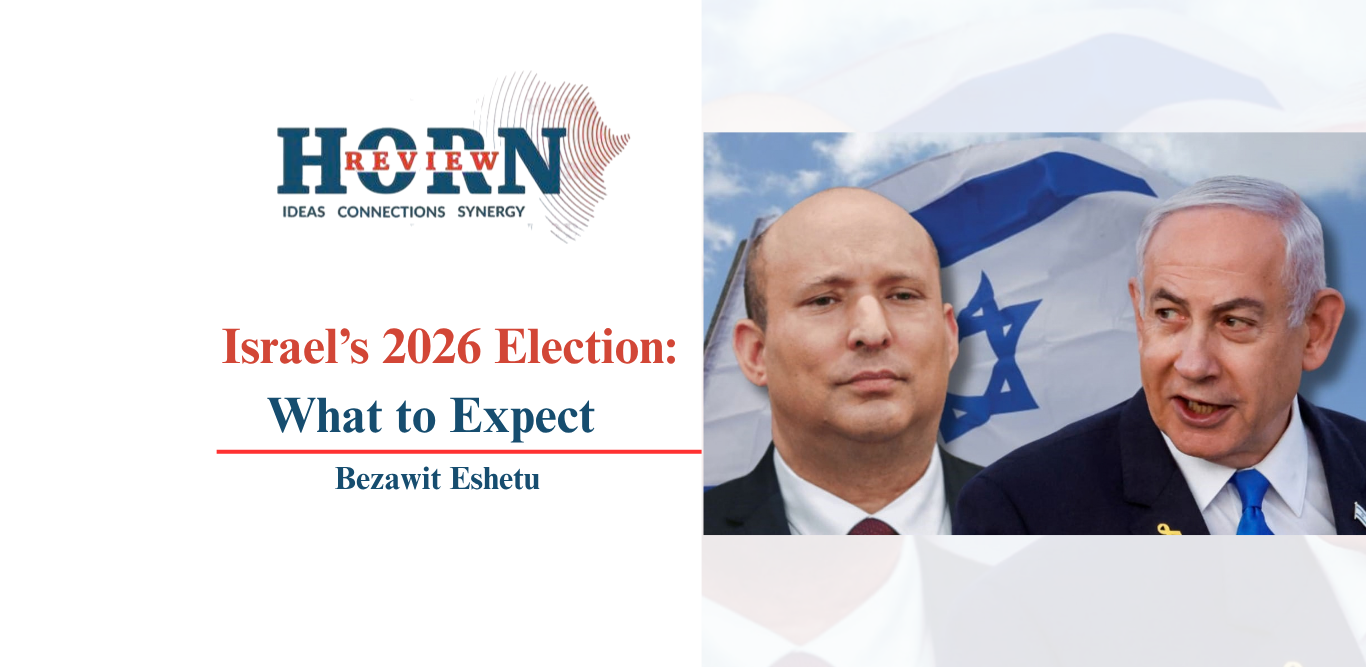
The political environment in Israel reflects a distinctly structured configuration as the country approaches the scheduled October 27, 2026 Knesset elections. At the center of this electoral realignment is Beyachad, a unified political party formed on April 26, 2026, through the merger of Naftali Bennett’s nationalist faction and Yair Lapid’s centrist Yesh Atid. Unlike earlier temporary coalitions, Beyachad functions as a consolidated single party platform intended to capture the fragmented political center and secular right.
Current polling indicates a deeply polarized electorate, with Beyachad and Likud effectively tied, each projected to win about 25 to 26 seats in the 120 seat Knesset. On a structural level, the numbers suggest that Benjamin Netanyahu’s prospects for retaining power are constrained, since his natural religious nationalist bloc has declined to an estimated 49 to 53 seats, which remains well below the 61-seat majority threshold.
By contrast, Beyachad has a viable route to a governing majority of 62 to 65 seats if it can align with Gadi Eisenkot’s Yashar party, Avigdor Lieberman’s Yisrael Beiteinu, and Yair Golan’s The Democrats. A transfer of power therefore appears highly plausible, although it remains contingent on Beyachad maintaining strict policy discipline across its internally diverse factions.
Netanyahu’s leadership model is best understood as one of tactical survival and continuous crisis management, with short-term political leverage often taking precedence over durable strategic resolution. This logic also shapes his interaction with Western governments, where calculated friction with allied capitals has frequently been used to project domestic strength. That dynamic became especially visible in early June 2026, when the escalation of Israeli airstrikes in Beirut produced significant tension with the United States.
President Donald Trump, who reportedly views Netanyahu as a war leader useful for certain military objectives, clashed directly with him over the disruption of a US brokered preliminary agreement with Iran. From Trump’s perspective, the immediate priority is a transactional and rapid settlement that would ease pressure on global energy markets and reopen the Strait of Hormuz, whereas Netanyahu has a domestic incentive to prolong military confrontation in order to claim a politically usable victory. The contrast between those objectives helps explain the intensity of the dispute.
A Bennett-led government would alter the character of Israel’s relationship with the West. Netanyahu has historically used ideological confrontation with Washington as a political instrument, whereas Bennett’s framework is more pragmatic, business oriented, and nationalist in a managerial sense. Under his leadership, Israel would likely present itself to the Trump administration as a more predictable and operationally focused partner, in part by excluding the disruptive far right elements that have often complicated Western alliance management. Such a shift would also require stricter rhetorical discipline within the diplomatic establishment.
That diplomatic change is important because recent examples of explicitly biblical and messianic language by senior Israeli diplomatic figures have generated clear friction with international actors that rely on international law and state sovereignty as their operative norms. Although Bennett’s ideological background is deeply nationalist and religious, he also recognizes the strategic costs of messianic messaging in the global arena. A Beyachad administration would therefore be expected to suppress that style of rhetoric in favor of a secular, security centered vocabulary designed to preserve the international legitimacy needed for regional defense partnerships.
This diplomatic recalibration would be closely tied to a broader shift in security doctrine, especially regarding Iran. Netanyahu’s approach has typically favored continuous tactical containment and high-risk attrition, a model intended to generate maximum pressure but one that often leaves Israel trapped in open-ended proxy conflict. Bennett’s alternative, by contrast, is the “Octopus Doctrine,” which argues that Israel should stop focusing primarily on the proxy networks at the periphery and instead target the system’s core through covert, cyber, and economic destabilization inside Iranian territory.
Yet this doctrine creates an immediate contradiction with Bennett’s effort to present Israel as a stabilizing partner to Washington. From President Trump’s perspective, the immediate Middle East priority is a transactional, rapid de-escalation that eases pressure on global energy markets and ensures the unhindered flow of shipping through the Strait of Hormuz. Striking directly inside Iran’s sovereign territory, whether through cyber sabotage or kinetic action, is arguably far more destabilizing to global markets than Netanyahu’s peripheral proxy skirmishes. A Bennett administration would therefore face the difficult task of selling an escalatory anti-Iran doctrine to a U.S. administration explicitly demanding regional quiet and economic predictability.
A similar divergence appears in the Lebanese arena. Netanyahu has generally treated Lebanon as a site for tactical deterrence and repeated airstrikes against Hezbollah infrastructure, whereas Bennett’s strategic logic treats the Lebanese state as inseparable from Hezbollah’s military apparatus. Under that view, a Bennett administration would shift from localized proxy engagements to a strict doctrine of state liability, holding the Lebanese government directly accountable for hostile action and thereby altering the rules of engagement in the northern theater.
However, translating this doctrine into operational reality exposes another severe friction point. Lebanon is a functionally bankrupt, politically paralyzed state, and holding the government liable would imply a willingness to systematically destroy state infrastructure such as power grids, bridges, and airports to force compliance. Executing that level of infrastructural warfare would inevitably trigger massive international condemnation and violate operative norms of international law. This creates a glaring paradox in Beyachad’s strategic posture: it is nearly impossible to execute ruthless state-liability warfare in the north while simultaneously suppressing hawkish rhetoric to play the role of the pragmatic, globally acceptable partner.
A central pillar of this wider security architecture is the “Hexagon Alliance,” originally proposed by Netanyahu in February 2026. He would turn it to a more operational intelligence- and maritime-defense framework. This shift reflects Bennett’s executive style, which, shaped by his technology-entrepreneurial background, tends to prioritize implementation, operational efficiency, and measurable security outcomes over the symbolic diplomacy associated with Netanyahu’s domestic messaging. In addition, Yair Lapid’s corporate-aligned centrist bloc gives the coalition a structural interest in Israel’s dependence on stable global supply chains.
By linking defense planning to the geo-economic logic of the India-Middle East-Europe Economic Corridor, a Bennett-led government would seek to convert a broad diplomatic initiative into a practical logistics-and-security system spanning the Arabian Sea and the Mediterranean. However, the extent of such institutionalization would depend not only on Israeli policy preferences but also on whether external partners such as India, Greece, and Cyprus are willing to limit their own strategic flexibility in order to formalize a mini-lateral security arrangement directed at radical regional actors.
The neo-periphery strategy extends naturally into the Red Sea and the Horn of Africa, where maritime security has direct implications for Israel’s southern gateway at Eilat. That arena was materially reshaped by Israel’s formal recognition of the Republic of Somaliland in December 2025, which helped consolidate what can be described as the emerging Berbera Axis. In strategic terms, this alignment serves as a counterweight to the Mogadishu-centered coalition backed by Turkey and Egypt, while also creating a wider opening for Ethiopia to align its own maritime ambitions with a changing regional balance.
Within this environment, Ethiopia under a Bennett-led Beyachad government would need to approach the issue through transactional diplomacy rather than symbolic regional positioning. As the Horn of Africa’s demographic anchor state, with a population exceeding 130 million, Ethiopia has both the scale and the strategic incentive to move beyond declaratory politics. A more effective posture would be to align with Bennett’s managerial emphasis on operational efficiency and Yair Lapid’s sensitivity to global supply chain choke points. On that basis, Addis Ababa could frame cooperation with Israel not as ideological alignment, but as a mutually useful security arrangement built around sea access, intelligence sharing, and corridor protection.
At the same time, this regional strategy cannot be separated from Israel’s domestic political constraints. Ultimately, the transition from Netanyahu to a Beyachad-led government will depend heavily on internal structural pressures, above all the continuing crisis over Haredi draft exemptions. A universal conscription law that removes broad ultra-Orthodox exemptions remains a non-negotiable demand for coalition partners such as Yisrael Beiteinu and Yashar. If such a solution is imposed before the October election, whether through judicial pressure or political necessity, it could substantially weaken Netanyahu’s dependence on the Haredi parties and accelerate the erosion of his governing bloc.
If Beyachad can also maintain internal cohesion while containing its own disagreements over Palestinian statehood in favor of a pragmatic “shrinking the conflict” framework, it would have a credible path to replacing the incumbent. Even then, a change in government would not necessarily imply an ideological retreat from regional hawkishness. Rather, it would represent a methodological shift from Netanyahu’s model of continuous tactical crisis management toward Bennett’s more structured doctrine of domestic reform, state-liability deterrence, and alliance-driven containment.
By Bezawit Eshetu, Researcher, Horn Review