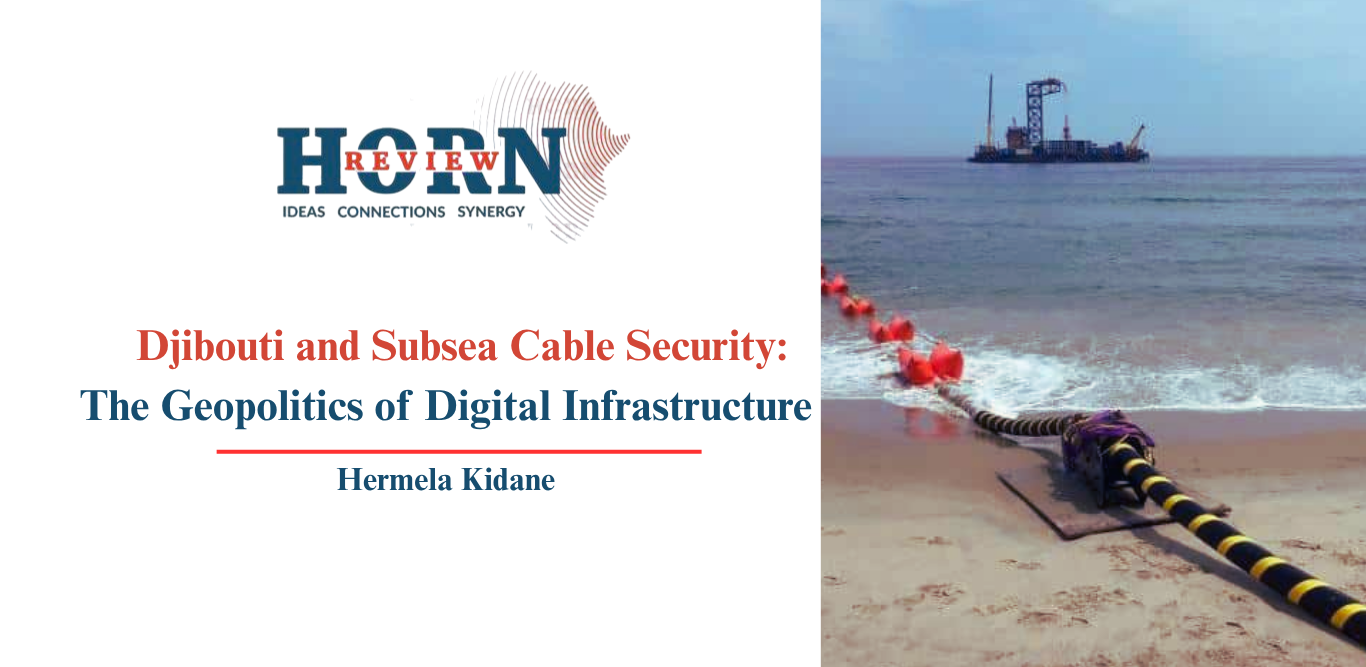
The vulnerability of undersea infrastructure has appeared as one of the most pressing and also underappreciated security challenges of the contemporary era. In recent years the importance of submarine fiber optic cables through which approximately 99 % of global intercontinental internet traffic flows has become increasingly apparent to state actors and non state armed groups alike . The war in Ukraine has accelerated this recognition. Since 2022 mutual accusations between Russia and European powers regarding potential sabotage of subsea infrastructure have intensified with Dmitry Medvedev deputy chairman of Russia’s Security Council publicly declaring that Russia possessed no remaining constraints to prevent it from destroying ocean floor cable communications belonging to its adversaries . While such threats may contain an element of verbal posturing, they have prompted genuine alarm among Western security establishments. The United States has reportedly observed increased Russian activity around subsea cables and European authorities have conducted stress tests and adopted formal recommendations to protect critical undersea infrastructure from both physical and cyber threats . The Nord Stream pipeline attack in 2022 demonstrated that subsea infrastructure sabotage is not just hypothetical but operationally feasible establishing a precedent that has fundamentally altered threat perceptions across the Euro-Atlantic.
The Red Sea is one of the most concentrated vulnerability in the global subsea cable network. Approximately 16 cables connecting Europe to Asia transit these waters passing through the Bab al Mandab Strait before continuing to major landing points in Djibouti, Marseille and beyond . This concentration creates a critical point where a single well executed act of sabotage could disrupt connectivity for hundreds of millions of users across multiple continents. The Houthi movement which controls substantial portions of Yemeni territory adjacent to this point has already demonstrated both the capability and willingness to target maritime infrastructure. In February 2024 three undersea cables in the Red Sea were damaged in ongoing Houthi attacks in the region. In September 2025, Microsoft reported damage to its subsea cables supporting Azure cloud infrastructure in the Red Sea with speculation pointing toward Houthi involvement. These incidents while not conclusively attributed illustrate the tangible risks facing the region’s digital backbone.
Djibouti which hosts landing points for at least 12 international submarine cable systems including the East African Submarine System, SEACOM and the Europe India Gateway has become the primary digital gateway for the entire subregion . The concentration of so many cables within Djiboutian territory reflects the same geographic logic that has made the country indispensable for maritime trade and military basing. However, this same concentration creates a vulnerability that hostile actors could exploit. A coordinated attack on cable landing stations or the offshore infrastructure feeding them could paralyze digital connectivity across Ethiopia, Somalia, Sudan and beyond with cascading economic and political consequences. Unlike the physical trade that passes through Djibouti’s ports which can be rerouted overland at cost, digital traffic has fewer redundancy options and the terrestrial infrastructure necessary to bypass damaged subsea cables remains underdeveloped across much of the continent.
It is precisely this vulnerability that has driven the most recent development in the region’s digital security. In February, Djibouti Telecom, Ethio Telecom and the Sudatel Group signed a tripartite agreement to construct the Horizon Fiber Initiative where a nearly 2,800 kilometer terrestrial fiber optic corridor linking Djibouti’s subsea cable landing stations through Ethiopia to Sudan’s Red Sea ports. The rationale for this project is explicitly defensive. As the chief executives of all three operators have publicly stated the corridor is designed to reduce dependence on submarine cables passing through the Red Sea where security concerns pose a serious threat to connectivity . The terrestrial route offers a redundant and secure alternative that is far less exposed to maritime contingencies whether from anchor drag, geopolitical conflict or deliberate sabotage.
By creating an Africa to Africa connectivity corridor the three nations aim to keep regional data traffic within African networks and regulatory structures. It is fundamentally a political project an effort to assert control over the information flows upon which modern governance, commerce and security depend. The participating telecom operators, all wholly or partially controlled by their respective governments are effectively constructing an alternative digital plan that bypasses the vulnerabilities and external dependencies of the existing maritime network.
The legal framework governing protection of subsea cables remains inadequate to address these threats. The relevant international instruments including the 1884 Paris Convention for the Protection of Submarine Telegraph Cables and the 1982 United Nations Convention on the Law of the Sea provide limited mechanisms for prosecution, particularly when damage occurs outside territorial waters . Article 113 of UNCLOS obligates signatories to establish jurisdiction over offences involving cable damage by vessels flying their flag but enforcement depends entirely on the political will of individual states. NATO has established a critical undersea infrastructure division and the European Union has enhanced cooperation with the alliance but these mechanisms are focused primarily on the Euro-Atlantic. The Horn of Africa despite its strategic importance lacks a comparable security structure for subsea infrastructure protection.
A successful attack on the cable landing stations in Djibouti or the offshore infrastructure feeding them could isolate the entire subregion from global digital networks, disrupting financial transactions, government communications, emergency services and the daily lives of millions of citizens. The terrestrial redundancy provided by the Horizon corridor mitigates but does not eliminate this risk as the corridor itself remains dependent on the submarine cables it supplements. True resilience would require a more fundamental diversification of connectivity routes including the development of alternative terrestrial corridors linking the Horn of Africa to the broader continental network.
In the arc of geopolitics development the submarine cables traversing the Bab al Mandab Strait may prove to be as strategically important as the warships that transit these same waters. The concentration of this infrastructure in Djibouti’s territory has transformed the small republic from a passive landing point into an active node in the global communications network in which a position of leverage that carries both opportunities and vulnerabilities. Whether Djibouti can protect this digital fortress from the sabotage and intimidation that now threaten it will depend on its capacity to build redundancy, attract international cooperation and also navigate the intensifying great power competition that defines the contemporary Red Sea. The future of global connectivity it turns out may rest on the security of a few cables passing through one of the world’s most tense regions.
By Hermela Kidane, Researcher, Horn Review