
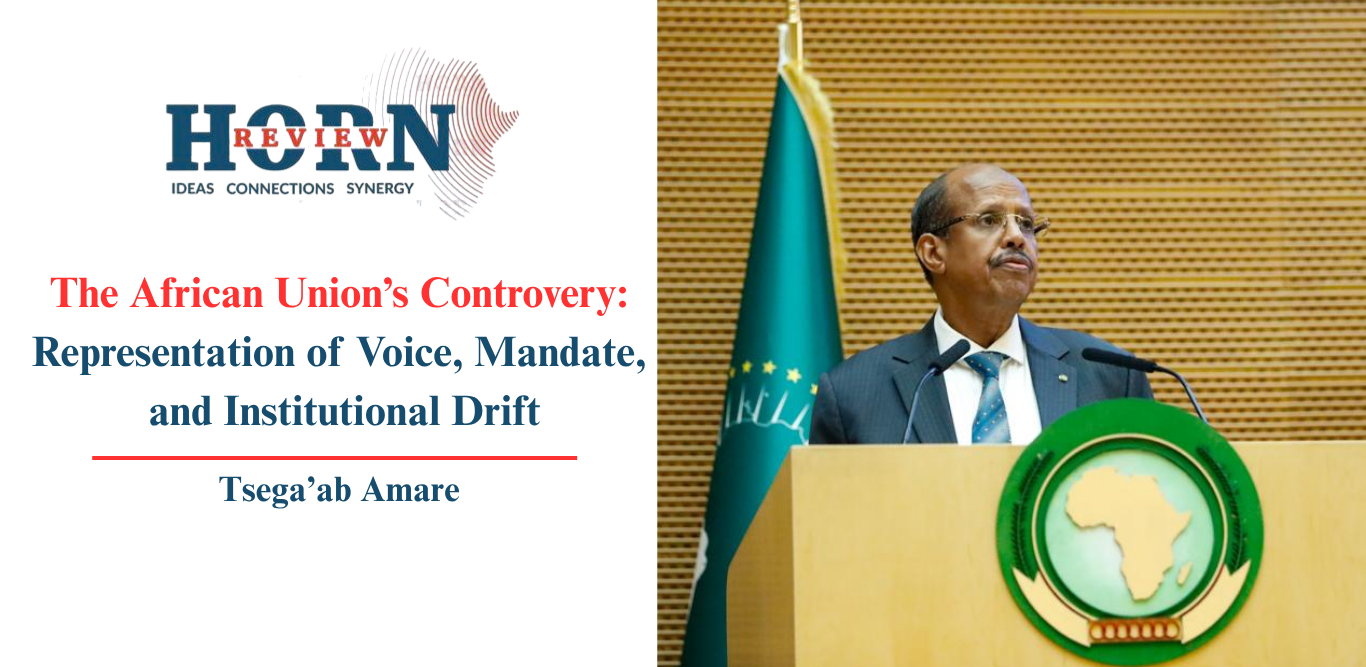
The African Union’s Controvery: Representation of Voice, Mandate, and Institutional Drift
When the African Union was redesigned from the OAU’s secretariat model in 2002, the architects of the new institution made a deliberate choice to give the chairperson a more vocal, more visible, and more empowered role. However, what they did not adequately design was a mechanism to ensure that the voice remained tethered to the collective position of 55 member states rather than the accumulated convictions of the individual holding office. More than two decades later that design gap has found its most visible expression.
Mahamoud Ali Youssouf assumed the African Union Commission’s Chairmanship in February of 2025, as one of the continent’s most experienced diplomats. Twenty years as Djibouti’s Foreign Minister, Successive chairmanships of the Arab league Council of Ministers, and the Organization of Islamic Cooperation; his career is defined by ideological coherence not institutional neutrality. And when the OIC formally endorsed his candidacy, it was not endorsing a technocrat rather it was endorsing a worldview. The question that should be raised then is not whether that worldview is legitimate, because it is, rather whether a Chairperson of the AUC is the appropriate vessel to enact it.
The AU’s own mandate documentation is unambiguous on this point. The Chairperson is the legal representative of the Union, acting under the guidance of and as mandated by the Assembly and the Executive Council. He does not set the institution’s agenda; he rather executes a collective one. What follows examines several instances where the gap between that formal standard and the operating style now visible in Youssouf’s early tenure appears to have been crossed, or at a minimum, substantially blurred.
The Red Sea Test
The clearest early window into the hierarchy of priorities Youssouf carries into this role comes not from his office in Addis Ababa, rather from a 2024 episode that is documented by Saxafi Media, when he was still Djibouti’s Foreign Minister and an active candidate for the chairmanship. He publicly characterized Houthi attacks on commercial shipping in the Red Sea and Gulf of Aden as expressions of solidarity with the Palestinian cause and also, he declined to align Djibouti with Western led naval operations that were designed to protect the corridor.
As a sovereign foreign policy choice, this falls within Djibouti’s prerogative. As a statement of analytical priority from someone seeking to lead a continental institution it might be a bit revealing. The Red Sea is not peripheral to African development; it is the foundational tool for it. The Suez Canal corridor carries a significant share of East Africa’s seaborne trade. Shipping disruptions drive inflation in some of the continents most economically exposed populations, who are the very populations the AU’s Agenda 2063 and the African Continental Free Trade Area are designed to protect. A Chairperson of the AUC is in a structurally different position from a national foreign minister when characterizing the disruption of African trade routes as morally defensible. The institution’s mandate is continental economic integration. That conflict between biography and office was visible before the election and has not fully resolved itself after.
Sudan and the Language of Mediation
Sudan is the AU’s most demanding active mediation task, and the standard of conduct it requires from the Chairperson is precise: equidistance between conflict parties, consistency in applying humanitarian norms, and care not to validate the political moves of one party while that party is prosecuting a war against another.
By late March 2025, the Sudanese Armed Forces had recaptured Khartoum after sustained urban fighting. In May, General Burhan’s government appointed a civilian Prime Minister. The AUC chairperson welcomed the appointment as a step towards inclusive governance. This response was not, in itself, diplomatically improper. A Chairperson has the legitimate ground and right to note and encourage movement toward civilian-led structures. The interpretative question is one of context, consistency, and framing.
The initiative the new PM subsequently brought to the UN Security Council, which Youssouf publicly endorsed as a credible peace pathway, was authored by the SAF’s own transitional authorities and centered on the disarmament of the opposing RSF under international supervision. Sudanese civil society organizations were direct in their response describing the AU’s endorsement as a shift from regional consensus and a signal of institutional bias. Whether or not that assessment is fully warranted, the pattern of the Chairperson aligning his statements within SAF’s political sequencing rather than maintaining an equidistant humanitarian and civilian framing is a pattern worth scrutinizing. This concern does not imply equivalence between the conduct of both parties but rather reflects the institutional obligation of the AU mediator to avoid appearing politically embedded within one belligerent’s sequencing of legitimacy
The Ethiopia Dimension
The Somaliland question, on its surface, is a question of territorial integrity and AU norms on secession. Beneath that surface, for Djibouti, it is an economic question of considerable national importance. Djibouti’s port infrastructure processes more than 90 % of Ethiopia’s overseas trade, generating revenues that form a critical pillar of Djibouti’s National economy. When Ethiopia signed its January 2024 MoU with Somaliland, providing for access to the port of Berbera in exchange for an undertaking on recognition, it represented a structural challenge to Djibouti’s position as Ethiopia’s principal maritime gateway. Djibouti’s government was among the deal’s most active opponents. The IGAD body, then chaired by Djibouti, convened an extraordinary meeting affirming Somalia’s territorial integrity, a meeting Ethiopia notably did not attend.
Moreover, when Israel recognized Somaliland in December 2025, the AUC Chairperson’s office responded with unusual speed and sharpness, issuing a statement firmly rejecting the move and warning of consequences for continental stability. The Substance of that position reflects genuine AU norms on territorial integrity; the AU has consistently supported “One Somalia” and the principle of inherited colonial borders – which, however, is debatable in the case of Somaliland. In this instance, Djibouti’s national interest in preserving its centrality to Ethiopia’s maritime access and the AUC Chairperson’s institutional response appear unusually aligned in ways that are difficult to disentangle.
The Djibouti Election
The most structurally transparent illustration of the risks posed by the current arrangement arrived in April 2026. President Ismail Omar Guelleh of Djibouti secured a sixth consecutive term with approximately 97.8 percent of the vote in an election that major opposition parties boycotted, describing it as lacking the basic conditions for genuine competition. The constitutional amendment removing the presidential age limit had been passed specifically to allow Guelleh, at 78, to run again. The AUC Chairperson responded by issuing a statement warmly congratulating President Guelleh, commending Djibouti’s people for what he characterized as their peaceful participation and commitment to democratic governance.
The AU’s own African Charter on Democracy, Elections and Governance contains explicit standards regarding genuine political pluralism and competitive conditions. Central to this mandate is Article 23(5), which prohibits any constitutional amendment or revision that infringes upon the principles of democratic change of government. The Chairperson is the custodian of AU legal instruments, including this one. The issue here is not whether congratulatory statements following elections are routine; they are. The issue is the absence of any qualification whatsoever regarding documented opposition concerns, in an election held in the Chairperson’s own country, under a president from whose political establishment the Chairperson directly emerged.
The Israel Question
At the 39th AU Summit in February 2026, Youssouf characterized the war in Gaza as an “Extermination” that must stop and called for the lifting of Israel’s blockade. Although AU solidarity with Palestine is longstanding and rooted in anti-colonial history, the escalation of language by the Chairperson risks obscuring the diversity of member-state positions toward Israel. As previously documented the AU’s expulsion of Israel’s envoy during the 2025 Rwanda Genocide commemoration raised foundational questions about the relationship between symbolic moral clarity and institutional coherence in African diplomacy.
The AU’s actual position on Israel, as documented in member states’ foreign policy conduct, is considerably more fractured than the Chairperson’s language reflects. Israel had, until recent suspensions, held AU observer status, and a substantial majority of AU member states maintain formal diplomatic engagement with Israel.
Advocacy language that is deployed at the level of maximum escalation does not represent that diversity; rather it overrides it. There exists a precise structural irony in this action. In 2021, Djibouti was among the countries that formally protested against Chairperson Moussa Faki’s decision to grant Israel observer status unilaterally, describing the action as a procedural violation and an overreach of the Chairperson’s individual discretion. With Youssouf himself later describing the move as an attempt by Israel to “infiltrate” the Union. The principle articulated in that protest that the Chairperson cannot use personal judgement to override institutional process on a contested question was correct. But it applies with equal force when the unilateral act runs in the other direction.
The Structural Problem and the Path Forward
The argument raised here is not about motive. Mahamoud Ali Youssouf is, in all likelihood, acting from a settled conviction, developed over two decades, about what the right positions are on Sudan, on Palestine, on Somaliland, and on democratic legitimacy. The problem is that those convictions predate the role and the role was not designed to be their vehicle. Moussa Faki noted near the end of his tenure that the Chairperson is paradoxically constrained on formal authority while simultaneously unchecked in the discretionary spaces of language framing and endorsement. That paradox is what the current Chairperson is navigating through biographical formation rather than collective mandate.
The AU Assembly has the formal authority to hold the Chairperson accountable. The historical record of AU decision implementation suggests that authority is rarely exercised with consistency. What is needed is not a different person but clearer institutional architecture: a requirement for collective deliberation before the Chairperson issues statements on contested geopolitical questions; a formal mechanism for member state challenge when statements appear to depart from documented consensus; and a standard that distinguishes the Chairperson speaking for Africa from the Chairperson speaking as a particular individual African.
A more vocal Chairperson is a desirable outcome of the 2002 AU reform. The price of that choice, however, is that the voice must be disciplined by the institution it tries to represent. When it is disciplined instead by the career that preceded it, the fifty-five member states who elected the institution do not get the leader they voted for rather they get the country that put him forward.
By Tsega’ab Amare, Researcher, Horn Review

RELATED
Posts
9
Oct
Could the Riyadh Airport Strike Reshape the Yemen Conflict?
A series of claimed missile and drone strikes on King...
8
Oct
The Makkah Pact and the Limits of Collective Defence
The Makkah Joint Defence Agreement rests on an ambitious...
28
Sep
Saudi-led Multinational Maritime Defence Coalition and the Changing Security of Bab el-Mandeb
On 2 September, the Saudi-led Multinational Maritime Defence Coalition...
28
Sep
The AI Disinformation War in the Horn and the Economics of Digital Conflict
In September, Marc Owen Jones, an Associate Professor of...
24
Sep
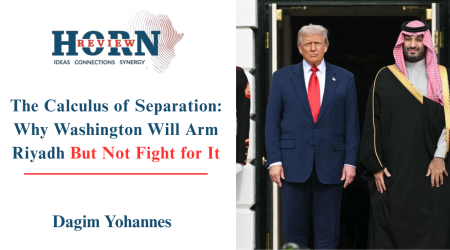
The Calculus of Separation: Why Washington Will Arm Riyadh But Not Fight for It
The episode reveals a distinction in the U.S.-Saudi security relationship...
21
Sep
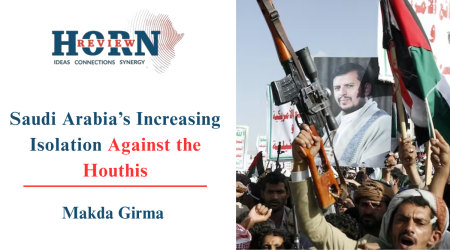
Saudi Arabia’s Increasing Isolation Against the Houthis
Saudi Arabia’s renewed confrontation with Yemen’s Houthis has exposed how...
21
Sep
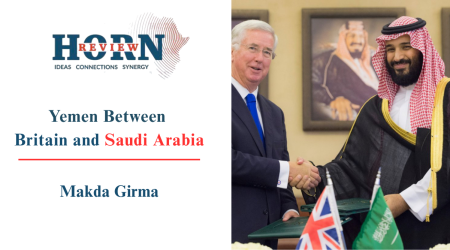
Yemen Between Britain and Saudi Arabia
The Houthi advance along Yemen’s Red Sea coast has exposed...
21
Sep
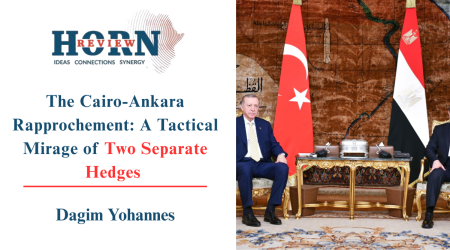
The Cairo-Ankara Rapprochement: A Tactical Mirage of Two Separate Hedges
The recent run of headlines out of Cairo and Ankara,...
20
Sep
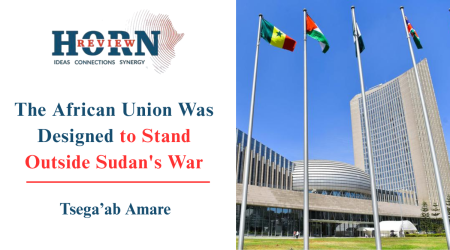
The African Union Was Designed to Stand Outside Sudan's War
Every time Sudan's war comes up in public discussion, mentioning...
2
Sep
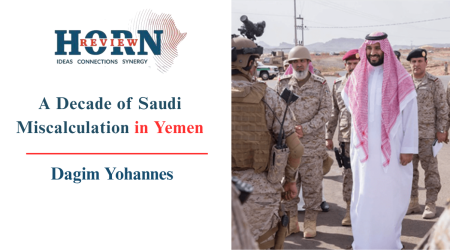
A Decade of Saudi Miscalculation in Yemen
On March 26, 2015, Mohammed bin Salman, then a thirty-year-old...