Egypt’s stategy in today’s Middle Eastern tensions is not neutrality in the noble sense. It reflects a loss of leverage. In a region where states often project influence through clear alignments and decisive positions, Egypt’s restraint reads less like strategy and more like limitation. There was a time when Egypt dictated the political rhythm of the Arab world. But now it looks like that role has faded. Today, its foreign policy is limited by many factors such shaped by internal economic strain, security concerns, and a reduced ability to shape outcomes beyond its borders. Its avoidance of taking a firm position in the confrontation shows not simply careful diplomacy. Shows also a state that no longer has the weight to influence the direction of events.
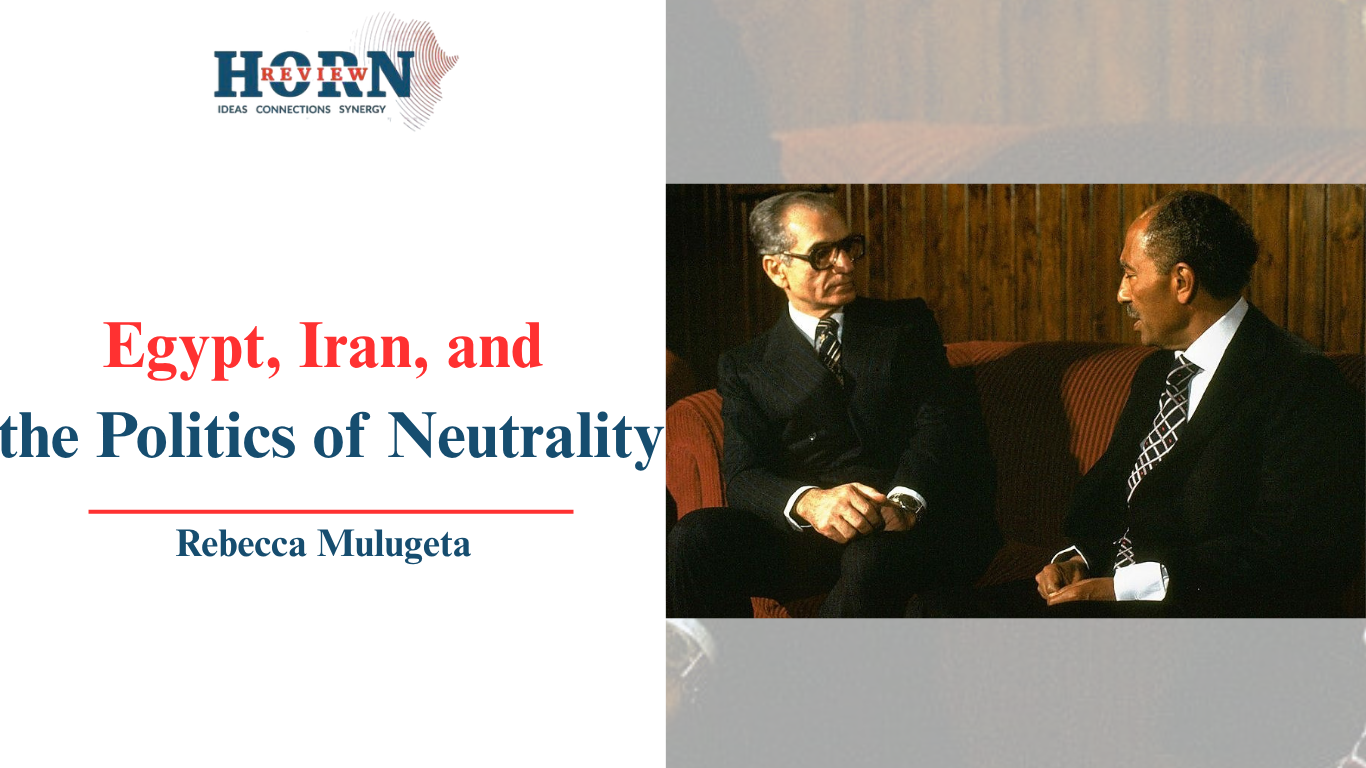
There was a time when Egypt did not calculate its position in the region; it defined it. Under Gamal Abdel Nasser, Cairo was the political and ideological heart of the Arab world. It shaped narratives, mobilized populations, and positioned itself as the voice of a broader regional identity. Even later, under Anwar Sadat, Egypt demonstrated its ability to alter the strategic map of the Middle East through decisive action, most notably with the Camp David Accords. In those decades, Egypt did not react to regional politics; it set their direction.
That era, however, has steadily receded. Today’s Middle East is no longer defined by a single dominant Arab actor. Instead, influence has shifted toward financially powerful Gulf states, such like UAE and Saudi whose economic capacity has translated into political leverage. This transformation has placed Egypt in a more constrained position, where its historical weight is no longer matched by its current capabilities.
The evolution of Egypt’s relationship with Iran reflects this broader change. Before the Iranian Revolution, Egypt and Iran were aligned within a shared strategic framework. Under Mohammad Reza Shah Pahlavi, Iran supported Egypt economically and politically, and both states operated within a Western-oriented order that prioritized stability and state authority. Their relationship was pragmatic, grounded in mutual interest rather than deep trust.
The revolution in Iran fundamentally disrupted this alignment. The emergence of a new political system under Ruhollah Khomeini introduced an ideological dimension that Egypt viewed with suspicion. Egypt’s decision to maintain its peace with Israel and its broader alignment with Western partners placed it on a different trajectory from Iran. Diplomatic ties were severed, but more importantly, the relationship lost its strategic foundation. What followed was not direct confrontation, but a prolonged period of distance marked by caution and indirect competition.
Over time, this distance became institutionalized. Egypt aligned itself more closely with Gulf states and the United States, while Iran expanded its regional influence through alternative channels. Yet, despite this divergence, Egypt never treated Iran as an immediate existential threat. The tension remained indirect, shaped by regional dynamics rather than direct rivalry. This allowed Egypt to preserve a degree of flexibility that continues to influence its policy today.
In recent years, there have been signs of cautious re-engagement between the two countries. These efforts do not reflect a fundamental reconciliation, but rather an adjustment to a changing regional environment. As the Middle East becomes more fragmented and less defined by rigid alliances, both Egypt and Iran have shown an interest in reducing tensions. However, this engagement remains limited, constrained by decades of mistrust and competing interests.
Understanding Egypt’s position in the current war means placing it within this longer decline. Cairo’s refusal to align with any side is not about balance or restraint. It reflects a lack of options. Pressured from the outside and constrained from within, Egypt is no longer in a position to shape events or project decisive influence across the region.
What might appear as cautious neutrality is, in reality, a defensive stance. Egypt is navigating a tense and competitive landscape where any clear position could expose its limitations. Rather than setting the agenda, it is trying to avoid being pulled into a conflict it has little ability to influence.
The most immediate of these risks is economic, and it heavily shapes Egypt’s foreign policy behavior. The country is already under strain from inflation, currency instability, and a mounting debt burden, while relying on vulnerable external lifelines such as the Suez Canal, tourism, and foreign investment. A major escalation in the region, particularly any disruption or closure of the Strait of Hormuz, would directly affect Suez by reducing the flow of ships carrying Gulf and trade toward Europe, cutting transit revenues. At the same time, global energy price spikes, higher shipping costs, and the diversion of vessels around Africa would further weaken canal income, while instability would deter tourists and investors. In this context, Egypt’s economic exposure is not hypothetical; it is immediate and deeply tied to the stability of distant but connected maritime routes.
These economic pressures have also changed how Egypt relates to the Gulf. In the past, Cairo led politically while Gulf states played more of a supporting role. That balance has shifted. Today, countries like Saudi Arabia and United Arab Emirates use their financial power to shape regional politics in ways Egypt increasingly cannot. Their resources give them influence that goes beyond economics, extending into diplomacy and strategic decision-making. At the same time, Egypt’s growing reliance on financial backing from these states has altered the relationship. It is no longer one of leadership, but one marked by dependence, where Cairo has less room to act independently.
Security concerns further explain Egypt’s caution, but they also highlight its narrowing focus. The state is largely preoccupied with immediate threats in the Sinai Peninsula and along its border with the Gaza Strip, where the risks of militant spillover and population displacement remain high. Rather than projecting influence across the region, Egypt is focused on containing instability within its own borders. This inward-looking approach underscores its reduced strategic reach. What is framed as security prioritization is, in reality, a limitation, restricting Egypt’s ability and willingness to engage meaningfully in wider regional conflicts.
Domestic political factors also play a critical role. Economic hardship has increased public sensitivity to government decisions, particularly those related to foreign policy. The Palestinian issue remains deeply significant within Egyptian society, and any perceived alignment with Israel would carry political risks. At the same time, alignment with Iran would also be problematic, given longstanding mistrust and ideological differences. Neutrality, therefore, provides a way to manage these competing pressures while maintaining internal stability.
The future of Egypt’s relationship with Iran is likely to follow a similar pattern of cautious engagement? Both countries have incentives to avoid escalation and explore limited areas of cooperation. However, structural constraints will continue to limit the depth of this relationship. Decades of mistrust, combined with Egypt’s existing alliances, make a full normalization unlikely in the near term. More broadly, Egypt’s future role in the Middle East will depend on its ability to address its internal challenges. Economic stability will be particularly important. Without it, Egypt’s capacity to project influence will remain constrained, and its role in regional politics will continue to be defined by limitation rather than leadership.
In this context, Egypt’s neutrality in the current war can be seen as part of a broader transformation. It reflects a shift from a foreign policy driven by ambition to one shaped by necessity. The country that once defined regional dynamics is now adapting to a landscape where power is more dispersed and where influence must be exercised with greater caution.
What once passed for regional leadership has narrowed into a strategy of survival rather than influence. Egypt’s decision to remain on the sidelines is not a mark of flexibility, but a sign of how exposed it has become in a region it no longer shapes. In a Middle East increasingly driven by those willing and able to project power, Egypt finds itself watching more than directing.
By Rebecca Mulugeta, Researcher, Horn Review