
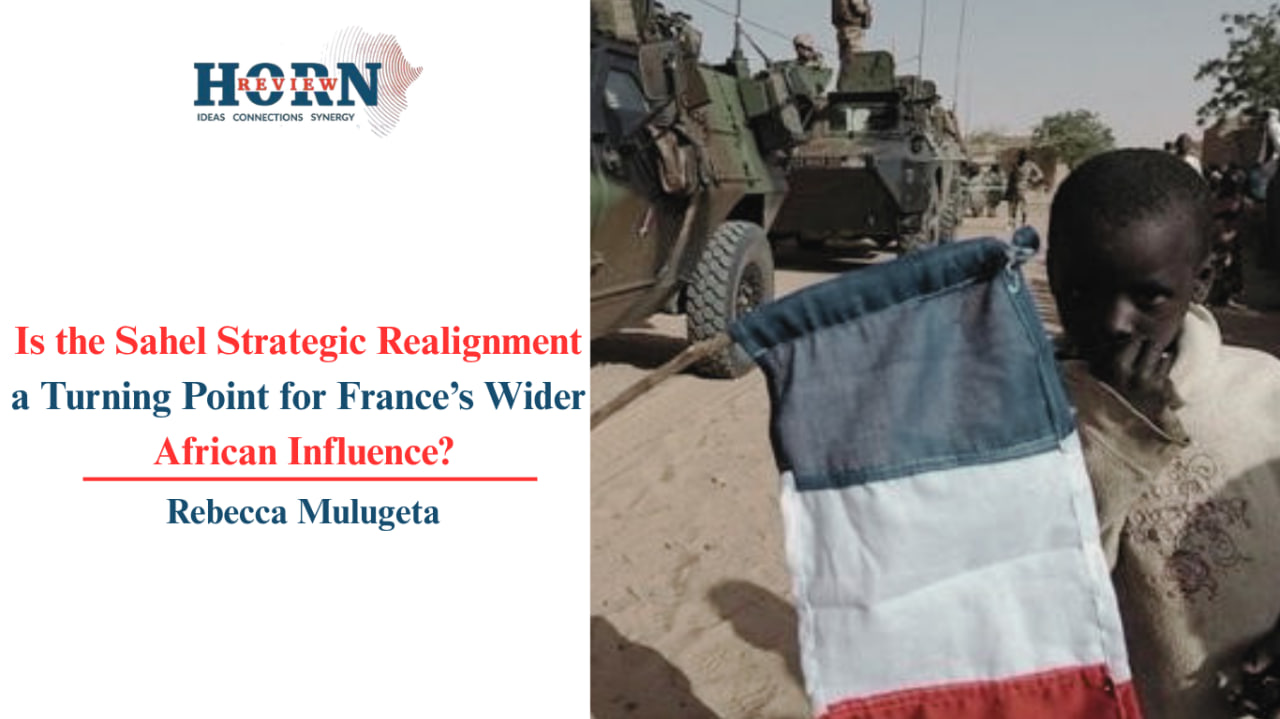
Is the Sahel Strategic Realignment a Turning Point for France’s Wider African Influence?
Across Africa today, influence is no longer concentrated in a single centre of gravity. It is dispersed across overlapping corridors of security, trade, infrastructure, finance, and military partnerships that rarely align under one dominant external actor. What is seen is not a contest for replacement but a process of redistribution. The Sahel sits at the core of this transformation, functioning less as a peripheral conflict zone and more as a laboratory where new forms of external engagement, state fragility, and insurgent resilience are interacting in real time.
The withdrawal and restructuring of Western-led counterterrorism missions from parts of the Sahel did not produce a stable post-intervention equilibrium. Instead, it opened space for a layered competition involving multiple foreign actors, each operating through different logics. The result is a fragmented strategic environment where influence is continuously negotiated rather than permanently secured.
To determine if France can navigate the current shifts in African influence, one must analyze its role through the lens of both historical continuity and modern structural evolution. France has traditionally functioned as a primary architect of the region’s security and political frameworks. Consequently, its changing footprint is more than a simple military adjustment; it represents a significant transition in a long-standing strategic partnership. Because of this deep-rooted history, any recalibration of the French presence carries profound symbolic and strategic weight, signaling a broader evolution in how regional and international actors engage across the continent.
The Sahel’s instability is rooted in long-term structural conditions that predate recent geopolitical competition. Weak state penetration across vast rural territories, limited fiscal capacity, demographic pressure, climate stress, and entrenched informal governance systems have created persistent governance vacuums. These spaces have historically been filled by local customary authorities, cross-border trade networks, community militias, and more recently, insurgent organisations that have learned to embed themselves within local economies and social grievances rather than operate outside them.
The collapse of Libya was a decisive accelerant in this process. The flow of weapons, fighters, and fragmented militant networks across porous borders transformed the Sahel into a transnational security ecosystem. Armed groups that were once locally confined evolved into adaptive regional actors capable of shifting across borders, exploiting weak state presence, and embedding themselves into illicit and informal economic structures. This evolution fundamentally changed the nature of conflict in the region. It was no longer a series of isolated insurgencies but a connected system of instability.
Within this landscape, external military interventions expanded their footprint, primarily guided by counterterrorism objectives. The underlying strategy rested on the premise that targeted force, enhanced intelligence sharing, and the capacity-building of local militaries could effectively contain or degrade insurgent threats. These operations frequently secured tangible tactical successes, disrupting militant networks and reclaiming territory. However, a significant challenge emerged in translating these military achievements into long-term stability. While the security apparatus focused on immediate threats, the complex political and socio-economic grievances driving the unrest proved more difficult to resolve.
This perception became politically consequential. In several Sahelian states, military governments emerged through coups that framed themselves as responses to prolonged insecurity and ineffective governance. These regimes increasingly linked national sovereignty to the rejection or redefinition of foreign military presence. The legitimacy of external actors, particularly Western ones, was no longer assumed but actively contested within domestic political narratives.
France’s current position is best understood through its long-standing, deeply integrated partnership with the Sahel and Francophone Africa. Historically, this relationship was defined by a unique structural interdependence that extended far beyond traditional diplomacy, encompassing synchronized currency systems, administrative models, and extensive political networks. All of this was underpinned by robust security cooperation, creating a sophisticated framework where formal sovereignty coexisted with deep-seated institutional and economic ties. Consequently, France functioned as a central pillar of a regional architecture built on decades of mutual strategic interests. As the global order shifts, the primary challenge lies in evolving this legacy of interdependence into a modern framework that aligns with the contemporary aspirations of all parties involved.
This model has faced a gradual transition over the past two decades. Recurring political shifts and expanding regional insurgencies have tested the foundations of this arrangement, requiring both regional and international partners to adapt to a more volatile environment. The conclusion of Operation Barkhane did not create these challenges, but rather brought the scale of this structural evolution into clearer focus. This shift marks a recalibration of a decades-old strategic relationship, as regional states increasingly seek to diversify their partnerships and redefine their own security architectures.
The critical question is whether France can prevent a broader loss of influence across Africa, or whether the Sahel represents an inflection point beyond which its role becomes permanently redefined.
The challenge lies less in intent than in the broader structural changes reshaping the region. For decades, France’s engagement in parts of the Sahel was closely linked to security cooperation, which also facilitated wider diplomatic, intelligence, and political coordination with regional governments. In the current Sahelian environment, however, political dynamics and public discourse around sovereignty have evolved considerably. Across countries such as Mali, Burkina Faso, and Niger, military-led governments have increasingly emphasised national autonomy and the diversification of external partnerships, reflecting a broader regional shift in how security cooperation and foreign engagement are perceived and negotiated.
This shift has significantly narrowed France’s strategic space. Its withdrawal or reduction of presence is not simply a tactical recalibration but a response to shrinking political legitimacy on the ground. More importantly, it reflects a broader continental trend in which African states are increasingly asserting diversified foreign partnerships rather than relying on a single external anchor.
Retaining a significant role in this shifting landscape requires a transition toward more flexible, sector-based cooperation. While the era of a single predominant power is giving way to a more pluralistic environment, France has proactively adapted by forging renewed partnerships focused on trade, infrastructure, and climate action. This evolution occurs as other global players including Russia, China, Türkiye, and the Gulf states expand their own footprints through diverse security, investment, and energy initiatives. In this increasingly competitive order, France is repositioning itself as one of several key strategic partners, where influence is maintained through specialized collaboration rather than the traditional architectures of the past. This recalibration reflects a broader trend toward a multi-polar African engagement model based on mutual interests and diversified alliances.
To fundamentally reconfigure its African strategy. This would involve moving beyond a security-first architecture toward a more integrated model that prioritises economic investment, industrial partnerships, climate cooperation, and infrastructure financing. It would also require a shift in political posture, from prescriptive engagement to negotiated partnership that recognises African agency as structurally central rather than rhetorically acknowledged.
However, even such adaptation would be unlikely to restore France to the level of central influence it once held. Africa’s geopolitical landscape has evolved into a more plural and competitive environment, where influence is increasingly shared among multiple external actors operating across different sectors. France itself has sought to adjust to this changing reality through renewed diplomatic and economic partnerships across the continent, including recent high-level engagement with Kenya focused on trade, infrastructure, climate cooperation, and regional security coordination. At the same time, other external actors have also expanded their presence.
The contemporary African landscape is increasingly defined by a model of strategic accumulation, where various global powers coexist through specialized, sector-based engagement. While Russia has focused on strengthening security partnerships and military cooperation, China has embedded its influence into the continent’s material foundations through large-scale infrastructure, resource extraction, and digital integration. Simultaneously, the Gulf states and Türkiye have expanded their footprints via finance, construction, and energy. This shift marks a transition from the predominance of any single external actor toward a more pluralistic environment, where influence is driven by flexible, diverse partnerships that address specific state needs across the security and economic spectrums.
France is transitioning into a significant strategic partner within an increasingly diversified African landscape, shifting from its historical role toward a model of specialized, partnership-based cooperation in diplomacy, trade, and security. Meanwhile, the Sahel continues to face deeply embedded structural challenges, as adaptive armed groups exploit governance gaps and fragmented state authority. This environment creates a persistent demand for security that transcends the presence of any single external actor. Because state institutions remain constrained by fiscal and administrative limitations, regional instability functions more as a durable condition than an anomaly. Consequently, the Sahel has become a corridor of continuous engagement where external actors, including France, operate within complex, ongoing dynamics rather than seeking definitive, short-term intervention outcomes.
The Sahel is evolving into a permanently contested space defined by the convergence of technological shifts, sovereignty-driven narratives, and economic complexity. Advanced technologies like drones have increased tactical sophistication but haven’t simplified the resolution of underlying grievances. Simultaneously, a rising emphasis on national autonomy is recalibrating the parameters of international engagement. This is further complicated by hybrid economic systems where formal state structures coexist with entrenched informal networks. Ultimately, the region is not moving toward a linear outcome, but rather toward a model of overlapping authority where influence depends on navigating these diverse and evolving systems.
Moving forward, France is evolving toward a highly adaptable, peer-based engagement model like it initiated in Kenya summit that aligns with Africa’s increasingly diversified geopolitical landscape. This transition marks a shift from a historically centralized framework to a modern, competitive environment where strategic relevance is maintained through innovative collaboration and shared objectives.
This shift mirrors a broader continental trend: Africa is not retreating from global cooperation but is instead diversifying its international ties. By engaging with multiple partners simultaneously, African nations are leveraging varied expertise across security, infrastructure, and development to enhance state capacity.
Consequently, the realignment in the Sahel represents a significant turning point not as an exit, but as a transition away from structural centrality. France is moving from being a primary architect of regional systems to a key strategy within a more pluralistic order. Ultimately, this new chapter is by multiplicity, where France remains a significant and active participant in a diverse community of global partners.
By Rebecca Mulugeta, Researcher, Horn Review

RELATED
Posts
9
Oct
Could the Riyadh Airport Strike Reshape the Yemen Conflict?
A series of claimed missile and drone strikes on King...
8
Oct
The Makkah Pact and the Limits of Collective Defence
The Makkah Joint Defence Agreement rests on an ambitious...
28
Sep
Saudi-led Multinational Maritime Defence Coalition and the Changing Security of Bab el-Mandeb
On 2 September, the Saudi-led Multinational Maritime Defence Coalition...
28
Sep
The AI Disinformation War in the Horn and the Economics of Digital Conflict
In September, Marc Owen Jones, an Associate Professor of...
24
Sep
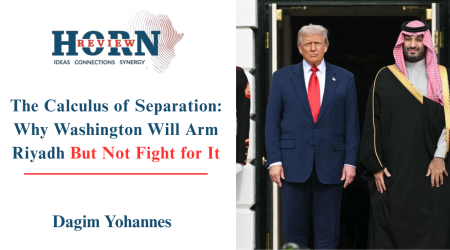
The Calculus of Separation: Why Washington Will Arm Riyadh But Not Fight for It
The episode reveals a distinction in the U.S.-Saudi security relationship...
21
Sep
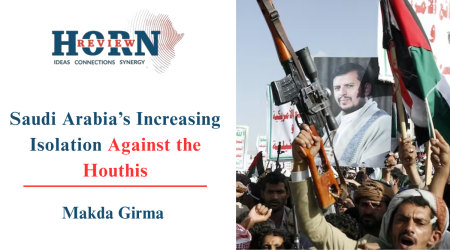
Saudi Arabia’s Increasing Isolation Against the Houthis
Saudi Arabia’s renewed confrontation with Yemen’s Houthis has exposed how...
21
Sep
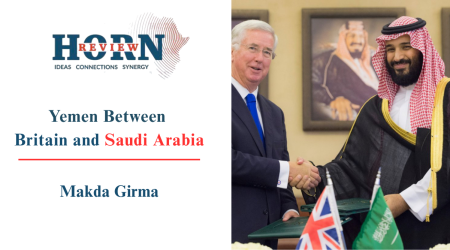
Yemen Between Britain and Saudi Arabia
The Houthi advance along Yemen’s Red Sea coast has exposed...
21
Sep
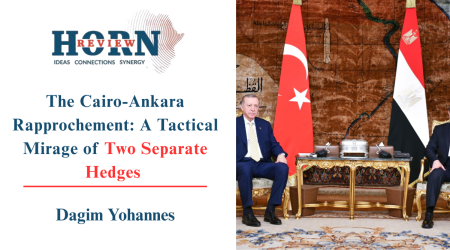
The Cairo-Ankara Rapprochement: A Tactical Mirage of Two Separate Hedges
The recent run of headlines out of Cairo and Ankara,...
20
Sep
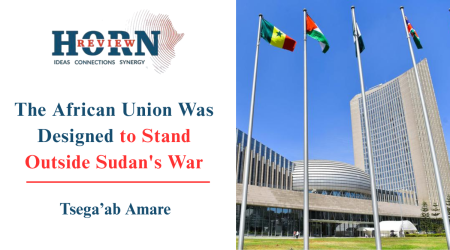
The African Union Was Designed to Stand Outside Sudan's War
Every time Sudan's war comes up in public discussion, mentioning...
2
Sep
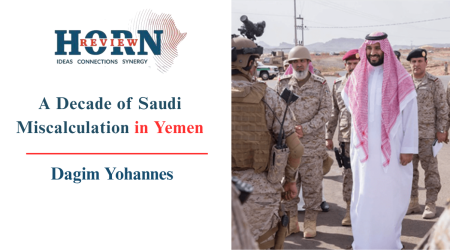
A Decade of Saudi Miscalculation in Yemen
On March 26, 2015, Mohammed bin Salman, then a thirty-year-old...