
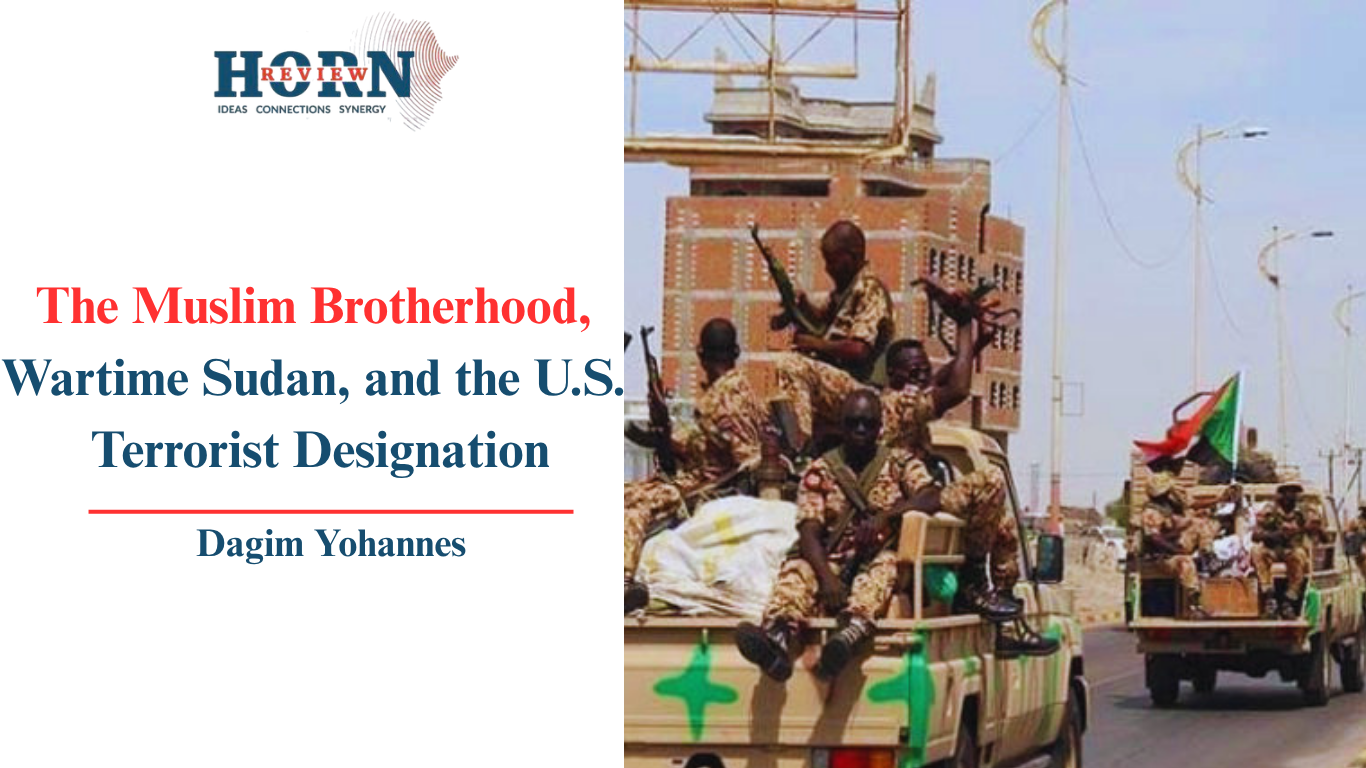
The Muslim Brotherhood, Wartime Sudan, and the U.S. Terrorist Designation
On Monday March 9, 2026 the U.S. state department announced designation of the Sudanese Muslim Brotherhood as a Specially Designated Global Terrorist (SDGT) and said it will designate it as a Foreign Terrorist Organization (FTO), effective March 16, 2026. The move follows earlier measures taken in September 2025, when the U.S. Treasury imposed sanctions on several Sudanese Islamist figures and entities, including Jibril Ibrahim and the Al-Barra bin Malik Brigade, accusing them of undermining peace efforts and cooperating with Iran’s Islamic Revolutionary Guard Corps (IRGC). This move cannot be understood in isolation; it is rooted in decades of Islamist political maneuvering, which have shaped Sudan’s institutions, armed forces, and regional networks.
Understanding the Muslim Brotherhood in Sudan therefore requires tracing its rise and political influence over the past four decades. The movement’s roots date back to the 1950s, when Sudanese Islamist activists, influenced by the broader Muslim Brotherhood ideology emerging in Egypt, began organizing within universities and professional circles.
During this period, Islamist networks gradually expanded their presence among students in university of Khartoum, lawyers, and civil servants, laying the intellectual and organizational foundations for political Islam in Sudan.
A pivotal figure in this transformation was Hassan al-Turabi, whose leadership reshaped Sudan’s Islamist movements into a disciplined political force. Educated in both Islamic jurisprudence and western law, Turabi sought to move the movement beyond religious activism toward direct political engagement. Under his influence, Islamist organizations began injecting influence within state institutions, including professional unions, the judiciary, and segments of the military.
By the late 1970’s and early 1980’s, these networks had consolidated into the National Islamic Front (NIF),which became the principal vehicle for Sudan’s Islamist political project. Rather than attempting to seize power through mass mobilization alone, the NIF pursued a more strategic approach: embedding its members within the state’s apparatus while cultivating alliances with sympathetic officers in the armed forces. This long-term strategy would eventually culminate in the 1989 NIF-led coup d’état, in which officers led by Omar al-Bashir overthrew the civilian government ofSadik al-Mahdiandushered in a new era of Islamist influence over Sudanese politics.
For at least a decade after the coup, the Islamist ideologue Hassan al-Turabi and his cadres were the de facto leaders in the government, embedding Brotherhood-style networks inside the army, security services, civil service, and economy through a policy often referred to as Tamkeen, which systematically replaced state officials with loyal Islamist cadres. During the 1990s Sudan also became a hub for transnational Islamist cooperation.
The regime hosted Osama bin Laden between 1991 and 1996, allowing him to establish businesses and logistical networks while maintaining close ties with Sudanese Islamist elites, but his presence eventually led to Sudan being added to the U.S. terrorism list in 1993. At the same time, Khartoum forged a strategic security partnership with Iran’s Islamic Revolutionary Guard Corps (IRGC), andits external operations arm, the Quds Force under the leadership of the late General Qasem Soleimanie. Under Soleimanie’s supervision, Quds Force provided weapons, training, and military advisers to Sudan’s security forces and Islamist militias. There are also reports that members of Iran’s so-called “Axis of Resistance,” including Hamas and Hezbollah, operated in Sudan during the regime of Omar al-Bashir.
Sudan became a hub for regional Islamist networks aligned with Iran, with Hezbollah members reportedly sent to the country for training, including preparation for suicide operations, while other Islamist militant training camps linked to al-Qaeda were also hosted on Sudanese soil At the same time, Sudan served as a transit corridor for Iranian-supplied weapons to Hamas in Gaza, and in 2009, airstrikes targeted truck convoys in eastern Sudan carrying these arms, highlighting Khartoum’s role in facilitating Iranian arms transfers. These connections demonstrate how the Sudanese Islamist government collaborated with Iran-aligned actors to project Islamist influence regionally and globally, while simultaneously consolidating control over Sudan’s state institutions.
These Brotherhood-linked networks not only entrenched Islamist dominance over Sudan’s state institutions but also deepened ethnic and regional divisions, leaving the country’s diverse populations, from Arab Sudanese to marginalized African communities such as the Fur, Nuba, and Zaghawa-subject to systemic violence, exclusion, and political marginalization.
Decades of entrenched Islamist networks and regional alliances meant that even the military overthrow of Omar al-Bashir in 2019 could not dismantle the Muslim Brotherhood’s influence. While Bashir’s National Congress Party was formally sidelined, the broader Islamist movement adapted quickly. Abdel Fattah al-Burhan, commander of the Sudanese Armed Forces (SAF), and Ali Karti, secretary-general of the Sudanese Islamic Movement (SIM), the local iteration of the transitional Muslim Brotherhood, have maintained a strategic alliance that has become particularly visible amid the ongoing civil war. This partnership not only sustains SAF operations but also ensures that SIM retains unequivocal leverage over Sudan’s political trajectory, reinforcing its influence across both military and civilian spheres.
The movement’s influence operates along two complementary tracks. The first is a quiet but systematic takeover of state institutions, most notably the Ministry of Foreign Affairs, a maneuver facilitated by Ali Karti’s early leadership role in the ministry under Omar al-Bashir’s administration. The second track extends beyond formal institutions, as Islamist actors have cultivated independent militias to secure influence in any future government settlement. In line with this strategy, the SAF has reportedly absorbed roughly 15,000 Islamist militia fighters from the Al-Bara bin Malik brigade into its ranks, with the aim to solve manpower shortage in the battle with the RSF. But these are jihadist militias affiliated with SIM and are allegedly responsible for human rights abuses, and framing the war as a jihad against Sudan’s secular civil society.
This political Islam faction is also becoming an obstacle for cessation of hostilities and humanitarian truce for one of the deadliest conflicts in Sudan’s recent history. In September 2025, Karti-led coalition and the broad Islamic current rejected the internationally backed “QUAD” proposal suggesting a three-month humanitarian truce followed by a longer political transition.
Before the U.S. move to designate the Muslim Brotherhood in Sudan as a terrorist organization, the Trump administration had already made efforts to separate the Sudanese military leadership from Islamist networks embedded within the state. In August 2025, Burhan dismissed five senior generals identified as Islamic extremists. The reshuffle followed his meeting with U.S. Special Envoy Massad Boulos in Switzerland on August 13, 2025, and was widely interpreted as occurring at Washington’s request.
Yet the move is far from a panacea for Sudan’s precarious political crisis. Muslim Brotherhood networks continue to wield robust behind-the-scenes influence within its military and its illegitimate government under Burhan, making the purge to appear less an unequivocal break with Islamist power than a symbolic gesture aimed at placating external partners without fundamentally altering the balance of power.
The U.S. designation of the Sudanese Muslim Brotherhood as a Specially Designated Global Terrorist organization has exposed a growing split within The Quad. The UAE has openly supported the move, aligning closely with Washington, while Egypt and Saudi Arabia reveal a striking irony: they treat the Brotherhood as a domestic enemy yet tolerate or leverage its influence abroad, all while continuing to back the Sudanese Armed Forces as a counterweight in Sudan’s volatile political landscape. The Rapid Support Forces, who are fighting the SAF for almost 3 years, were quick to endorse Washington’s move, issuing a statement supporting the U.S. designation, in doing so , the RSF sought to frame the conflict not as a struggle between rival military factions but as a confrontation with Islamist networks rooted in the al-Bashir era. Republican Senator who chairs the senate Foreign Relations Committee, Jim Risch has called for the RSF itself to be labeled as a terrorist organization, arguing that the group is responsible for alleged genocidal activities in Sudan.
However, this push is unlikely to gain traction, given the substantial influence of the UAE and Israel on the Trump administration and their strategic interest in maintaining ties with Sudan’s military factions. For Israel in particular, the priority is preventing Sudan from once again becoming a strategic foothold for Iranian influence. Israeli officials have long viewed Sudan as a potential corridor for the transfer of Iranian weapons and military support to militant groups in the region, including Hamas and Hezbollah. Thus maintaining engagement with Sudan’s competing military factions may be seen in Tel Aviv and Abu Dhabi as a pragmatic necessity. A complete diplomatic rupture through a terrorist designation of RSF could reduce western leverage and create a vacuum that Iran and its regional proxies might exploit, particularly along the Red Sea corridor and the broader Horn of African security architecture.
Overall the designation underscores a broader U.S. consensus that Sudan’s conflict is not merely a civil war but a calculated power grab by Brotherhood factions rooted in the al-Bashir era, using the SAF as a Trojan horse to reassert control. The move highlights both Washington’s determination to curb political Islam in northeastern Africa and the contradictions of regional actors navigating the tension between domestic suppression and strategic alliances abroad.
By Dagim Yohannes, Research Intern, Horn Review

RELATED
Posts
28
Sep
Saudi-led Multinational Maritime Defence Coalition and the Changing Security of Bab el-Mandeb
On 2 September, the Saudi-led Multinational Maritime Defence Coalition...
28
Sep
The AI Disinformation War in the Horn and the Economics of Digital Conflict
In September, Marc Owen Jones, an Associate Professor of...
24
Sep
The Calculus of Separation: Why Washington Will Arm Riyadh But Not Fight for It
The episode reveals a distinction in the U.S.-Saudi security relationship...
21
Sep
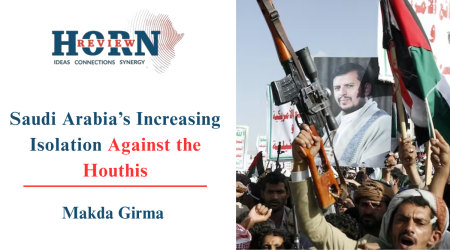
Saudi Arabia’s Increasing Isolation Against the Houthis
Saudi Arabia’s renewed confrontation with Yemen’s Houthis has exposed how...
21
Sep
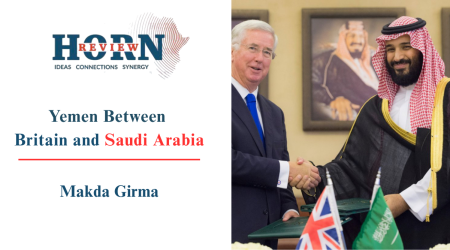
Yemen Between Britain and Saudi Arabia
The Houthi advance along Yemen’s Red Sea coast has exposed...
21
Sep
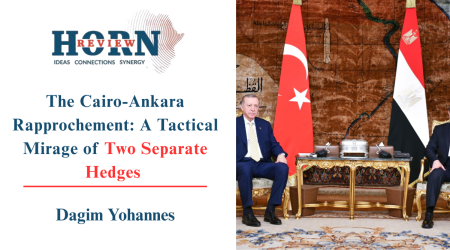
The Cairo-Ankara Rapprochement: A Tactical Mirage of Two Separate Hedges
The recent run of headlines out of Cairo and Ankara,...
20
Sep
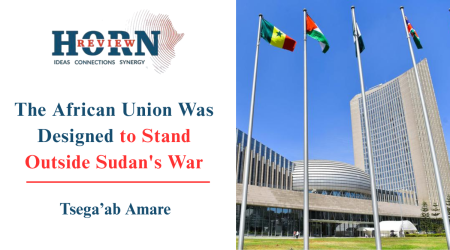
The African Union Was Designed to Stand Outside Sudan's War
Every time Sudan's war comes up in public discussion, mentioning...
2
Sep
A Decade of Saudi Miscalculation in Yemen
On March 26, 2015, Mohammed bin Salman, then a thirty-year-old...
31
Aug
Mahamat Déby or Burhan: Who Can Win the US?
On August 20, 2026, Sudanese warplanes and drones pursued a...
27
Aug
What the Decline of Multilateralism Could Mean for Africa
Multilateralism is weakening just as African states need it most....