The article from Africa Defense Forum, published on January 6, 2026, presents a sobering assessment about Somalia’s precarious trajectory. It centers on analyst Matt Bryden’s assessment that al-Shabaab’s encirclement of Mogadishu signals a looming collapse of the federal government unless urgent political reforms materialize. Bryden argues that the Al-Qaida-linked group’s potential takeover of the city is not a distant threat but an impending reality, driven by a confluence of military weaknesses, political divisions, and strategic missteps within the Somali federal government.
To understand Bryden’s warning, one must first look at the historical trajectory that has empowered Al-Shabaab. Emerging as a resilient insurgent force amid Somalia’s protracted civil strife, the group has capitalized on decades of state fragmentation since the fall of Siad Barre in 1991. Al-Shabaab’s affiliation with Al-Qaida has provided ideological cohesion and operational expertise, allowing it to evolve from hit-and-run tactics to territorial control. By 2026, it holds sway over approximately 30 percent of Somalia’s land, including vital rural expanses in the Juba River Valley and southwest regions. This dominance is not merely geographic but also psychological, as the group’s checkpoints encircle Mogadishu, creating a siege-like atmosphere that erodes public confidence in the federal authority. Bryden vividly describes the capital as a metropolis housing a diplomatic corps alongside a demoralized and ineffectual army. This portrayal highlights how historical governance failures have left urban centers vulnerable to encirclement rather than outright conquest.
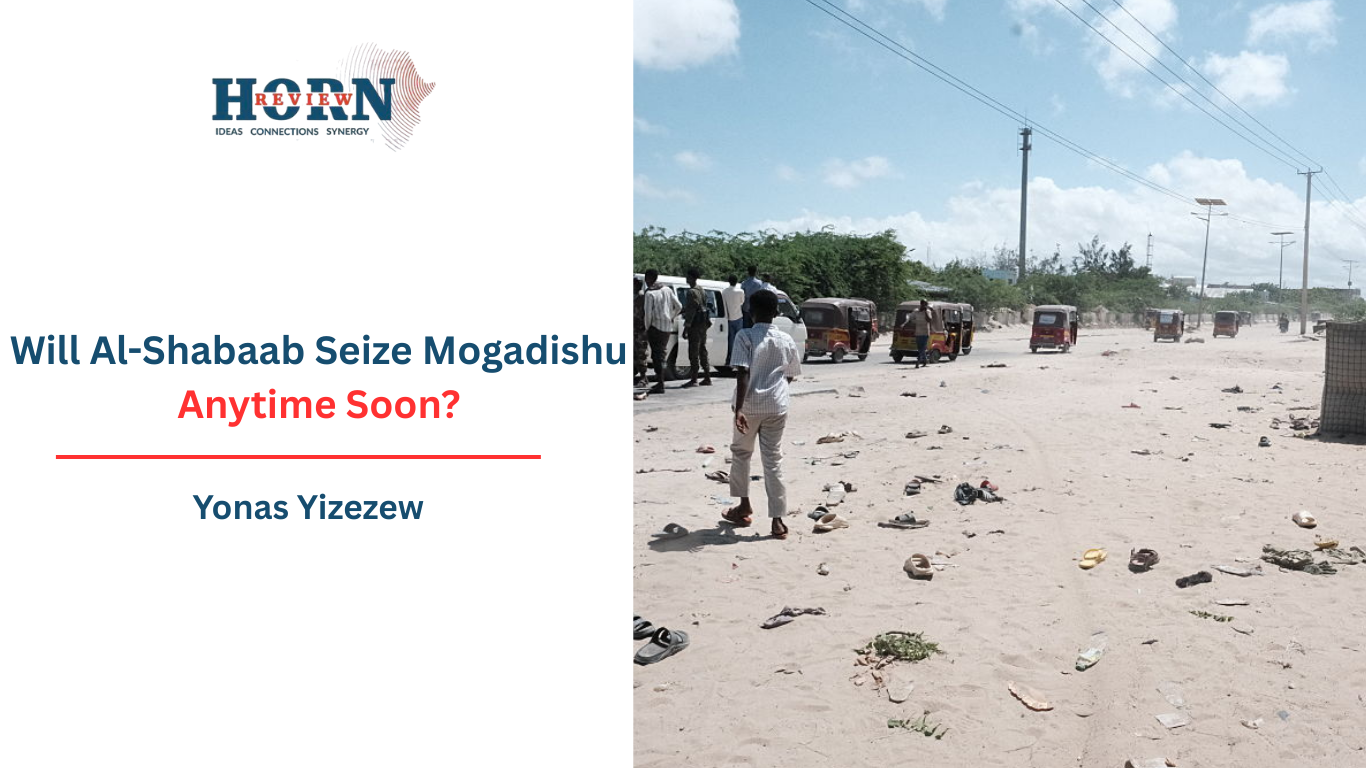
The current situation amplifies these vulnerabilities through a series of brazen attacks that demonstrate Al-Shabaab’s tactical sophistication. For instance, the early October car bomb, disguised as a military vehicle, targeted the Somali National Intelligence and Security Agency near the presidential palace, not only destroying critical intelligence assets but also facilitating the release of imprisoned militants. This incident, coupled with a July assault on a military base within Mogadishu itself, illustrates the group’s ability to infiltrate supposedly secure zones.
Local voices, such as resident Samatar Talliye, highlight the peril in government-absent pockets across states like Jubaland, South West State, Hirshabelle, and Galmudug, where state administrations control only major towns, leaving vast swathes open to exploitation. Even recent government successes have come at a high cost. Operations such as the December 10 raid by the National Intelligence and Security Agency in Afgooye that killed twelve militants, including a senior leader, and the mid-September capture of fighters in Toratorow by Danab Special Forces illustrate this reality. These operations resulted in civilian casualties and demonstrated the asymmetrical nature of the conflict, where Al-Shabaab’s mortar retaliations inflict disproportionate harm, further alienating the populace.
At the heart of Bryden’s critique lies the Somali federal government’s internal frailties, particularly under President Hassan Sheikh Mohamud’s leadership. With his term set to end in May 2026, Mohamud’s efforts to amend the constitution, introduce a new electoral system, and redraw federal boundaries appear as calculated moves to consolidate power, rather than foster unity. This has polarized the political landscape, alienating Federal Member States and preventing a cohesive front against the insurgency. Bryden points out that the administration’s focus on sidelining and subordinating these states diverts resources from the fight, transforming what should be a military challenge into a predominantly political one.
The Somali security forces are severely overstretched after suffering between ten thousand and fifteen thousand casualties in clashes with Al-Shabaab and the Islamic State affiliate over the past three years. As a result, they remain heavily dependent on the African Union Support and Stabilization Mission in Somalia. Yet, this mission grapples with understaffing, a fractured chain of command due to political interference, and waning donor support, teetering on the brink of reduction or outright termination. Such dependencies reveal a government more preoccupied with survival than strategy, allowing Al-Shabaab to exploit divisions through extortion, civilian abuse, and explosive preparations in hideouts like those raided in Afgooye.
Internationally, the stakes extend beyond Somalia’s borders, as Bryden warns of profound consequences for regional security. Neighboring countries face heightened risks of terrorist spillover, with a jihadist-controlled Mogadishu potentially igniting renewed attacks across frontiers. The analyst envisions scenarios where Al-Shabaab’s seizure occurs not solely through brute force but possibly via negotiations amid government collapse. This would lead to control over four million inhabitants and sparking new cycles of armed conflict with adversaries in Puntland or Somaliland. These areas, unlike the weaker southern states, maintain firmer territorial grip, setting the stage for prolonged warfare.
Reflecting on Bryden’s call for urgent intervention, it becomes clear that defeating Al-Shabaab demands more than sporadic raids. He advocates for simultaneous military offensives across multiple fronts, with Federal Member States leading coordinated deployments supported by select federal units. This approach hinges on rebuilding trust between the federal government and member states, a process undermined by current power plays. Without such synergy, half-measures will suffice only to delay the inevitable, allowing Al-Shabaab to morph Somalia into a jihadist haven akin to historical precedents in Afghanistan under the Taliban.
The analyst’s emphasis on political reconciliation as the linchpin resonates deeply, suggesting that true security stems from inclusive governance rather than authoritarian consolidation. In a broader sense, this situation mirrors global patterns where insurgencies thrive on state neglect, reminding us that counterterrorism succeeds through holistic strategies encompassing economic development, community engagement, and equitable power-sharing.
In this sense, Bryden’s analysis serves as a strong warning against complacency, urging decisive action to prevent a regional catastrophe. As Somalia teeters on this precipice in early 2026, the international community must recalibrate its support, prioritizing mission unification and donor commitment while pressuring Mohamud’s regime toward genuine federalism. Failure to heed this warning risks not only Mogadishu’s fall but also the unraveling of fragile peace in the Horn of Africa, where interconnected conflicts could draw in external powers and perpetuate cycles of violence. This reflection demonstrates the imperative for Somalia to transcend its divisions, forging a path where unity supplants fragmentation, and resolve replaces resignation, before time runs out.
This is a reflection on the Africa Defense Forum article “Analyst: al-Shabaab Seizure of Mogadishu May Be a ‘Matter of Time’,” available at: https://adf-magazine.com/2026/01/analyst-al-shabaab-seizure-of-mogadishu-may-be-a-matter-of-time/
By Yonas Yizezew, Researcher, Horn Review