For decades, Eritrea has survived as one of the world’s most closed, centralized, and militarized states. Its political reality has revolved around one man, one party, one military structure, and one dominant narrative: permanent threat. But today, a new and unavoidable factor is reshaping Eritrea’s future – not war, not sanctions, not diplomacy – but Ethiopia’s political transformation, something the People’s Front for Democracy and Justice (PFDJ) has been unable to reverse despite a sequence of subversions, aggressions, and sabotages over the past eight years.
The greatest challenge confronting the PFDJ has never been external aggression. It is the idea of change itself. Ethiopia’s attempt – however imperfect and seemingly unstable – to open political space, allow discourse, reform governance, and even change leadership has altered the psychological and political landscape of the entire Horn of Africa. And for Eritrea, that shift is existential.
Ethiopia has shown, even amid chaos and conflict, that a government can be questioned, leadership can be changed, and reform can be demanded. That example is dangerous to a system built on total obedience and permanent mobilization. The virus of political imagination – the belief that reform is possible – is far more destabilizing to Eritrea’s ruling structure than any army or foreign power.
This is why Eritrea’s leadership has historically resisted genuine openness toward a progressive Ethiopia, even during moments of apparent normalization. It is not simply about borders or sovereignty. It is about survival of a system that depends on citizens never imagining alternatives.
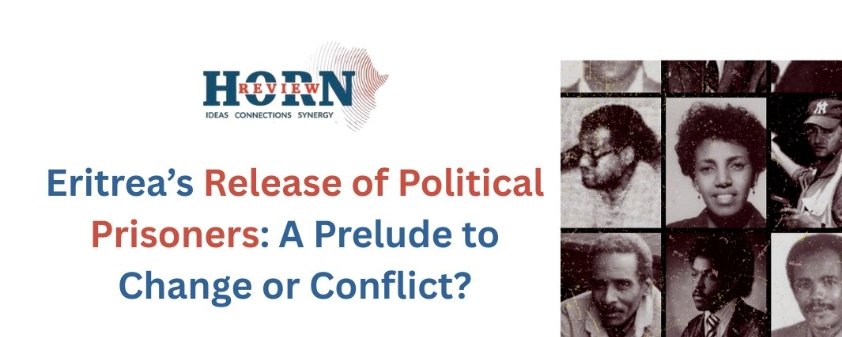
Recently, actions by Eritrean authorities appear, on the surface, to suggest a change of tone. Some political prisoners have reportedly been released after 18 years of imprisonment in a remote military prison, without trial or even charge. Ambassadors and consular officials have held meetings with select diaspora communities abroad. Outreach language has softened. Cultural gatherings and “unity” events have been encouraged among Eritreans in foreign countries. But symbolism is not reform.
There has been no implementation of the 1997 Constitution. No free and independent media. No elections. No official end to indefinite national service. No transparent accounting of political prisoners – especially those arrested in 2001 and never seen again. No space for opposition. No legal political pluralism.
Real transformation begins inside a country, not in embassy halls abroad. This raises a troubling but necessary question: are these gestures a genuine prelude to reform – or are they a strategic performance, designed to project unity in anticipation of regional instability or renewed confrontation with Ethiopia?
History leans heavily toward the later. Authoritarian regimes facing potential conflict often rally nationalism, organize diaspora support, and manufacture images of unity. The intent is not reconciliation, but consolidation. Patriotism is weaponized. Fear is mobilized. Loyalty is publicly staged. Eritrea has used this formula before.
Yet even in this pattern lies the deeper truth: Eritrea cannot remain locked in political stasis forever. The regional order is changing. Sudan is collapsing. Somalia has paid dearly for institutional emptiness. Libya disintegrated after its strongman fell. Yemen, Syria, both fractured almost beyond repair. States with no independent institutions, no pluralism, no political culture, and total centralization around a single ruler do not transition – they collapse.
Eritrea, in its present form, is structured not for succession, but for rupture. Without reform, any sudden vacuum will almost certainly result in fragmentation, instability, and possibly violent internal competition. The very mechanisms that now enforce unity would, in a crisis, become the engines of its breakdown.
This is why – paradoxically – reform, openness, and political transformation are not Eritrea’s threats. They are its only long-term protection. The choice is no longer theoretical. Either Eritrea follows a difficult, imperfect, and gradual path of reform – similar to Ethiopia’s attempt – allowing political life to breathe and institutions to develop. Or it continues to suppress change until it breaks under its own weight and follows the tragic path of Sudan or even worse, Somalia.
The most dangerous myth promoted by the PFDJ is that reform equals chaos. In reality, the longer reform is denied, the more catastrophic the eventual collapse will be.The greatest threat to Eritrea is not Ethiopia’s military power. It is Ethiopia’s political evolution.
Once Eritreans fully accept that leadership can change without the nation disappearing, the ruling party’s greatest tool – fear of the unknown – no longer works. By refusing to open politically, Eritrea’s leadership is not defending sovereignty. It is quietly constructing the conditions for state failure. And time, like history, is not on the side of those who refuse to evolve. The real question is no longer whether change will come to Eritrea. It is whether that change will be chosen – or forced by collapse.
By Horn Review Editorial