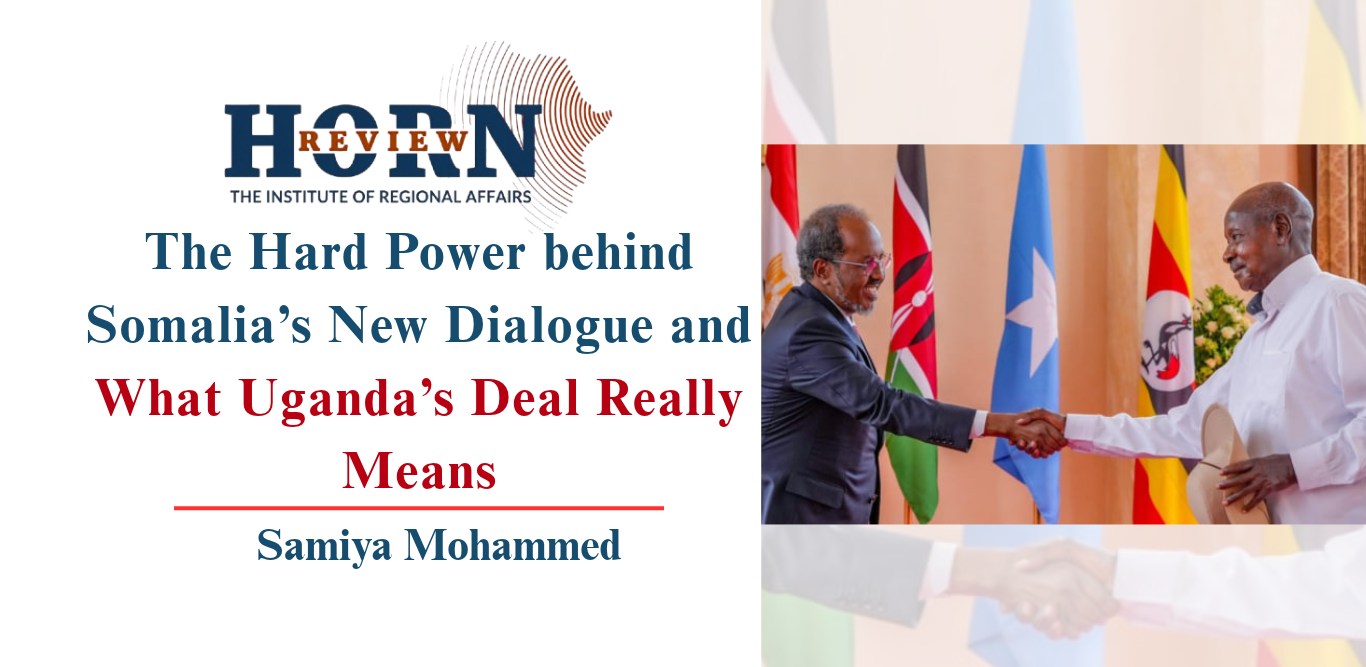
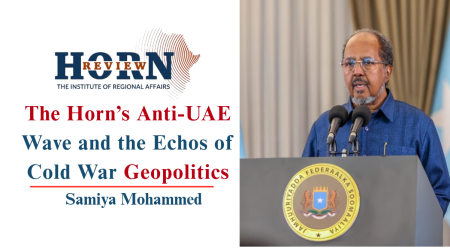
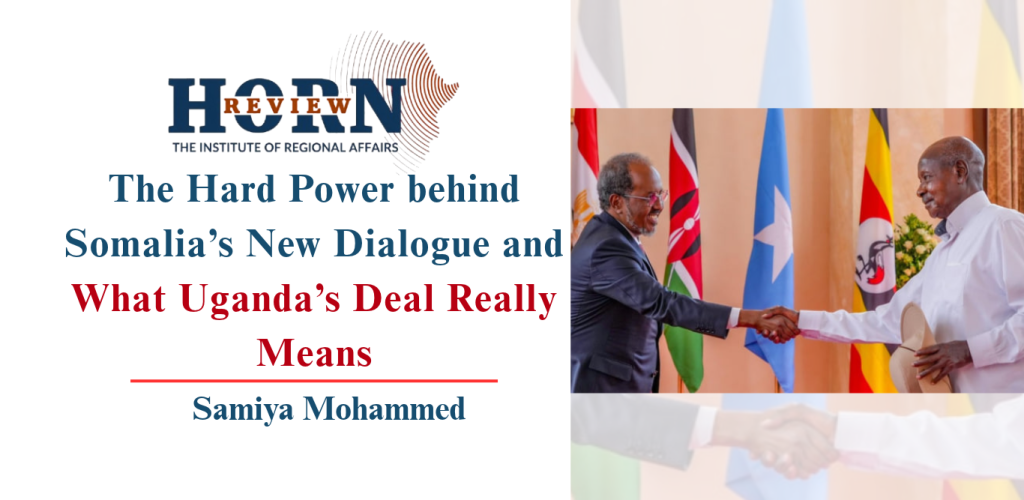
The recent decision by Somali President Hassan Sheikh Mohamud to travel to Uganda and accept President Yoweri Museveni as mediator in the stalled national dialogue process should not be construed as a sudden conversion to the principles of inclusive dialogue or as an exercise in statesmanship. It is a forced tactical retreat compelled by the convergence of pressures that have rendered the president’s unilateral political project untenable and any interpretation that presents this development as a democratic advance or a genuine reconciliation initiative misapprehends the underlying scenarios. What is happening between Somalia and Uganda is pure power politics with the management of elite survival under military and political duress and the extraction of leverage by regional actor intent upon securing an orderly exit from a two decade security commitment. The substance of the arrangement is of far less consequence than the power relations that produced it and those relations are defined by hard military leverage rather than by diplomacy or a shared commitment to democratic norms.
The predicament confronting Hassan Sheikh Mohamud arises from the effect of multiple reinforcing pressures that have jointly constrained options and rendered concession the path of least political cost. A Supreme Court determination that his mandate has expired has undermined the legal basis of his continuance and exposed him to challenges emanating from both within and beyond the federal government. The principal opposition formation, the Somali Future Council comprising the leadership of Puntland under Said Abdullahi Deni, of Jubaland under Ahmed Madobe and national figures including Sharif Sheikh Ahmed and Hassan Ali Khaire has declined his successive invitations to dialogue invoking the unproductive character of thirteen prior engagements and conditioning any further participation upon genuine international mediation, enforceable guarantees, adequate security arrangements for regional leaders and the formal abandonment of his unilateral electoral framework together with the associated constitutional amendments.
The mediation initiative undertaken by the Quartet of the United States, the United Kingdom, Turkey and the European Union likewise failed to produce the inclusive process that had been anticipated and the opposition withheld participation from the mid November consultations even under Quartet auspices. Al Shabaab continues to test existing security arrangements confirming the persistence and adaptability of an insurgency that neither the federal authorities nor their external partners have succeeded in containing. Ugandan contingents serving under the African Union Transition Mission in Somalia have commenced their withdrawal, the Uganda People’s Defence Forces having already vacated Barawe and having indicated their readiness to relinquish a further dozen positions that constitute critical defensive buffers for Mogadishu.
It is precisely this final pressure point that accounts for the decision to travel to Uganda and to accept Museveni as mediator. Museveni retains the sole instrument of immediate coercive leverage that remains available, namely the presence of Ugandan forces on the approaches to the capital. The Quartet states may convene meetings, issue communiqués and exert diplomatic pressure yet they maintain no ground forces in positions that directly condition the security of Mogadishu. Museveni does and he has demonstrated a readiness to employ that capacity. The prospect of an accelerated withdrawal of Uganda People’s Defence Forces from the buffer positions in Lower Shabelle together with the attendant implication that the security of Mogadishu itself would be placed in jeopardy, generated a cost that Hassan Sheikh could not disregard. Facilitation of the talks thereby became the necessary price of an orderly Ugandan departure after two decades of deployment rather than an expression of charity. Museveni is not mediating from altruistic motives however he is securing a political arrangement that permits Uganda to withdraw without incurring responsibility for a subsequent security collapse in the Somali capital.
Hassan Sheikh’s acceptance of Museveni as mediator and his abandonment of the unilateral one person one vote election plan must be construed as a tactical retreat rather than a principled transformation and this distinction is consequential because it elucidates the logic of the concession. He relinquished the unilateral vote on his own terms only subsequent to the convergence of the court ruling, opposition rejection and Museveni’s troop threat which rendered the unilateral pathway too costly to sustain. In Somali political practice such concessions are characteristically provisional and tactical rather than enduring and principled. The president will endeavour to control the process, defer on substantive matters or reconfigure the terms once the immediate pressure subsides and the history of Somali political negotiations abounds with instances of agreements announced and undermined through procedural manipulation or selective implementation. There is scant reason to believe that this case will fundamentally deviate from that pattern and the structural incentives that generate such behaviour remain intact.
The Ugandan role is precisely main because it is the only actor possessing hard leverage capable of rapid and decisive application. The Quartet can convene and exert pressure yet it cannot physically secure or destabilize the capital and its influence is mediated through diplomatic channels that Somali political actors have learned to manage and deflect. Museveni can act directly and he has demonstrated a willingness to do so. His credibility in this regard is reinforced by the 2021 episode involving former President Mohamed Abdullahi Farmaajo when Museveni threatened withdrawal and Farmaajo capitulated. That precedent established a template in which credible signals of accelerated departure precipitate recalibration among Somali leaders, and Hassan Sheikh yielded to Museveni where he would not yield to others because Museveni alone holds the immediate security key to the capital.
The opposition however will not capitulate easily and its leverage remains substantial. The Somali Future Council has already rejected thirteen prior meetings and boycotted the Quartet facilitated round in mid November and its distrust of Hassan Sheikh is well founded. The opposition demands genuine guarantees on security, binding outcomes and the termination of Villa Somalia’s control over the process and it perceives the president as instrumentalizing dialogue for his political survival rather than as a bona fide partner in renegotiating the national compact. Museveni’s involvement and reported security guarantees for attendees render the opposition more likely to participate yet agreement on substance will be gradual, transactional and contested. The core issues encompass the election model, the question of term limits, power sharing arrangements with federal member states and the reversal of the constitutional amendments that Hassan Sheikh pursued unilaterally and these are not matters that will be resolved just because Museveni is present or because the opposition consents to attend a meeting.
This constitutes elite survival management rather than a democratic breakthrough. Hassan Sheikh is managing the termination of unilateral project under military pressure and Museveni is extracting a political settlement so that Uganda may effect an orderly exit without being held responsible for the next security collapse. The opposition likewise possesses leverage and will exact its price and the probable path is possibly inconclusive talks in Mogadishu rather than rapid consensus. Attendance is one matter, agreement on the election model, term limits, power sharing with federal member states, and reversal of the constitutional amendments is another and those issues will not be resolved just because Museveni is present. The process remains reversible and vulnerable to the same spoilers and incentives that have derailed previous rounds and the power relations that produced the current opening have not been fundamentally transformed.Substance must take precedence over optics and the talks that follow will produce statements and perhaps a communiqué yet the real test lies in whether the parties can move beyond procedural agreement to substantive resolution of the core disputes that have paralyzed Somali politics. The opposition can still withdraw and if the process appears to be another controlled exercise or if Museveni is perceived as excessively close to the federal government it will demand more or refuse.
By Samiya Mohammed, Researcher, Horn Review