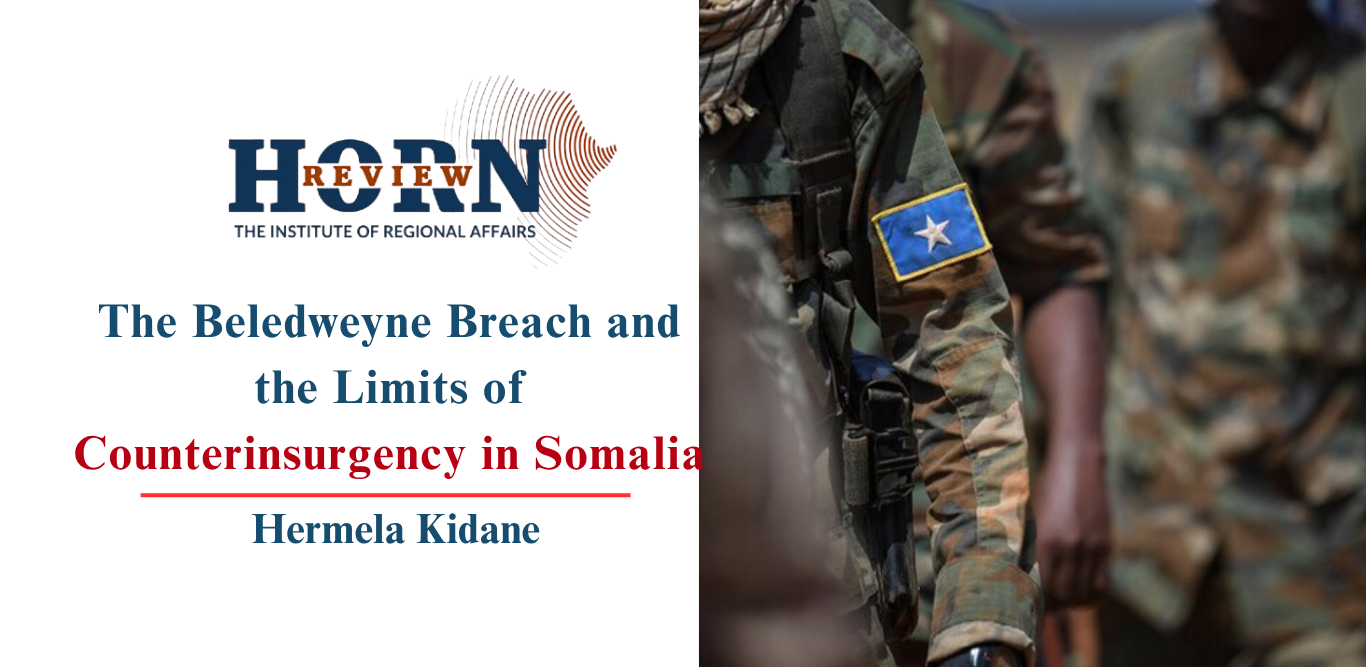
The seizure of the Amagala administration compound in Beledweyne by Macawisley fighters in late October 2026 presents a serious challenge in Somalia’s counterinsurgency effort. These local forces once central to clearing Al-Shabaab from parts of Hiiraan turned on the federal structure they had supported. The episode is not an isolated clan dispute. It shows the structural weakness of a strategy that mobilizes irregular fighters for battlefield gains without converting those contributions into durable political presentation. At a moment when external support is contracting the resulting fragmentation creates space for Al-Shabaab to regenerate.
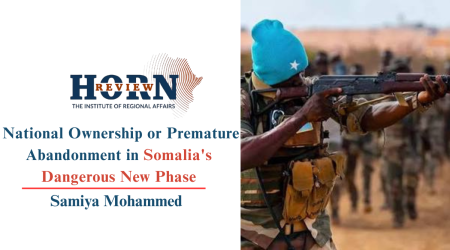
The Macawisley originated as community self defense units among the Hawadle of Hiiraan. Named after the traditional Somali sarong they formed in response to Al-Shabaab’s extortion and violence when regular forces proved unable to protect local populations or hold recovered ground. The federal government recognized their operational value, supplied training and materiel and integrated them into joint operations. Their intimate knowledge of terrain and social networks enabled clearances that conventional units had repeatedly failed to sustain. This partnership though improvised became a practical template for combining state and popular forces against the insurgency.
That arrangement broke down when Hawadle political and militia leaders concluded that their sacrifices were being discounted in Hirshabelle’s power configuration. The consolidation of influence around Ali Gudlawe an Abgaal figure closely aligned with President Hassan Sheikh Mohamud was widely interpreted as a zero sum reallocation that marginalized Hiiraan’s dominant clan. According to contemporaneous reporting Macawisley fighters entered the Amagala compound after Somali National Army personnel withdrew encountering no resistance. The informal understanding that security contributions would yield governance entitlements had collapsed. What Somali political vernacular terms a blood contract was severed by elite bargaining.
The involvement of experienced political and security actors has elevated the episode beyond spontaneous local protest. Former National Intelligence and Security Agency director Abdullahi Mohamed Ali Sanbalolshe and in some accounts associated figures have been linked by multiple reports to efforts aimed at constructing an autonomous Hiiraan administration detached from Hirshabelle. This project resonates with existing tensions between Mogadishu and the administrations of Puntland and Jubaland. The Beledweyne action thus functions as a component of a wider pattern of center periphery contestation rather than a purely regional grievance.
Operational effects appeared almost immediately. Reports indicated that Macawisley units abandoned forward positions along the Mataban and Buuloburte axes sectors where their local knowledge had been especially effective and concentrated two thousand fighters in and around Beledweyne. This movement constitutes a partial defection from the counterinsurgency coalition. Al-Shabaab has shown consistent capacity to exploit political division and reduced pressure. The timing intensifies the risk. The United Nations political mission completed its transition and closed at the end of October 2026. Ugandan forces which are contributor to African Union efforts began a phased withdrawal in early November with full departure projected by the end of 2027. Uncertainty over sustained financing for the African Union Support and Stabilization Mission further reduces external enabling capacity. The simultaneous loss of a proven local force multiplier creates precisely the opening the insurgent group requires.
The federal government confronts a narrow dilemma. Coercive restoration of control in Beledweyne would consume scarce military resources and risk activating wider Hawadle networks potentially drawing in kin groups from adjacent regions and precipitating broader clan conflict. Somalia’s historical record demonstrates that armed peripheral communities are difficult to demobilize absent credible political accommodation. Acquiescence however, would establish a precedent that rewards the use of force to extract concessions encouraging similar actions by other irregular formations and further eroding central authority. Neither option strengthens the fight against Al-Shabaab both risk expanding the group’s operational space.
For Ethiopia these developments carry direct implications for national security. A fragmented central Somalia adjacent to its borders presents a liability. Al-Shabaab has previously used Hiiraan as a platform for cross border activity. Ethiopia retains clear interests in preventing the group’s resurgence and in the maintenance of a stable cooperative authority along its periphery. Its participation in African Union missions and bilateral security cooperation provide channels of influence. The most effective use of those channels lies in quiet diplomatic support for an inclusive Somali political process rather than unilateral initiatives that could be perceived as interference. A negotiated arrangement that keeps Hawadle fighters invested in containing Al-Shabaab serves Ethiopian border security more reliably than any short term military posture.
Counterinsurgency strategies that rely on irregular forces succeed only when those forces are subsequently incorporated as stakeholders with genuine voice in governance. Treating militias solely as instruments produces the rupture now visible in Beledweyne. A sustainable resolution requires a political settlement within Hirshabelle and Hiiraan that renegotiates power sharing, establishes clearer institutional presentation for the Hawadle and offers structured pathways for integration that preserve both security utility and political dignity. Such an outcome is not a concession to pressure it is a prerequisite for durable territorial control.
Absent that settlement Mogadishu risks simultaneous confrontation with Al-Shabaab in the countryside and with former partners in the towns a struggle no Somali government can sustain and one whose consequences will not remain confined to Somalia’s borders. The Beledweyne breach therefore stands as a warning of structural vulnerability. Addressing the political deficit that produced it remains the essential condition for protecting recent gains and limiting the space available to Al-Shabaab during a period of external transition.
By Hermela Kidane, Researcher, Horn Review