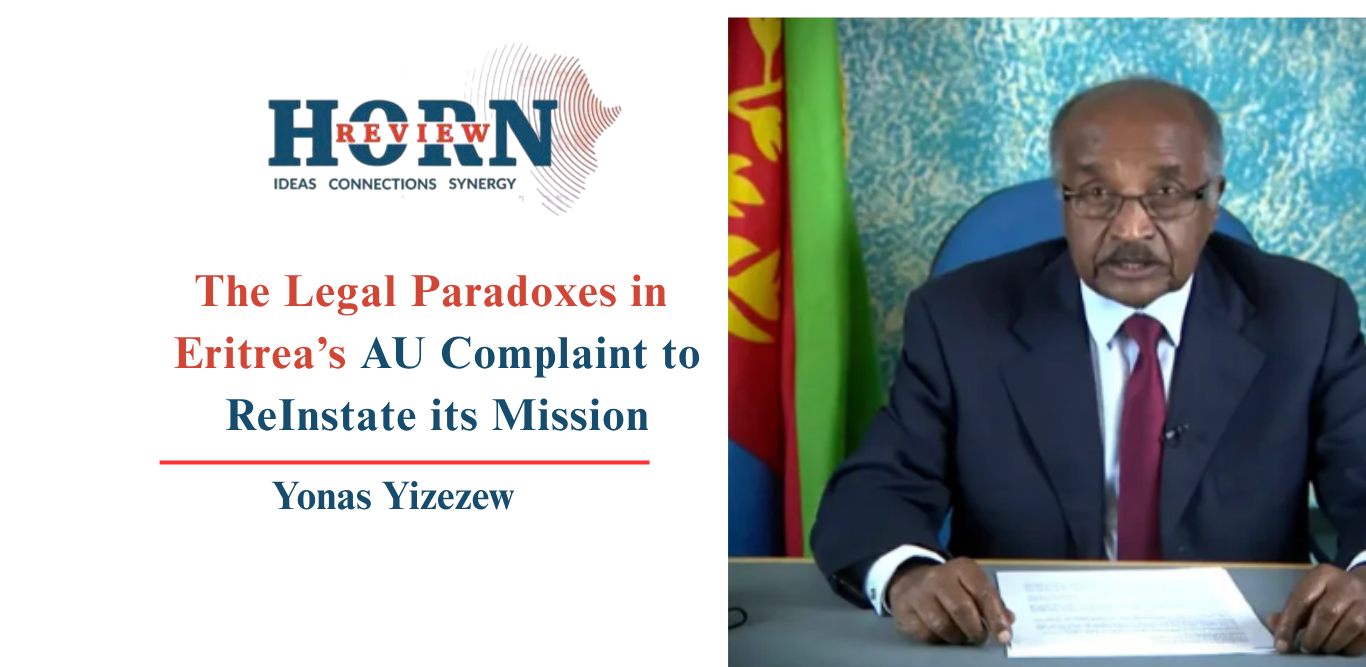
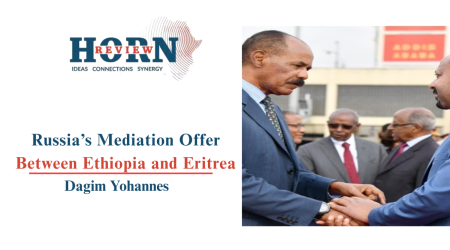
Ethiopia’s expulsion of ten Eritrean diplomats from Addis Ababa marked the culmination of more than a year of steadily worsening relations. It is characterized by formal accusations of interference and subversive activity. Eritrea responded by withdrawing beyond 10 personnel, i.e. invluding all remaining personnel, shutting its embassy and placing before the African Union Commission and UNECA a request that treated the decision as an unlawful termination of its permanent mission. The sequence of events and the legal arguments advanced on both sides needs a closer examination of the relevant facts, the Headquarters Agreement between Ethiopia and the African Union, the principles set out in the AU Constitutive Act, established host-state practice and member-states’ rights and obligations.
While the AU-Ethiopia Headquarters Agreement protects the physical access of multilateral missions, this privilege remains conditional upon the foundational tenets of the Union itself. Article 4(g) of the AU Constitutive Act enshrines the prohibition of interference by Member States in one another’s internal affairs as a core obligation under the Union’s founding framework. When a diplomat, such as a dual-accredited Chargé d’Affaires engages in subversive activities, that individual violates the core mandate of Article 4(i) which requires the peaceful co-existence of member states. Eritrean diplomats, in this case, has stripped themmselves of functional multilateral protections by engaging in subversive activities against the host state thereby allowing Ethiopia to invoke its sovereign rights of self-preservation.
Ethiopia, as host country is obligated to respect the right of every member state to maintain a permanent mission. Hosting the AU does not, however, relegate Ethiopia to a sub-sovereign status. As an equal sovereign state under Article 4(a), Ethiopia retains the inherent right to police threats within its borders, just as any other member state would. This authority does not preclude the taking of appropriate measures against individual representatives who are deemed to pose a threat to national security. Without obstructing the permanent mission itself, Ethiopia can declare specific representatives persona non grata. The essential distinction lies between the institutional right to maintain a permanent mission and the host country’s authority to address legitimate security concerns involving particular individuals.
Eritrea’s appeal to the AU Commission appears to assume that Ethiopia’s obligations as host state are absolute and unconditional. However, those obligations must be interpreted alongside Ethiopia’s rights under the applicable legal framework, including its authority under diplomatic law to declare individual representatives persona non grata. As mentioned, under Article 4(g) of the AU Constitutive Act, Eritrea is constitutionally forbidden from interfering in Ethiopia’s internal affairs and as a member state, is obligated to respect the rights of the host country. Historical precedent suggests that during the 1998 Ethiopia–Eritrea conflict, Eritrea’s diplomatic mission in Addis Ababa retained the capacity to perform basic functions despite a significant reduction in its diplomatic staff into two. Ethiopia’s letter to the Security Council of 9 October invoking Article 51 may further broaden the latitude it can claim, since the Commission has accepted that a receiving state possesses somewhat greater room for maneuver during periods of heightened security threats.
As an Asmara-directed diplomat engages in espionage, funds local dissidents, or exploits the Addis Ababa mission for intelligence gathering during a period of active tension and risk of confrontation, Eritrea commited a material breach of the Union’s foundational treaty. It becomes difficult for a state to claim protections under a treaty it is actively subverting. Ethiopia’s actions should be assessed in light of the conduct that prompted them and not necessarily as an attempt to obstruct Eritrea. By targeting the diplomats’ non-functional and unauthorized domestic interference, Ethiopia demonstrated that it did not infringe upon legitimate AU institutional autonomy, but rather policed personal misconduct that was unlawfully shielded by a diplomatic passport.
The factual sequence in the present case is also decisive. Reports indicate that Ethiopia declared 10 Eritrean diplomats persona non grata, while some other members of the Eritrean diplomatic mission were not included in the expulsion order. Eritrea however responded by withdrawing the entire embassy personnel and closing its embassy drclaring it has cut all diplomatic ties with Ethiopia, thereafter presenting the entire situation as a forced termination of its AU mission – which was not. That characterization appears to serve a political purpose by conflating the expulsion of individual diplomats with the termination of Eritrea’s institutional representation at the African Union. Ethiopia did not order the closure of the permanent mission but removed specific individuals. The subsequent decision to empty the mission entirely was Eritrea’s own. A Member State that voluntarily withdraws its remaining accredited personnel cannot thereafter claim that the host state has abolished its right of representation, nor can it demand that the AU compel the reinstatement of the very individuals already declared persona non grata.
International legal history confirms that hosting a multilateral body does not require a state to commit diplomatic suicide. When the United States expelled Soviet and Russian UN diplomats in 1986 and 2018 under Section 13(b) of the US-UN Headquarters Agreement, it established a global precedent that national security overrides multilateral accommodation when a diplomat abuses residence for espionage or subversion. Although the AU-Ethiopia Headquarters Agreement does not provide an explicitly detailed provision comparable to the UN instrument, the customary right to state survival remains an implied term. Ethiopia’s invocation of national security therefore serves as a sovereign override. A host state cannot be expected to disregard credible threats to its territorial integrity simply because the individuals concerned serve as representatives of a foreign state or an international institution. Ethiopia’s duty to admit representatives does not require it to accept every nominee or to tolerate the continued presence of individuals whose conduct undermines the security of the state in which the organization is seated.
Similar international practice supplies a closely analogous precedent. In February 2022 the United States expelled twelve Russian diplomats accredited to the United Nations Mission in New York, citing their engagement in espionage activities adverse to national security. The action was taken expressly under the US-UN Headquarters Agreement. The Russian Permanent Mission continued to function and Russia retained the right to nominate replacements in accordance with ordinary accreditation procedures. The same distinction operates here. Ethiopia’s measures against the ten individuals do not extinguish Eritrea’s institutional right to maintain a permanent mission. Eritrea remains free to propose new representatives. Ethiopia, for its part, retains the residual authority recognized in host-country practice to limit the overall size of any mission when security considerations so require.
The experiences of Iran, Cuba, and Palestine at the United Nations also illustrate the complex relationship between diplomatic representation, national sovereignty, host-country authority, and international obligations. Although Iran and Cuba are full UN member states and Palestine holds non-member observer-state status, their representatives have faced various restrictions imposed by the United States, including limitations on movement and, in certain cases, visa restrictions. These cases demonstrate that diplomatic status and international complaints do not automatically exempt states or their representatives from disputes over access, accreditation, or the exercise of host-country authority.
Eritrea’s request therefore misstates both the nature of Ethiopia’s action and the legal consequences that flow from it. The right to maintain a permanent mission survives the removal of particular diplomats. The affected Member State may nominate successors, but the host state may, consistent with the Headquarters Agreement and customary practice, scrutinize those nominations and, where justified, control the numerical strength of the mission. By choosing to withdraw all remaining personnel rather than seek accreditation of replacements, Eritrea converted a limited, individual-focused security measure into a self-imposed absence. That political choice cannot be reframed as an Ethiopian violation of multilateral obligations, nor can it generate a legal duty on the part of the AU to compel the reinstatement of the expelled individuals.
As such, Ethiopia’s obligations as host country require it to preserve the institutional space for every Member State’s permanent mission. They do not require it to retain specific persons whose activities have been determined to threaten national security. Eritrea’s demand for reinstatement of the expelled diplomats confuses the two. The proper course remains the ordinary one in which nomination of new representatives and the regulation of their presence with in the Ethiopian state is subject to the host state’s legitimate security prerogatives.
By Yonas Yizezew, Researcher, Horn Review