
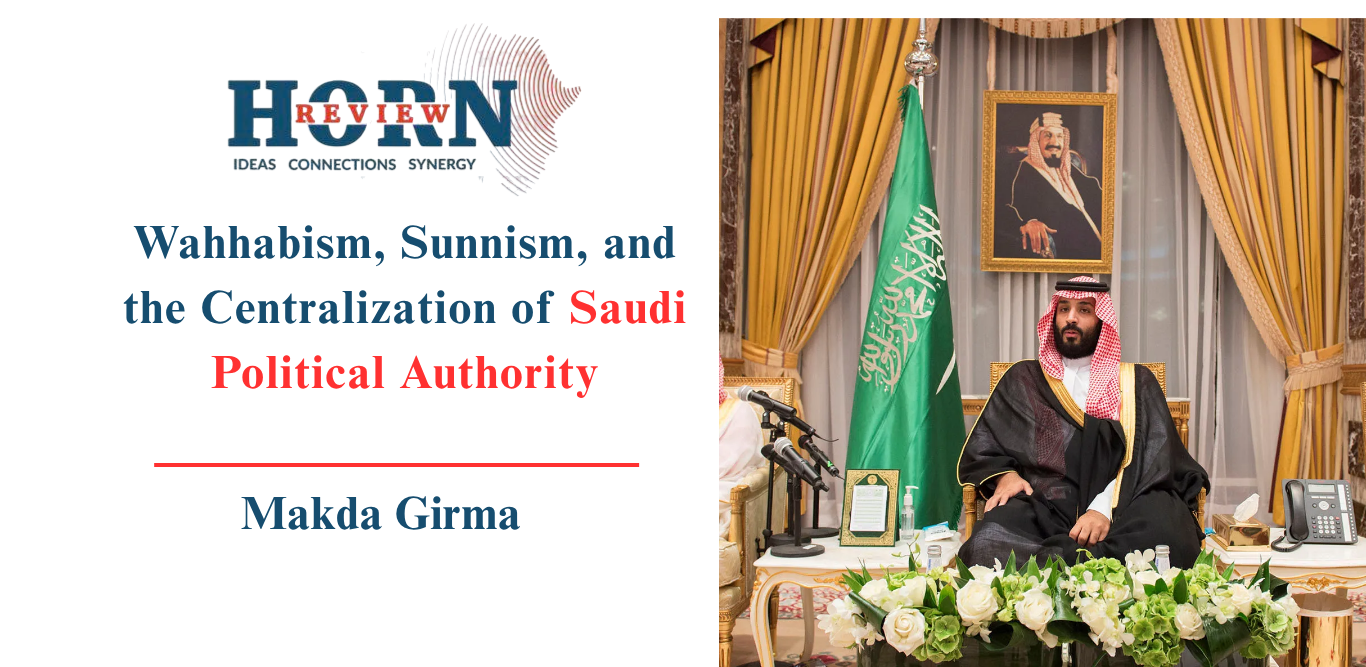
Wahhabism, Sunnism, and the Centralization of Saudi Political Authority
Saudi Arabia’s recent transformation is frequently presented as a movement away from Wahhabism toward a more moderate form of Sunni Islam. However, this description creates a theological distinction that does not fully exist. Wahhabism developed within Sunni Islam and historically drew heavily from the Hanbali legal tradition. The more significant transformation is therefore political: who has the authority to interpret Islam, regulate society, and legitimize the Saudi state?
For much of Saudi history, the House of Saud governed through an alliance with a Wahhabi religious establishment that exercised considerable influence over education, the judiciary, mosques, religious administration, and public morality. The monarchy retained ultimate political sovereignty, but clerics were given substantial delegated authority over religious and social life. Since 2016, this arrangement has undergone its most significant restructuring. Religious institutions remain, but their ability to independently determine state policy has weakened substantially.
Saudi Arabia has therefore not simply replaced Wahhabism with Sunni Islam. It has moved from a Wahhabi dominated form of official Sunnism toward a broader but increasingly state managed Sunni system. At the same time, this religious restructuring has been accompanied by social liberalization, economic modernization, Saudi nationalism, and a growing concentration of political authority under Crown Prince Mohammed bin Salman.
The Fallacy of Theological Replacement
Wahhabism became politically important through the eighteenth century alliance between Muhammad ibn Abd al Wahhab and the House of Saud. What began as a religious reform movement eventually became deeply incorporated into Saudi state institutions. Religious scholars gained access to education, courts, mosques, religious administration, and social regulation while providing the monarchy with a powerful source of Islamic legitimacy.
Saudi Arabia was never a clerical state in which religious scholars formally ruled above the monarchy. Instead, Wahhabi institutions exercised significant authority because the House of Saud delegated important religious and social responsibilities to them. Ultimate political sovereignty remained with the ruling family.
The monarchy had already begun narrowing this delegated religious authority before Mohammed bin Salman. Under King Abdullah, the Council of Scholars was reorganized in 2009 to formally include scholars from all four major Sunni schools rather than remaining almost exclusively Hanbali. In 2010, Abdullah also restricted the public issuance of fatwas to officially approved scholars, part of a broader effort to bring religious interpretation further under state authority.
The process accelerated significantly after 2016. The Council of Senior Scholars remained in existence, religious ministries continued operating, and Islamic law remained fundamental to the state. What changed was the ability of these institutions to independently determine political and social policy.
The decision to allow women to drive illustrates this changing hierarchy. Conservative religious figures had historically opposed the policy, yet once the political leadership decided that women would be allowed to drive, the official religious establishment accommodated the decision. Rather than clerics determining the limits within which the monarchy could reform society, the monarchy increasingly established policy and expected official religious institutions to provide compatible interpretations afterward.
Mohammed bin Salman gave this transformation a public ideological language in 2017 when he announced that Saudi Arabia would return to moderate Islam open to the world. The significance of the phrase is political as much as theological. Moderate Islam has not meant removing Islam from the state or introducing a secular government. Instead, it increasingly describes an interpretation of religion compatible with economic modernization, foreign investment, social stability, international integration, and the priorities of the monarchy.
The transformation is therefore not the replacement of one religion by another. It is the weakening of one religious establishment’s ability to monopolize the political interpretation of Sunni Islam.
From Religious Policing to State Regulation
The clearest institutional example came in April 2016, when Saudi Arabia sharply restricted the powers of the Committee for the Promotion of Virtue and Prevention of Vice. The religious police had historically possessed extensive authority over public morality, including dress, interaction between men and women, prayer observance, entertainment, and other forms of public conduct.
The religious police reform removed their powers to arrest, pursue, or demand identification from suspected offenders. This represented a major reduction in Wahhabi institutional power, but it did not mean that the Saudi state abandoned the regulation of society. Coercive authority increasingly moved toward ordinary police, ministries, courts, and regulatory agencies more directly controlled by the central government.
Saudi Arabia therefore moved from religiously administered social regulation toward centrally administered state regulation.
The effects on everyday life have been substantial. Women gained greater mobility, cinemas reopened, entertainment expanded, concerts and sporting events became increasingly common, tourism became central to economic policy, and gender interaction in public spaces became less restrictive. These were genuine changes rather than simply changes in political rhetoric.
Yet the state remained the institution determining the boundaries of those freedoms. The weakening of the religious police did not create an unregulated public sphere. Instead, government agencies such as the Ministry of Interior, Ministry of Culture, General Entertainment Authority, courts, and ordinary police increasingly became responsible for public regulation.
Judicial reform demonstrates the same transfer of authority at a deeper institutional level. Historically, Saudi judges possessed substantial discretion in applying sharia and Hanbali jurisprudence to individual cases. The contemporary leadership has increasingly replaced this degree of judicial discretion with written legislation.
In 2021, Mohammed bin Salman announced a broader legislative program involving major laws governing personal status, civil transactions, evidence, and discretionary criminal penalties. The objective was to make judgments more predictable, reduce inconsistencies, and create clearer statutory references.
The Personal Status Law approved in 2022 was explicitly described by the crown prince as deriving from Islamic sharia while also incorporating contemporary legal practices. The Civil Transactions Law followed in 2023 and was presented as another major stage in Saudi judicial reform.
This codification does not eliminate ijtihad or Islamic law. The civil law text itself provides that where statutory provisions and general legal rules do not resolve a matter, relevant principles derived from Islamic sharia remain applicable.
The political significance lies elsewhere. Judges increasingly begin with legislation written and approved by the state rather than exercising the same degree of individual religious discretion. Islamic law therefore remains, but the monarchy has acquired greater authority over how religious principles are converted into formal and predictable law.
The process can consequently be understood as a shift from clerical interpretation toward state codification.
Nationalism, Vision 2030, and Political Legitimacy
Reducing the political importance of the Wahhabi establishment creates another problem for the monarchy. For generations, the alliance between religious scholars and the House of Saud contributed to the legitimacy of Saudi rule. Weakening that relationship requires alternative sources of political legitimacy.
Saudi nationalism has increasingly filled part of this space.
The creation of Founding Day provides one of the clearest examples. In 2022, King Salman established February 22 as a national commemoration marking the foundation of the First Saudi State by Muhammad bin Saud in 1727.
The date is politically significant because it precedes the famous alliance with Muhammad ibn Abd al Wahhab.
Previous historical narratives frequently emphasized the alliance between Muhammad ibn Saud and Ibn Abd al Wahhab as a foundational moment in Saudi political development. The new narrative moves the origin of the state backward and places Muhammad bin Saud and the ruling dynasty at the center of the national story.
Sultan Alamer’s Founding Day analysis interprets this as a substantial break with the older Wahhabi political narrative, arguing that the new historical account elevates the Saudi state itself above its former religious partnership. Eman Alhussein’s analysis of the evolving national narrative similarly shows how national celebrations increasingly emphasize Saudi history, the ruling family, national identity, and political continuity.
The older political story could be understood as Saudi political authority combined with a Wahhabi religious mission to produce the Saudi state.
The emerging story places greater emphasis on the Saudi dynasty creating political unity, security, continuity, and statehood, while religion becomes part of that wider national project.
Religion has not disappeared from Saudi legitimacy. The monarchy remains Custodian of the Two Holy Mosques, Islam remains foundational to the legal system, and control of Mecca and Medina gives the Saudi leadership religious significance across the Muslim world.
What has changed is the monopoly once exercised by specifically Wahhabi validation.
Vision 2030 provides another increasingly important source of political legitimacy. Economic development, employment, technology, infrastructure, tourism, entertainment, investment, and international influence are increasingly presented as evidence that the monarchy is capable of successfully governing and transforming the country.
Political scientists describe this as performance legitimacy, in which an authoritarian political system strengthens public acceptance by demonstrating its capacity to deliver public goods, stability, and effective government.
This creates a different relationship between citizens and the monarchy. The older rentier bargain emphasized the distribution of oil wealth and government benefits. Vision 2030 increasingly asks citizens to judge the government through its ability to create a successful post oil economy.
Mohammed bin Salman has also become personally associated with this legitimacy. Vision 2030 is closely identified with his leadership, making economic success, social transformation, and international prestige increasingly part of his political image. Carnegie’s Vision 2030 review describes the project as combining economic reform and social liberalization with the personalization of political power around the crown prince.
The External Retreat from Wahhabism
The same transformation is visible outside Saudi Arabia.
For decades, Saudi Arabia used religious outreach as an important form of foreign influence. The kingdom financed mosques, religious schools, scholarships, charities, publications, and Islamic institutions across different regions of the world. During King Fahd’s reign in particular, international Salafi networks became an important form of Saudi soft power.
Saudi religious outreach served geopolitical as well as theological purposes. Saudi supported Salafism helped the kingdom compete against Arab nationalism, revolutionary Shia Islam following Iran’s 1979 revolution, and rival Sunni movements. It also strengthened Saudi Arabia’s ability to influence debates about what constituted orthodox Sunni Islam internationally.
Under Mohammed bin Salman, this strategy has been substantially reduced. Saudi Arabia has withdrawn from or decreased support for some overseas Salafi institutions while increasingly relying on investment, infrastructure, diplomacy, tourism, culture, and sport as mechanisms of international influence. Carnegie describes this decline in Salafi soft power as part of a wider restructuring of Saudi foreign influence.
The retreat serves several purposes. It reduces international association between Saudi Arabia and religious extremism, addresses security concerns surrounding transnational ideological networks, improves relations with Western governments, and makes the country’s international image more compatible with foreign investment and Vision 2030.
It also changes the nature of competition with Iran.
Historically, Saudi Arabia and Iran competed partly through rival claims to Islamic leadership. Saudi supported Sunni and Salafi networks competed with Iran’s revolutionary Shia political model. Contemporary Saudi foreign policy increasingly emphasizes Saudi national power rather than relying primarily on transnational religious ideology.
Investment funds, diplomatic agreements, infrastructure financing, sporting events, international business, and cultural influence increasingly perform functions once partly served by religious networks.
The foreign transformation therefore mirrors the domestic one: religious authority is not eliminated, but becomes increasingly subordinate to Saudi state interests.
Social Liberalization Without Political Liberalization
The decline of Wahhabi authority can easily create the impression that Saudi Arabia has undergone political liberalization. Yet social and political liberalization must be separated.
Socially, Saudi citizens have gained significant freedoms. Women can drive and participate more extensively in the workforce. Entertainment has expanded. Tourism has grown. Religious police no longer regulate daily behavior with their previous powers.
Politically, however, the monarchy remains highly centralized. Saudi Arabia has no competitive national elections capable of replacing the ruling government, organized political opposition remains heavily restricted, and independent activism can carry significant consequences.
The authority removed from religious institutions was therefore not primarily transferred to citizens, parliament, independent courts, or autonomous civil society.
It was largely transferred upward to the state.
The crackdown on independent religious figures provides important evidence. In September 2017, Saudi authorities arrested prominent clerics including Salman al Ouda and Awad al Qarni. Both were associated with the Sahwa movement, which historically combined religious conservatism with forms of political activism. Human Rights Watch documented the cleric arrests as part of a wider crackdown on independent dissent.
Their arrests complicate the argument that the state was simply suppressing conservative Wahhabis who obstructed modernization. Independent religious actors could face repression even when their positions differed from those of the traditional Wahhabi establishment.
The relevant political characteristic was increasingly independent influence.
The same pattern appeared among women’s rights activists. Shortly before women gained the legal right to drive in 2018, authorities detained several prominent activists who had spent years campaigning for precisely that reform. The activist arrests demonstrated the difference between granting reform from above and allowing independent social movements to develop political influence from below.
The contradiction is revealing. The state was willing to implement social reforms while remaining unwilling to allow autonomous social movements to establish themselves as independent political forces capable of claiming responsibility for those reforms.
The monarchy could grant change.
Independent organizations could not necessarily compel it.
This pattern extends beyond religious figures and women’s activists. Under Mohammed bin Salman, powerful princes, business figures, journalists, intellectuals, and other potential centers of independent influence have also faced pressure or political restrictions.
The broader transformation is therefore well described through the political science concepts of autocratic consolidation and personalized authoritarianism.
The Saudi state has become more socially permissive while simultaneously concentrating political authority. There’s a combination of administrative restructuring, relaxation of social restrictions, economic transformation, personalization of political power, and strong repression of public dissent.
The modern Saudi political bargain increasingly permits considerable freedom over lifestyle while maintaining strict limits over organized political challenge.
This is why moderate Islam should not automatically be interpreted as politically liberal Islam.
In the Saudi context, moderation increasingly means a religious environment compatible with economic modernization, social stability, international engagement, and the authority of the state.
Saudi Arabia’s transformation since 2016 cannot be accurately understood as a simple transition from Wahhabism to Sunni Islam. Wahhabism remains historically and institutionally connected to Saudi Sunnism, while Islam continues to provide an important foundation for law, legitimacy, and political identity.
What has changed is the distribution of authority.
The monarchy has weakened clerical autonomy, reduced the coercive power of religious institutions, increasingly codified areas of law previously shaped by greater judicial religious discretion, and developed alternative sources of legitimacy through Saudi nationalism, economic performance, Vision 2030, national history, security, and international prestige.
The same pattern is visible abroad, where economic diplomacy and state centered soft power increasingly substitute for the international religious networks that once expanded Saudi influence.
Yet these changes have not produced comparable political liberalization. Independent religious scholars, activists, journalists, and other potential centers of influence remain constrained, while political authority has become increasingly concentrated around Mohammed bin Salman.
Saudi Arabia has therefore not removed religion from politics. Nor has it simply replaced Wahhabism with a different Sunni theology. Instead, it has subordinated the Wahhabi establishment, broadened the religious interpretations available to the state, and centralized the power to decide which interpretations, institutions, and social practices remain politically useful.
The most consequential transformation is therefore not theological replacement but political ownership. The monarchy increasingly determines what religion may authorize, what society may practice, and what sources of legitimacy justify Saudi rule.
Makda Girma, Researcher, Horn Review

RELATED
Posts
14
Sep
Shadow Competition in the Horn, Saudi Training and Emirati Surveillance
The Horn is experiencing a shift in the character of...
14
Sep
Egypt's Rafale Rush Is What's Left After Washington Closed the Other Doors
Egypt is nearing a new deal with French company...
14
Sep
Why Has Ethiopia Become Egypt’s Exception on the Nile?
Egyptian officials have repeatedly made a revealing distinction about the...
14
Sep
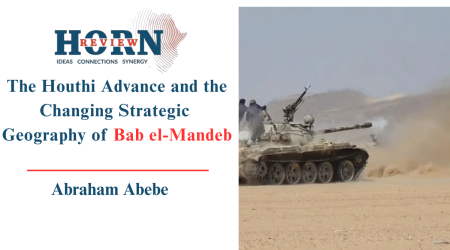
The Houthi Advance and the Changing Strategic Geography of Bab el-Mandeb
The Red Sea crisis has largely been understood as a...
14
Sep
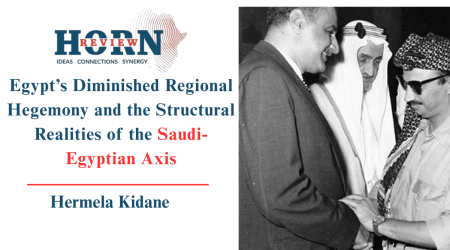
Egypt’s Diminished Regional Hegemony and the Structural Realities of the Saudi-Egyptian Axis
The geopolitics of the modern Middle East is frequently interpreted...
12
Sep
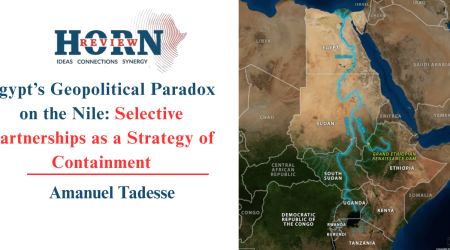
Egypt’s Geopolitical Paradox on the Nile: Selective Partnerships as a Strategy of Containment
Egypt’s response to Ethiopia’s development and utilization of the Nile...

11
Sep
The Houthis at Bab el-Mandeb and the Stakes Ahead
The Houthis have completed their takeover of the Bab...
10
Sep
Isaias's Ideology of Defiance Renders Engagement Without a Viable Outcome
Eritrea appears, in recent years, to be making diplomatic strides....
9
Sep
Sudan’s War and Ethiopia’s Narrowing Strategic Space
How SAF–Eritrea Cooperation and TPLF Mobilization Are Reshaping the Regional...
9
Sep
Understanding the Transactional Alliance between Yemen's Houthis and Somalia's al Shabaab
The alleged al Shabaab fighters among Houthi casualties on...