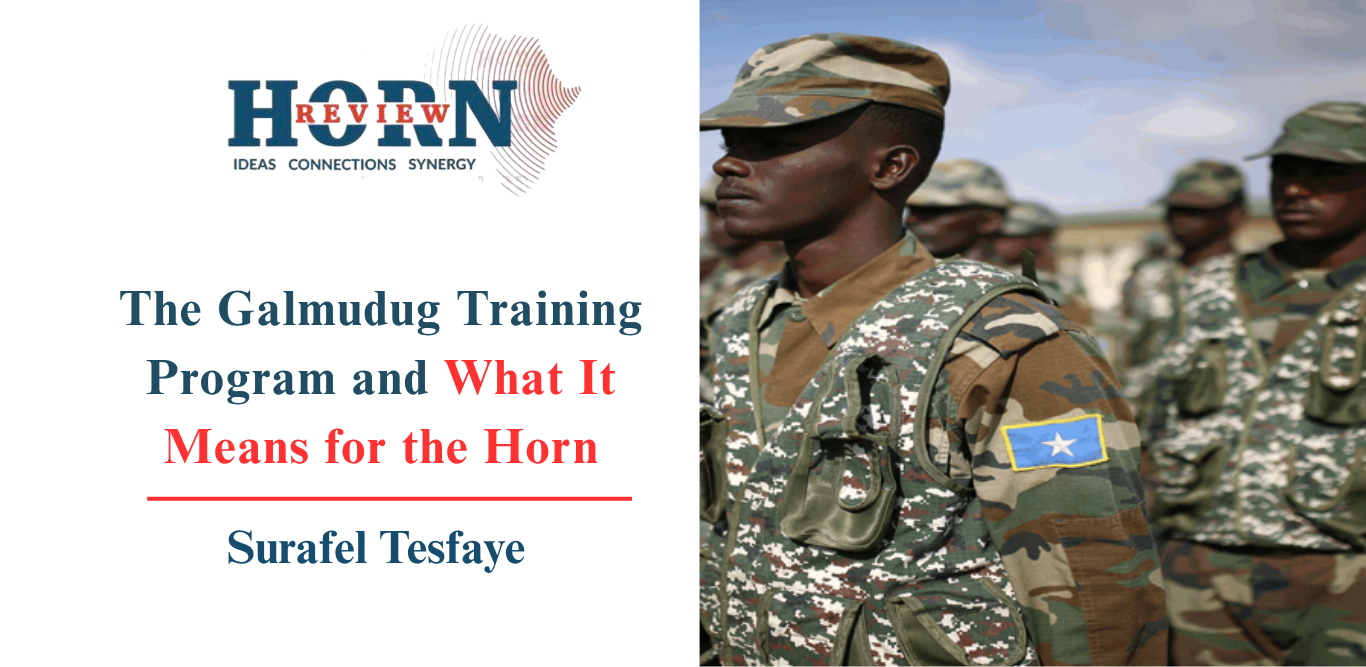
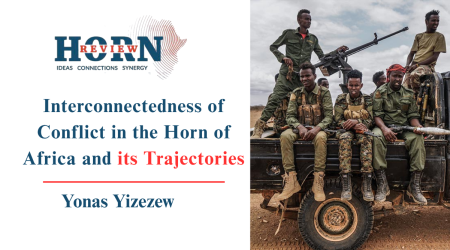
In August 2026, approximately 3,000 Somali soldiers graduated from the Xananbuure training camp in Galguduud, marking the largest cohort of troops trained on Somali soil since the state collapsed in 1991. The ceremony, presided over by President Hassan Sheikh Mohamud and attended by Saudi military representatives, was framed as a milestone in Somalia’s institutional restoration. Yet beneath the celebratory rhetoric lies a far more complex geopolitical calculus one that reveals Saudi Arabia’s deepening strategic footprint across the Horn of Africa and raises difficult questions about the region’s shifting alignments.
The training programme itself is ambitious in scale and design. Financed by Saudi Arabia under a February 2026 military cooperation agreement with Mogadishu, the initiative aims to train up to 5,000 Somali recruits over a nine-month period. The instruction has been delivered by foreign military contractors from Ukraine, Romania, South Africa, and Colombia with later reports also identifying Sudanese instructors among the training cadre. The composition of these trainers is itself revealing: it reflects Riyadh’s willingness to assemble an international coalition of military expertise, drawing from Eastern European, African, and Latin American sources, to execute a programme that serves its broader regional objectives.
The involvement of Sudanese Armed Forces personnel in the training programme is particularly significant. Reports from early 2026 indicated that a SAF detachment had been conducting a covert training programme for approximately 1,000 Somali recruits in Galmudug. The training was structured under the National Intelligence and Security Agency rather than the Ministry of Defence, and the arrangement was formalised through a confidential contract that committed monthly payments to Sudanese officers and non-commissioned officers. By employing “retired” Sudanese personnel instead of active-duty officers, the federal government preserved plausible deniability and avoided defining the initiative as a formal military partnership. This covert dimension suggests a deeper operational integration between Riyadh and Khartoum that goes beyond financial support.
The training programme must be understood within the sequence of regional events that began in August 2024, when Egypt and Somalia signed a major defense pact that revived a military relationship dormant for decades. That agreement marked Cairo’s return to active security engagement in Somalia and was followed by Egypt’s delivery of artillery and anti-aircraft systems to Mogadishu in September 2024 its first significant arms transfer to Somalia in over forty years. While Egypt’s role unfolded publicly, a parallel and far less visible track began taking shape inside central Somalia. By December 2024, training had commenced at the Adado camp in Galmudug, where approximately 973 recruits entered instruction under retired SAF veterans. Simultaneously, 432 additional recruits were prepared in Guriel to form a “civil guard,” which was later integrated into the main formation in March 2025.
The involvement of Eritrea in this emerging architecture is more subtle but no less significant. Asmara has cultivated a strategic relationship with Riyadh in recent years, with Eritrea participating in Saudi-led Red Sea security initiatives. The Kingdom has also engaged Eritrea as part of its broader effort to secure the maritime approaches to the Bab-el-Mandeb.
For Eritrea, alignment with Saudi Arabia offers diplomatic cover and economic opportunities, while for Riyadh, Eritrea provides a strategic partner on the Red Sea coast capable of monitoring and influencing regional security dynamics. The Eritrean regime’s role in the broader training and recruitment ecosystem and its historical ties to both Sudanese and Somali actors adds another layer to the complex web of alliances emerging across the Horn.
For Saudi Arabia, the Horn of Africa has never been merely a peripheral concern. The Bab-el-Mandeb strait, through which approximately ten percent of global shipping passes, represents a maritime chokepoint of existential importance to the Kingdom. Riyadh views the African coastline not as distant territory but as an integral part of its maritime security architecture a flank that must be secured against hostile penetration. The training programme in Galmudug must be understood within this broader framework. The agreement with Mogadishu, signed in February 2026, came just weeks after Israel’s recognition of Somaliland, a move that Riyadh publicly opposed. For Saudi Arabia, Somalia’s territorial integrity is not merely a diplomatic principle but a strategic necessity. Any permanent Israeli or Emirati foothold on the Somali coast would represent a direct challenge to Riyadh’s influence over the Red Sea and Gulf of Aden. By embedding itself deeply within Somalia’s security sector, Saudi Arabia is attempting to establish a presence that can counterbalance rivals and secure its maritime interests simultaneously.
The training programme also reflects a significant departure from previous Saudi engagement in the region. Historically, Riyadh’s involvement in the Horn was channeled through economic assistance and diplomatic mediation, not through direct military capacity-building. The decision to finance, oversee, and staff a large-scale training operation on Somali soil signals a new phase in Saudi strategy one that prioritises security cooperation as the primary vehicle for influence. This shift has been further enabled by the UAE’s recalibration of its presence in Somalia, creating space for Riyadh to fill the vacuum left by Abu Dhabi’s reduced footprint.
The arrest of approximately 200 Somali recruits attempting to cross into Ethiopia some reports suggesting they were returning to visit family, others indicating they were defecting highlights the unintended consequences of ad hoc troop generation schemes. When multiple foreign actors conduct parallel training programmes with competing objectives and varying standards, the result is not a cohesive national army but a fragmented force pulled in different directions. The fact that most of the arrested recruits are said to be ethnic Somalis from the Somali Region of Ethiopia underscores the transnational nature of these dynamics. Some reports indicate that the majority of the more than 800 recruits originally drawn from Ethiopia’s Somali Region have already crossed back into Ethiopia with their weapons. This raises serious questions about the long-term sustainability of such programmes and their potential to exacerbate regional tensions rather than alleviate them.
Analysts have expressed concern that the proliferation of foreign-backed military initiatives could introduce competing tactical systems and weaken operational cohesion within the Somali National Army. The involvement of instructors from Ukraine, Romania, South Africa, Colombia, and Sudan means that different units within the same army are being trained according to different doctrines, with different equipment standards, and potentially different strategic objectives. This fragmentation undermines the very institutional rebuilding that such programmes are ostensibly designed to support.
The graduation of 3,000 Somali soldiers at Xananbuure was a significant achievement for Somalia’s institutional recovery. But it was also a signal a signal that the Horn of Africa is entering a new phase of geopolitical competition, and that Saudi Arabia intends to be a central player in that competition. Whether this signal leads to greater stability or deeper conflict will depend on how regional actors respond to the shifting balance of power. For Ethiopia, these developments carry particular significance. The movement of armed groups across its borders, the militarisation of its neighbours, and the intensification of Gulf competition on its periphery all present challenges that cannot be ignored. The arrest of Somali recruits attempting to cross into Ethiopia underscores the fragility of regional security arrangements and the ease with which military tensions can escalate.
What is unfolding across the Horn of Africa is not merely a series of bilateral security agreements but a fundamental restructuring of regional alliances. The convergence of Saudi financial power, Egyptian strategic ambition, Sudanese military expertise, and Eritrean geopolitical positioning represents a new alignment that could reshape the region’s balance of power for years to come. The challenge for regional states is to manage this competition in a way that enhances security rather than undermining it. The question is whether the intensifying competition will produce stability through deterrence or chaos through proliferation. For now, the answer remains uncertain.
Surafel Tesfaye, Researcher, Horn Review