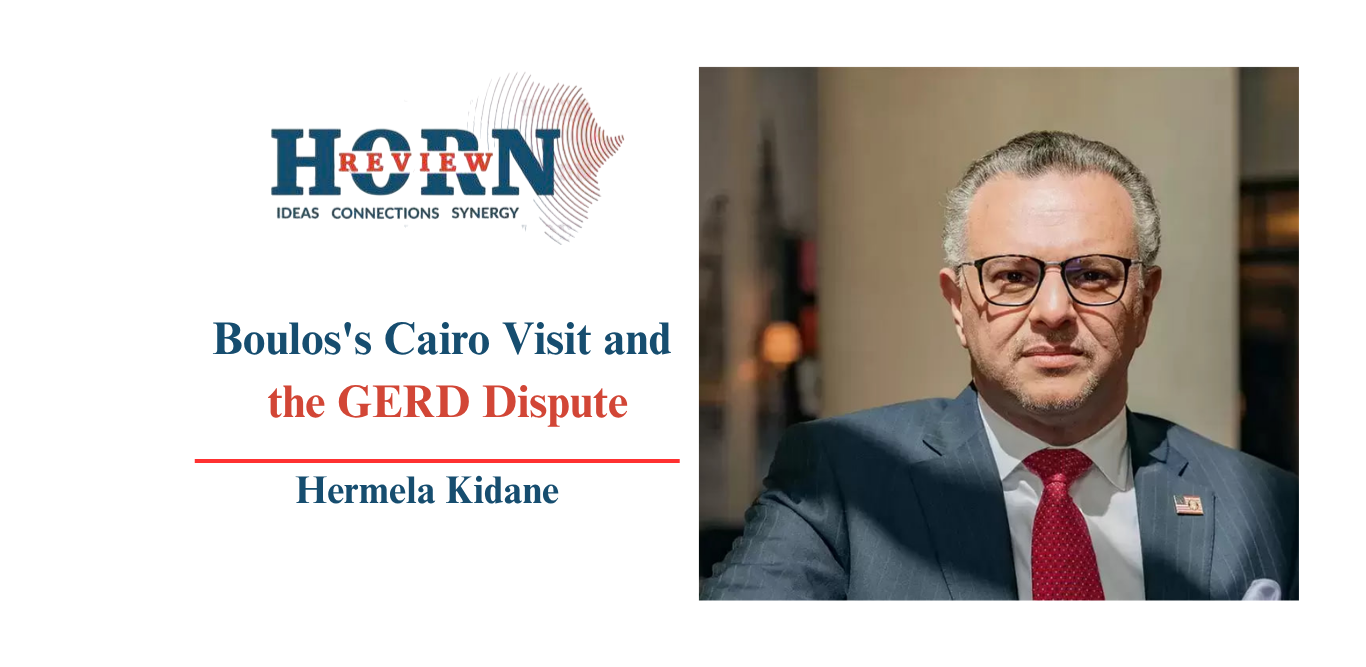
The recent diplomatic tour of Massad Boulos, Senior Advisor for Arab and African Affairs in the U.S. administration constitutes a development of relevance for Ethiopian planning. While Ethiopia values its partnership with the United States, Boulos’s engagements warrant a measured forward looking assessment. His focused discussions in Egypt alongside separate meetings with officials from Somalia and Eritrea align with an existing pattern of coordination among these states that touches directly upon Ethiopia’s interests in the GERD and Red Sea access. This itinerary serves as a timely wakeup call for the need to assert diplomatic leadership and protect its sovereign developmental priorities in the Nile Basin.
Boulos’s Lebanese descent and established emotional affinity for the Arab world presents pertinent variables in any serious analysis of advisory influence. As a member of the Arab League an organization that has historically endorsed Egypt’s positions on Nile water sharing Lebanon’s perspective naturally resonates with downstream concerns. Informal White House channels operating alongside traditional State Department processes can emphasize relational familiarity and historical narratives in ways that amplify certain claims. In the GERD context this raises the analytical prospect of a framing that prioritizes Egyptian hydraulic anxieties. Such interplay does not question American intent but highlight the importance for Ethiopia to counterbalance any potential tilt through proactive assertion of equitable principles grounded in international water law and African agency.
Ethiopia’s legitimate aspiration for reliable Red Sea access is essential and sustained economic transformation has encountered concerted resistance. The tripartite interaction involving Egypt, Eritrea and Somalia has evolved from security consultations into an alignment that Ethiopia perceives as containment oriented. This resistance is anchored in historical claims stemming from the 1929 and 1959 Nile Waters Agreements which allocated the vast majority of Nile waters to downstream states without Ethiopia’s participation or consent. In this environment external diplomatic initiatives risk lending credence to narratives that portray Ethiopia’s developmental and maritime objectives as destabilizing. Therefore this requires Ethiopia to treat these developments as catalysts for heightened vigilance even as it maintains constructive engagement with all partners including the United States.
Central to efforts is a high diplomatic vigilance and preparedness. Ethiopia should approach external initiatives with foresight ensuring that its positions are articulated clearly and consistently across multiple fora. This entails preparation rather than reactive posture enabling Ethiopia to shape agendas rather than only respond to them.
A foundational principle remains steadfast adherence to the African Union’s principle of African solutions to African problems. This doctrine is a powerful instrument for preserving continental sovereignty over hydro political and security matters. By insisting that Nile Basin and Horn of Africa issues be resolved primarily through African mechanisms Ethiopia reinforces the legitimacy of its positions while limiting the scope for external actors to assume mediatory roles that may carry inherent asymmetries. This principle must guide all dialogue concerning the GERD and regional stability.
Complementing this is Ethiopia should intensify collaboration with other Nile Basin states particularly Kenya and Uganda transforming cordial bilateral relations into a more institutionalized front. Such a bloc can consistently advocate for the principles of equitable and reasonable utilization enshrined in the 2010 Cooperative Framework Agreement along with data transparency and benefit sharing. Strengthened upstream solidarity would diplomatically isolate maximalist approaches and demonstrate that sustainable management of the Nile requires inclusive governance rather than outdated allocation structures inherited from colonial eras.
Active lobbying and the establishment of clear red lines form another essential strand. A critical red line concerns the precise role of external powers the United States and others should act as facilitators, hosting dialogues and transmitting proposals rather than mediators empowered to pressure or impose structures. Past experiences illustrate the risks of biased mediation Ethiopia must communicate this distinction firmly to prevent any opening for undue Egyptian leverage through external channels. Such red lines protect interests without undermining constructive international partnerships.
Equally important is the pursuit of hydro political and scientific deterrence. Egypt’s Toshka Lakes and Valley project offers a case study that it diverts billions of cubic meters of Nile water into desert reclamation efforts where massive losses to evaporation and seepage undermine overall efficiency. Rigorous satellite imagery analysis, hydrological studies and comparative assessments juxtaposed against the GERD’s non-consumptive hydropower generation and flow regulation benefits can effectively challenge narratives of scarcity. This approach reframes Ethiopia’s dams including inevitable future projects on its sovereign territory as responsible contributions to basin wide climate resilience, energy trade and sustainable development.
Underpinning all these efforts is the imperative of national security deterrence. Ethiopia does not seek war and consistently prioritizes regional stability as a fundamental national interest. Nevertheless responsible governance demands thorough military preparedness and proactive measures to secure critical infrastructure such as the GERD. Enhanced vigilance, resilience planning and full spectrum deterrence capabilities ensure that any potential adventurism carries prohibitive risks. In this sense a capable defense posture serves as the quiet foundation that lends credibility and weight to Ethiopia’s diplomatic initiatives.
The events surrounding Boulos’s visit offer Ethiopia lessons. In an era of transactional diplomacy and shifting informal channels, sustained vigilance combined with principled assertiveness provides the most effective safeguard for sovereignty. By championing African solutions, building resilient coalitions, enforcing clear parameters for external involvement, advancing scientific truth and maintaining deterrence Ethiopia can protect its developmental path while contributing constructively to Nile Basin cooperation. This balanced and firm approach transforms potential challenges into opportunities to consolidate Ethiopia’s role as a stabilizing and responsible power in the Horn of Africa.
By Hermela Kidane, Researcher, Horn Review