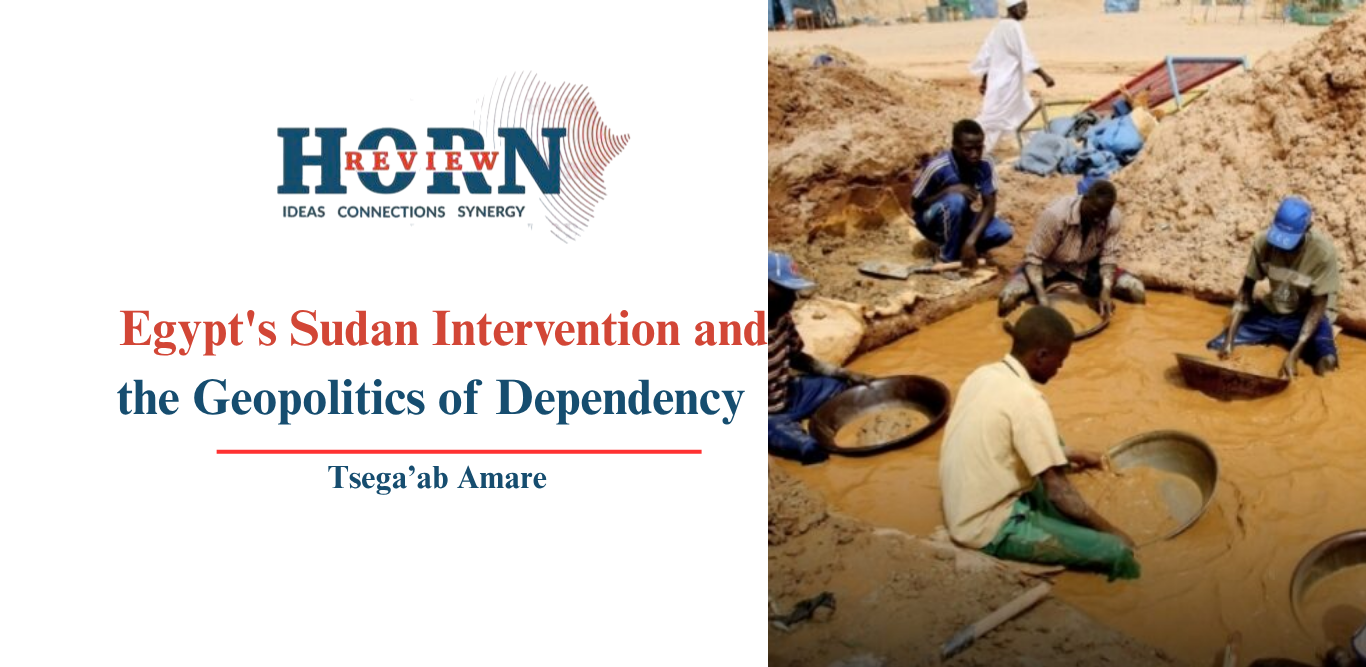
On June 16, 2026, aircrafts attributed to Egyptian Air Force struck artisanal gold mining sites in the Jabal al-Uqaydat area of Sudan’s River Nile State, near the Egyptian border. At least thirty people were killed and more than eighty others injured. Eyewitness Ahmed Mustafa told Darfur24 that the seriously wounded were transported by truck to Al-Ansari market in Abu Hamad locality before transfer to hospitals in Atbara. A miner in the area reported intensive aerial surveillance in the week preceding the attack. The strikes triggered a mass exodus from multiple adjacent mining sites, including Jabal al-Ahmar and Jabal al-Abyad. No party claimed responsibility and Egypt offered no statement.
Although responsibility for the attack remains unconfirmed, the incident occurred within a broader pattern of reported Egyptian military activity in and around Sudan’s northern frontier. Understanding its significance therefore requires situating it within Egypt’s evolving regional strategy toward Sudan and the wider Nile Basin.
Egypt’s Expanding Military Presence in Sudan
Egyptian aircraft and drones were reportedly involved in strike operations in June, October, and November 2025, as well as on January 9, 2026, targeting weapons convoys moving between Kufrah airbase and Darfur along routes used to supply the RSF. Those operations were publicly framed as efforts to interdict Emirati arms flows and curb external interference in Sudan’s conflict. Yet they also reflected a growing Egyptian operational presence inside Sudanese territory, one that extends beyond traditional border security concerns.
Egypt’s conduct in the border zone has a longer history. Artisanal gold miners near the El-Uwaynat tripoint have previously documented Egyptian army units attacking them on what they identified as Sudanese territory, with soldiers reportedly intervening on behalf of an Egyptian mining company. Miners involved in those incidents had paid fees to the Sudanese Mineral Resources Company and appealed to the Sudanese government for protection.
Taken together, these developments suggest that Egypt increasingly views Sudan not merely as a neighboring state, but as a strategic arena directly connected to its broader security and geopolitical interests.
The Halaib Triangle provides important context for understanding Egypt’s approach. The 1899 Anglo-Egyptian Condominium placed the political border at the 22nd parallel, locating Halaib within Sudan. The 1902 administrative arrangement granted Egypt authority over local administration and tribal affairs but did not transfer sovereignty.
Egypt’s Council of Ministers established the Shalatin Company for Mineral Resources in November 2012 as a joint-stock enterprise with the military’s National Service Projects Organization (NSPO) holding a 34% stake, to organize and formalize gold extraction between latitudes 22° and 24° north, which directly encompasses the contested Halaib Triangle. The maritime area adjacent to the territory is larger than the land area itself and contains significant natural resources. Security concerns and resource extraction have therefore become increasingly intertwined in Egypt’s management of the border zone.
Cairo publicly frames its Sudan engagement through three objectives: border security, support for Sudan’s internationally recognized authorities, and the protection of bilateral interests. Each contains elements of truth. Yet none fully explains the scale of Egypt’s involvement or the strategic significance Sudan has acquired in Egyptian regional thinking.
Why Sudan Matters for Egypt
The deeper logic lies in the Nile Basin;
For much of the twentieth century, Egypt occupied a position of hydro-political dominance grounded in colonial-era arrangements. The 1929 Anglo-Egyptian Treaty granted Egypt effective veto power over upstream Nile projects, while the 1959 Nile Waters Agreement allocated 55.5 billion cubic meters annually to Egypt and 18.5 billion to Sudan without recognizing the rights of upstream states that contribute more than 85 percent of the flow.
As a sovereign state rather than a British colony, Ethiopia was never a party to either agreements and has consistently rejected them as products of a colonial order imposed without its consent. That position is supported by a basic principle of international law: treaties cannot impose obligations on third parties without their agreement.
The GERD’s September 2025 inauguration fundamentally resolved the dam’s physical existence as a contestable fact and altered the strategic landscape. Turning the question confronting Cairo from whether the dam can be prevented into how Egypt can preserve influence in a Nile Basin increasingly shaped by Ethiopian capabilities.
Beyond electricity generation, GERD carries geopolitical implications. It creates the potential for Ethiopia to export power throughout the region, deepen economic integration with neighboring states, and convert infrastructure into soft-power political influence. For Egypt, the issue is therefore not only water. It is the redistribution of regional leverage.
This context helps explain Egypt’s relationship with the Sudanese Armed Forces. Since the outbreak of Sudan’s civil war, Egypt has emerged as one of the SAF’s most important military and diplomatic backers. This relationship has significantly narrowed Khartoum’s room for maneuver on regional issues, particularly those touching Egyptian national security interests.
Although Sudan has frequently echoed Cairo’s public position on the GERD, evidence suggests a more complex reality. The contrast between Sudan’s earlier technical engagement with Ethiopia and its subsequent public alignment with Egypt raises important questions about the degree of policy autonomy available to the SAF-led administration. Sudan’s public alignment with Egypt on the GERD largely reflects a hostage position rather than a sovereign policy judgment.
Egypt’s support for the SAF is therefore better understood through its Nile calculus than through any broader commitment to Sudanese governance. A SAF-controlled Sudan remains the closest available partner for preserving Egyptian influence in Nile Basin diplomacy at a time when Cairo’s traditional leverage is under increasing pressure.
Egypt’s stake in a SAF-aligned Sudan is not only strategic; it has an economic dimension that has deepened over the course of the war. Sudanese political figures interviewed by Sudan Peace Tracker allege that gold extracted from Sudanese territory, including from contested border areas, has flowed into Egypt’s Central Bank reserves throughout the conflict, while Sudanese agricultural and livestock exports, much of it channeled through companies linked to the military establishment, continue to enter the Egyptian market at depressed prices. If accurate, this would mean that the same war displacing millions and pushing Sudanese civilians into precarious livelihoods such as artisanal mining has simultaneously generated a steady transfer of resources northward, with Cairo positioned as both political patron and economic beneficiary of the conflict’s continuation.
This dynamic does not require Egypt to have engineered the war in order to benefit from it. A weakened, fragmented Sudan, dependent on Egyptian military and diplomatic backing for its international legitimacy, is simply better positioned to accept asymmetric economic terms than a stable, sovereign one would be. The same leverage that constrains Khartoum’s room for maneuver on the GERD applies with equal force to the terms of resource access and trade.
Whether intended as counter-smuggling operations or not, strikes such as the one in Jabal al-Aqaydat carry significant humanitarian costs that compound this dynamic. In wartime Sudan, artisanal gold mining has become one of the few livelihood strategies available to displaced populations; military action against these sites adds to the same socioeconomic instability that the broader extractive relationship already produces.
The central question raised by Egypt’s Sudan policy is therefore not whether Cairo possesses legitimate security concerns along its southern border. It is whether those concerns have become inseparable from a broader interest in keeping Sudan economically dependent and politically constrained, at a moment when the GERD has already narrowed Egypt’s options elsewhere in the Nile Basin. If so, Sudan’s war is not simply a crisis Egypt is managing from the outside. It is a relationship from which Cairo has structural reasons not to want a fully sovereign, fully stable Sudan to emerge.
By Tsega’ab Amare, Researcher, Horn Review