
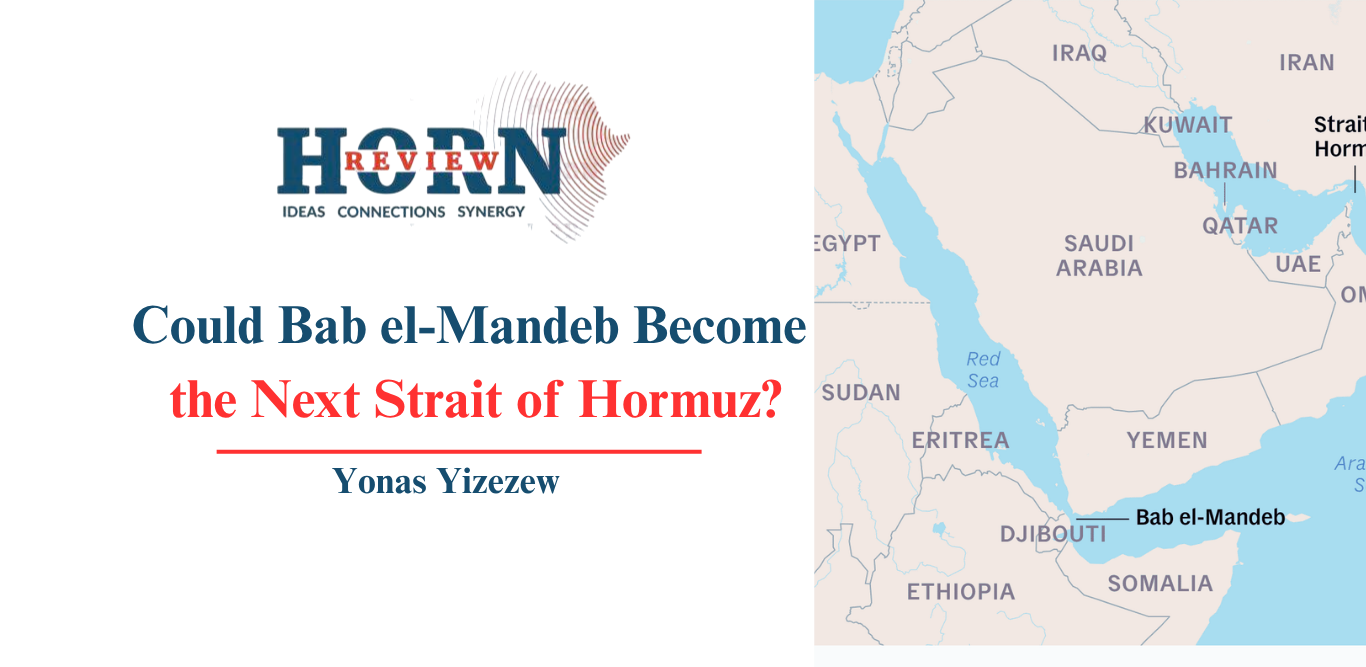
Could Bab el-Mandeb Become the Next Strait of Hormuz?
When the Tasnim News Agency, which has deep Islamic Revolutionary Guard Corps ties, reported that Iran had suspended indirect negotiations with the United States and declared its readiness to close the Strait of Hormuz while opening other fronts, naming the Bab el Mandeb explicitly. The stated trigger was the continued Israeli operations in Lebanon. The harder question is whether this narrow channel between the Gulf of Aden and the Red Sea is now entering the same category of strategic threat as Hormuz or whether it could end up worse.
The Bab el-Mandeb is a critical maritime artery connecting the Indian Ocean (via the Gulf of Aden) to the Red Sea. Roughly 29 kilometers wide at its narrowest point, the strait funnels a significant share of global trade. Saudi Arabia has relied on its East-West Pipeline (Petroline) to Yanbu on the Red Sea to bypass Hormuz vulnerabilities, ramping up to near full capacity of around 7 million barrels per day. However, this shift merely transfers a portion of the risk to the Red Sea corridor and Bab el-Mandeb.
A full or even partial disruption here would multiply the existing pressures. It will force ships to reroute around Africa’s Cape of Good Hope, inflating shipping costs, driving up insurance premiums, and pushing energy prices worldwide higher.
The threat emerges as regional tensions continue to deepen. It forms part of a broader, interconnected web of conflicts spanning Iran’s nuclear ambitions, proxy networks, and direct confrontations with Israel and the United States. Following intense escalations for months, a fragile April 2026 ceasefire provided a temporary pause, but repeated strains have undermined the pause. Iran views any comprehensive deal with the US as requiring de-escalation on “all fronts,” including Lebanon. Tehran has suspended mediator exchanges, protesting what it calls violations of the ceasefire framework.
US Secretary of State Marco Rubio pushed back firmly during congressional testimony. He stated that Washington seeks to treat Israel-Lebanon talks as separate and distinct from Iran. This compartmentalization effort demonstrates a core tension as the US aims for targeted agreements on nuclear issues and Hormuz reopening, whereas Iran leverages its regional network to demand broader concessions.
On June 3, 2026, Israel and Lebanon reached a renewed ceasefire agreement, mediated by the United States leading to reduced oil prices. The deal includes pilot implementation zones and aims to stabilize the situation following the April framework. It led to reduced oil prices. Yet the agreement remains highly fragile. Immediate reports of clashes, Israeli strikes in southern Lebanon, and Hezbollah rocket activity tested its viability within hours of the announcement. This development creates a potential opening for de-escalation on the Lebanese front, which Iran has consistently linked to its warnings regarding Bab el-Mandeb. However, the fragility of the arrangement and continued uncertainties on the ground highlight how easily tensions could resurface.
Besides, Hezbollah has rejected a US-brokered ceasefire plan agreed by the Lebanese and Israeli governments, throwing the future of a truce in Lebanon and regional peace negotiations into question. The group’s leader Naim Qassem rejected the plan, arguing that it would harm Lebanese communities and undermine Lebanon’s interests. He demanded a complete ceasefire and withdrawal of Israeli troops from Lebanon, and said that as long as Lebanese villages were being bombed, northern Israel would not be safe.
It demonstrates the structural complexity of the broader Iran-aligned conflict. Iran’s longstanding support for Hezbollah has been central to its posture. Over time, Tehran has invested heavily in the group as a forward deterrent against Israel. IRGC Quds Force commander Esmail Qaani and other senior figures have explicitly linked potential Bab el-Mandeb disruptions to ongoing Israeli actions in Lebanon, framing them as unified Axis responses. Meanwhile, the US and Israel, despite designating both Hamas and Hezbollah as terrorist organizations, have pursued differentiated approaches. Israel has applied sustained military pressure on Hezbollah due to its direct border threat and advanced arsenal.
A collapse or prolonged stalemate in Lebanon could increase the likelihood of Iran escalating pressure on other fronts. One of the most likely avenues would be through the Houthis in Yemen and the Bab el-Mandeb Strait. This creates a dangerous multiplier effect that one localized ceasefire failure can cascade into disruptions across the Red Sea, compounding the existing crisis in the Strait of Hormuz.
The Houthis in Yemen serve as Iran’s primary instrument for Bab el-Mandeb threats, offering Tehran a layer of plausible deniability. Having previously disrupted Red Sea shipping extensively, the Houthis have a proven capacity to use missiles, drones, and naval mines, including advanced anti-ship ballistic missiles derived from Iranian designs. Senior Iranian figures, including advisers like Ali Akbar Velayati, have explicitly equated Bab el-Mandeb with Hormuz in strategic importance, with statements emphasizing that the “unified command of the Resistance front” views both straits equally.
While Houthi actions have remained calibrated so far, they have focused on harassment, targeted launches toward Israel, and selective disruptions to shipping. The group’s demonstrated resilience allows it to sustain pressure even in the face of international naval coalitions. Even though resupply challenges exist, the infrastructure for rapid escalation remains intact.
Gulf states, particularly Saudi Arabia, view any Bab el-Mandeb closure with alarm. They have sought assurances from the Houthis against targeting their vessels and rely on Red Sea routes as alternatives when Hormuz faces restrictions. A dual-chokepoint crisis would severely damage their economies and global energy stability. For the wider world, simultaneous disruptions could block up to a quarter of global oil and gas flows, with cascading effects on inflation, supply chains, and economic growth.
The potential closure of Bab el-Mandeb would hit countries along the Horn of Africa particularly hard. Even the existing closure of the Strait of Hormuz has already triggered serious economic crises across the region through skyrocketing fuel prices, disrupted supply chains, and rising inflation. Nations such as Djibouti, Eritrea, Ethiopia, and Somalia sit directly adjacent to the strait and depend heavily on their ports for the vast majority of their imports (except Ethiopia), including fuel, food, medicine, and fertilizer. A shutdown here would immediately choke these vital lifelines.
Landlocked Ethiopia, for instance, relies overwhelmingly on access through Djibouti for over 95% of its trade by volume. The result would likely include acute shortages of basic goods, sharply higher costs for essentials, and increased risks to stability in already vulnerable economies. The combined pressure from disruptions at both Hormuz and Bab el-Mandeb could create overlapping crises in energy, food security, and trade that would be especially devastating for the Horn of Africa, potentially exacerbating local and regional rivalries.
Tensions between Washington and Jerusalem add another layer of complexity. Reports of a heated phone call between President Donald Trump and Prime Minister Benjamin Netanyahu revealed sharp disagreements, with Trump pressing Israel to restrain operations in Lebanon to protect broader diplomatic efforts with Iran. Netanyahu’s government has prioritized neutralizing immediate threats from Hezbollah, viewing sustained pressure as essential for long-term security. These frictions illustrate differing priorities and may embolden Iran by exposing visible divides.
Domestically in the United States, congressional resistance to prolonged conflict with Iran has intensified. On June 3, the House passed a war powers resolution directing the withdrawal of U.S. forces from hostilities with Iran unless Congress authorizes continued operations. The vote saw several Republicans join Democrats, reflecting growing bipartisan concern over escalation.
The Trump administration seeks a deal that curbs Iran’s nuclear program, reopens key waterways, and stabilizes energy markets. Israel remains more skeptical of arrangements that might leave Iranian proxies intact. Iran may feel emboldened by these visible divides, calculating that it can exploit them to extract better terms or buy time. Yet Tehran’s own position carries risks that prolonged conflict has strained its economy, military resources, and domestic stability.
Unlike Hormuz, where Iran has direct geographic proximity and naval capabilities, action at Bab el-Mandeb would rely heavily on proxies effective for asymmetric pressure. Assessments suggest disruptions here could pose even greater systemic risks to diversified global trade due to fewer viable bypass options for non-oil cargo.
The Houthis have signaled readiness without imposing a total blockade thus far, using disruption as a calibrated tool. The new Israel-Lebanon ceasefire introduces a de-escalatory factor that could reduce immediate incentives for activation, yet its fragility and the persistent linkage demands from Tehran mean the Bab el-Mandeb threat retains significant leverage. In a scenario of renewed major escalation, the risk would rise sharply.
From an Israeli perspective, continued operations against Hezbollah represent necessary self-defense against an entrenched threat. Iran frames its actions as legitimate resistance to a war and perceived US-Israeli efforts toward regime change. The US walks a tightrope, supporting its ally’s security while prioritizing de-escalation to protect global economic interests. Gulf states and broader international actors largely seek stability, wary of proxy wars derailing development and trade.
The coming weeks and months will prove decisive. Diplomatic channels, though strained, have not fully collapsed, and the combination of the fragile Lebanon ceasefire, congressional pressure for restraint, and economic risks creates competing forces: Iranian leverage through maritime chokepoints versus growing momentum for de-escalation. Whether Bab el-Mandeb becomes the new Hormuz ultimately depends on whether the interconnected disputes — nuclear, Lebanese, and proxy-driven — can be disentangled before economic pain forces all sides toward compromise. The stakes, measured in oil prices, shipping lanes and regional stability across the Horn of Africa, remain exceptionally high.
By Yonas Yizezew, Researcher, Horn Review

RELATED
Posts
21
Sep
Egypt’s Policy Thinking Toward Ethiopia: How Cairo’s Institutions Read Ethiopia?
Egypt’s policy thinking toward Ethiopia has evolved from a primarily...
21
Sep
Sudan’s Rejection of War with Ethiopia Despite Hardline Voices in Khartoum
The closed door meeting in Djibouti in early May...
21
Sep
Somalia’s Informal Economy in U.S. Security and Financial Policy
In various settings, the line between formal and informal economic...
21
Sep
Security Dependencies and Al Shabaab’s Dominance
The Federal Government of Somalia exists in a condition that...
19
Sep
Eritrea’s Sanctions Expired, Not Formally Lifted
The U.S. sanctions on several Eritrean entities and individuals did...
16
Sep
Why Eritrea Turned from Engaging Somaliland in 2019 to Opposing It Today
In March 2019 Eritrean Foreign Minister Osman Saleh accompanied by...
16
Sep
Ethiopia and the U.S. After the War on Terror: Within a New Arc of Terrorism
The War on Terror began as a direct response to...
16
Sep
Why the Abraham Accords Will Not Expand Yet
The claim that Israel is unlikely to find an...
16
Sep
The Real Houthi Weapon Was Mobilization, Not Missiles
Fatima Abo Alasrar frames the Houthi ground strategy as...
16
Sep
The Houthis Reached Zuqar Island: Can Eritrea Be a Neutral Observer?
The island of Zuqar sits in the southern Red Sea,...