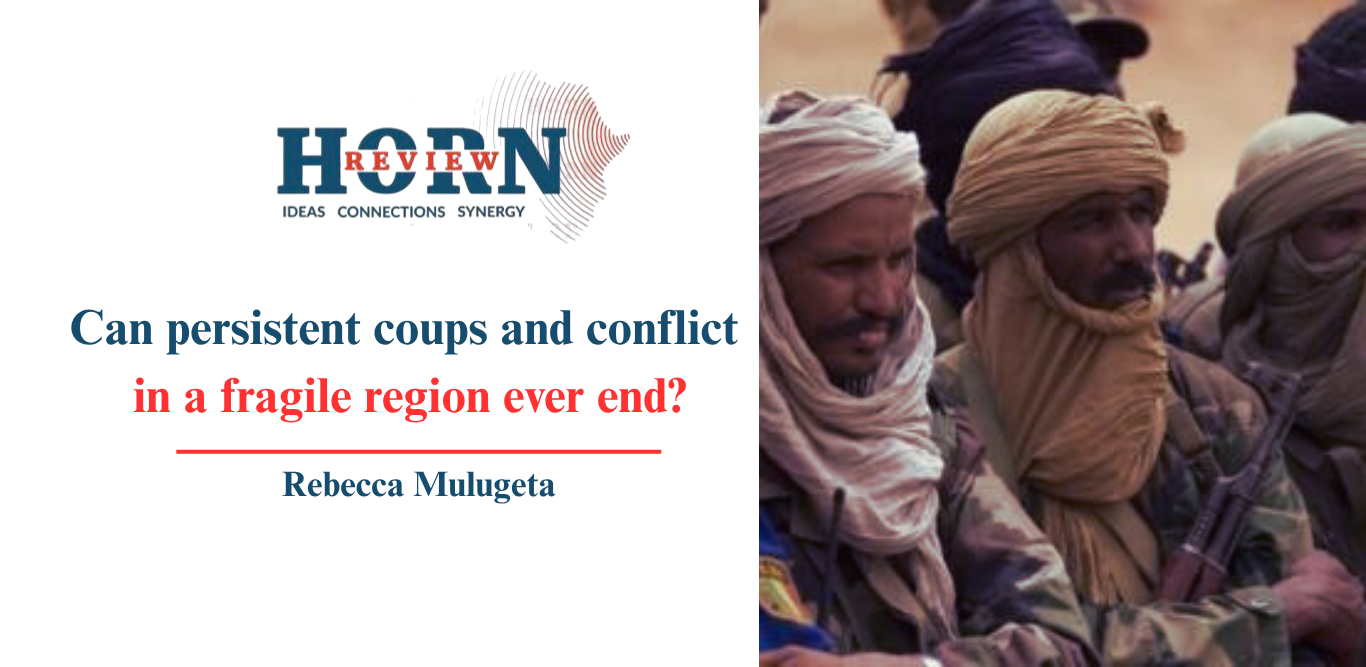
What the world is witnessing today is the exhaustion of a post-colonial state structure that survived for decades through external security guarantees, centralized elites, and fragile political bargains that rarely reached the rural margins of society. The crisis of the Sahel is therefore not only a military crisis. It is a crisis of legitimacy, sovereignty, economic exclusion, and broken trust between the state and its citizens. This is why despite years of foreign intervention, billions in international aid, and extensive military operations, violence has continued to spread rather than disappear. Armed groups have adapted faster than governments. Public frustration has deepened faster than reforms. And the gap between state capitals and peripheral communities has widened dangerously.
Still, the future of the Sahel is not predetermined. The region can move out of this cycle of instability, but not through the same formulas that failed it repeatedly over the last decade. Sustainable stability will not emerge from military victories alone, nor from foreign-backed security operations that treat the Sahel only as a battlefield against extremism. Stability will only become possible when the region begins rebuilding political legitimacy from the ground upward, while balancing sovereignty, governance, economic survival, and strategic foreign engagement in a far more realistic way than before.
One of the greatest misunderstandings in international approaches toward the Sahel has been the assumption that terrorism is the root of the crisis rather than a symptom of deeper structural fractures. Armed groups did not emerge in a political vacuum. In this environment, insecurity became more than a military issue. It became tied to identity, survival, land access, ethnicity, and historical marginalization.
This is precisely why military campaigns alone repeatedly failed to produce lasting peace. Foreign operations managed to kill militant leaders and temporarily disrupt insurgent networks, yet they rarely transformed the conditions that allowed those groups to recruit and expand. In some cases, military operations themselves intensified local resentment, especially when civilian casualties, weak coordination, or perceptions of foreign domination entered the political narrative. Over time, many communities began questioning not only the effectiveness of international intervention but also the intentions behind it.
The growing anti-foreign sentiment across the Sahel did not emerge simply from propaganda. It emerged from accumulated disappointment. Populations saw international troops deployed for years while insecurity continued spreading into villages, roads became more dangerous, and economic hardship worsened. Citizens began asking a painful question: if foreign powers possess advanced military capabilities, why does the region remain unstable after so many years of intervention? That question gradually evolved into a wider political rejection of the existing order itself.
The wave of military coups that swept through the Sahel was therefore not an isolated phenomenon. It reflected a broader collapse of confidence in civilian political structures that were increasingly seen as ineffective, corrupt, or externally dependent. Military leaders presented themselves as defenders of sovereignty and national dignity against both terrorism and foreign interference. Whether those claims ultimately translate into durable governance remains uncertain, but the political symbolism behind them resonated deeply across societies frustrated by years of insecurity and stagnation.
Yet sovereignty alone will not save the Sahel. This is where many current political transitions risk falling into contradiction. Reclaiming national autonomy is emotionally and politically powerful, but sovereignty without institutional transformation can quickly become symbolic rather than substantive. A government may remove foreign troops, denounce external influence, and adopt nationalist rhetoric, yet still fail to provide security, jobs, justice, or economic opportunity for its people. In that case, instability merely changes language while the underlying crisis survives.
Sahelian states are actively diversifying their partnerships to renegotiate international engagement on terms that prioritize long-term domestic investment over brief political cycles. Ultimately, sustainable peace will not be achieved simply by removing foreign influence, but by successfully channeling demographic pressure into productive national capacity leveraging agriculture, renewable energy, and digital infrastructure to offer the region’s youth a viable economic future within a legitimate, non-extractive state framework.
Still, diversification carries risks. Replacing one foreign dependency with another does not necessarily create genuine autonomy. The danger is that the Sahel becomes an arena for competing global powers seeking influence through military contracts, resource access, strategic positioning, or political alliances. If external rivalries intensify within fragile political environments, instability may deepen rather than decline.
The Sahel’s long-term survival hinges on a critical shift: foreign partnerships must build up local governance and economic infrastructure, not replace them. Because borderless insurgent and smuggling networks easily exploit divided nations, escaping this fragmentation requires moving past isolated military reactions toward real regional integration like unified intelligence sharing, trade networks, and infrastructure corridors. Ultimately, holding territory means nothing without political legitimacy; guns alone cannot secure a state if governments fail to deliver real accountability, dignity, and tangible results to a population that can now connect, organize, and challenge power faster than ever before.
The Sahel’s path out of instability will therefore not be sudden, linear, or easy. The region is undergoing a profound political transformation that may take years, even decades, to stabilize fully. There will likely be setbacks, internal contradictions, and continued violence along the way. Yet the current crisis also reflects something deeper than collapse. It reflects a struggle over what the future political order of the Sahel will look like after the exhaustion of the old system.
The region now stands between two competing futures. One future leads toward permanent militarization, fragmented sovereignties, proxy competition, economic deterioration, and chronic insurgency. The other points toward gradual state reconstruction rooted in legitimacy, regional cooperation, economic resilience, and more balanced international partnerships. Neither outcome is guaranteed. But the direction the Sahel takes will shape not only West Africa, but broader African geopolitics and international security dynamics for decades to come.
The lesson of the Sahel is that stability cannot be imported from abroad, imposed solely through force, or sustained through dependency. Lasting stability emerges when states become politically legitimate, economically functional, socially inclusive, and strategically sovereign at the same time. The Sahel’s future will depend on whether its leaders can finally build systems that citizens trust not because they are feared, but because they genuinely deliver security, opportunity, and national purpose.
By Rebecca Mulugeta, Researcher, Horn Review