
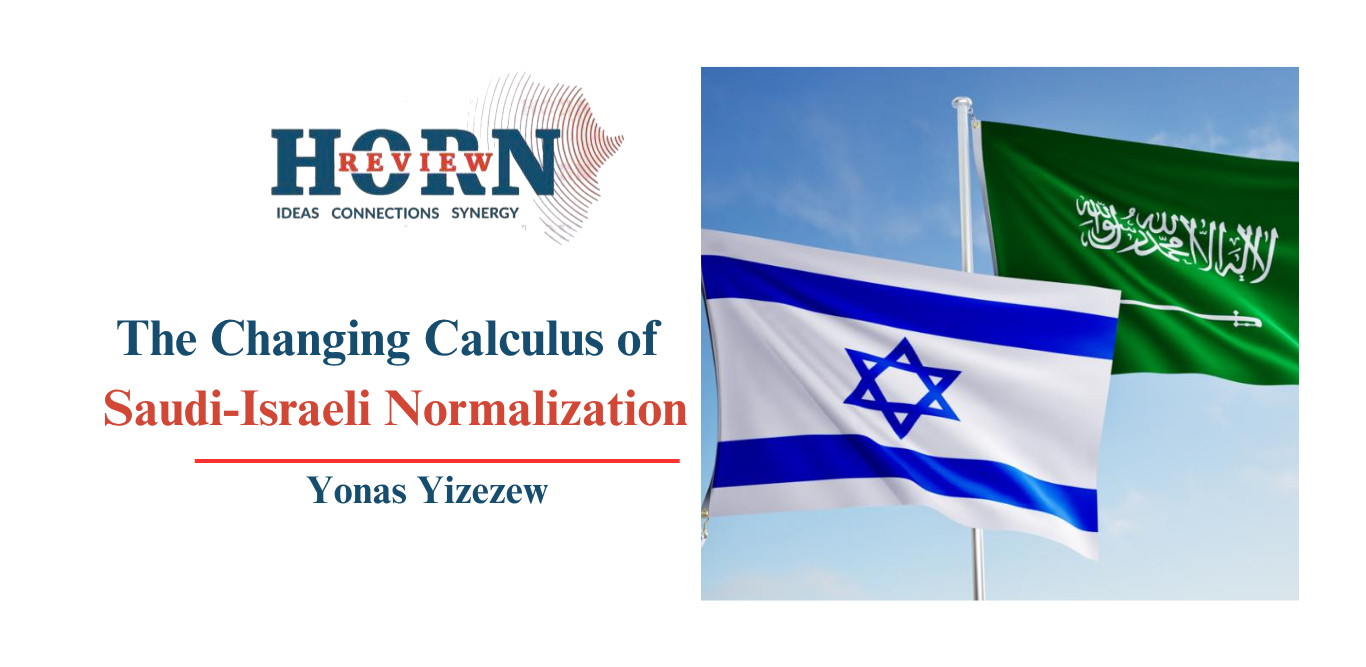
The Changing Calculus of Saudi-Israeli Normalization
Recently, unusual public exchanges revived speculation about Saudi-Israeli ties. Israeli President Isaac Herzog told Al Arabiya that rapprochement remained his ‘dream’ and praised Crown Prince Mohammed bin Salman, while a former senior Saudi air force officer appeared on Israeli television. These moves occurred in the context of renewed Houthi attacks on Saudi territory and fragile post-Iran-war dynamics. Far from signaling imminent normalization, these developments reflect Riyadh’s broader strategy of maintaining regional influence, diversifying diplomatic partnerships, and linking any agreement with Israel to progress on the Palestinian issue. They also indicate growing tensions over competing visions for regional influence, particularly as Israel expands its strategic presence in the Red Sea, the Horn of Africa, and the wider Middle East.
Relations between Saudi Arabia and Israel have evolved from direct hostility rooted in the 1948 Arab-Israeli conflict to cautious, interest-driven engagement, only to regress into renewed diplomatic strain and open hostility in the wake of the Gaza war and its regional fallout. Saudi Arabia backed Arab coalitions in the 1967 Six-Day War and the 1973 Yom Kippur War. It also endorsed the Khartoum Resolution’s “three no’s”—no peace, no recognition, and no negotiations with Israel. This reflected both solidarity with Palestinians and its role as custodian of Islam’s holiest places, defining Saudi’s diplomacy for decades.
The then Crown Prince Abdullah proposed The 2002 Arab Peace Initiative and it was later adopted by the Arab League offering a comprehensive framework. It conditioned full Arab normalization on Israeli withdrawal to the 1967 borders establishment of a Palestinian state with East Jerusalem as its capital. This initiative established Saudi leadership in Arab diplomacy but also created a rigid benchmark that subsequent Israeli governments have found difficult to meet. These historical positions continue to influence Saudi public discourse and official statements linking any normalization to tangible progress on Palestinian statehood, in addition to regional factors created recently.
One of the drivers toward cooperation has been the shared perception of Iran as a regional threat. Saudi Arabia has faced Houthi attacks including the 2019 strikes on Aramco facilities and continued attacks in July 2026. In parallel, Israel has also confronted Iranian nuclear ambitions, missile programs and proxy forces including the Houthis. These common challenges fostered quiet intelligence and security coordination even before public discussions intensified. At times, Saudi Arabia permitted Israeli overflights and engaged in back channel talks signaling tacit approval.
During 2019 and 2020, Saudi Arabia and Israel held unofficial discussions on normalizing relations. The signing of the Abraham Accords between Israel, the UAE, and Bahrain in September 2020 altered the regional diplomatic landscape and created a framework that Saudi Arabia was expected to eventually join. The Accords, brokered during President Donald Trump’s first term, normalized relations between Israel and several Arab nations including Morocco and Sudan, and established a precedent for Arab states to engage with Israel without requiring a full resolution of the Palestinian issue. In the wake of the Accords, Saudi-Israeli contacts accelerated with direct American involvement and began receiving public attention. One of the strategic logic for Saudi Arabia is that normalization with Israel would accelerate Crown Prince Mohammed bin Salman’s Vision 2030 by pairing Saudi capital and ambition with Israeli innovation and security expertise, all underwritten by American strategic backing. Previously, a U.S.-brokered civilian nuclear deal was seen as one of the main benefits Saudi Arabia stood to gain from normalizing with Israel. However, a recent WSJ report indicates that the Trump administration has approved the nuclear agreement without requiring normalization.
From the planned normalization, Israel would gain legitimacy and integration into the broader region while both nations envision integrated air and missile defense systems. Nevertheless, the 2023 Chinese brokered Saudi-Iranian rapprochement introduced nuance. By reducing immediate tensions with Tehran, Riyadh gained diplomatic space but also in part affected the optics of aligning closely with Israel with the U.S. backing.
Until the outbreak of the war in Gaza, Saudi Arabia pursued a measured and gradual rapprochement with Israel. By September 2023, Israel and Saudi Arabia appeared poised to normalize relations, a strategic breakthrough that could have reshaped the Middle East. Saudi officials were clear at the time that Riyadh would not merely follow the United Arab Emirates into the Abraham Accords but would chart its own course as the region’s most consequential Arab power. During this period, the Crown Prince affirmed Saudi Arabia’s unwavering commitment to the Palestinian cause and the two-state solution as the first criteria for normalization. He also reaffirmed this again during his visit to the White House and his meeting with President Trump at the Oval Office, where he made clear that any normalization agreement would require meaningful progress on the Palestinian front.
However, the Gaza war fundamentally altered the regional calculus putting the normalization on the edge, causing Riyadh to put US-brokered Israeli normalization talks on hold. Because of the public anger caused by the war, Saudi Arabia was compelled to cool its approach and establish more stringent requirements for any future agreement.
The 12 day Israel Iran confrontation in 2025 and the broader Iran war that escalated in early 2026 laid further effects on the regional balance of power and the normalization prospects. Saudi Arabia criticized the move claiming it was not consulted on the campaign and opposed the use of its territory for operations. While the conflicts arguably weakened Iranian capabilities, they exposed Riyadh to spillover risks and raised questions about whether closer ties with Israel amplify rather than mitigate threats. In contrast, the war has shown Iran’s capacity to absorb sustained military pressure while retaining the ability to retaliate, demonstrating its continued relevance in shaping the Persian Gulf security order. It also made the regional countries question the reliability of U.S. security guarantees after facing huge attacks from Iran. This experience affected earlier assumptions that United States and Israeli alignment automatically enhances Saudi security.
U.S. brokerage has remained central yet challenging. During former President Joe Biden’s administration, Washington and Riyadh explored a broader agreement that would have combined security guarantees for Saudi Arabia with normalization of ties with Israel and a pathway toward Palestinian statehood. Saudi Arabia has been seeking security guarantees and other benefits with the United States in return for normalizing with Israel. President Donald Trump’s return to office has reinvigorated the push for normalization, though with distinctive characteristics. Trump has linked the Iran conflict to a broader push for Arab and Muslim countries to join the Abraham Accords. He has called on Arab nations, including Saudi Arabia and Qatar, to sign the Abraham Accords as part of a peace agreement with Iran. Trump has boldly tied negotiations to end his war with Iran to Arab nations formally establishing diplomatic ties with Israel. He suggested that joining the Abraham Accords should be mandatory for a number of Arab and Muslim countries as part of his proposed deal to end the war in Iran. Trump also said he had spoken with leaders from Saudi Arabia, Bahrain, Qatar, Pakistan, Turkey, Egypt, and Jordan, asking them to normalize relations with Israel after a possible agreement to end the Iran war. However, the resumption of the war after the Memorandum of Understanding reflects the many issues that remained unresolved, further complicating the normalization process.
The late Senator Lindsey Graham believed that Israel-Saudi normalization could be the ‘big prize’ product of the war with Iran. Graham had been working on a new initiative to broker a historic normalization agreement, believing that the Iran war had created an opening for President Trump to broker such an agreement. He sought to begin an intensive diplomatic push after Israel’s October election and the US midterm elections, with the aim of reaching an agreement before the new US Congress was sworn in, in January.
In addition, developments preceding the war further intensified intra-Gulf and regional rivalries. Saudi Arabia increasingly views the close alignment between Israel and the UAE as a destabilizing factor that challenges Riyadh’s traditional leadership role in the region.This competition manifests strongly in the Red Sea and Horn of Africa. Israel’s recognition of Somaliland drew sharp opposition from Saudi Arabia and a broad coalition of Arab countries. Riyadh condemned the move as a violation of Somalia’s sovereignty and territorial integrity and worked through the Organization of Islamic Cooperation to reject it as a dangerous precedent. Saudi Arabia has responded with enhanced defense cooperation with Somalia, closer coordination with Egypt and Qatar, and overtures to Pakistan while improving ties with its former rival Turkey which maintains major investments in Somalia. These steps aim to counter perceived Israeli and UAE influence in strategic maritime zones and to preserve a Red Sea order aligned with Saudi preferences.
Israel’s moves in the wider region are seen by Riyadh as part of a broader strategy that challenges Saudi influence and regional stability. This, in turn, intensified a form of regional alliance-building, placing Saudi Arabia and Israel on opposing sides. Israel’s Red Sea strategy may also become a source of tension, particularly as it overlaps with Saudi Arabia’s broader efforts to define the regional order. Saudi Arabia seeks to preserve a Red Sea status quo aligned with the regional order it aims to shape and influence.
The cumulative effect of these developments has significantly increased the complexity of Saudi-Israeli normalization. Historical Palestinian commitments now intersect with post-war security doubts, US brokerage ambitions, and intensifying rivalries in critical regions like the Red Sea and Horn of Africa. Saudi Arabia’s strategies, leadership assertions, and insistence on substantive Palestinian progress create a high threshold for any agreement. While incentives such as Vision 2030 and lingering concerns over Iran persist, major obstacles remain. Unresolved Iran-related issues, intra-Arab competition, and declining confidence in U.S. reliability make normalization an unpredictable prospect. Any future breakthrough would need to navigate not only bilateral ties but also the broader regional order both countries seek to shape, making the process more intricate than at any point in recent years. This complexity would be further compounded if the Iran war remains prolonged, delaying the prospects for normalization.
By Yonas Yizezew, Researcher, Horn Review

RELATED
Posts
9
Oct
Could the Riyadh Airport Strike Reshape the Yemen Conflict?
A series of claimed missile and drone strikes on King...
8
Oct
The Makkah Pact and the Limits of Collective Defence
The Makkah Joint Defence Agreement rests on an ambitious...
28
Sep
Saudi-led Multinational Maritime Defence Coalition and the Changing Security of Bab el-Mandeb
On 2 September, the Saudi-led Multinational Maritime Defence Coalition...

28
Sep
The AI Disinformation War in the Horn and the Economics of Digital Conflict
In September, Marc Owen Jones, an Associate Professor of...
24
Sep
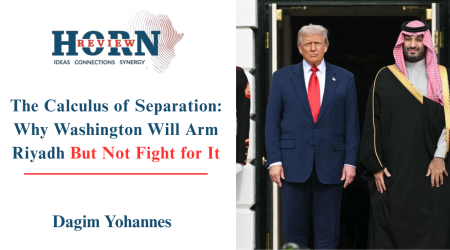
The Calculus of Separation: Why Washington Will Arm Riyadh But Not Fight for It
The episode reveals a distinction in the U.S.-Saudi security relationship...
21
Sep
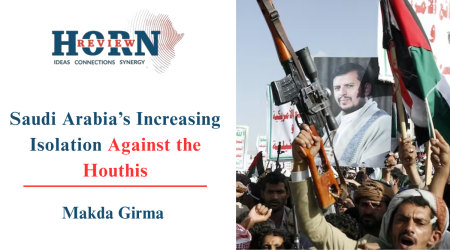
Saudi Arabia’s Increasing Isolation Against the Houthis
Saudi Arabia’s renewed confrontation with Yemen’s Houthis has exposed how...
21
Sep
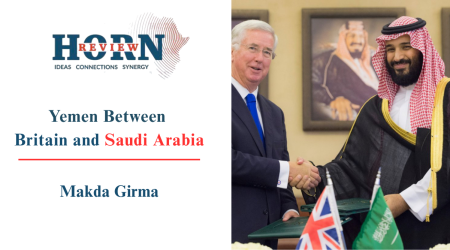
Yemen Between Britain and Saudi Arabia
The Houthi advance along Yemen’s Red Sea coast has exposed...
21
Sep
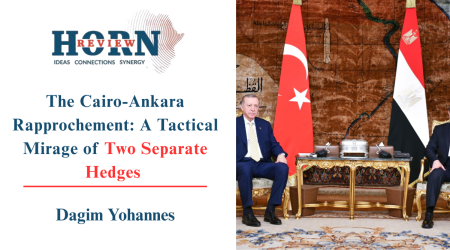
The Cairo-Ankara Rapprochement: A Tactical Mirage of Two Separate Hedges
The recent run of headlines out of Cairo and Ankara,...
20
Sep
The African Union Was Designed to Stand Outside Sudan's War
Every time Sudan's war comes up in public discussion, mentioning...
2
Sep
A Decade of Saudi Miscalculation in Yemen
On March 26, 2015, Mohammed bin Salman, then a thirty-year-old...