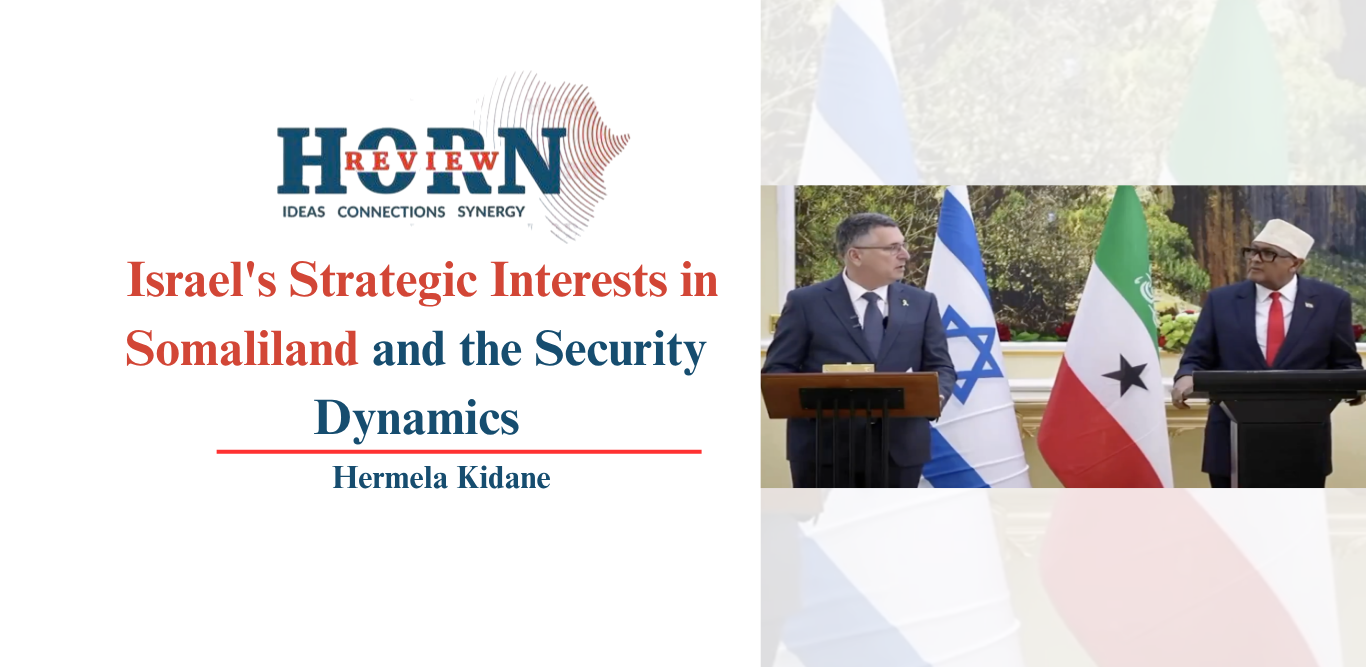
The geopolitical framework of the Horn of Africa is shifting quietly but with fundamental consequences. Recent reports indicated that Israel has planted an intelligence base in Somaliland and talks of a larger military presence are already underway. It is a revealing perspective through which the contending ambitions of regional and global powers come into sharp focus each one jostling for a firmer hold along the Bab al-Mandeb Strait, one of the world’s most critical maritime straits. However, this is not a simple tale of allies against adversaries, rather, it is a complex interplay of national drives and the persistent pursuit for security and a seat at the table.
The immediate influence is security pure and simple. For Israel the Bab al-Mandeb Strait is not just a maritime crossroads. Yemen’s Ansar Allah movement has proven it can strike Israeli linked shipping at will and has even fired directly at Israeli soil effectively shutting down the Red Sea port of Eilat. From a distance of over two thousand kilometers, it will enable Israel to monitor any kind of activities of the Houthis as well as Iran’s movements in the wider region from the Arabian Peninsula to the Red Sea. A presence in Somaliland just across the Gulf of Aden from Yemen would change the equation. It offers a forward perch for ears and eyes on the ground and if a military base follows it becomes a launchpad for faster strikes deeper awareness and shorter decision loops.
The question of how this materialized leads directly to the long and unrequited quest of Somaliland for international recognition. President Abdirahman Mohamed Abdullahi Irros description of Israel as a reliable partner says it all but for Somalia, this relationship is not a side note, it is a foundation of a deliberate step onto a stage it has long been barred from entering. Somalia stance is layered and unyielding grounded in its constitutional claim over Somaliland which it regards as inseparable from its own soil. President Hassan Sheikh Mohamud has voiced a deeper dread that any Israeli military presence could pull Somalia into a conflict it never chose with consequences that could shatter the entire region.
Somalia had already turned down Israeli overtures for diplomatic ties citing religious ideological and humanitarian grounds and that rejection now hardens its resolve. From where Somalia stands Israel has simply sidestepped the legitimate federal authority and cut a deal with a Somaliland administration creating a security problem that destabilizes not just Somalia but the delicate balance of across the region.
Since 2017 the UAE has maintained military infrastructure agreements tied to Berbera International Airport. The airport now reportedly shifting major upgrades has been flagged by analysts as a possible core for an expanded Israeli presence. Reports indicates that Somalia’s President Hassan Sheikh Mohamud cut ties with the UAE over its dealings with Somaliland lend weight to the view that UAE has been a central facilitator of the recognition and the case including the STC leader passing through Somaliland.
Meanwhile the reactions of other regional players particularly Egypt and Turkey show a ground defined by competing and sometimes clashing priorities. Egypt’s objection to an Israeli presence near the Bab al-Mandeb fits with its long-held concern over any non-Arab power securing a base on the southern approaches to the Suez Canal. At the same time Egypt is expanding its own security presence in the Horn of Africa as a means to contain Ethiopia’s influence in the region. One of its strategies is through a deepened military partnership with Somalia a move that exists in a competitive situation with Turkish influence. Turkey for its part is a major security provider and commercial partner to Somalia operating a military base in Somalia and holding extensive hydrocarbon exploration rights. Turkey firm opposition to Somaliland’s independence and by extension its relationship with Israel is thus both a defense of its investments in a Somalia and a facet of its extended contest with Egypt and the UAE. Both nations share a common opposition to the new Israeli-Somaliland pattern. However, their motivations are distinct as each acting to priorities its own benefit and its own vision in a crowded and contested arena. This collective yet uncoordinated disapproval frames the future of the region as a complex multi-player contest where everyone moves to serve their own interests first.
In this complex matrix of alliances and enmities sits Ethiopia, a country for whom access to the sea is a defining national priority. Ethiopia and Israel share a historically deep relationship that spans decades. For Ethiopia the current moment calls for careful hedging and Ethiopia must hedge if it is to protect its interests. At the same time, it must navigate its own negotiations for maritime access balancing its engagement with Somaliland against its need to maintain a functional relationship with Somalia.
Looking ahead the path points toward division and a hardening of opposing lines. In the short term the immediate consequence is the enhancing of Somalia’s diplomatic and security coordination with Egypt and Saudi Arabia as seen in the recent formalization of regional federal states opposed to Somalia. This will likely manifest as increased diplomatic isolation for Somaliland from the Muslim world balanced by strengthened and tangible security cooperation with Israel. The critical variable in the coming months will be the response of Ansarallah which has already issued explicit threats to target any Israeli presence in Somaliland. A response or even a serious attempt could test the fledgling deterrence posture of the new partnership and potentially draw Somalia directly into the vortex of the wider Middle Eastern conflict precisely the scenario Somalia fears most.
Within a year the region may witness the rise of a new security arena. The waters around the Bab al-Mandeb will grow more heavily patrolled and more hotly contested no longer just by state navies but by a cluster of forward deployed assets intelligence posts and non-state actors armed with asymmetric tools. What this comes down to is simple Somaliland sought recognition and found a partner with a pressing need Israel sought security and found a willing territorial entity on a crucial frontline. Other nations from Egypt and Turkey to the UAE and Somalia will continue to pursue their own deeply and distinct interests. The outcome will not be a single stable settlement but a prolonged condition of managed friction where the push for individual gain continuously reshapes the destiny of the entire Red Sea basin. In this new order there are no final victories only shifting priorities and the relentless pursuit of advantage in one of the world’s most essential waterways.
By Hermela Kidane, Researcher, Horn Review