Libya, Iraq, Iran, and Sudan
The assumption that disintegrating a dysfunctional central authority will clear a path for democratic order is a persistent and dangerous policy fallacy. Historical evidence from the past quarter century offers a counter narrative that in states fissured by armed ideological movements, the collapse of central power does not nurture moderate civil society but instead creates a security vacuity of extraordinary lethality filled by the most ruthless and organized actors. Libya, Iraq, and the structure of Iran each offer converging lessons with direct implications for Sudan where the phantom of state collapse pressures to replicate the region’s worst calamity.
Libya provides the most unvarnished illustration of the gap. The 2011 NATO backed intervention succeeded in overthrowing Muammar Gaddafi but what followed was not democratic transition but comprehensive fragmentation. The centralized if repressive security evaporated replaced by a constellation of armed militias pursuing regional, tribal and ideological agendas. The security void became so big that it enabled open slave markets and provided presence for transnational jihadists including the Islamic State. Libya became a place for a complex proxy war with Turkey and Qatar backing Tripoli based Islamist factions while Egypt and others supported Khalifa Haftar’s eastern coalition. The internationally recognized Government of National Unity remains a diplomatic fiction unable to project authority beyond a few neighbourhoods of the capital. The Libyan case demonstrates with brutal clarity that removing an authoritarian structure without a pre existing and broadly accepted alternative framework produces not liberty but a Hobbesian war of all against all.
Iraq in 2003 reinforces this adding the dimension of institutional dissolution. The toppling of Saddam Hussein caused an immediate collapse of state authority but the Coalition Provisional Authority’s decisions to implement de Baathification and disband the Iraqi military dismantled the state’s capacity to monopolize violence. Hundreds of thousands of trained, armed, disenfranchised men were released into a society with no functioning security sector. The resulting gap was filled with devastating speed. Al-Qaeda in Iraq which metastasized into ISIS found fertile ground among disaffected Sunni Arabs. Simultaneously, Iran cultivated a dense network of Shia militias that became integrated into the formal security apparatus while maintaining loyalty to the Quds Force. Iraq descended into a sectarian civil war producing ethnic cleansing on a massive scale and millions of refugees. Even after ISIS’s territorial defeat, the legacy remains with militia capture of state resources and a fragile equilibrium perpetually vulnerable to renewed conflict. The Iraqi lesson for Sudan is collapsing military and security institutions will not remove an obstacle to democracy but will unleash the forces that make democracy impossible.
Iran though a theocratic state rather than a collapsed one offers a distinct but equally instructive dimension. It illuminates how an ideological regime built on transnational patronage and armed proxies generates structural instability even before any hypothetical collapse. The Islamic Revolutionary Guard Corps operates according to a revolutionary logic that frequently transcends the national interest. Its network of proxies presents a model of influence projection that relies on arming ideologically aligned non state actors. This is inherently destabilizing linking Iran’s internal stability to conflicts far off its borders. Critically, a hypothetical collapse of the central command in Tehran would not produce a clean break. It would create a scenario where multiple power centers the conventional military, the IRGC, ethnic separatist movements compete for control. The question of who would control Iran’s nuclear program under fragmentation is not alarmist but it raises the spirit of a nuclear armed non state actor. Iran demonstrates that ideological regimes construct security designed to survive state pressure but that make normal governance nearly impossible and whose fragmentation would generate a space of unparalleled danger.
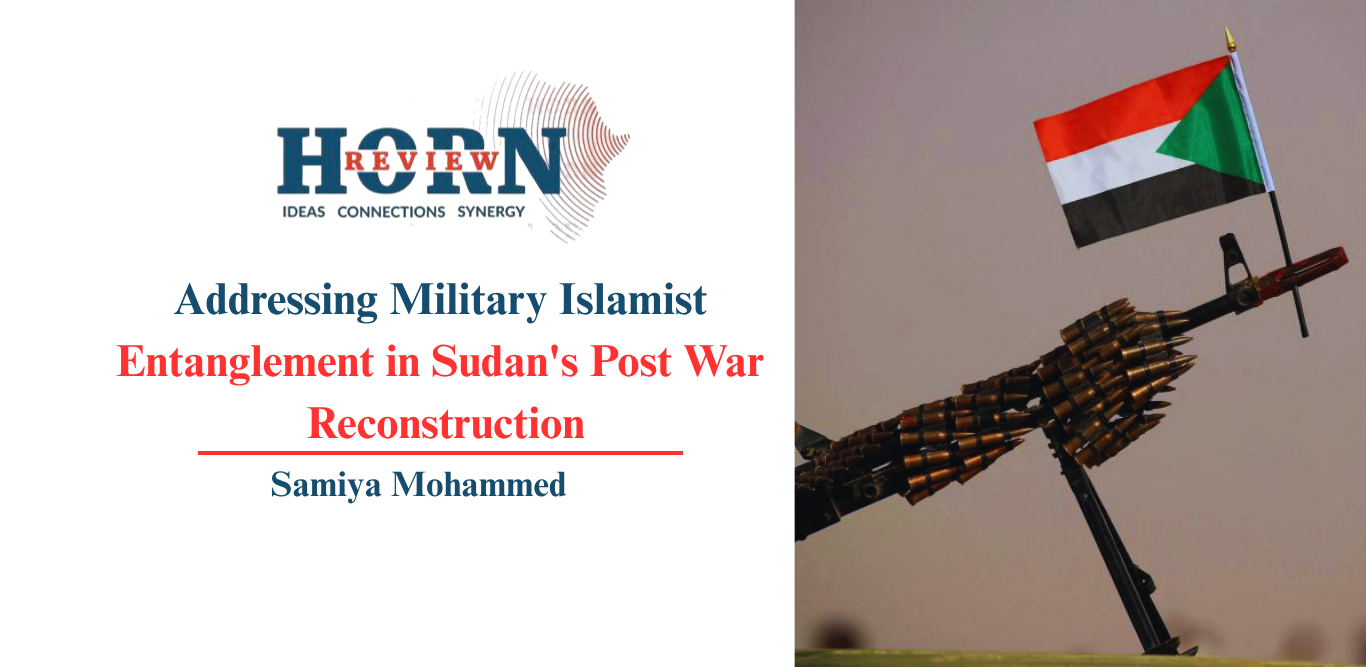
Sudan’s current war symbolizes an alarming convergence of these three models. This conflict occurs within a state shaped by decades of Islamist ideology under Omar al-Bashir. Networks of the Sudanese Muslim Brotherhood remain deeply embedded within the security apparatus, civil service, and economic structures. The assertion that these Islamist elements can be managed or side lined after the guns fall silent dangerously underestimates their organizational capacity to survive repression and operate in the shadows.
The regional dimension compounds the internal fragmentation. The danger that Sudan will replicate Libyan and Iraqi road is acute. If the SAF weakens to institutional collapse without a legitimate, inclusive successor authority the ensuing void will not be filled by civilian democratic forces. It will be filled by a more fragmented of armed actors. Al-Qaeda and Islamic State affiliates already probing ungoverned spaces would expand. Sudan’s immense borders touching seven states would become conduits for illicit traffic weapons, humans, drugs fueling regional destabilization. The migration crisis would intensify dramatically.
The collapse of central authority in states fissured by armed ideological factions does not yield peaceful democratic transition. Those who suggest that Islamist networks embedded within the Sudanese state can be surgically managed amidst broader collapse are advancing a proposition contradicted by the entirety of recent regional history. To avoid this fate it should be confronted the uncomfortable reality that ending the current war is just a precondition for the most difficult phase of state construction. The alternative is not an imperfect democracy but an charnel house where ideology, arms, and anarchy form a self replicating cycle of human misery.
By Samiya Mohammed, Researcher, Horn Review