
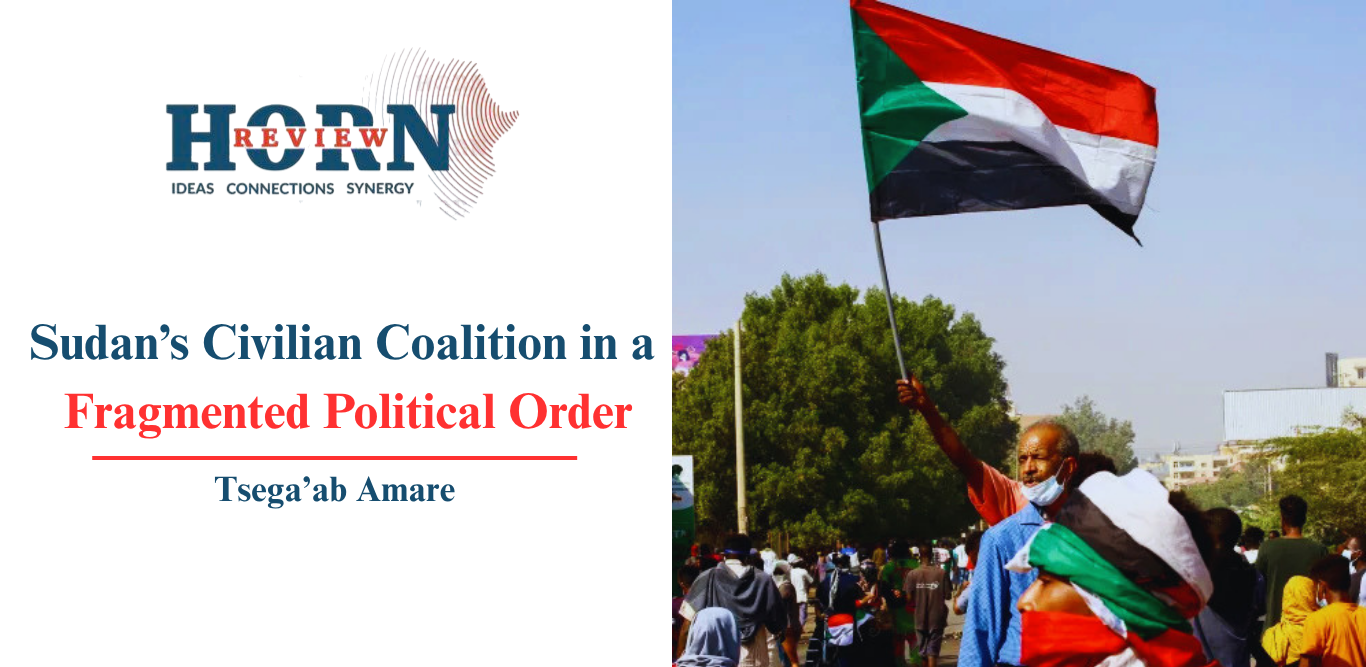
Sudan’s Civilian Coalition in a Fragmented Political Order
On May 22 in Nairobi, the opening session of the signatories to the Declaration of Principles for Building a New Sudan, the document that has come to be known as the Nairobi Declaration, convened with the kind of symbolic gravity that marks significant political junctures.
Former Prime Minister Dr. Abdalla Hamdok, Mr. Abdulwahid Nour and a cross-section of Sudanese political, civil society, and intellectual leaders addressed the gathering, closing with a contribution from poet Mr. Alam Abbas, a choice that was at once deliberate and telling. When poetry enters the political space, it usually signals despair or aspiration. In Sudan’s case today, the two are inescapably fused.
The meeting carries weight well beyond procedure. The gathering will test whether Sudan’s non-military civilian forces can transform a signed document into an actionable, unified platform, and whether one of the world’s most consequential conflict can find a political off-ramp before the humanitarian and regional catastrophe deepens further.
The Architecture of the Nairobi Framework
The Declaration of Principles, signed in December 2025, represents the most significant convergence of Sudanese civilian and armed opposition forces since the April 2023 outbreak of the war. The declaration brought together Hamdok’s Somoud (Resilience) coalition; the SLM under Abdulwahid Nour, an armed movement that has historically operated independently of broader coalitions and controls areas in Jebel Marra, Darfur; the Arab Socialist Ba’ath Party; and a collection of civilian groups including the Coordination of the Displaced and Refugees and the Darfur Bar Association.
The declaration makes several politically significant commitments: that there can be no military solution to Sudan’s war; that the National Congress Party (NCP) and the Islamic Movement should be designated as terrorist organizations; that a secular, civil state should be the goal of any transitional arrangement; and that the Quad roadmap, backed by Saudi Arabia, the United States, the UAE, and Egypt, remains the preferred international framework for peace negotiations.
More consequentially, the declaration proposes a fundamentally different political architecture for post-war Sudan: a civilian-led transitional process explicitly excluding the warring parties. In Sudanese political history, where military actors have consistently positioned themselves as indispensable arbiters of transition, this represents a sharp ideological break from the post-2019 model of military-civilian power-sharing. The declaration is therefore not simply anti-war; it is implicitly anti-military tutelage. Whether such a framework is politically realistic while both the SAF and RSF retain territorial control and coercive capacity, remains deeply uncertain. Yet its significance lies in its attempt to redefine the terms of political legitimacy away from armed leverage and toward civilian authority.
The declaration’s anti-Islamist position is especially uncompromising. It calls for the NCP and the broader Islamist movement to be removed “roots and branches” from state institutions, security structures, and economic networks, while advocating their designation as terrorist organizations. This resembles forms of post-authoritarian deconstruction and could take Iraq with de-Baathification (of 2003) than with conventional transitional settlements. For supporters, this reflects an effort to prevent the reconstitution of the Bashir-era political order. For critics, however, such maximalist language risks deepening polarization and reinforcing SAF narratives that civilian coalitions pursue ideological elimination rather than national reconciliation.
A notable gap in the declaration’s language is the consistent avoidance of naming the SAF and RSF directly, both are referred to throughout as “warring parties.” While this ambiguity may be diplomatically deliberate, it creates a structural weakness: a roadmap to end a war that cannot name its belligerents will struggle to operationalize accountability provisions.
However, the coalition’s press release argues that a genuine political process requires “precise identification of parties” as a foundational procedural step. By including this phrase, the signatories acknowledge that peace cannot be negotiated in a vacuum of anonymity. The Charter and Roadmap, to be published in coming days, must address this directly.
The ambiguity is especially striking because the declaration simultaneously advances one of the most ambitious state-restructuring agendas articulated by any Sudanese civilian coalition since the war began, calling for a single unified professional national army subordinate to civilian authority. In effect, the Nairobi initiative seeks to address not only the war itself but the structural crisis of fragmented sovereignty that produced it. Sudan’s conflict is rooted in parallel coercive systems, competing chains of command, and militarized political economies. The declaration’s security vision amounts to an effort to re-found the Sudanese state around a restored monopoly of force under civilian oversight.
The signatory composition matters as much as the content. Abdulwahid Nour’s participation is particularly notable. He has spent years refusing to align his movement with elite-driven coalitions arguing that Sudanese civilians, particularly the displaced in Darfur, had been bargained away too easily in previous peace processes. His presence signals at minimum a strategic calculation that coalition-building is now unavoidable.
The framing around unifying national efforts and collective actions also reflects an awareness among the signatories that Sudan’s civilian political space is dangerously fragmented. Three broad civilian blocs now exist: the Somoud/Nairobi coalition led by Hamdok; the Tasis alliance, which formed a parallel government in July 2025 in areas under RSF control; and the Democratic Bloc, broadly aligned with the SAF. These blocs carry fundamentally different visions of Sudan’s political future, different relationships to the two warring parties, and different international sponsors.
The Nairobi Declaration’s greatest vulnerability is the accusation of proximity to the RSF. Sudan’s military government has repeatedly accused Hamdok’s Somoud coalition of providing political cover to the RSF, while the NCP has alleged UAE influence over the initiative, a charge amplified by the UAE’s reported ties to the RSF and Sudan’s gold trade. Yet the dilemma runs deeper than perception management. Any meaningful civilian anti-war initiative must engage actors who control territory and military power. In Sudan’s polarized political climate, however, engagement with parties linked to the RSF is easily reframed as alignment with it. The Nairobi coalition therefore faces a paradox: efforts to remain politically relevant to both sides risk undermining its own legitimacy.
The concern among international actors is increasingly less about the absence of initiative and more about their multiplication. Sudan now faces overlapping mediation architectures, AU-led processes, IGAD efforts, Gulf-backed diplomacy, and civilian-led frameworks like Nairobi, each operating with different participants, assumptions, and external sponsors. Senior EU diplomatic source told Al Jazeera in December that Brussels does not see the Nairobi roadmap as a foundation for a unified civilian process, with one official describing it as “a distraction.” The EU’s preference for a single, AU-led civilian framework reflects a growing concern that each new platform, rather than catalyzing convergence, further fragments the political space and gives the warring parties additional room to maneuver.
Regional Stakes
From the HoA perspective, Sudan’s war has destabilized border regions, disrupted trade routes, generated mass displacement across neighboring states, and intensified regional political pressures.
Kenya’s sustained engagement, hosting the declaration signing, facilitating this session and pushing for a civilian third force, reflects Nairobi’s recognition that Sudan’s outcome will reshape the regional order. Kenya has framed its role as facilitating all stakeholders rather than endorsing a particular faction, but that posture grows increasingly difficult to sustain as the political lines in Sudan harden.
The declaration’s language on preventing Sudanese territory from becoming a platform for destabilizing foreign military activity also reflects the extent to which Sudan’s conflict has become inseparable from wider Red Sea and maritime security competition.
For Ethiopia, which shares its longest international border with Sudan, the implications are particularly acute. Prolonged instability risks reshaping wider regional alignments, particularly around the unresolved al-Fashaga border question, Nile basin diplomacy where Khartoum’s institutional coherence directly affects downstream negotiations, Red Sea security calculations, and the militarization of border economies stretching from al-Fashaga to the western Ethiopian frontier. These are structural pressures that compound regardless of which civilian coalition eventually gains traction in Nairobi.
Addis Ababa therefore has a direct stake in ensuring that whatever emerges from this process complements rather than contradicts the AU framework, the institution in which Ethiopia has invested significant diplomatic capital, and which remains the only platform with the regional legitimacy to anchor a durable settlement.
Conclusion
The Nairobi opening session is a necessary political act. Sudan has now endured more than three years of devastating war. The humanitarian toll, famine, mass displacement, and the collapse of basic services, demands that civilian forces organize, speak with greater unity, and keep alive the possibility of a political solution when the guns eventually fall silent.
Necessary, however, is never sufficient. The Declaration of Principles will be measured by whether it can bridge the gap between its aspirations and Sudan’s fractured political reality, a gap that the structural dilemmas of RSF proximity, forum fragmentation, and competing international sponsors all work to widen. The path from a declaration in Nairobi to a durable peace in Khartoum, el-Fasher, and Omdurman runs through some of the most treacherous political terrain in the region.
The coalition’s immediate priority must be the publication and wide distribution of the Charter and Roadmap adopted on 22–23 May. Until those documents are available, the Nairobi framework remains, in the eyes of sceptics, a declaration of intent rather than a plan of action. The test of seriousness is not the convening of sessions, as Sudan has no shortage of those, but the willingness to publish commitments that can be held to account, name the parties to the conflict without euphemism, and demonstrate that the civilian space has moved from aspiration to architecture.
What today’s gathering does make unmistakable is this: Sudanese civilians have refused to surrender the political space to their generals. That, in itself, is a fact worth recording.
By Tsega’ab Amare, Researcher, Horn Review

Leave a Reply Cancel reply
RELATED
Posts
28
Sep
Saudi-led Multinational Maritime Defence Coalition and the Changing Security of Bab el-Mandeb
On 2 September, the Saudi-led Multinational Maritime Defence Coalition...

28
Sep
The AI Disinformation War in the Horn and the Economics of Digital Conflict
In September, Marc Owen Jones, an Associate Professor of...
24
Sep
The Calculus of Separation: Why Washington Will Arm Riyadh But Not Fight for It
The episode reveals a distinction in the U.S.-Saudi security relationship...
21
Sep
Saudi Arabia’s Increasing Isolation Against the Houthis
Saudi Arabia’s renewed confrontation with Yemen’s Houthis has exposed how...
21
Sep
Yemen Between Britain and Saudi Arabia
The Houthi advance along Yemen’s Red Sea coast has exposed...
21
Sep
The Cairo-Ankara Rapprochement: A Tactical Mirage of Two Separate Hedges
The recent run of headlines out of Cairo and Ankara,...
20
Sep
The African Union Was Designed to Stand Outside Sudan's War
Every time Sudan's war comes up in public discussion, mentioning...
2
Sep
A Decade of Saudi Miscalculation in Yemen
On March 26, 2015, Mohammed bin Salman, then a thirty-year-old...
31
Aug
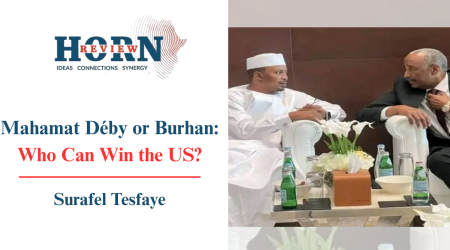
Mahamat Déby or Burhan: Who Can Win the US?
On August 20, 2026, Sudanese warplanes and drones pursued a...
27
Aug
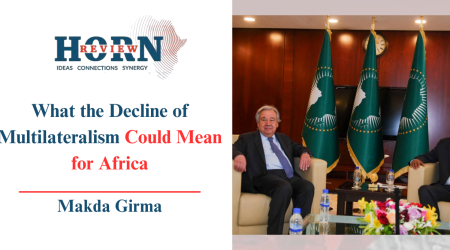
What the Decline of Multilateralism Could Mean for Africa
Multilateralism is weakening just as African states need it most....
Comment (1)
[…] proposed political architecture pointedly excludes both warring parties from transitional authority. Its founding declaration […]