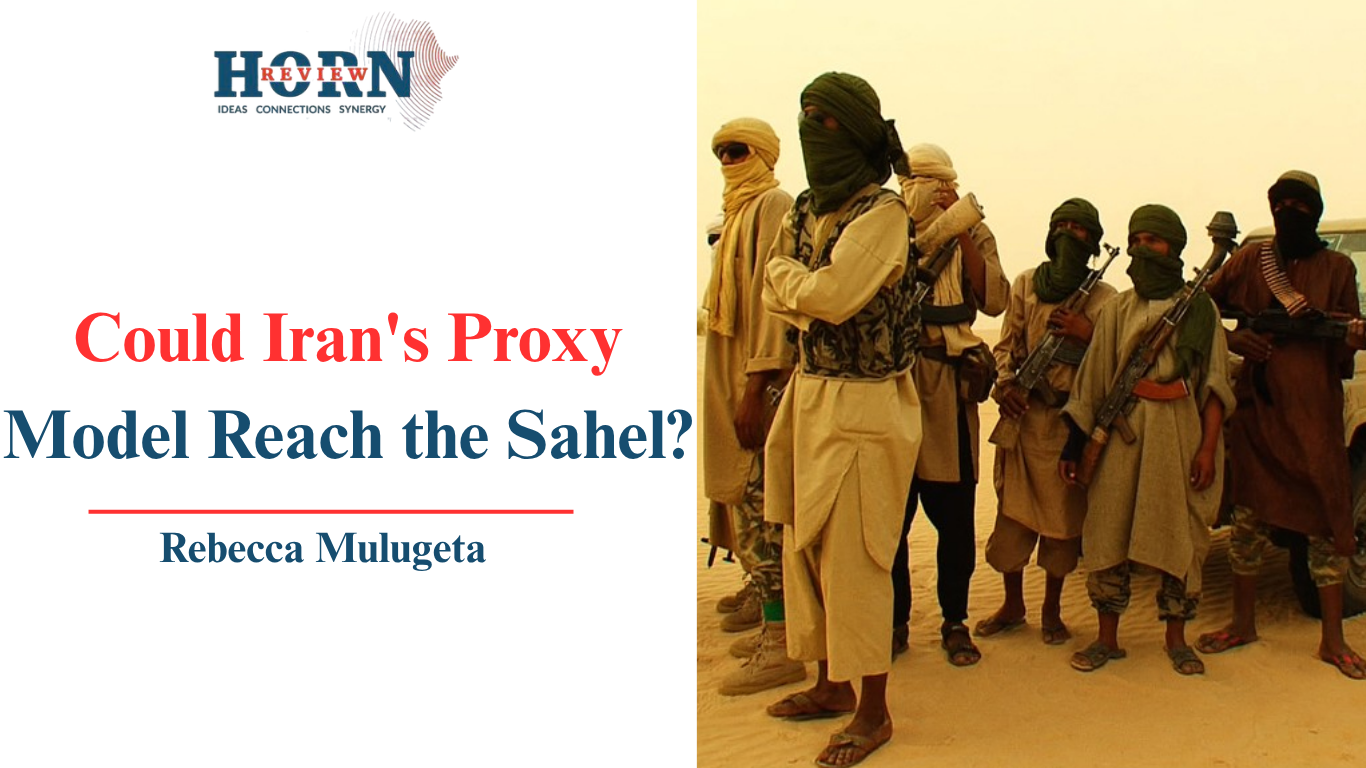
Recently It looks like the Sahel has graduated from a simple region in crisis into a high-stakes arena for systemic instability. On the surface, it is a sophisticated, layered ecosystem where weak governance and porous borders have been weaponized by dynamic militant networks. In the power vacuums of Mali, Niger, and Burkina Faso, the traditional state is not just eroding, it is being replaced by a peripheral governance of ethnic militias and armed shadows. This isn’t just a breakdown of order rather it is a strategic opening. The Sahel is no longer a place to be pitied, but a sign warning of how modern power will be contested not through the strength of the center, but through the mastery of the vacuum.
Groups like Boko Haram, Al-Qaeda in the Islamic Maghreb, Islamic State in the Greater Sahara, and Ansarul Islam are often seen as purely ideological, but their survival relies as much on pragmatism as belief. Even though they don’t have a core administrator for all, they engage in smuggling, taxation, and local alliances, shifting loyalties as needed. The 2011 collapse of Libya intensified this dynamic as weapons flowed south and fighters dispersed across the Sahel expanding smuggling routes and creating a transregional corridor of instability. In this environment, fighters, weapons, and knowledge move freely blurring the lines between separatist, jihadist, and criminal networks and making the region increasingly vulnerable to outside influence.
In this fluid and interconnected landscape, we must shift how we analyze proxy dynamics. The critical metric is no longer whether an external power directly funds a specific group, but whether it can inject influence into the wider network so that it diffuses across the entire system. This allows a foreign actor to shape the environment even when there is no formal ideological alignment or tier formation between them and the local players.
The Islamic Republic of Iran is increasingly adopting a diplomacy-first approach to expand its strategic footprint across Africa, particularly in the Sahel and the Horn of Africa, where Western influence has receded. By positioning itself within arms-trafficking networks and reportedly providing advanced drone technologies to both state and non-state actors, including alleged links to groups such as the Polisario Front and intermediaries in Mali.
This is where Iran becomes directly relevant. Over the past two decades, Iran has consistently demonstrated a distinct model of influence. Rather than relying on conventional military force, it builds power through non-state actors, creating layered systems of indirect control that allow it to shape conflict environments without appearing as the primary actor. This model has been most clearly observed in Iraq, Lebanon, and Yemen.
To expel the U.S. from the Middle East, Iran has consistently utilized a high-impact proxy model to dominate battlefields without direct confrontation. Since 2003, Tehran has cultivated Iraqi Shiite militias like Kata’ib Hezbollah through weapons, funding, and training to raise the operational cost and complexity of the American presence. In Lebanon, the alliance with Hezbollah remains a premier example of this strategy, enabling Iran to project power, deter adversaries, and shape regional dynamics indirectly. Similarly, Iranian support for the Houthis in Yemen providing critical weapons and technical expertise has empowered the group. In each play this indirect influence has proven highly effective in achieving Tehran’s strategic objectives.
The importance of these examples for the Sahel lies not in direct replication, but in the underlying logic. Iran’s strategy does not depend strictly on ideological alignment. It depends on access to fragmented environments, the ability to work through intermediaries, and the gradual insertion of influence into existing networks. At first glance, the Sahel may appear resistant to this approach. The dominant extremist groups in the region are Sunni, while Iran’s traditional alliances are rooted in Shia networks. However, in a fragmented conflict environment operational priorities often outweigh ideological divides. Cooperation can emerge based on immediate interests, even among actors with fundamentally different beliefs.
Allegations that Iran, through Hezbollah, has engaged with the Polisario Front have raised concerns about the extension of Iranian-linked networks into the Maghreb. These claims, which led Morocco to sever diplomatic ties with Iran in 2018, suggest that Hezbollah may have provided training and logistical support to Polisario individuals linked to the shale extremist groups.
Iranian-linked networks may already be present within the North African security landscape. If so, the next question becomes how these networks intersect with the Sahel’s militant groups. The answer lies in mobility and overlap. The boundaries between North Africa and the Sahel are highly porous. Fighters, smugglers, and intermediaries move across these regions with relative ease carrying with them experience, training, and connections. There are documented cases of individuals transitioning from North African environments into leadership roles within Sahelian extremist groups illustrating how these networks are interconnected
This is where indirect proxy dynamics become most relevant. Iran does not need to directly support Sunni extremist groups in the Sahel. If actors in North Africa receive training, weapons, or logistical support through Iranian-linked networks, and these actors are connected to Sahelian militant systems then influence can spread gradually. Training travels through individuals, weapons circulate through trafficking routes, and networks expand through interaction. The geography of the Sahel further reinforces this process. It is a vast land-connected region without sea or river dissecting the countries and also with minimal border control. Once influence enters the system it can move across large distances with little resistance. This creates what can be understood as a shadow proxy environment, where influence is exercised indirectly through layers of connection rather than direct command.
At the same time, the Sahel is emerging as a key arena for global competition. The United States continues to view the region as strategically important particularly in terms of counterterrorism resources, and regional stability. Even as its level of engagement shifts its underlying interest remains. This creates space for Iran to expand their presence both openly and indirectly. Iran’s growing engagement with African countries especially in energy and industrial sectors, adds another dimension even Burkina Faso leader said support for iran in the current middle east situation. Economic partnerships can serve as entry points for broader strategic influence, creating networks of cooperation that extend beyond formal agreements. While these engagements are not inherently linked to security dynamics they contribute to a wider presence that can be leveraged over time.
The central point is that the Sahel does not require a fully developed proxy system for indirect influence to take hold. Its existing conditions already provide the foundation. Weak governance, transnational networks, and increasing external interest create an environment where influence can be gradually introduced and allowed to evolve. The analysis indicates that the region is structurally vulnerable to the kind of indirect strategies Iran has applied elsewhere. The same logic that shaped conflict environments in Iraq, Lebanon, and Yemen could, in a different and less visible form, begin to emerge in the Sahel.
The risk is not immediate domination but gradual entanglement. Networks deepen, connections expand, and influence spreads quietly. Over time the boundary between local conflict and external competition becomes increasingly blurred. The Sahel therefore is not merely a regional security concern; rather, it is an evolving arena of indirect geopolitical competition where power is exercised not through visible force but through the subtle movement of networks, resources, and ideologies. In such an environment, the most significant developments are often the least visible which is precisely what makes them so critical to understand.
By Rebecca Mulugeta, Researcher, Horn Review