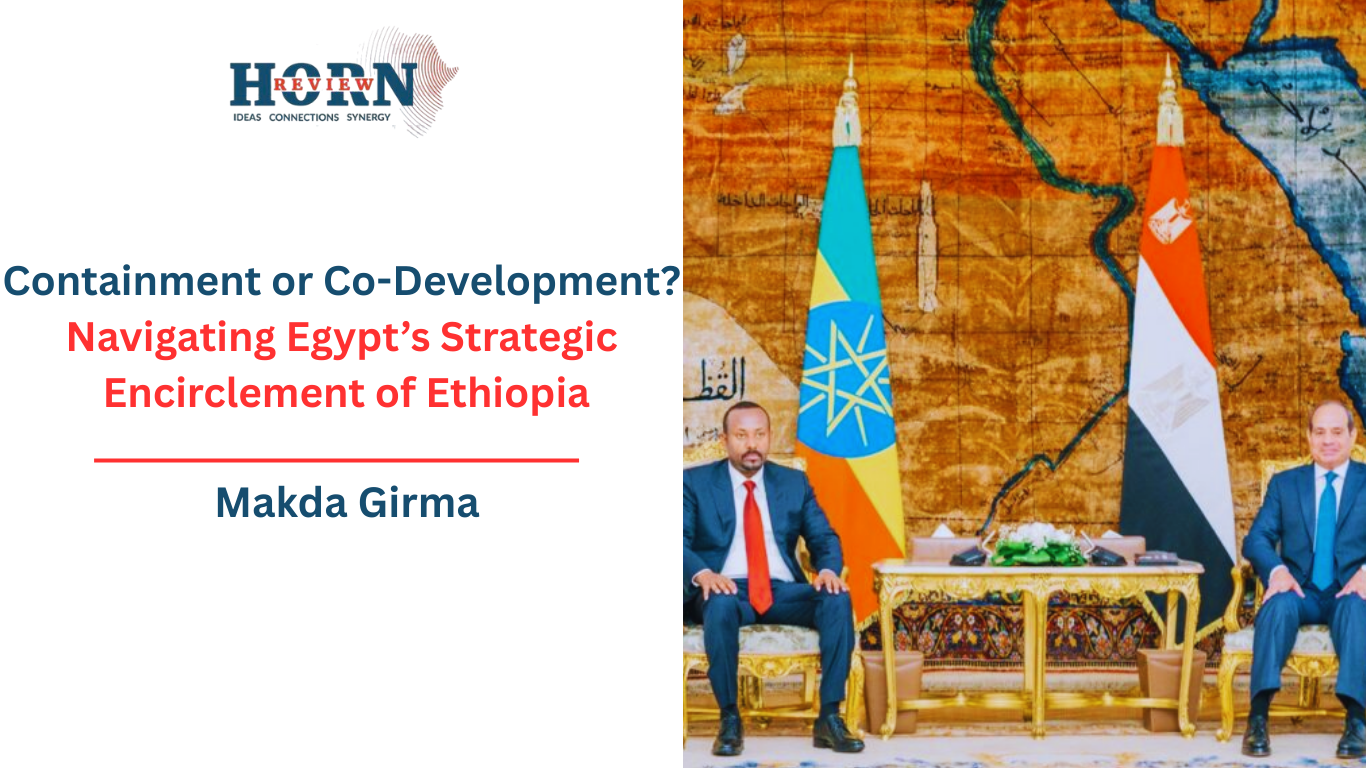
Egypt is not merely reacting to the GERD. It is constructing a layered regional containment strategy that Ethiopia must counter through calibrated alliance diplomacy rather than confrontation. This power projection blends economic incentives, military deployments, and diplomatic leverage. It counters perceived threats from the GERD amid longstanding Nile disputes with Ethiopia. Framed as partnerships for stability, it risks broader Horn destabilization. This underscores Ethiopia’s need to fortify alliances through pragmatic, reciprocal engagements.
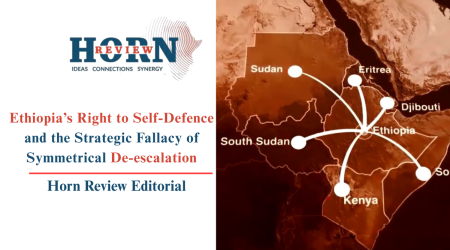
Egypt consolidates positions from troop commitments in Somalia to infrastructure overtures in Djibouti and Kenya. Ethiopia must recalibrate GERD diplomacy. It should offer targeted concessions that preserve sovereignty. These foster basin-wide equity and cooperation.
Central to Cairo’s strategy is its deepening alliance with Somalia. This has evolved into a robust military partnership since the August 2025 security pact. It committed arms shipments and up to 10,000 troops under AUSSOM. Analysts note that Egypt’s involvement aligns with its containment goals against Ethiopia. Yet Somalia advances its own priorities, including addressing security grievances tied to the Somaliland MoU. Forces were presumed to be positioned in border regions like Gedo, Hiraan, and Lower Shabelle. Somalia’s foreign minister has threatened support for Ethiopian insurgent groups amid escalation risks. The October 2025 tripartite summit in Asmara with Eritrea solidified a regional alignment perceived in Addis Ababa as strategically unfavorable.
Egypt has not engaged bilaterally to address Ethiopia’s core motivations behind its January 2025 Somaliland MoU. These include secure sea access and trade diversification. Cairo opts for outright opposition framed as defending Somalia’s territorial integrity. For instance, in February 8, 2026, talks in Cairo, President Abdel Fattah el-Sisi reiterated rejection of sovereignty-undermining actions to Somali President Hassan Sheikh Mohamud. He offered no alternatives like shared infrastructure to alleviate Ethiopia’s landlocked vulnerabilities. This echoes Cairo’s July 2025 pledge to block Red Sea ambitions via accelerated aid to Mogadishu. It prioritizes deterrence over reconciliation.
Yet Ethiopia’s MoU with Somaliland focuses solely on economic and logistical benefits. It includes no plans for formal recognition of independence. Addis Ababa has consistently affirmed respect for Somalia’s sovereignty. It views Mogadishu as a key ally in regional stability, counter-terrorism, and shared development goals that cannot be jeopardized.
Egypt’s influence extends beyond Somalia. It infiltrates economic and infrastructural domains to encircle Ethiopia. In Djibouti, Cairo pursues agreements for solar parks, logistics zones, and a major container terminal. This embeds itself in infrastructure handling nearly all of Ethiopia’s seaborne trade. It grants potential leverage over Addis Ababa’s economic lifelines. This is especially relevant as Ethiopia explores diversified access options without pursuing Somaliland recognition.
External moves like Israel’s December 2025 decision add complexity. Egypt condemned it as exacerbating Red Sea insecurities. Cairo baselessly links it to Ethiopian intentions. Similarly, Egypt’s February 2026 engagements with Kenya include $100 million in funding for dam projects. They emphasize rejecting “unilateral measures” on the Nile. This subtly positions Nairobi in Cairo’s orbit, despite Kenya’s concurrent defense ties with Ethiopia.
These initiatives reflect a broader pattern. Egypt uses economic inducements to erode Ethiopia’s regional partnerships. It exploits vulnerabilities like water scarcity and infrastructure needs. This advances its Nile narrative.
At the continental level, Egypt’s February 2026 PSC chairmanship amplified its agenda. This occurred during the lead-up to and at the 39th AU Assembly in Addis Ababa on February 14-15. A ministerial meeting on February 12 focused on Sudan and Somalia. It yielded a communiqué reaffirming Somalia’s territorial integrity. It rejected unilateral Somaliland recognition. This aligns with Cairo’s support for Mogadishu amid Ethiopia’s sea access pursuits. Addis Ababa clarifies its non-recognition stance.
The communiqué welcomed Egypt’s AUSSOM deployment. It urged UN expedited processes to avert vacuums. This fast-tracks Cairo’s Horn footprint while enabling repatriations like Burundi’s. In Sudan, the statement referred to the SAF as the “transitional government.” This reflects Egypt’s backing of the SAF against the RSF.
These PSC outcomes informed the Assembly’s deliberations. They noted persistent Horn conflicts and terrorism, including in Somalia. The summit adopted an MoU on the African Standby Force for coordination. It addressed Sudan-South Sudan issues without lifting Sudan’s suspension. This happened despite Egyptian pushes for SAF representation.
Bilateral alignments featured prominently. These included those between AU Chairperson Mahmoud Ali Youssouf, Mohamud, and Egyptian Foreign Minister Badr Abdelatty. The 2026 theme, “Assuring Sustainable Water Availability and Safe Sanitation Systems to Achieve the Goals of Agenda 2063”, aligns with Egypt’s priorities. It frames water as a collective good. This potentially sidelines upstream equities.
Egypt’s absence from bridging efforts stands out. Unlike Türkiye’s facilitation of Ethiopia-Somalia talks in January 2025 and December 2024 AUSSOM agreements, Cairo pursues encirclement over negotiation. This risks prolonged friction despite Ethiopia’s commitment to allied ties with Somalia.
These developments reveal Egypt’s encroachment as a sophisticated institutional play. It leverages the PSC to embed forces. It isolates Ethiopia through anti-Somaliland stances. It steers priorities toward downstream-favoring narratives. It biases Sudan framings. Hosting the summit in Addis Ababa did little to blunt these moves. This highlights how Egypt turns AU mechanisms into national interest extensions. It potentially fractures cohesion amid al-Shabaab and climate threats.
This spread of Egyptian power is formidable but not without vulnerabilities. Cairo’s downstream dominance risks alienating upstream states. Climate and demographic pressures demand equitable sharing. The GERD exports electricity to Sudan, Djibouti, Kenya, and potentially Tanzania. This positions Ethiopia as an energy hub. It counters alarmist rhetoric.
To mitigate escalation, Ethiopia should pursue nuanced alliance-building. It must extend olive branches blending firmness with reciprocity. Addis Ababa could accelerate CFA ratification and implementation. It should offer transparency like real-time data sharing via joint committees. This addresses concerns without ceding control.
Pair this with co-development. Examples include irrigation upgrades in Egypt and Sudan funded by GERD revenue. This fosters mutual gains. Strengthening upstream ties is essential. Propose energy-for-water deals with Kenya for CFA support. This counters Egyptian pressure.
Engage Djibouti and Tanzania via grid connections. This diversifies alliances. Avoid zero-sum concessions. Condition offers on Egypt de-escalating tensions, including through reduced external deployments in Somalia. Leverage shared BRICS membership since January 2024 for multilateral mediation. Emphasize South-South cooperation.
Domestically, inclusive governance bolsters credibility. It counters vulnerability narratives. In an era of exploited African divisions, Ethiopia’s GERD strategy must embody proactive leadership. It defends rights while extending hands for prosperity. Failure risks lengthening Egypt’s shadow. Equity-grounded alliances could illuminate a new Nile order driven by African resolve.
By Makda Girma, Researcher, Horn Review