
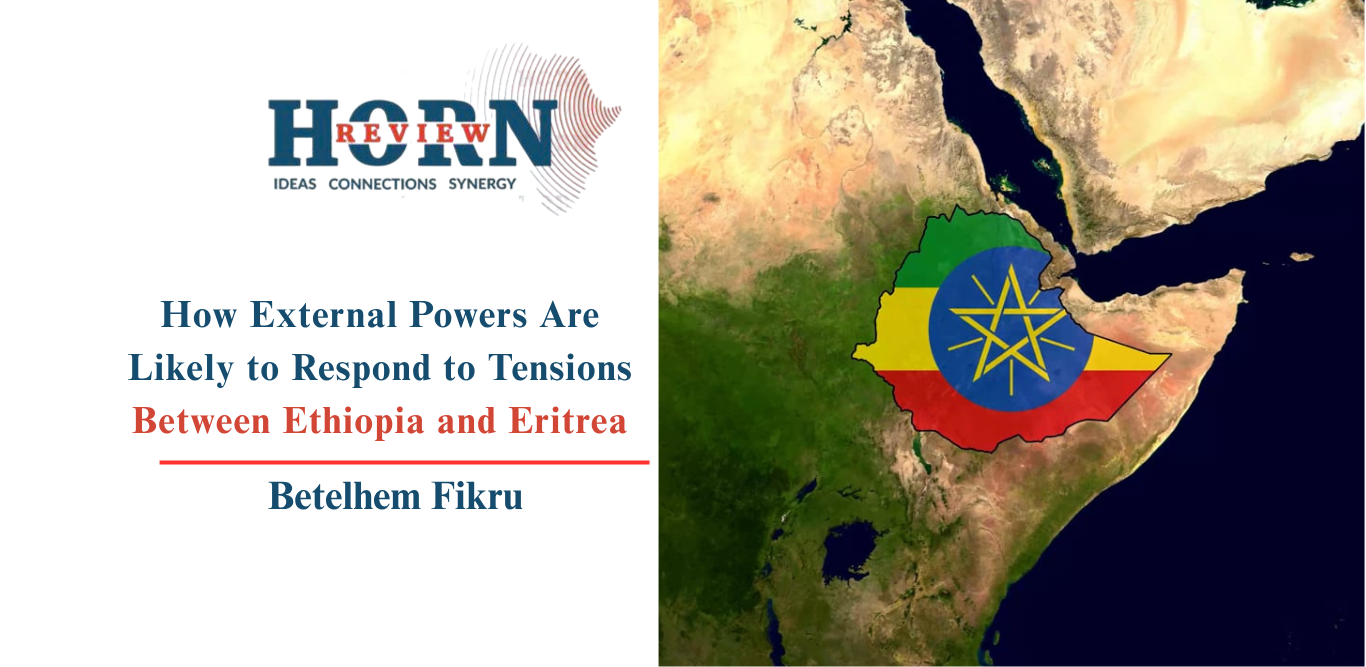
How External Powers Are Likely to Respond to Tensions Between Ethiopia and Eritrea
Tensions between Ethiopia and Eritrea extend beyond their bilateral relationship, given the Horn of Africa’s strategic and geographical positioning. Any escalation would affect neighboring states and external powers whose military presence, commercial interests and regional partnerships depend on stability in the area. While the immediate flashpoints along the border highlight the fragile post-Pretoria security architecture, any potential conflict between Addis Ababa and Asmara would not occur in a vacuum. Rather, it would instantly resonate across the broader region, triggering defensive realignments and military hedging among neighboring states as well as major Gulf actors and global powers with critical stakes along the Red Sea corridor.
Eritrea’s post-Pretoria trajectory reflects an unresolved security and political landscape rather than a straightforward military disengagement or normalization. While the November 2022 agreement formally concluded hostilities between the federal government and the TPLF, it left the deeper structural frictions of the bilateral relationship unaddressed, paving the way for renewed confrontation over border administration and peace implementation. By October, diplomatic and security tensions reached a critical juncture in which Addis Ababa formally accused Asmara of deploying forces across international borders and rendering material support to hostile opposition groups, whereas Asmara dismissed the allegations. International reporting has similarly documented Eritrean troop movements inside northern Ethiopian districts. Consequently, the current assessment must weigh reported military friction, intense diplomatic posturing, and the systemic deterioration of political channels rather than relying on the assumption of a complete, enduring post-2022 Eritrean withdrawal.
This tense environment has been further compounded by a fundamental shift in Ethiopia’s domestic political alignment, most notably marked by the formal declaration in mid-July 2026 that the Pretoria Agreement was defunct, followed closely on September 20–21 by the public launch of the Ethiopian Peoples’ Forces Alliance for Survival. Bringing together disparate armed movements including the TPLF, Fano factions, and the Oromo Liberation Army this newly consolidated front creates an unprecedented convergence with Asmara’s ongoing strategic pressures, even as direct external command lines remain a subject of debate rather than established fact. Simultaneously, this domestic realignment dovetails with a broader regional architecture crystallized by the October 4, 2026, New Alamein summit, which united Egypt, Eritrea, Somalia, and the Sudanese Armed Forces in a formal consultative framework addressing littoral sovereignty, maritime navigation, and Nile water management. Together, these interlocking developments, an unresolved post-Pretoria security stalemate, the emergence of a unified multi-front domestic opposition, and a coordinated regional containment bloc form a cohesive, multi-layered strategic challenge that demands rigorous analysis of mutual reinforcement rather than isolated incidents.
Regional Actors
United Arab Emirates
The United Arab Emirates maintains a deep, institutionalised economic and logistical partnership with Ethiopia. It has grown steadily since the mid-2010s port interests and intensified after 2018 through large-scale financial and infrastructure commitments, together with Abu Dhabi’s support for the Ethiopia–Eritrea rapprochement. The relationship continued uninterrupted through 2020–2022, which shows that it is anchored in mutual commercial returns and long-term predictability rather than short-term political shifts. Abu Dhabi brings capital, infrastructure capacity and logistics expertise, and Ethiopia brings a rapidly growing market and rising trade volumes.
With Eritrea, the UAE’s earlier logistics presence has given way to a more distant posture, and current priorities centre on the Ethiopian partnership. Eritrea’s relation with the emirates shattered particularly in 2021, after the UAE dismantled its base in Assab and Eritrea’s posturing in the region and alignment with Iran.
The result is a UAE that stands clearly closer to Addis Ababa than to Asmara and one that is expected to remain a stable commercial anchor for Ethiopia while the regional environment shifts. In the event of wider regional polarization or escalation, Abu Dhabi will side practically and economically with Addis Ababa, leveraging its financial and logistical weight to support Ethiopia’s growth while maintaining its primary focus on long-term integration.
Saudi Arabia
Saudi Arabia’s strategic relationship with Ethiopia is anchored in long-standing investments in domestic agriculture and real estate, complemented by a major diplomatic role, such as hosting the historic 2018 peace accord between Ethiopia and Eritrea. Riyadh views the Red Sea as a critical security perimeter inextricably linked to its Vision 2030 economic transformation and vital energy export corridors. Consequently, Saudi Arabia’s strategic calculations remain heavily concentrated on the stability of its eastern shores, including neighboring Yemen and Eritrea, with which it maintains distinct bilateral ties geared toward maintaining regional security and protecting its maritime trade routes.
At the same time, Riyadh’s diplomatic architecture along the Red Sea reflects a cautious and risk-averse posture that prioritizes predictability and de-escalation over unilateral geopolitical realignments. This is notably evidenced by the functioning of the Red Sea Littoral States Council, an institutional framework structured primarily around coastal sovereignty where Ethiopia currently holds no formal membership. While Saudi Arabia values Ethiopia as a substantial economic partner and a stabilizing weight in the Horn, its overarching regional strategy favors managed, consensus-driven arrangements that safeguard its immediate coastal interests while insulating its mega-projects from wider geopolitical friction. However, Saudi’s perception of both countries should be independently assessed. Its policy towards ethiopia
Qatar, Kuwait, Oman, Bahrain and the Smaller Gulf States
These states maintain low-profile relationships with Ethiopia centred on development finance and selective diplomatic engagement, from Qatari mediation in earlier border talks to the long-standing work of the Kuwait Fund. They have not taken leading roles in the current maritime or security disputes, and they function as quiet supporters of negotiated outcomes who prioritise commercial continuity and the avoidance of open friction.
Their ties with Eritrea are similarly limited. Overall they remain outside the main lines of alignment and do not lean strongly toward either Addis Ababa or Asmara, though their preference for negotiated solutions is consistent with Ethiopia’s own approach.
Iran
Iran’s position in the Horn of Africa must be understood in the context of its ongoing conflict and its wider interests in Red Sea security. The war places significant demands on Tehran’s military and diplomatic resources, but it does not necessarily reduce its regional engagement. The strategic importance of the Red Sea and the Bab el-Mandeb gives Iran continuing reasons, in addition to countering its rivalries presence, to maintain relationships in the Horn. Its direct relationship with Ethiopia has included diplomatic engagement and discussions on economic and technological cooperation, although the depth of practical cooperation remains limited relative to the region’s more established external partnerships.
Iran’s historical security and maritime connections with Eritrea might give Asmara a different place in Tehran’s regional calculations. These relationships do not, by themselves, establish that Iran can materially shape the Ethiopia–Eritrea dispute. Iran is therefore best understood as an external actor whose interests intersect with the Horn’s changing security environment, rather than as a principal determinant of bilateral relations between Addis Ababa and Asmara. The extent of its influence will depend on its capacity to sustain regional engagement, the practical content of its relationships and the personal behavior of President Isaias.
Israel
Israel and Ethiopia share a long-standing strategic partnership rooted in mutual interests, deep diplomatic ties, and a shared commitment to regional stability. This closeness was visible again on 12 October 2026, when Prime Minister Abiy Ahmed made a telephone call with Prime Minister Benjamin Netanyahu. In his account the two leaders reviewed bilateral relations and key regional developments and reaffirmed their commitment to cooperation on shared interests. The call followed a 6 October conversation between Foreign Minister Gedion Timothewos and Israeli Foreign Minister Gideon Sa’ar, and it came as tensions with Eritrea were rising, which places the exchange within a steady, high-level channel at a moment of regional pressure.
The relationship is bilateral and oriented toward mutual stability, with both Israel and Ethiopia recognizing the strategic value of Somaliland’s coastline and maritime positioning. Because Israel’s engagement with Eritrea remains minimal and its security calculus requires a reliable anchor overlooking the Bab-el-Mandeb strait, this strategic partnership sits firmly on Ethiopia’s side of the current regional divide. In the event of wider polarization or open friction, Israel will side diplomatically and practically with Addis Ababa, offering advanced technical, technological, and intelligence collaboration while relying on Ethiopia as a stable, predictable partner at the western edge of the Red Sea corridor.
Türkiye
Türkiye maintains a substantial economic footprint inside Ethiopia alongside strategic engagement across the region, establishing a unique position as a vital bridge between the landlocked giant and the wider Horn of Africa. The current bilateral relationship between Türkiye and Eritrea remains minimal and transactionally cautious, defined by low-level trade and historic mutual suspicion over regional influence. During recent high-level diplomatic exchanges, Ethiopia demonstrated the fundamental importance of reliable maritime connectivity to sustain its large and rapidly growing economy, while Ankara reaffirmed its steadfast commitment to regional stability and the structured resolution of maritime access disputes. Rather than viewing its Horn of Africa strategy as contradictory, Turkish foreign policy deftly balances its extensive industrial and defense-industrial investments in Addis Ababa with its diplomatic channels across the Red Sea corridor, leveraging its proven mediation experience to harmonize competing regional interests.
This strategic equilibrium demonstrates that Türkiye’s deep political and economic partnership with Ethiopia anchored in mutual strategic trust and multi-faceted defense-industrial ties, is fully compatible with its broader commitment to Horn stability when diplomatic channels are pursued through structured, mutually agreed-upon frameworks. Rather than entangling itself in Asmara’s confrontational orbit, Ankara’s regional calculus leans systematically toward prioritizing its structural alliance with Addis Ababa, leveraging its diplomatic weight and technical cooperation to reinforce Ethiopia’s role as the regional anchor. Consequently, in the event of heightened regional polarization, Türkiye’s substantial capital, defense, and institutional commitments firmly align its strategic posture with Ethiopia’s long-term stability rather than the containment dynamics operating on the periphery.
Djibouti
Djibouti remains the indispensable and historical maritime gateway for the vast majority of Ethiopian trade, anchoring an economic relationship characterized by deep commercial density and structural interdependence. Decades of shared infrastructure, transport corridors, and institutional cooperation have cemented Djibouti’s status as the primary lifeline connecting Ethiopia’s landlocked economy to global markets. Rather than operating in a zero-sum framework of substitution, Ethiopia’s ongoing pursuit of trade diversification functions as a complementary measure designed to manage surging cargo volumes and build long-term supply chain resilience, ensuring that Djibouti continues to handle vital commercial traffic while regional trade corridors expand to meet growing economic demands.
Djibouti’s reaction would be passive pro-Ethiopian neutrality under a foreign security umbrella. It will prioritize keeping its port corridor open to protect its economy while heavily fortifying its northern border to keep Eritrea at bay.
Somalia
Somalia’s alignment within this emerging regional architecture has grown increasingly institutionalized through a persistent pattern of high-level diplomatic and security summits alongside Egypt, Eritrea, and Sudan. Following the elevation of relations to a strategic partnership, the pattern of leadership encounters intensified significantly, with Egyptian President Abdel Fattah al-Sisi and Somali President Hassan Sheikh Mohamud holding multiple bilateral and multilateral meetings culminating in at least five major direct engagements and the formalization of the quadrilateral alliance at the New Alamein summit in early October 2026. This regularized rhythm of high-level consultations is among the efforts to court Mogadishu directly into Cairo’s broader containment framework.
Within this coordinated diplomatic rhythm, Somalia’s official stance maintains that territorial integrity and sovereignty are fixed, non-negotiable principles. While commercial possibilities and maritime access could theoretically exist under negotiated frameworks, they remain strictly calibrated to Somalia’s internal political consolidation and its reliance on external security partnerships. Somalia’s posture is fractured, risk-averse hedging. Mogadishu wants Ethiopia’s Somaliland ambitions contained through regional diplomatic pressure, but it cannot afford an Ethiopian military defeat or sudden withdrawal that causes Somalia’s own internal security structure to collapse. The distinction between Somalia’s declarative rhetoric and its actions highlights a critical dynamic in geopolitical assessments in which declarative neutrality often serves as operational cover for active counter-balancing.
While Mogadishu publicly maintains a posture of strict regional neutrality to avoid direct confrontation with Addis Ababa, its operational choices reflect an active strategy of external counter-balancing. However, its military pacts with Cairo, acceptance of Egyptian arms shipments, welcoming of Egyptian troop deployments, and participation in quadrilateral summits with Egypt, Eritrea, and Sudan might undermine that neutral posture or position it in a difficult and complicated situation.
Global Powers and European Countries
While major global and European powers share a common imperative to prevent a wider Horn of Africa conflict, their strategic responses are fractured by competing priorities. Consequently, external interventions are unlikely to follow a unified strategy, as each power balances its commitment to Red Sea maritime security and regional stability against its distinct diplomatic, military, and economic equities with both Addis Ababa and Asmara. Besides, the concentration of foreign military facilities in Djibouti, including those operated by the United States, China, France and Japan, reflects the strategic importance of these maritime routes, although each power has distinct priorities and relationships across the region.
These interests will shape how external powers respond to a potential confrontation. Washington’s regional posture, for instance, is tied to counterterrorism, maritime security and developments in the Middle East, while Beijing’s military base in Djibouti supports overseas logistics, intelligence and the protection of its wider regional interests. European engagement is similarly influenced by Red Sea security, as demonstrated by the EU’s Operation ASPIDES and other bilateral engagements with regional countries. France also relies on Djibouti as a key military foothold following the contraction of its presence in the Sahel, while maintaining significant diplomatic, economic and security ties with Ethiopia. These overlapping interests make external responses unlikely to follow a single pattern, as each actor weighs regional stability against its relationships with Addis Ababa and Asmara, its maritime priorities and the potential consequences of a wider conflict.
United States
The Trump administration is pursuing an Africa policy that differs from its predecessors. Its recent reset effort with Eritrea, helped by Egyptian lobbying and driven partly by Red Sea interests, suggests a balancing approach that builds leverage over both capitals despite strong ties with Ethiopia. Washington’s approach appears to address Eritrea’s conduct on a case-by-case basis, with limited evidence of a broader policy framework connecting these developments. Coming to Ethiopia, Ambassador Ervin Massinga condemned the TPLF leadership’s September offensive, describing it as a poor decision, and warned that Washington could impose further sanctions on those escalating the conflict. The statement signaled a willingness to apply pressure against actors undermining stability, although Washington’s public response to Eritrea’s military involvement has been less explicit.
Calls for stability and territorial integrity press both sides, yet the willingness to go further, including through pressure diplomacy, still remains limited. If confrontation escalates, the United States would try to stay neutral but might lean toward Ethiopia, because Isaias’s despotism is a structural problem which the U.S. understands and the balance of power points the same way. Stronger diplomatic pressure is likely, and sanctions remain possible.
China
Chinese policy is driven by economic, strategic and stability imperatives. Beijing has invested heavily in Ethiopian infrastructure, including the Addis Ababa to Djibouti railway and industrial parks, holds significant mining interests in Eritrea, and values its ties with Egypt. A direct military confrontation between Ethiopia and Eritrea would disrupt the corridors linking Ethiopian industry to Djibouti’s ports, threaten assets on both sides of the border and complicate its balance between Addis Ababa and Cairo.
Special Envoy Hu Changchun has visited both capitals repeatedly, including a meeting with President Isaias in April 2026, and promotes the Outlook on Peace and Development in the Horn of Africa. China would urge restraint, sovereignty and a return to the 2018 framework while avoiding public condemnation and military alignment. The pragmatic rationale would lead us to conclude that due to its deeper footprint in Ethiopia, it could tilt practical preferences toward Addis Ababa. China offers predictability in its approach, but it expects stability in return.
India
India treats Ethiopia as the clear focal point of its Horn policy. Relations were raised to a Strategic Partnership during Prime Minister Modi’s visit in December. Indian companies have invested billions, bilateral trade stands near $550 million, and defense cooperation has expanded under a 2025 MoU, with a second Joint Defense Cooperation meeting held in Addis Ababa in late September 2026. External Affairs Minister Jaishankar visited in early October. Ethiopia has briefed New Delhi on the current tensions, and its envoy has noted that India expressed solidarity. Ties with Eritrea are limited and secondary. India would call for restraint and dialogue, and lean practically toward Ethiopia, reinforced by shared BRICS membership.
Russia
Russian interests are opportunistic and security oriented, built around arms sales, energy projects and a Red Sea naval foothold that remains stalled in Sudan. Ethiopia is a significant partner through fertilizer supply, military-technical cooperation, naval capacity building and the Rosatom nuclear roadmap, while ties with Eritrea are thinner. In late September 2026 Foreign Ministry spokeswoman Maria Zakharova called for a ceasefire, urged external actors to refrain from interfering in Ethiopia’s internal affairs, and stressed Ethiopia’s unity and territorial integrity. That wording signals how Moscow reads the situation. Russia would keep a formal neutrality while leaning toward Ethiopia. The spirit of the statement demonstrates there is an understanding of Moscow that there exist external actors interfering in Ethiopia’s internal affairs and violating its territorial sovereignty.
United Kingdom
London combines humanitarian concern, migration management, support for African Union processes and an interest in Red Sea stability. Its statement of 24 September 2026 condemned attacks by Tigray Defense Forces, rejected the Alliance for Survival’s aim of overthrowing the federal government, and called for dialogue under AU mediation and unhindered humanitarian access. The UK would remain formally neutral while potentially backing federal authority and the AU, preferring statements and multilateral mediation to unilateral coercion. Any lean toward Ethiopia would be tempered by concern over civilian harm and spillover into migration and maritime security.
France
France maintains one of the densest military footprints in the region through its Djibouti base. President Macron has previously described Ethiopia’s wish for diversified sea access as legitimate if pursued peacefully and lawfully. On 24 September 2026 Paris condemned the TPLF’s seizure of airports and attacks into Afar and Amhara, backed AU mediation led by Olusegun Obasanjo and full implementation of the Pretoria Agreement, and supported UN Security Council discussion. France would push hard for de-escalation and coordinate with EU and AU partners, while leaning practically toward Ethiopia given their strong relationship and convergence of interests.
Italy and Germany
Italy has a strong relationship with Ethiopia that outweighs its revived ties with Eritrea. Germany’s relationship with Ethiopia is also substantial, and its relations with Eritrea are strained. Berlin would call for de-escalation while understanding Eritrea’s spoiler role in the region.
Implications and K ey Takeaways
The international environment offers Ethiopia diplomatic space but limited material backing. Statements of neutrality from external powers are likely to be accompanied by calls for restraint, yet these alone will not deter the pattern of pressure now visible along Ethiopia’s northern and western approaches.
Eritrea’s post-Pretoria conduct retention of forward positions, cultivation of the Tsimdo alignment with TPLF hardliners and other armed groups, material support for opposition forces, and progressive military repositioning forms a single, coherent strategy rather than a series of isolated incidents. This strategy is reinforced by the wider regional coordination articulated at the New Alamein meeting, in which Egypt has played the central orchestrating role, bringing Eritrea, Somalia and the Sudanese Armed Forces into a shared political posture that emphasises littoral primacy and the containment of Ethiopian options.
Sudan’s internal division has further opened space for logistical pathways and the movement of non-state actors along the shared border, linking the Al-Fashaga file, Nile disagreements and Red Sea questions into one interconnected security environment. Somalia’s participation in the same diplomatic rhythm has institutionalised its alignment with this posture, while Djibouti remains the indispensable commercial partner whose corridor continues to carry the large majority of Ethiopian trade.
Among external powers, most will maintain formal neutrality while leaning practically toward Ethiopia, the larger demographic, economic and institutional actor with deeper existing ties. India, France, the United Kingdom, China and Russia each possess substantial stakes that incline them in this direction. The United States remains the partial exception: its approach is more dispersed, its outreach to Eritrea continues, and its eventual lean is therefore the least certain. Smaller Gulf states are likely to stay on the margins, prioritising commercial continuity. Iran’s indirect effects on maritime routes add a further layer of vulnerability for any landlocked importing economy.
In this setting, the most valuable task for Addis Ababa is to present the full pattern clearly: Eritrea’s cross-border activities, the facilitation of armed groups, the New Alamein coordination, and the wider attempt to keep Ethiopia strategically overstretched form one connected reality. Partners with deep ties can reinforce that reading, while the African Union and IGAD channels keep the process legitimate and give every outside power a recognised framework to support. Arrangements that accommodate the structural weight of the region’s largest hinterland economy remain the path most likely to increase overall corridor resilience and commercial density for all parties.
By Betelhem Fikru, Researcher, Horn Review

RELATED
Posts
14
Oct
Ethiopia or Eritrea, Who Is the Aggressor?
Tensions between Ethiopia and Eritrea extend beyond their bilateral relationship,...
14
Oct
The Recurring Script of Eritrea’s Invasion-Victim Cycle
Tensions between Ethiopia and Eritrea extend beyond their bilateral relationship,...
14
Oct
Under the Banner of Red Sea Security, Egypt Encircles Ethiopia
Tensions between Ethiopia and Eritrea extend beyond their bilateral relationship,...
14
Oct
Egypt's Attack on Sudan's Gold Mines and the Long Road That Led to It
Tensions between Ethiopia and Eritrea extend beyond their bilateral relationship,...
14
Oct
Where Somalia’s Federal and Regional Fight Is Going
Tensions between Ethiopia and Eritrea extend beyond their bilateral relationship,...
14
Oct
Eritrea’s Post-Pretoria Strategy and the Escalation in Ethiopia
Tensions between Ethiopia and Eritrea extend beyond their bilateral relationship,...
14
Oct
The Houthi-al-Shabaab Nexus and the Emerging Security Architecture of the Gulf of Aden
Tensions between Ethiopia and Eritrea extend beyond their bilateral relationship,...
14
Oct
After Years of Turnover, Ethiopia Chooses Continuity in Its Foreign Ministry
Tensions between Ethiopia and Eritrea extend beyond their bilateral relationship,...
14
Oct
Ethiopia’s Northern Crisis: Actors, Interests and the Anatomy of Escalation
Tensions between Ethiopia and Eritrea extend beyond their bilateral relationship,...
14
Oct
“Decaffeinated Sovereignty”: Eritrea’s One-Way Street with Ethiopia
Tensions between Ethiopia and Eritrea extend beyond their bilateral relationship,...