The emergence of a coalition of armed and political movements including a faction of the Ogaden National Liberation Front alongside the Tigray People’s Liberation Front introduces a new variable into the security environment. The alliances formation creates conditions that al Shabaab has demonstrated it is prepared to exploit. The risk is follows a documented pattern of jihadist opportunism during periods of Ethiopian military distraction most clearly evidenced during the Tigray war. This vulnerability shows the structural conditions that enable al Shabaab’s predatory behavior, the specific mechanics of its 2022 incursion and the internal fractures within the ONLF that could transform political friction in the Somali Region into a security crisis.
The ONLF’s fragmentation is central that the organization that signed a peace agreement with the Ethiopian government in October 2018 renouncing armed struggle for peaceful political engagement now speaks with competing voices. One faction led by Abdirahman Mohamed Sheikh Mahdi has confirmed its participation in the coalition asserting that the 2018 peace deal has been rendered meaningless by unfulfilled commitments, arrests and office raids. A rival leadership structure based in Jigjiga aligned with the Somali Regional administration and rejects the alliance and maintains that ONLF remains a registered political party operating within the framework of the 2018 agreement. This is creates two competing claims to legitimate representation of Ogaden political aspirations each with the potential to mobilize constituencies and each distrustful of the other’s intentions.
A political dispute that remains rhetorical poses limited risk. But the moment that dispute turns kinetic whether through the Mahdi faction attempting to mobilize supporters or through a heavy handed regional crackdown on suspected sympathizers the resulting disruption creates precisely the kind of local instability that al Shabaab has exploited. The group does not require formal partnership with nationalist movements to benefit from their activities. It requires gaps in security coverage, communities under stress and opportunities for recruitment and transit. The ONLF split threatens to generate all three.
Despite their ideological and strategic differences, al Shabaab and Ogaden nationalist factions such as the Mahdi faction might still find limited, tactical reasons to cooperate just as they attempted in the 1990s through al Ittihaad al Islamiya. Analytically three factors could drive such convergence with the first being shared hostility including Ethiopian forces and the Somali federal government and this creates a temporary alignment of interests. Al-Shabaab’s operational need for local knowledge, recruitment pool, and safe passage through Ogaden populated areas may incentivize transactional arrangements with clan militias and also weakened nationalist groups facing existential pressure may seek al Shabaab’s protection or resources even at the cost of autonomy. However any such cooperation would remain asymmetrical, coercive and opportunistic rather than a genuine partnership.
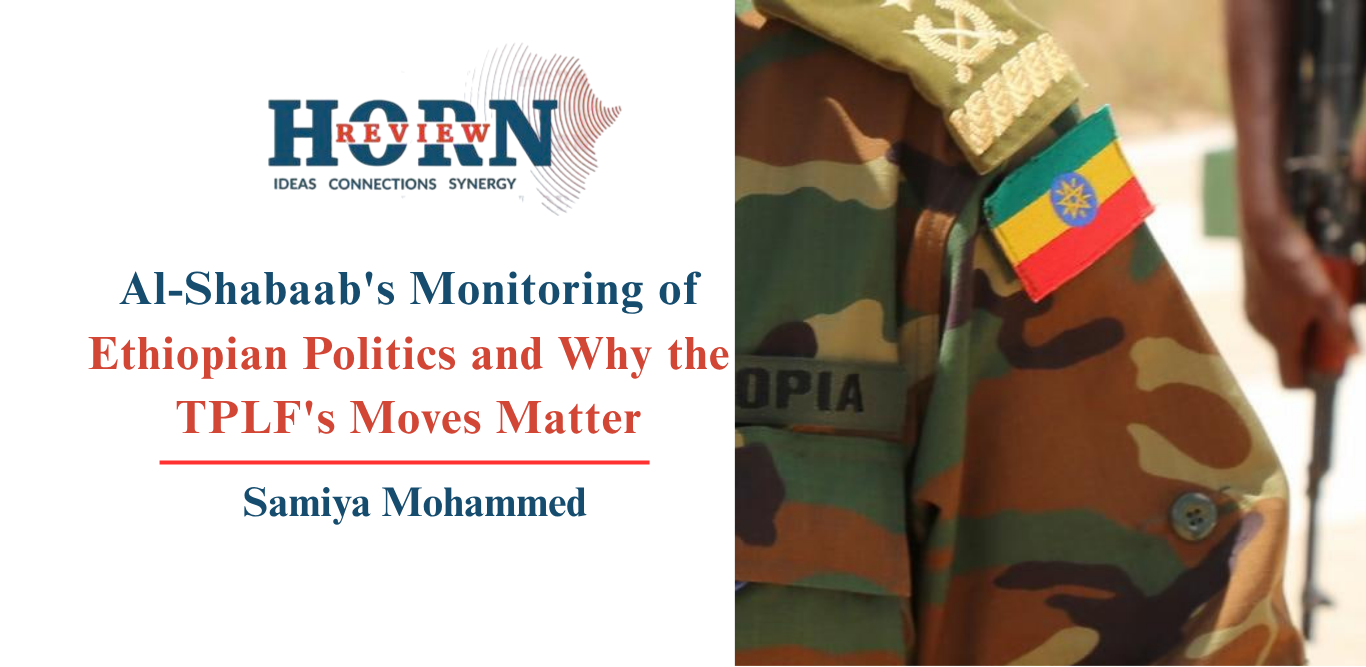
The 2022 incursion into Ethiopia’s Somali Region provides the clearest evidence of this pattern. In July of that year while Ethiopian forces were heavily committed in Tigray, al Shabaab launched a coordinated cross border operation. The initial phase involved diversionary attacks on border towns in Somalia’s Bakool regio where Ethiopian Police were stationed. These attacks which al Shabaab claimed killed dozens of Ethiopian forces served to fix attention on the border while a main force of several hundred fighters pushed into Ethiopian territory. The incursion penetrated approximately 150 kilo meters into the Ogaden with some elements reportedly reaching the Bale Mountains before being beaten back by Police and federal units. The operation demonstrated that al Shabaab possesses both the capability and the willingness to move a battalion sized element across the border when it perceives Ethiopian military attention to be focused elsewhere. That is the pattern and That is the vulnerability.
The aftermath of the 2022 incursion did not eliminate the threat. Arrests and terrorism related sentences in Jigjiga during 2024 and 2025 indicate that infiltration attempts never fully ceased. More concerning al-Shabaab has been actively improving its capabilities through external partnerships. Its relationship with the Houthi movement in Yemen has evolved from informal contact to a functional, transactional cooperation focused on capability transfer. Hundreds of al Shabaab fighters have traveled to Yemen for training in drone operation, bomb making and small arms use.
The coalition’s formation creates additional risk vectors. The presence of the TPLF in the alliance is particularly significant because the 2022 al Shabaab incursion occurred precisely when Ethiopian forces were engaged in Tigray. If the new alliance’s activities whether through coordinated military operations or through the just threat of renewed conflict in the north cause the federal government to redeploy forces away from the Somali Region, al Shabaab will likely perceive an opportunity. The group’s operations are opportunity driven. It seeks moments of state weakness and military distraction. A multi front security challenge with active or potential conflict in Tigray, Amhara, Oromia and the Somali Region simultaneously creates exactly the conditions that al Shabaab has previously exploited.
If the ONLF split leads to intensified political tension in the region, the Police may find itself in the difficult position of policing communities that are divided in their loyalties. Heavy handed tactics against suspected Mahdi faction supporters could alienate segments of the population creating openings for al Shabaab recruitment and intelligence gathering.
The critical insight is that Ethiopia’s security has demonstrated resilience in the face of direct challenges. The 2022 incursion was ultimately repelled and proved capable of responding to a cross border threat. The lesson of 2022 is not that Ethiopia is defenseless. It is that al Shabaab is opportunistic, adaptive and willing to accept losses if the operations suggests a strategic gain. The convergence of a new opposition coalition, a fractured ONLF and the potential for renewed conflict on multiple fronts creates conditions that the group will almost certainly seek to test.
The Somali Region’s security forces retain the capability to counter incursions. The political tensions surrounding the ONLF split require careful management to prevent local disputes from creating security spaces. Al-Shabaab’s pattern is consistent as it waits for the moment when attention shifts and then it moves. The coalition’s formation may not have created that moment yet but it has moved the conditions closer to the kind of instability that al Shabaab has always sought to exploit.
By Samiya Mohammed, Researcher, Horn Review