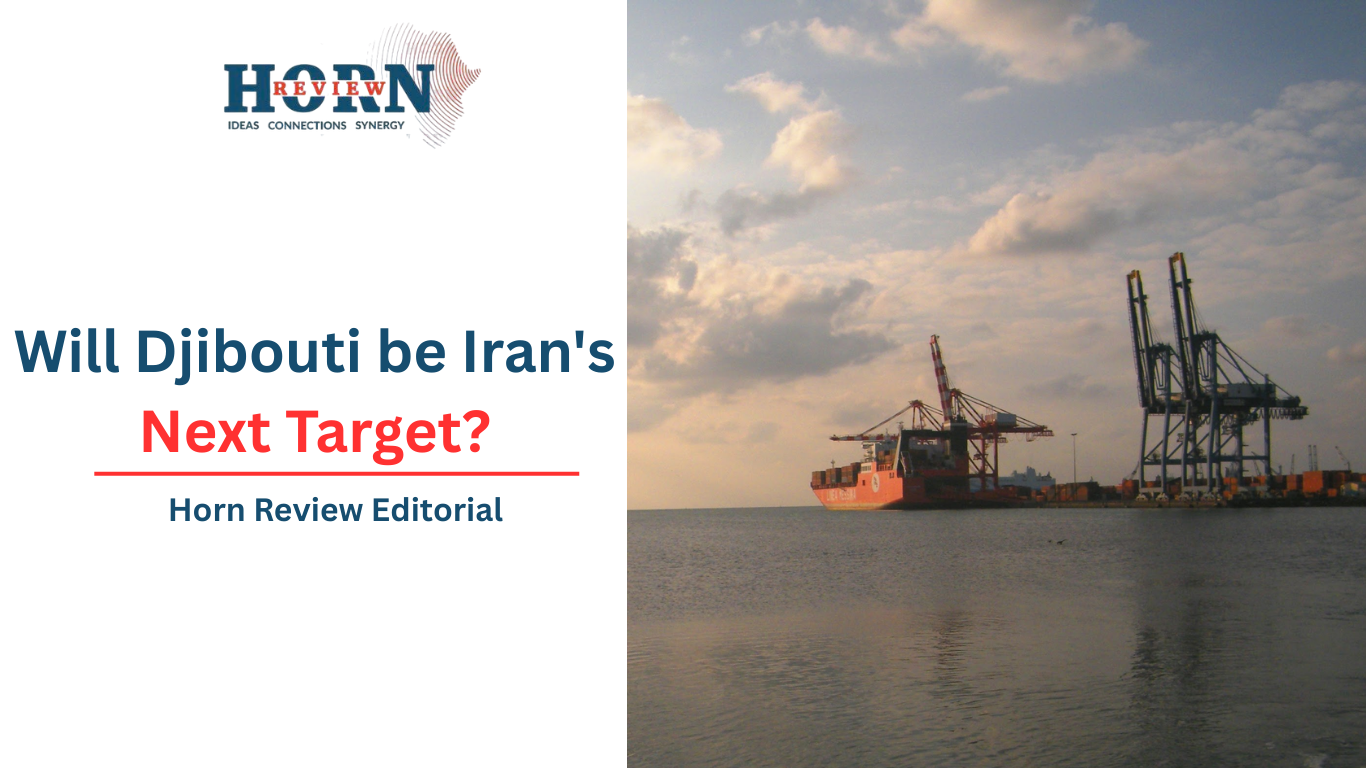
The widening instability across the Middle East has re-centered global attention on strategic maritime chokepoints. Much of the discourse has understandably focused on the Strait of Hormuz, the narrow artery through which a substantial portion of the world’s seaborne oil passes. Yet a closure or sustained disruption of Hormuz would not confine its consequences to the Persian Gulf. Rather, it would trigger a cascading reconfiguration of maritime routes, military postures, and geopolitical calculations extending westward to the Bab el-Mandeb. In that expanded theater, Djibouti emerges as a structurally exposed node – one whose strategic centrality could transform it from a logistics hub into a potential target.
The comparison with Gulf states such as United Arab Emirates, Bahrain, Qatar, and Saudi Arabia is not superficial. These states have become embedded in regional security architectures heavily intertwined with Western military power. Their ports, financial establishments, energy infrastructure, and bases are deeply integrated into global force projection systems. As tensions with Iran have periodically escalated, these countries have been framed by adversaries not merely as sovereign actors but as extensions of broader strategic blocs. In moments of acute crisis, this perception has rendered them vulnerable to missile strikes, drone attacks, sabotage operations, and asymmetric retaliation.
Djibouti’s geopolitical positioning now mirrors several of these structural characteristics. It sits astride the Bab el-Mandeb, the maritime corridor linking the Red Sea to the Gulf of Aden and, by extension, to the Suez Canal. Any significant disruption in the Strait of Hormuz would intensify the importance of the Red Sea route, particularly for energy shipments rerouted from Gulf terminals seeking alternative pathways. As maritime traffic concentrates along this western corridor, the strategic value of Djibouti’s ports and facilities would correspondingly increase. With increased value comes increased vulnerability.
Djibouti hosts multiple foreign military installations, most prominently Camp Lemonnier, the primary U.S. base in Africa, alongside French, Chinese, Japanese, and Italian facilities. This density of extra-regional military presence is frequently interpreted as a guarantee of deterrence. However, deterrence is contingent upon the rational calculus of adversaries and the bounded scope of conflict. In a scenario marked by escalation spirals and horizontal expansion, the very visibility of foreign forces may shift from shield to magnet. If the strategic logic of a conflict evolves toward targeting logistical nodes, forward operating bases, or maritime chokepoints associated with adversarial coalitions, Djibouti’s profile changes fundamentally.
The closure of the Strait of Hormuz would constitute not only an economic shock but a strategic shock. Energy-importing states would scramble to secure alternative supplies; naval deployments would surge; insurance premiums for shipping would skyrocket; and the militarization of sea lanes would intensify. In such an environment, the Bab el-Mandeb would assume even greater systemic importance. Any actor seeking leverage in a broader confrontation could calculate that disruption at the Red Sea’s southern gateway would multiply the economic and psychological impact initiated in Hormuz. The logic of escalation could thus propagate westward, transforming Djibouti into a pressure point within a connected maritime battlespace.
Moreover, Djibouti’s economy is highly dependent on port services, transit trade, and base rents. Its fiscal architecture is intertwined with the steady flow of global commerce. A prolonged regional crisis that depresses shipping volumes or elevates security risks would therefore have internal socioeconomic repercussions. This vulnerability is compounded by the fact that Djibouti’s strategic model relies on hosting competing great powers simultaneously. While this diversification of partnerships is often portrayed as hedging, it also embeds the state within the rivalries of those powers. Should tensions among major actors intensify in parallel with Middle Eastern escalation, Djibouti could find itself navigating conflicting pressures that constrain its autonomy.
The analogy with Gulf monarchies is instructive in another respect. States such as the United Arab Emirates and Saudi Arabia have invested heavily in missile defense systems, hardened infrastructure, and diversified export routes precisely because they recognize that alliance with powerful external actors does not eliminate exposure. The attacks on Saudi oil facilities in 2019 underscored the limits of traditional deterrence against non-state or hybrid threats. If highly resourced Gulf states with advanced air defenses remain vulnerable to asymmetric strikes, the relative exposure of a smaller state like Djibouti – located within range of multiple potential actors operating across the Red Sea and Gulf of Aden – becomes analytically salient.
The presence of the Chinese naval support base further complicates the calculus. In a polarized environment, Djibouti is one of the rare geographies where U.S. and Chinese military facilities operate in close proximity. While this coexistence has thus far been managed pragmatically, a sharp deterioration in global great-power relations could render Djibouti an arena of strategic signaling. Even absent direct confrontation, cyber operations, intelligence competition, and information warfare could intensify, increasing the risk of misperception and accidental escalation.
The Horn of Africa’s own security landscape adds additional layers of fragility. Instability in neighboring regions, maritime insecurity in the Gulf of Aden, and political tensions within the broader Red Sea basin create a complex threat environment. In a scenario where Middle Eastern conflict widens and the Strait of Hormuz is closed, non-state actors might seek to demonstrate relevance or extract concessions by targeting maritime traffic near the Bab el-Mandeb. The symbolic impact of striking a globally significant chokepoint would be amplified by the concurrent crisis in the Gulf.
From a structural realist perspective, Djibouti’s predicament reflects the paradox of geostrategic centrality. Location confers opportunity, enabling the state to monetize its geography and attract investment. Yet the same geography exposes it to systemic shocks generated far beyond its borders. When great-power competition intensifies and regional rivalries escalate, small but strategically situated states often experience reduced room for maneuver. Their territory becomes a conduit for external projection and, potentially, a target for adversarial countermeasures.
The closure of the Strait of Hormuz would therefore not simply redirect tankers; it would reconfigure the hierarchy of maritime vulnerabilities. The Bab el-Mandeb would emerge as an indispensable artery. Djibouti, as its principal logistical hub, would assume heightened strategic salience. In such a context, adversaries seeking to impose costs on Western-aligned coalitions might view Djibouti through the same lens applied to Gulf states hosting foreign forces. The calculus would not be driven by hostility toward Djibouti per se, but by the logic of disrupting interconnected security architectures.
This analysis does not imply inevitability. It underscores contingency. Djibouti’s leadership has historically pursued a pragmatic foreign policy, balancing relationships and avoiding overt alignment in regional disputes. The durability of this strategy will depend on the extent to which escalating conflicts remain compartmentalized rather than systemic. Should the Middle Eastern crisis remain geographically bounded, Djibouti’s exposure may remain largely theoretical. However, if conflict widens horizontally, maritime chokepoints become integrated theaters, and external powers intensify their operational tempo, the probability distribution shifts.
The emerging picture is one of interlinked maritime geopolitics. The Strait of Hormuz and the Bab el-Mandeb are not isolated corridors but components of a continuous strategic chain connecting the Indian Ocean to the Mediterranean. Disruption at one node increases pressure on others. In that chain, Djibouti occupies a critical link. Its model of security through external partnerships has generated economic dividends and relative stability. Yet in a scenario characterized by escalation, deterrence erosion, and chokepoint weaponization, that same model could render it vulnerable – much as Gulf states have discovered when regional rivalries spill beyond diplomatic arenas into kinetic confrontation.
In the shadow of Hormuz, Djibouti’s future security will depend not solely on the presence of foreign bases but on the broader trajectory of regional de-escalation, cooperative maritime governance, and the capacity of Red Sea states, including Ethiopia, to prevent their corridor from becoming an extension of distant wars.
By Horn Review Editorial