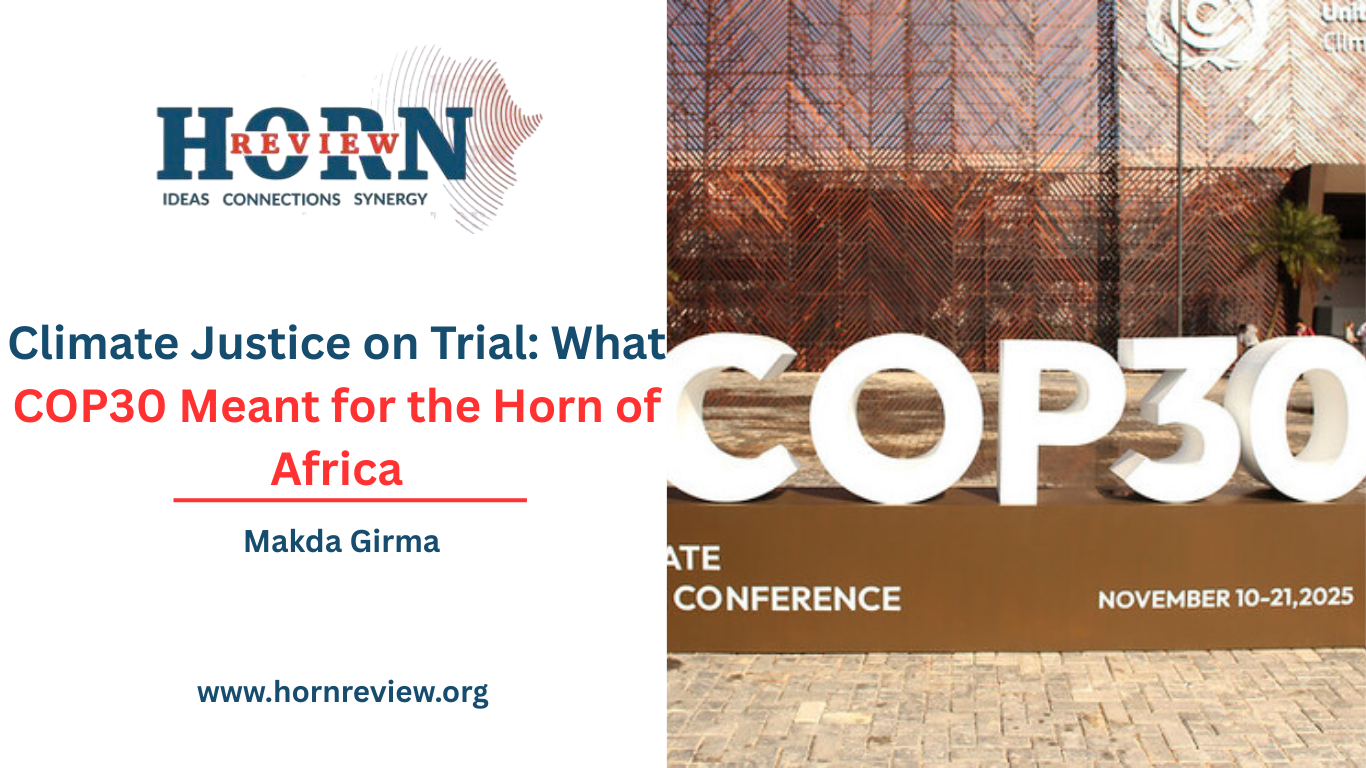
Global climate ambitions at COP30 are profoundly reshaping the Horn of Africa, turning one of the world’s most vulnerable regions into a testing ground for adaptation finance, mobility frameworks, and equity demands. This evolution, accelerated by Africa’s unified stance in Belém, including the African Group of Negotiators’ endorsement of Ethiopia as COP32 host in Addis Ababa in 2027, positions fragile states like Somalia and Ethiopia as pivotal voices, advancing the continent’s agency in decisions that shape its climate future.
Ethiopia’s appointment of Foreign Minister Dr. Gedion Timothewos as COP32 President-Designate signals strong governmental backing, leveraging diplomatic expertise to prioritize African-led solutions like drought resilience and equitable finance. As a nation acutely prone to droughts and floods that exacerbate food insecurity and displacement, mirroring the Horn’s broader vulnerabilities. Ethiopia’s presidency offers a frontline perspective to ensure these realities drive the 2027 agenda, potentially resolving COP30’s lingering implementation gaps through targeted African coalitions. One key praise for these ambitions is the Joint Statement on Climate Mobility, released on November 11 by the African Union, COP30 Special Envoy for Africa, and IOM, which reframes displacement as an adaptation strategy rather than failure.
This shift directly addresses the Horn’s 8.4 million internal displacements in 2024 from droughts and floods, implying empowered pastoralist communities in Somalia and Ethiopia through regional integration and remittances, though success depends on finance that prioritizes dignity over containment. Ethiopia’s hosting role, drawing from its own experiences with such displacements, positions it to spearhead COP32 discussions on mobility as resilience, ensuring these frameworks evolve from rhetoric to regionally enforceable tools.
Building on this momentum, Somalia’s submission of its National Adaptation Plan on November 14 and the launch of its $11.5 billion NDC 3.0 investment roadmap exemplify COP30’s facilitative power, centering drought resilience, water security, and land restoration. This proactive diplomacy highlights potential for community-led cash transfers and early warning systems, implying reduced acute hunger for 4.4 million Somalis at risk in 2025-2026, yet it raises questions about whether such plans truly lighten burdens from external emissions or merely formalize them pending genuine funding flows.
The Adaptation Finance Window for Africa deserves recognition for channeling blended finance into nature-based solutions across water, agriculture, and energy sectors, with implications for tangible drought mitigation in Kenya and Ethiopia that could avert livestock losses and child malnutrition rates exceeding 15 percent in affected zones, though this has high risk of entrenching dependency if not scaled beyond pilot pledges. In a similar vein, Africa Day on November 11, steered by the African Development Bank, reaffirmed $15 billion through the Africa Adaptation Acceleration Program with a grant-oriented approach; this could unlock green mineral opportunities and up to five million jobs by 2030 in the Horn, implying a counterweight to the region’s 3 percent share of historical emissions against disproportionate suffering, but only if it dismantles loan-heavy models that deepen debt.
COP30 delivered a connected set of equity-focused gains for Africa: the newly established Just Transition Mechanism offers fossil-reliant states like Nigeria and Angola tailored support for diversification, skills training, and clean-energy shifts, backed by the Baku-to-Belém Roadmap’s path toward $1.3 trillion in annual climate finance and explicit emphasis on grants and local value addition in critical minerals to create millions of green jobs by 2030. This economic-rebalancing thrust dovetails with the Belém Package’s commitment to triple adaptation finance to $120 billion annually by 2035 and the Health Action Plan’s integration of climate and disease response, advances that could close the Horn’s $50 billion adaptation gap, sustain life-saving early-warning systems, and better shield communities from tropical illnesses amid erratic rains, though all remain shadowed by underfunded humanitarian appeals and lingering distrust after COP29’s broken $300 billion pledge.
Multilateral development banks’ renewed commitments to innovative funding praise the summit for tackling Africa’s under-10 percent share of global climate finance; this could accelerate renewables in energy-scarce corners of the Horn, fostering stability, yet loan dominance risks compounding problems rooted in developed nations’ pollution. Complementing these, the Improved and Equitable Access to Climate Finance Network, including Somalia, has amplified fragile-state barriers in ministerial dialogues; implications point to prioritizing adaptation over reactive aid and redressing Somalia’s $300 million climate versus $1 billion humanitarian imbalance, but absent structural overhaul it threatens administrative overload on nations already strained by external forcings.
Youth engagements through the Horn of Africa Youth Network’s pre-COP30 dialogues commend the summit for embedding grassroots views on just transitions; this implies localized innovations blending indigenous knowledge with technology in Uganda and Kenya, potentially empowering a generation, though participation costs question genuine inclusivity. On the critical side, however, COP30’s exorbitant venue expenses, Belém hotels surpassing $1,000 nightly, systematically exclude Horn delegations, imposing financial strains on low-income representatives; implications include ceded influence to emission-heavy powers, undermining equitable outcomes for drought-vulnerable communities.
This exclusion feeds into the summit’s blind spot on climate-conflict intersections, with negotiating texts silent on peace-security linkages; crucial for the Horn where droughts fuel clan tensions in Somalia and insurgencies in Ethiopia, this oversight risks heightened instability and displacements, especially as U.S. aid cuts compound vulnerabilities without confronting industrial polluters’ responsibility. Similarly, misalignments between NDCs and national development plans, as exposed by CATF analysis, fault COP30 for failing to integrate climate with socioeconomic goals; in the Horn’s fragile contexts, where NDCs mention jobs in only 19 percent of cases, this implies stalled progress on growth and employment, adding coordination burdens amid external climate impacts.
The Loss and Damage Fund’s paltry $789 million against Africa’s trillions in needs condemns COP30’s inadequacy; implications involve unrepaired damages from Tigray’s flooded 26,000 acres, sustaining poverty cycles attributable to wealthy nations’ delays. Brazil’s hesitance on climate-peace-security, shaped by BRICS dynamics, faults the summit for marginalizing war-torn zones; in the Horn, this complicates Green Climate Fund access amid aid reductions, aggravating governance fractures in Somalia without relief from external loads. Ethiopia’s 2027 leadership, born from Tigray-like flood damages it knows all too well, will likely champion rapid Fund replenishment and peace-security integration, unlocking access for war-torn areas and breaking poverty cycles through expedited, equitable relief.
Overlooking equity principles in land-use burdens, as flagged by CGIA ensures COP30’s narrow lens; for the Horn, this means unapplied fairness in practice, heightening adaptation demands on smallholders battling pests and desertification from global emissions. Finally, the Gates Foundation’s $1 billion for smallholder tools lauds targeted support, yet scalability concerns persist; in the Horn, this suggests bolstered endurance for poorest farmers, but lacking systemic change it could introduce execution challenges to communities already taxed by alien climate influences. As a host nation wrestling with desertification-fueled land burdens, Ethiopia is poised at COP32 to broaden equity lenses, scaling tools like these into systemic reforms that fairly redistribute adaptation loads and fortify smallholders against emissions-driven pests and droughts.
Ethiopia has turned its selection as COP32 host into an expert display in African solidarity and continental leadership. Rather than treating the 2027 presidency as a national trophy, Addis Ababa has deliberately framed it as a shared African platform, pledging from day one to place the continent’s priorities at the centre of the global agenda and opening preparatory structures to all 54 African states. This inclusive approach, warmly endorsed by the unanimous vote of the African Group of Negotiators and enthusiastically supported even by Somalia whose own climate fragility is acute, demonstrates Ethiopia’s quiet but effective diplomacy of integration. By transforming what could have been perceived as a unilateral win into a collective triumph for the Horn and for Africa as a whole, Ethiopia has strengthened the continent’s unity, amplified its negotiating power, and laid a foundation of genuine regional ownership that will echo far beyond the Addis Ababa summit in 2027.
Ultimately, COP30’s mixed legacy prompts urgent questions on equity: does it reshape climate action in the Horn for genuine resilience or added burdens? While unified advocacy and finance windows kindle hope, criticisms on exclusions, blind spots, and insufficient pledges suggest implications of prolonged inequities, compelling developed nations to honor responsibilities for crises they predominantly caused.
strengthened the continent’s unity, amplified its negotiating power, and laid a foundation of genuine regional ownership that will echo far beyond the Addis Ababa summit in 2027.
By Makda Girma, Researcher, Horn Review