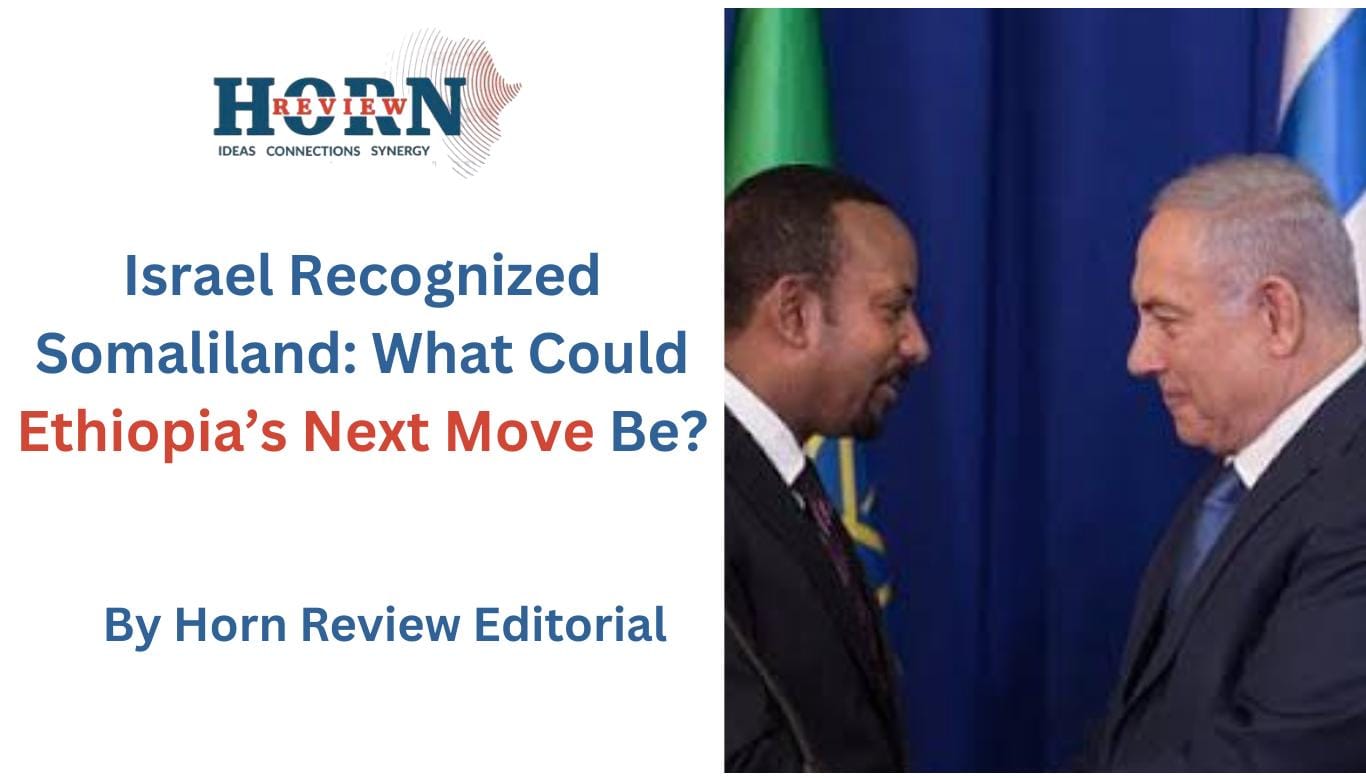
Israel’s formal recognition of Somaliland marks a seismic shift in Horn of Africa geopolitics. By becoming the first United Nations member state to extend sovereign recognition to Somaliland, Israel has transformed a long-standing regional question into an active arena of international strategic competition. The move elevates Somaliland from a de facto political entity into a state with emerging international legitimacy, reshaping both regional and global calculations along the Red Sea corridor.
Like most global and emerging regional powers, Israel’s interest in Somaliland is deeply strategic, driven by the territory’s proximity to the vital Bab-el-Mandeb Strait, a chokepoint critical for global maritime trade and regional security. Recognition and deeper engagement provides Israel with a potential military and intelligence hub to monitor and counter Iranian and Houthi threats, as well as secure Red Sea access. As clearly stated by Prime Minister Benjamin Netanyahu, the partnership extends into economic and security cooperation potentially facilitated by the . Israel’s recognition is also framed within the context of the Abraham Accords, signaling a broader Middle Eastern alignment and creating incentives for other regional actors to follow suit. Its cautious approach so far, favoring gradual engagement below the formal recognition threshold, reflects the complex regional dynamics, including Somalia’s claims, Gulf sensitivities, and competing global interests. Compounding these security considerations is the emergent transnational alliance between the Houthis and Al-Shabaab, which threatens regional stability and maritime security, underscoring Somaliland’s strategic value – particularly as Turkey’s influence in the Horn of Africa continues to rise.
Turkey’s regional expansion has extended beyond Somalia into Sudan, exemplified by Al-Burhan’s visit to Ankara and the resumption of the previously frozen “Afak” security project. Ankara’s growing footprint along the Red Sea corridor challenges the strategic interests of Gulf states, the UAE, and Western powers, who are concerned with securing maritime trade routes, countering Turkish expansion, and maintaining regional stability. Israel’s recognition sets a precedent, creating a strategic opportunity for these actors to follow suit and coordinate engagement that can counterbalance Ankara’s influence in the region.
Meanwhile, Russia’s interests in Somaliland are becoming increasingly pronounced due to the strategic significance of the Red Sea port of Berbera. Moscow has been exploring potential economic, trade, and military cooperation, which could challenge Western influence in the Horn of Africa. Somaliland reportedly rejected a recent Russian diplomatic visit request, likely due to pressure from Western allies leveraging recognition in exchange for port access. While Somalia maintains its claim over Somaliland, Russia appears willing to engage directly with the self-declared state to secure strategic interests, including potential naval facilities – a pivot from earlier plans focused on Sudan.
China, in contrast, continues to firmly support Somalia’s “One Somalia” policy, opposing Somaliland’s independence and leveraging its close ties with Mogadishu to counter Western and Gulf efforts toward recognition. Beijing views Somaliland’s growing relations with Taiwan as interference in its strategic interests, while simultaneously reinforcing Somalia’s sovereignty through diplomatic engagement and aid programs. In response, Somaliland is actively courting the West, Israel, and Taiwan to secure recognition and break its international isolation, transforming the territory into a geopolitical proxy battleground.
The United States’ position on Somaliland remains complex and fluid. Officially, U.S. policy continues to support a “One Somalia” approach. However, there is significant speculation that the Trump administration is considering a policy shift, potentially driven by strategic interests in countering China’s influence and securing access to Berbera. Somaliland has reportedly offered the U.S. military base access and mineral rights in exchange for recognition, while some U.S. lawmakers, notably Republican Representative Scott Perry, have introduced legislation calling for formal recognition. Israel’s recognition, framed within the Abraham Accords, and Prime Minister Netanyahu’s efforts to communicate Somaliland’s desire to join the Accords to President Trump could also influence U.S. calculations. Adding to the strategic dimension, the new AFRICOM commander recently visited Somaliland, signaling U.S. military interest and a willingness to engage with the territory on security matters. Recognition, however, carries risks, including potential complications with Somalia, which maintains strong ties to Turkey and Egypt.
At the regional level, Ethiopia played a central role in reigniting international focus on Somaliland through the January 2024 Memorandum of Understanding under Prime Minister Abiy Ahmed. The MoU envisioned a pathway toward recognition in exchange for Ethiopian access to Somaliland’s ports, highlighting Addis Ababa’s strategic interest in Red Sea access and regional influence. Yet Ethiopia exercised restraint, delaying full recognition to respect Somalia’s sovereignty. Mogadishu’s intense reaction, compounded by alignment with Egypt and Eritrea, forced Ethiopia to pause, diffuse tension, and restore bilateral relations – demonstrating careful statecraft that balanced long-term strategic objectives with immediate regional stability. Somalia’s position as the “mother state” remains central. While Ethiopia–Somaliland relations already embody many of the substantive characteristics of state-to-state interaction, formal recognition could be strategically delayed until Mogadishu’s position becomes clearer. This ensures that Ethiopian or other international recognition does not reignite tensions with Somalia and aligns with broader regional diplomacy – particularly amid growing friction involving Ethiopia, Eritrea, Sudan, and Egypt.
The reactions to Israel’s recognition of Somaliland from Egypt, Turkey and Somalia have been immediate and geopolitically consequential. They have articulated strong opposition. Egypt’s position is informed by Ethiopia’s historical ties to Somaliland, as Cairo seeks to safeguard its influence along the Red Sea corridor and within the broader Horn of Africa. By contesting unilateral recognition, Egypt aims to assert its regional authority and carefully manage potential shifts in the strategic equilibrium that could advantage Ethiopia, Israel, or competing Gulf actors. Turkey’s objection arises from its substantial investments in Somalia and Sudan, where Ankara has cultivated enduring strategic partnerships and expanded its footprint along the Red Sea. The recognition is perceived as a direct challenge to Turkey’s regional influence and an encroachment upon its expanding strategic ambitions. Djibouti, for its part, opposes recognition in order to maintain its status as the primary reliable and stable hub on the Bab-el-Mandeb and Red Sea corridor. Djibouti is acutely aware that formal recognition of Somaliland could reorient the regional power center, particularly as Ethiopia seeks to diversify its Red Sea access via Berbera, potentially diminishing Djibouti’s strategic leverage and economic centrality.
On the other hand, other states in Africa and beyond are expected to reassess their positions and follow Israel in the coming days. South Sudan, with its own recent independence and strategic alignment with regional powers, could emerge as a likely candidate to extend recognition in the coming days, while countries such as Guinea may also weigh the political and economic benefits of supporting Somaliland’s sovereignty. This cascading effect would reinforce Somaliland’s international legitimacy, further consolidating Red Sea access and regional influence for states coordinating recognition, including the UAE, other Middle Eastern actors, and Western powers.
Amid this rapidly evolving geopolitical landscape, Ethiopia remains a key regional actor whose approach to Somaliland will shape broader Horn of Africa dynamics. The optimal approach for Addis Ababa is strategic patience coupled with robust functional engagement: deepening economic, security, and port cooperation with Somaliland while maintaining constructive dialogue with Somalia to avoid inflaming tensions. By preparing carefully and coordinating its eventual recognition or formal engagement with broader international support, Ethiopia can maximize leverage, preserve regional stability, and ensure that its actions strengthen, rather than disrupt, the emerging order in the Horn of Africa. In this context, Ethiopia need not rush, but it also cannot remain indefinitely passive – its timing, coordination, and measured diplomacy will determine its role in shaping the future of Somaliland, the Horn of Africa and the entire Red Sea corridor.
By Horn Review Editorial