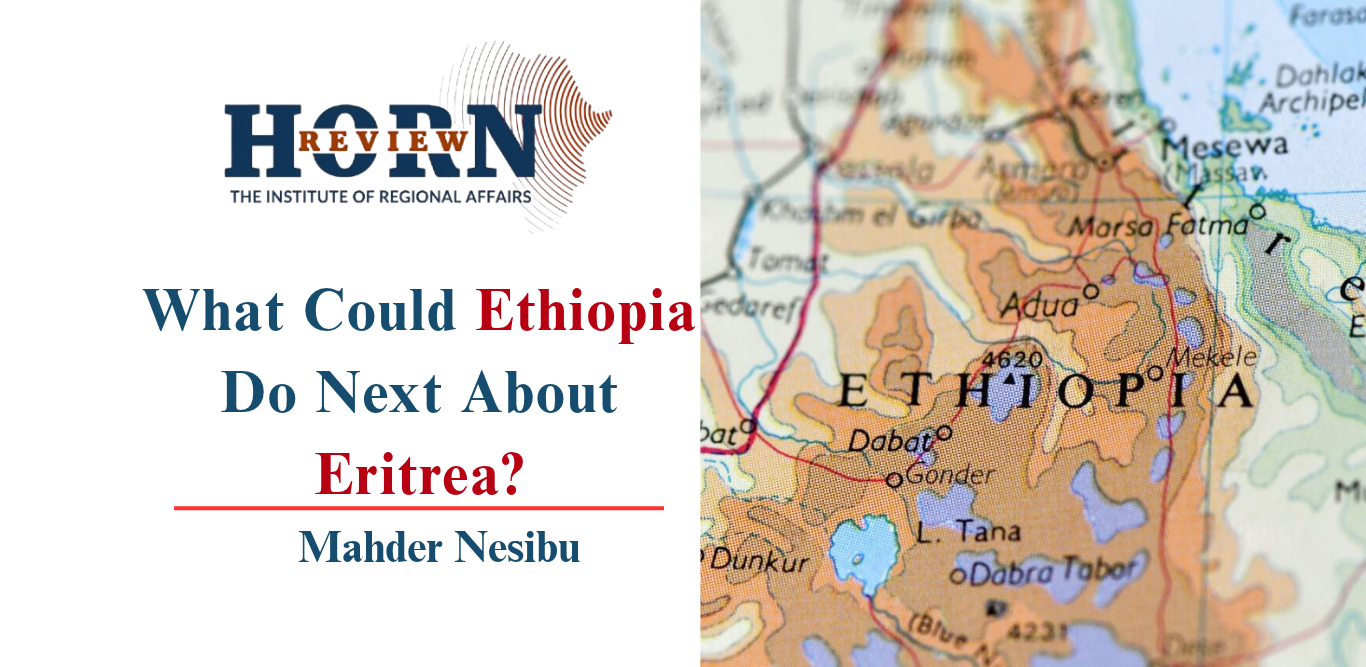
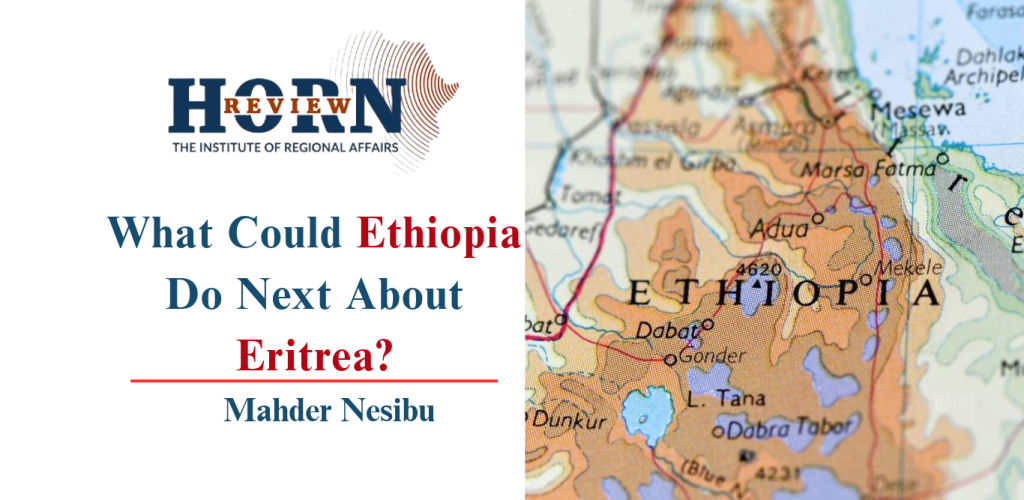
The Eritrean regime remains a threat to Ethiopia’s national security, and hostilities have in effect been the climate between the two countries for some time, falling short of direct confrontation between their armies. Tensions built gradually and then escalated sharply on 23 September, when Asmara-backed rebel groups, operating under an umbrella alliance, attacked Ethiopian army positions. The battlefront was soon reconfigured, however, as the Ethiopian National Defence Force (ENDF) came to face its Eritrean counterpart, the Eritrean Defence Forces (EDF), across a perilous border, and that border now marks the point where hostilities could turn direct.
Elements of the Tigray People’s Liberation Front (TPLF), the strongest of the rebel groups, have reportedly crossed into Eritrea itself, among them its core leadership and the leaders of other member groups such as the Amhara Fano National Movement (AFNM), alongside their partners. Having lost a safe presence inside Ethiopia, they have been guaranteed safe haven by Asmara. The theatre of operations thus shifts from Tigray, in Ethiopia, into Eritrea, and coordination between the Eritrean regime and the TPLF’s forces deepens to the point where they could end up fighting alongside the EDF. The prospect of war and the situation on the ground leave the Ethiopian security establishment with a strategic knot over how to counter the threat it faces.
The present situation is the product of a mutual realignment. Eritrea, which fought the TPLF in the Tigray conflict of 2020 to 2022, now stands with its former adversary, and the TPLF has in turn embraced Asmara. The shift developed over the years since the conflict’s conclusion, when movements towards rapprochement between the TPLF and Asmara began. After 2024 in particular, the convergence between the so-called hardliners of the TPLF and the Eritrean regime became increasingly visible. A similar coordination with rebels inside Ethiopia emerged at the same time, fashioned primarily by Asmara as part of its broader strategy.
Reports preceding the fighting of 23 September had revealed that Asmara was generating the momentum that would allow the TPLF and its allies to mount an offensive against Addis Ababa. In Asmara’s thinking, rebel forces operating inside Ethiopia’s north would turn Tigray and its neighbouring regions into a buffer zone, tying the Ethiopian government down in fighting within its own territory and leaving it incapable of confronting Eritrea directly.
That strategy has failed. The Ethiopian counteroffensive has dealt the TPLF a heavy blow, pushed back the Eritrean forces that entered Ethiopian territory and established government control of Tigray, dismantling Asmara’s buffer zone. It has also returned the ENDF to key areas along the border, including around Badme, the flashpoint of the previous war between the two countries, and Zalambessa, the main route between them.
The relocation of the TPLF’s leadership into Eritrea shows that Isaias has likely decided to let Ethiopian rebel forces use Eritrean territory as a launchpad against the Ethiopian army, a continuation of the proxy strategy that keeps the regime a standing menace on Ethiopia’s border. For Addis Ababa, the survival of the TPLF’s capacity to fight from that base is the most pressing security concern.
The Eritrean threat is structural as well, broader in scale and more permanent than the present events. The regime in Asmara, Isaias included, has its roots in a rebellion against Ethiopia that ran from 1961 to 1991 and ended in the secession of Eritrea, which cost Ethiopia its Red Sea coast and left the state considerably weakened. Isaias Afwerki, Eritrea’s only president, led the rebel group that came to constitute his government, the Eritrean People’s Liberation Front (EPLF), and has run Eritrea since its statehood in 1993 in the same unchecked and repressive manner. His foreign policy follows the same pattern, defined by inherent contentiousness and a readiness to resort to force.
Eritrea fought its neighbours in the 1990s. Its brutal war with Ethiopia from 1998 to 2000 was sparked at the regime’s instigation, after it miscalculated the balance of power between itself and Addis Ababa. Ethiopia managed to turn the tide, but a prolonged period of hostility followed, and Eritrea was diplomatically isolated for the two decades after, an isolation deepened by its systematic use of proxies across the Horn of Africa, the terrorist group al-Shabaab included.
Where open war has been absent, Eritrea has relied such proxies against Ethiopia, and the tradition is long. The regime, as a rebel group, helped the TPLF emerge as a force against Addis Ababa. As a state, following the 1998 to 2000 war, it opened its territory to Ethiopia’s rebels of all sorts, from ethnic separatists to professed Ethiopianists seeking regime change, who found refuge, arms and training there. Ginbot 7, whose ranks included Zemene Kasie, now head of the AFNM and the rebel alliance, and the Oromo Liberation Front with its armed wing (now also part of the rebel alliance), both benefited from that hospitality.
The rapprochement of 2018 offered the relationship its best chance of recovery. The Jeddah agreement broke an 18-year stalemate and promised to put relations on the right track, but the thaw failed to last. The Tigray conflict brought a fresh rupture. Eritrea’s brutal conduct in it, together with its dissatisfaction with the way it ended, in the Pretoria agreement of November 2022, to which Asmara was not a party and which left the TPLF standing, led Asmara to foster animosity towards Addis Ababa and to draw closer to forces on the ground aligned with its own stance.
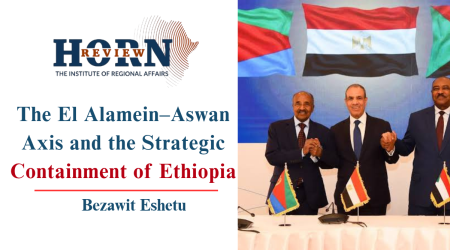
The regime has also served as an entry point for Ethiopia’s rivals into its security calculations in the wider region, chiefly Egypt. Cairo, locked in a multifaceted struggle with Ethiopia for decades (if not more), mainly over the Nile, found in Eritrea a strategic point of pressure. The pattern traces back to the Eritrean insurgency, when the two countries were one and Cairo extended critical support to the rebels. That EPLF served Egyptian interests in other ways too, including through the landlocked status that Eritrea’s secession later imposed on Ethiopia, an issue that, security concerns aside, Ethiopia wants to revisit.
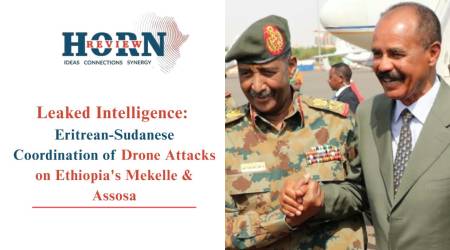
The relationship has rekindled as tensions between Eritrea and Ethiopia have risen, while Ethiopia and Egypt have grown more contentious over the Nile following the completion of the Grand Ethiopian Renaissance Dam and Addis Ababa’s increasingly assertive stance on use rights. Isaias is effectively a proxy in his own right, since his goal of a weak and unstable Ethiopia serves Cairo, which is intent on curbing Addis’s posture over the Nile waters. The result is a congregation of anti-Ethiopian forces. Eritrea sponsors proxies of its own and aligns visibly with Ethiopia’s other adversaries, Egypt and the Sudanese army next door. The army, under General Abdel Fattah al-Burhan, shares Eritrea’s orientation towards Egypt, depends on Cairo and Asmara for its war effort and is at odds with Ethiopia over what it sees, and presents, as Addis Ababa’s support for its adversary, an accusation that remains unproven.
The confluence of these developments means that the Eritrean regime will remain structurally hostile to Ethiopia and a lasting security concern for the foreseeable future. The present flare-up belongs to a long and violent relationship, and direct confrontation between the two armies remains a live possibility.
Addis Ababa weighs its response against persistent internal insecurity in the Amhara and Oromia regions and a regional climate that calls for a posture of deterrence in an increasingly volatile, complex and less friendly neighbourhood. Several strategic responses could take place.
One option is to confront the EDF with the aim of total military victory over the Eritrean regime and the remnants of the TPLF’s forces. Ethiopia holds the advantage in population, economy and air power, and the ENDF enjoys a clear edge over its adversary, which gives the option credibility. The campaign would nonetheless be daunting. The EDF, built on decades of mass conscription, would defend a rugged frontier whose difficulty the trench fighting of 1998 to 2000 made plain, and a push deep into Eritrea would expose Ethiopia’s rear to armed groups, so far limited in strength, while Cairo and the Sudanese army would find it reasonable to deepen their support for Asmara. Even a battlefield victory would leave open the question of what follows. Addis Ababa itself has publicly ruled out war with Eritrea, which makes this an unlikely path
The second path is for Ethiopia to create a buffer zone of its own inside Eritrea, reversing the logic of the buffer that Asmara sought to build in Tigray. This would mean entering Eritrean territory and deploying forces there. It would effectively cut the Eritrean side and its allies off from Ethiopian territory, allowing Addis Ababa to stabilise its bordering regions, mainly Tigray. If direct clashes continue to flare and expand, the ENDF could push the Eritrean forces back, and the resulting position would give Ethiopia considerable leverage against the regime in any eventual settlement. This strategy, like a campaign for military victory, would require Ethiopia to manage the international response and to convince its regional and international partners that the move constitutes self-defence and that it can see a peaceful settlement through.
A third path stops short of a ground campaign. Ethiopia could pursue the strategic decapacitation of the regime, degrading its ability to prosecute military action by striking legitimate military targets such as installations, weapons depots and air defence sites, the command, supply and arms movement networks on which the EDF depends, and the positions of the rebel coalition inside Eritrea. This is the most plausible move for the Ethiopian security establishment. It builds deterrence and strips Asmara of the means to prolong its proxy and buffer zone strategy, while discouraging the regime from direct fighting. The regime would emerge badly weakened and its forces unable to mount a credible threat, at lower cost than a prolonged ground war.
These options remain subject to the viability of a diplomatic solution, which would spare Ethiopia the messiness of a military one. Diplomatic engagement remains limited, having failed to curb the escalations that built up over the past years and culminated in the present crisis. The task for Addis Ababa, therefore, is to craft a strategy that secures Ethiopia’s borders and internal stability without the costs of a prolonged war.
By Mahder Nesibu, Researcher, Horn Review