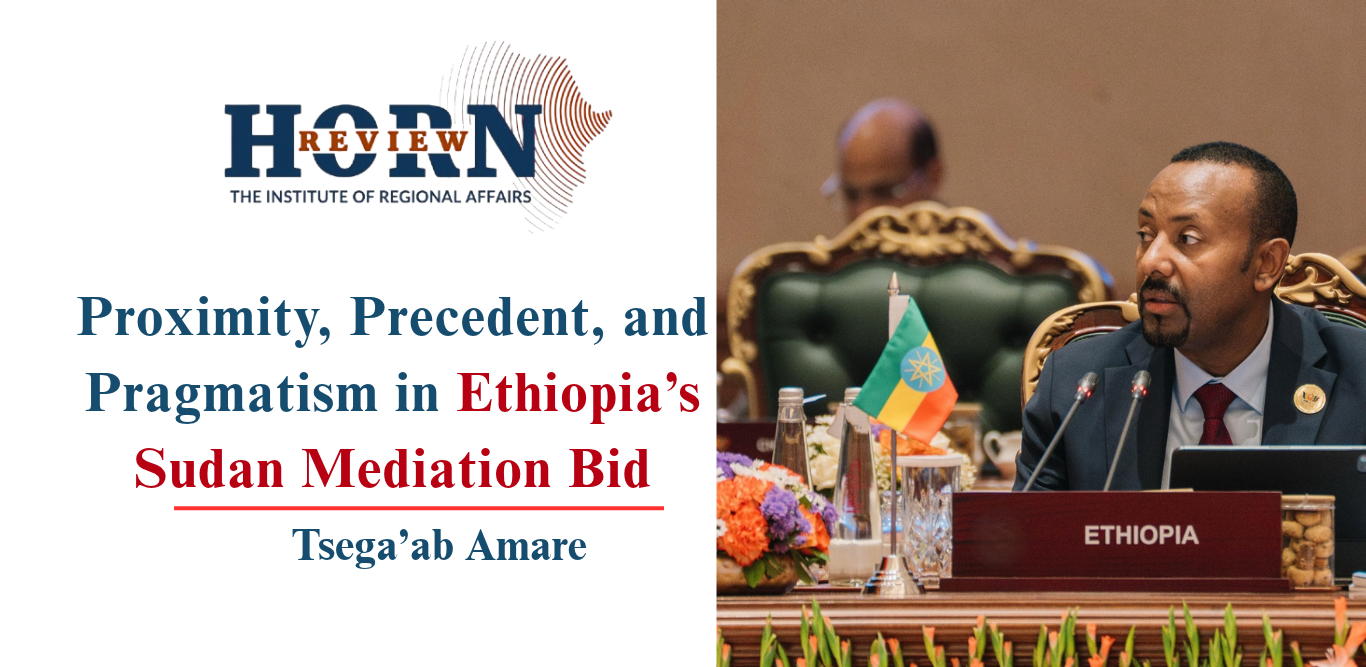
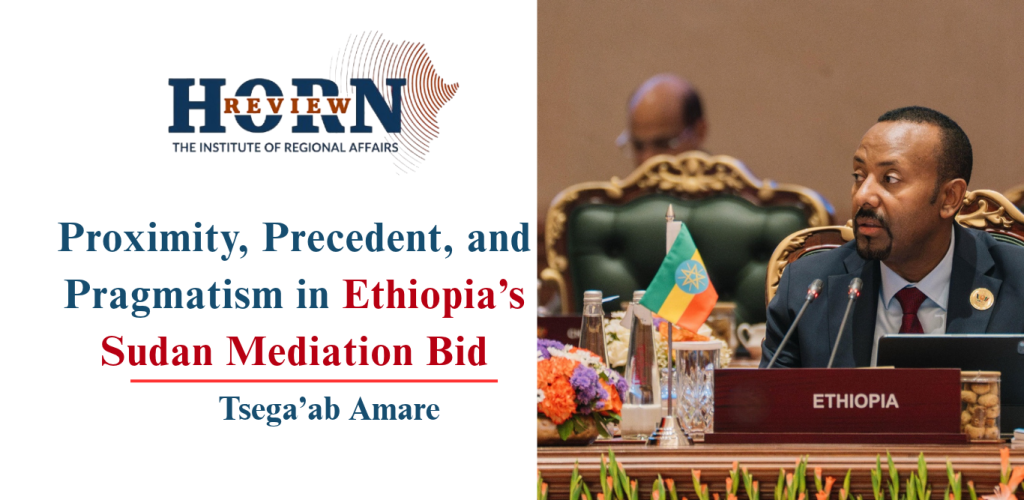
Prime Minister Abiy Ahmed’s invitation issued on 24 November 2026 to all Sudanese military, political, and civilian actors to convene an inclusive dialogue in Addis Ababa, represents a consequential diplomatic intervention aimed at putting at rest a devastating war now in its fourth year. With humanitarian assessments estimating the death toll above 200,000 and the country enduring the world’s most acute hunger and displacement crises, the initiative warrants serious engagement. Few regional actors, if any, possess the geographic proximity, institutional history, and direct structural stake that Ethiopia brings to the Sudanese crisis, making its proposal a credible mechanism for de-escalation.
The framework outlined by Addis Ababa rests upon four interconnected pillars. First, it establishes a structured facilitation process designed to create the political conditions necessary for a durable ceasefire and national consensus. Second, it defines a clear political end-state in the form of a broadly accepted national unity government mandated to restore state institutions, safeguard territorial sovereignty, and reconstruct critical infrastructure. Third, the proposal anchors its legitimacy in Sudanese ownership and Ethiopian equidistance, explicitly prioritizing the preservation of the Sudanese state over the triumph of any single faction. Fourth, it leverages Ethiopia’s regional and international diplomatic networks to build external consensus around a cessation of hostilities and the expansion of humanitarian access.
Ethiopia’s credibility as a mediator is rooted in an extensive record of regional conflict resolution. The 1972 Addis Ababa Agreement terminated Sudan’s first civil war, while the 2011 Abyei arrangements and the September 2012 security and oil accords between Khartoum and Juba were similarly brokered in the Ethiopian capital under African Union auspices. More recently, in 2019, Ethiopia operated alongside the African Union to guide the Transitional Military Council and the Forces of Freedom and Change toward the constitutional declaration following the ouster of Omar al-Bashir. That precedent retains significant currency among Sudanese political actors, as evidenced by the Civil Democratic Alliance, known as Somoud, explicitly referencing the 2019 mediation in welcoming the current outreach.
The Horn of Africa’s broader diplomatic history reinforces the logic of a regionally anchored settlement. During the Somali crisis, Ethiopia hosted the 1993 Addis Ababa reconciliation conferences and the 1997 Sodere conference before intervening militarily in 2006 against the Islamic Courts Union at the request of the internationally recognized Transitional Federal Government and with diplomatic and intelligence support from the United States. While critics characterized that intervention as partisan, the subsequent political trajectory demonstrated that durable stability in the Horn requires inclusive political bargaining rather than unilateral military victory. Ethiopia remained deeply invested as the political process widened, culminating in the 2008 Djibouti Agreement and the 2009 election of former Islamic Courts Union chairman Sharif Sheikh Ahmed to the presidency, a settlement that succeeded precisely because it integrated former adversaries. Because Addis Ababa treats neighboring state collapse as an existential security concern and possesses decades of institutional experience navigating entrenched factionalism, it is far better positioned to convene Sudan’s rivals than distant capitals whose engagement remains episodic.
The Sudanese Armed Forces leadership under Abdel Fattah al-Burhan has nonetheless rejected the initiative, alleging that Ethiopia compromised its neutrality by permitting the Rapid Support Forces to launch drone strikes from Ethiopian territory. Port Sudan has further demanded that the African Union exclude Addis Ababa from any mediation framework, insisting that the venue and agenda remain strictly under Sudanese control. These assertions require rigorous scrutiny. Port Sudan’s accusations regarding cross-border drone launches remain independently unverified, and they occur alongside reciprocal allegations from Addis Ababa regarding Khartoum’s backing of armed factions operating in Ethiopia. More fundamentally, unresolved allegations between neighbors are precisely what regional diplomatic mechanisms are designed to address, rather than grounds for a belligerent party to pre-emptively veto a mediation venue.
Moreover, the SAF’s institutional standing to dictate African Union diplomacy is fundamentally compromised. The African Union suspended Sudan’s membership on 27 October 2021, two days after the military coup led by al-Burhan, and the Peace and Security Council reaffirmed that suspension in February 2026 under the African Charter on Democracy, Elections and Governance. Following a Council delegation’s August 2026 assessment that al-Burhan’s administration derives from an unconstitutional takeover, Sudan remained barred from the 39th African Union summit for a fifth consecutive year. An authority whose legitimacy is rejected by the continental body lacks the standing to demand the exclusion of an active member state from a peace process that aligns with the Union’s core mandate. While the SAF retains administrative control over certain territories and occupies Sudan’s seat at the United Nations, de facto control confers the status of a conflict party rather than the sovereign authority to veto diplomatic venues.
The SAF’s posture also reflects external geopolitical alignments that diverge from Sudan’s long-term national interests. Cairo has invested substantial political and material capital in the SAF camp, and al-Burhan’s reflexive opposition to Addis Ababa is widely interpreted as deference to Egyptian regional preferences. A leadership prioritizing Sudanese recovery would explore every viable avenue to halt the war, particularly a hosted dialogue that imposes no cost on Sudanese sovereignty. By contrast, Ethiopia possesses an enduring structural stake in Sudanese stability, bound by a shared border, the Blue Nile basin, interconnected borderland communities, and decades of reciprocal refugee flow as Prime Minister Abiy noted in the statement made public.
This structural interdependence is most visible in the hydro-politics of the Grand Ethiopian Renaissance Dam. While Sudan stands to gain substantially from regulated water flows, flood mitigation, and power generation, its legitimate technical concerns regarding downstream dam operations can be effectively managed through bilateral mechanisms or the Nile Basin Initiative. Egypt, conversely, views the project through a zero-sum security lens rooted in colonial-era water treaties. Al-Burhan would commit a strategic error by subordinating his long-term basin interests to short-term military and political backing from Cairo. The same calculus applies to the Al-Fashaga borderlands, where recurring friction over fertile territory disputed under colonial boundary demarcations is far better resolved through bilateral diplomacy than weaponized for tactical leverage.
The positive reception of Ethiopia’s invitation by the Somoud civilian coalition and the RSF-aligned Transitional Peace Government under the Tasis alliance demonstrates that major stakeholders across the divide view Addis Ababa as a viable venue. Somoud commended Ethiopia’s commitment to Sudanese territorial unity, while Tasis spokesman Khaled Ahmed Danna affirmed the administration’s readiness to engage. Crucially, the principle of parity must apply equally to all belligerents, as neither Tasis nor the SAF holds the unilateral right to dictate preconditions for the other. Consequently, the dialogue should proceed with all willing participants while keeping the process open to those currently abstaining.
Admittedly, the timing of the initiative invites critique, as it arrives amidst intensifying military escalation when an earlier bilateral intervention might have constrained the conflict’s trajectory. Previously, Addis Ababa largely deferred to multilateral frameworks such as the Quintet and the Quad, while maintaining that a durable settlement required genuine Sudanese ownership rather than an externally imposed formula. As those multilateral tracks deadlocked amid competing external rivalries and civilian suffering reached catastrophic levels, however, continued diplomatic deference became untenable, making a direct, neighbor-led intervention far preferable to prolonged inaction.
Ultimately, the efficacy of the Addis Ababa process will depend on the composition of the negotiating table and the durability of its institutional backing. The dialogue cannot be monopolized by the two primary armed factions. Sudanese civilian coalitions, women’s organizations, youth movements, and civil society bear the heaviest burden of the conflict and possess the strongest mandate for democratic governance, making their substantive inclusion indispensable to preventing a purely transactional elite pact. Simultaneously, Addis Ababa should consolidate its diplomatic role by appointing a dedicated special envoy for Sudan. Given that Ethiopia’s national security is structurally tied to stability across its borders, it requires diplomatic representation at least commensurate with the special envoys maintained by distant European and international powers. Such an envoy would ensure continuous shuttle diplomacy, prepare technical consultations, and sustain momentum between formal sessions. Backed by a dedicated envoy and an inclusive civilian mandate, Ethiopia is uniquely positioned to leverage its historical ties and play a decisive, constructive role in ending Sudan’s war.
By Tsega’ab Amare, Researcher, Horn Review