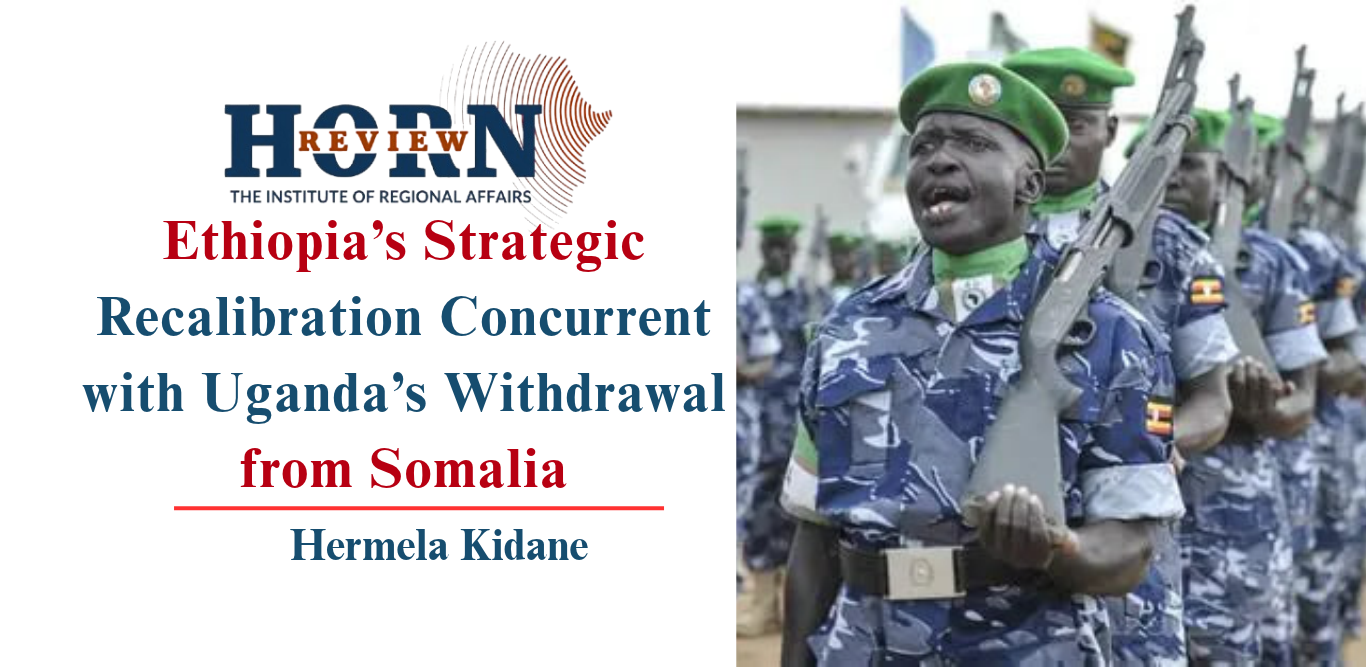
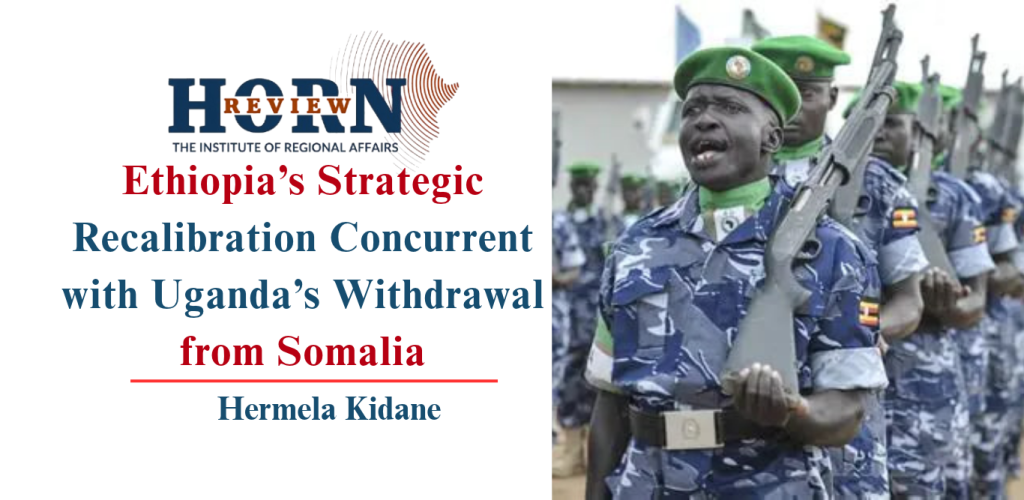
Uganda’s phased withdrawal from Somalia announced in late October 2026 and set for completion by the end of 2027 shows a structural shift in the Horn of Africa’s security. For nearly two decades Ugandan forces have formed a central pillar of the African Union’s efforts in the country, first under AMISOM and later under the African Union Support and Stabilization Mission in Somalia. Their departure which includes both bilateral contingents and those serving under the AU framework creates an immediate security space at a moment of acute political fragmentation in Mogadishu. For Ethiopia this is a clarifying moment that requires disciplined recalibration of military posture, alliance order and the defense of core national interests along the shared border.
Uganda has long secured sensitive installations in and around Mogadishu including the presidential palace and the international airport. Its drawdown from positions in Lower Shabelle and related sectors removes a physical shield just as Somalia’s federal government confronts an unresolved political crisis. President Hassan Sheikh Mohamud’s term expired in May 2026 and disagreements over electoral modalities have deepened tensions between the federal center and opposition actors as well as with several regional administrations. Into this space Al Shabaab stands to regain operational freedom along key approaches to the capital. Somali national forces still consolidating capacity are not yet positioned to fill the gap fully or rapidly.
Mogadishu’s most probable response is heavier reliance on Turkish air and drone capabilities together with contributions from other partners including Egyptian forces operating under or alongside the AUSSOM framework. Turkey has invested substantially in Somalia through training facilities, infrastructure and hydrocarbon exploration. Reports indicate prospective resources in Somali offshore blocks with estimates of substantial reserves under active survey and drilling arrangements. Egypt’s involvement while framed as stabilization support is viewed by administrations in Puntland, Jubaland and South West State as an external presence that risks aggravating internal political fault lines. The resulting activities could intensify centrifugal pressures rather than contain them.
Parallel constraints affect the broader mission with AUSSOM’s logistics backbone has facing uncertainty linked to decisions on United Nations Support Office in Somalia funding. Earlier notifications pointed toward reduced or terminated support around the end of 2026 with subsequent adjustments extending limited windows. Without reliable sustainment of fuel, medical services, transport and related enablers the operational viability of the roughly 12,000 strong mission becomes constrained. Continuing large scale Ethiopian deployments under a framework whose long term financing remains unresolved would present an inefficient use of national resources.
A more coherent Ethiopian approach centers on two complementary tracks. The first is a measured reduction of force levels under AUSSOM accompanied by the consolidation of a resilient bilateral defense zone along the Ethiopian and Somali border. This zone extending approximately 100 to 150 kilometers inside Somali territory from the Dollo Ado area toward Ferfer and encompassing key localities in Gedo, Bakool and the approaches to Baidoa would serve multiple purposes. It would deny Al Shabaab the ability to use the borderlands as a staging ground for cross border operations. It would establish a clear geographic buffer that limits the westward projection of any external forces toward Ethiopian territory. And it would enable Ethiopia to shape security outcomes in southern Somalia from a position of geographic advantage rather than through open ended commitment to a financially strained multilateral mission.
The second track involves deeper, direct security and economic engagement with regional administrations that share practical interests in containing Al Shabaab and managing the risks of excessive centralization. South West State, Jubaland and Puntland have demonstrated both capacity and willingness to function as autonomous partners on security matters. Strengthening these relationships reduces the leverage that any single federal configuration in Mogadishu might attempt to exercise and anchors Ethiopian influence in durable local realities.
Uganda’s reported reorientation toward closer ties with Abu Dhabi adds a further diplomatic opening. Kampala’s evolving external partnerships create space for practical coordination among Ethiopia, Uganda and the United Arab Emirates on intelligence sharing, logistics and maritime access. The UAE’s established positions in Berbera and Bossaso offer complementary depth that can reinforce landward security arrangements. Such coordination need not take the form of a rigid alliance it can function as a flexible mechanism among actors with converging interests in regional stability and the prevention of exclusive spheres of influence.
Ankara’s hydrocarbon exploration and infrastructure projects depend on a baseline of security that has historically benefited from broader regional military contributions. As Ethiopian forces consolidate closer to the border and reduce exposure in central Somalia the security environment around key assets will adjust. This creates natural incentives for dialogue. Turkey has every reason to seek predictable arrangements that protect its interests and Ethiopia is well placed to engage on the basis of mutual recognition of security requirements rather than open ended subsidy of external political preferences.
The central error to avoid is the continued commitment of Ethiopian manpower and resources to sustain a political and security order in Mogadishu that yields diminishing returns for national defense while serving the strategic math of others. Parking forces under an AUSSOM framework whose sustainment is uncertain would constitute precisely such a misallocation. The alternative consolidating a defensible cross border zone cultivating practical partnerships with regional administrations and leveraging Ethiopia’s indispensable geographic and military position is not disengagement. It is the reassertion of agency.
Uganda’s departure is frequently described as a loss for the African Union mission. For Ethiopia it is more accurately understood as a moment of clarity. The era of open ended subsidized security provision is drawing to a close. What replaces it will be shaped by those actors prepared to define their interests with precision defend them with credible capacity and negotiate from positions of strength. Ethiopia possesses the geography, the military capability and the historical stake required to influence that outcome. Acting with discipline and focus on national security priorities will determine whether the transition strengthens or erodes Ethiopia’s long term position in the Horn.
By Hermela Kidane, Researcher, Horn Review