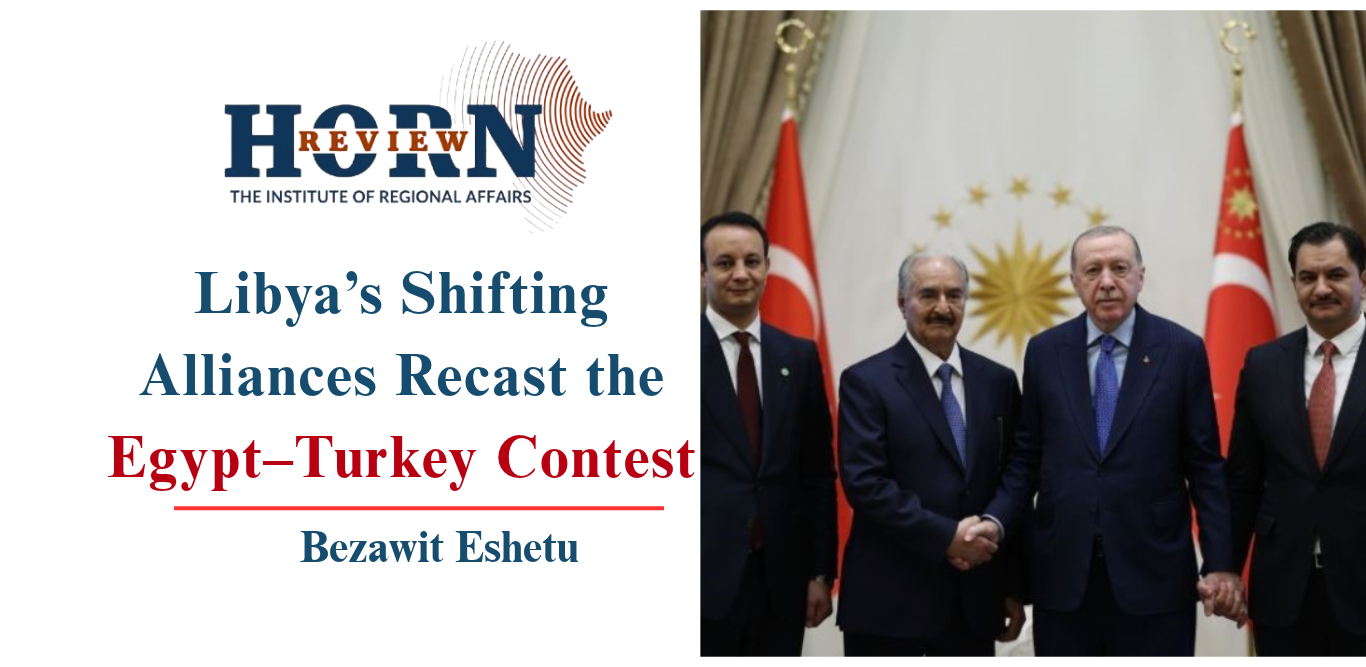
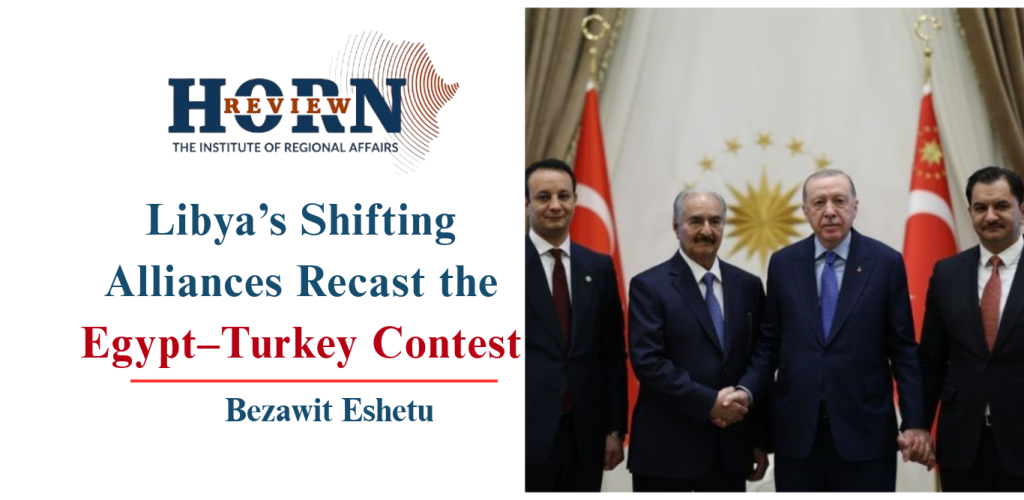
On 25 November 2026, Turkish President Recep Tayyip Erdoğan received Khalifa Haftar, commander of the eastern-based Libyan National Army, at the Presidential Complex in Ankara. Haftar’s first official visit to Turkey followed years of Ankara’s support for the Tripoli government he had sought to overthrow. Foreign Minister Hakan Fidan, Defense Minister Yaşar Güler and senior Turkish intelligence and military officials participated in the meetings.
Five weeks earlier, the eastern House of Representatives had unanimously approved the 2019 maritime memorandum signed by Turkey and Libya’s former Government of National Accord (GNA), reversing its 2020 resolutions rejecting the agreement and severing political relations with Ankara. The Tripoli-based Government of National Unity (GNU), led by Abdulhamid Dbeibah, welcomed the decision, bringing both rival administrations into agreement over an arrangement that had previously divided them. This convergence carries particular significance for Cairo, as the eastern parliament, despite its longstanding relationship with Egypt, had endorsed an agreement that directly challenges Egyptian maritime claims.
That alignment originated in the war that brought Turkey and Egypt into opposing camps. When Haftar launched his April 2019 offensive against Tripoli, Egypt, the United Arab Emirates and Russia supported the eastern camp, while Turkey backed the GNA. Turkish military intervention helped prevent the capital’s fall and reversed the battlefield momentum. The two memoranda signed on 27 November 2019 reflected that strategic alignment. The security agreement formalized cooperation with Tripoli, while the maritime memorandum gave a strategic maritime dimension to Turkey’s Blue Homeland conception by linking its position in Libya to its wider Eastern Mediterranean contest. Together, the two agreements made Libya both a theatre of military confrontation and a strategic foothold from which Turkey could advance its maritime claims and challenge the Eastern Mediterranean arrangements promoted by Greece, Cyprus and Egypt.
The wartime relationship has since moved beyond its original alignment. Turkey retains its political and military ties with Tripoli while opening channels to Haftar and the eastern command. Fidan, Güler and senior intelligence and military officials attended the Ankara meeting, giving it institutional weight; that alters the basis of Turkish leverage. Ankara can approach both camps as interlocutors in a prospective settlement and seek influence over national institutions, security arrangements and economic development.
Haftar has reasons of his own to cultivate Ankara. His relationship with Egypt has brought security support and diplomatic backing, but a channel to Turkey expands his options and strengthens his bargaining position. The House of Representatives’ approval of the maritime memorandum is consistent with the eastern camp’s effort to broaden its external relationships. It also shows that Cairo’s partnership with Haftar no longer guarantees alignment on every strategic question. Egypt retains considerable influence in the east, but its ability to turn that influence into a veto over its partners’ decisions has weakened.
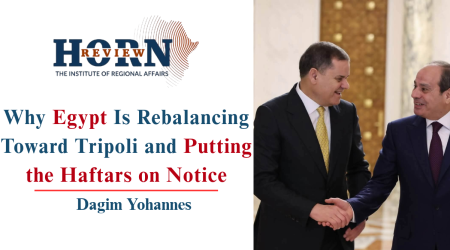
Cairo’s response has involved broadening its engagement with Libya’s competing centres of authority. On 7 November, Foreign Minister Badr Abdelatty reopened Egypt’s embassy in Tripoli after twelve years, restoring a formal diplomatic channel to the western-based authorities. This was followed by parallel high-level contacts with the eastern and western leaderships. On 13 November, intelligence chief Hassan Rashad received Saddam Haftar in Cairo, before el-Sisi hosted Dbeibah six days later. The engagement with Tripoli also produced agreements covering energy, fisheries and other sectors, extending bilateral cooperation into economic affairs. These relationships serve distinct Egyptian interests. Haftar remains a key interlocutor on border security and eastern Libya, while Dbeibah provides access to Tripoli’s administrative structures and economic networks.
Egypt and Turkey have also begun rebuilding the relationship that deteriorated during the Libyan conflict. At the second meeting of the High-Level Strategic Cooperation Council in Cairo on 4 February 2026, the two governments formalized agreements covering defense, investment and trade, building on the restoration of high-level relations in 2024. Both have reasons to avoid a return to the confrontation that brought them close to a direct clash during the 2019–20 war.
Their improved relations, however, have not brought their Eastern Mediterranean strategies into alignment. Cooperation remains concentrated in areas where their interests overlap, while their positions on Libya and the region’s maritime order remain distinct. Their rapprochement has therefore depended on keeping these disagreements from obstructing cooperation in other fields, even as both continue to pursue different political and maritime objectives in Libya.
These differences are also reflected in the maritime memorandum Turkey signed with Libya’s Government of National Accord on 27 November 2019 and registered with the United Nations on 11 December. By establishing a boundary between their claimed maritime zones, the agreement challenges the extent of the areas Greece claims on the basis of Crete and other islands, while conflicting with the delimitation agreement Greece and Egypt concluded in 2020.
Athens maintains that the Turkish-Libyan arrangement fails to recognize the islands’ maritime entitlements. Ankara disputes the weight Greece assigns to them, arguing that delimitation should take account of coastal geography and equitable considerations. The disagreement ultimately concerns the extent to which islands can determine the allocation of maritime space, with wider implications for the competing regional arrangements in the Eastern Mediterranean.
Cairo is likely to pursue its interests on several tracks. It has strong incentives to preserve rapprochement with Ankara, given the benefits of trade, investment and defense cooperation, while preventing the maritime memorandum from becoming an operational precedent. Egypt is therefore likely to continue diplomatic protests, coordinate with Greece and Cyprus, and press for direct discussions with Libyan authorities. It will also seek to retain its security relationship with Haftar while deepening ties with Tripoli. This diversification reflects a loss of strategic exclusivity. The embassy reopening and Dbeibah visit show Cairo investing in channels it previously avoided because its influence in Benghazi no longer provides sufficient leverage over Libya’s national direction.
Turkey, meanwhile, can use its new access to shape Libya’s security arrangements. Its hosting of talks between rival military representatives on 23 October, including Saddam Haftar and Tripoli’s deputy defense minister, indicates an interest in the future command structure. Reports from the talks indicated that a proposal for a joint command in Sirte encountered disagreement over political oversight, exposing the difficulty of integrating forces that answer to rival authorities. Ankara’s involvement could preserve its access to western Libya while opening a role in the east. Yet unification requires agreement over command, civilian control, foreign forces and existing formations.
Haftar, however, has his own reasons for engaging Ankara. He has built his position in eastern Libya through a network of external relationships that allows him to draw support from competing regional powers without becoming entirely dependent on any one of them. His opening to Ankara follows this approach. Turkey remains deeply involved in western Libya’s political and security arrangements, giving it considerable influence over any future settlement. Maintaining a channel to Ankara allows Haftar to engage a power that could otherwise constrain his ambitions at the national level. It also gives him greater room to maneuver in his dealings with Egypt, the UAE and Russia. This does not require him to abandon those relationships or accommodate all of Turkey’s regional objectives. Rather, it gives him greater flexibility in pursuing his own political and security interests.
For Egypt, the growing overlap between its and Turkey’s relationships in Libya makes maintaining its influence more complicated. Haftar remains an important partner, particularly in relation to border security and the military balance in eastern Libya, but his engagement with Ankara means that Cairo cannot take his external alignment for granted. Turkey, meanwhile, has an opportunity to extend its influence beyond western Libya and become a participant in discussions involving the eastern leadership. Neither country has displaced the other, but both are increasingly operating within the same political and security networks. Their ability to manage this overlap will depend on whether they can accommodate each other’s interests without undermining their respective relationships with Libyan actors.
The consequences for Libya will depend on whether this broader engagement helps produce an agreement between the country’s competing centers of power or simply gives their leaders more options for preserving the existing arrangements. An agreement between the eastern and western leaderships could facilitate cooperation over public finances, government formation and the management of national resources. But agreement among the principal power holders would leave difficult questions unresolved, particularly the integration of armed forces, control of security institutions and distribution of authority between the rival administrations. The danger is that a political bargain could consolidate the position of existing elites while leaving the institutions they control divided. Egypt and Turkey may find such an arrangement sufficient to protect their immediate interests and avoid another confrontation over Libya. That would give them a more manageable political environment, but it would fall short of the national settlement that Libya’s prolonged division requires.
By Bezawit Eshetu, Researcher, Horn Review