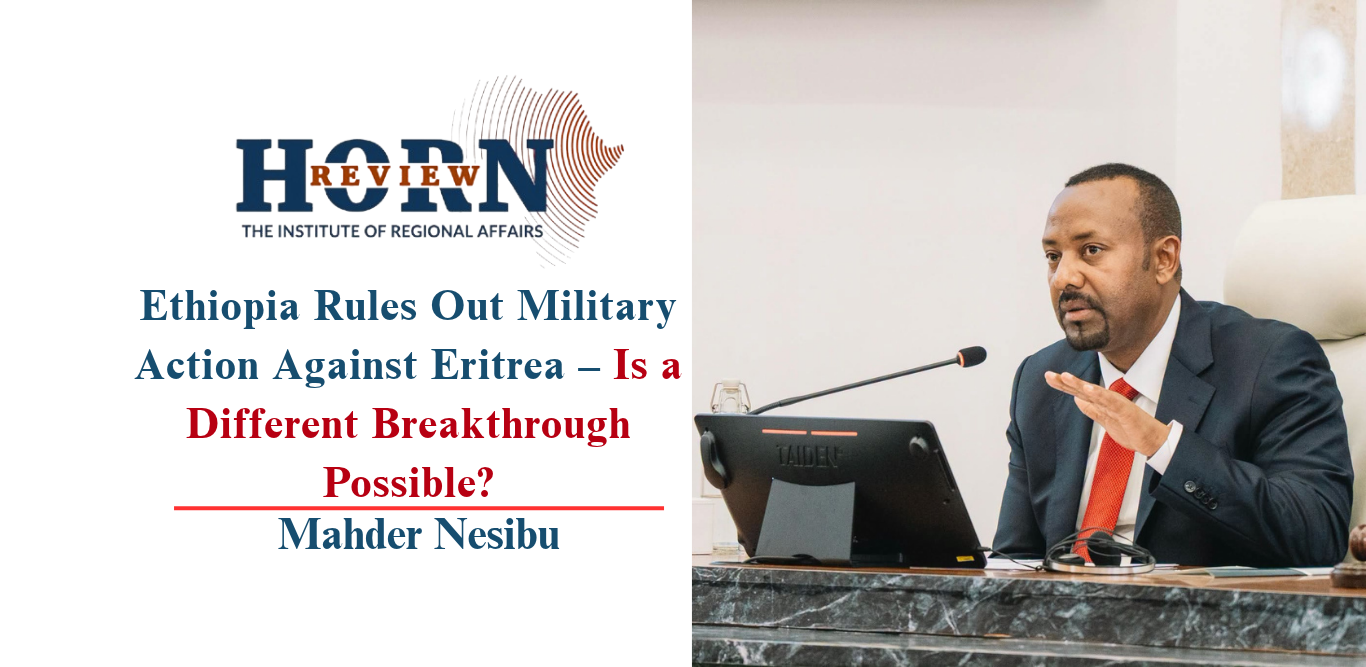
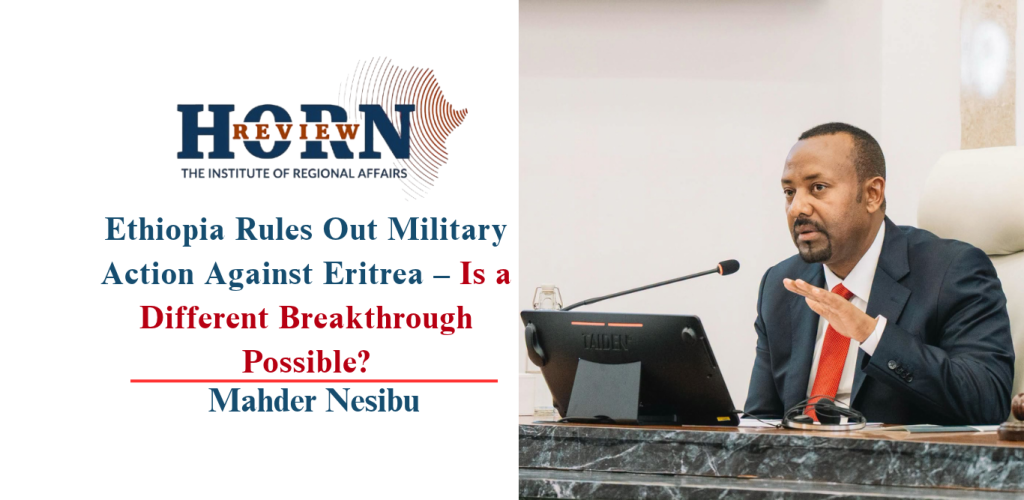
Prime Minister Abiy Ahmed has effectively ruled out military action against Eritrea in remarks to the new parliament, which began its term in October following elections held in June. The position holds even though Ethiopian troops now face their Eritrean counterparts along the border, after repelling a rebel attack in September that Eritrea supported directly and in which Eritrean soldiers themselves crossed into Ethiopia.
According to the prime minister, Ethiopia’s posture towards Eritrea remains in essence what it was before the recent escalation, and it rests on two conditions. The first is cooperation with Eritrea on the “principles of give and take”, a reference to Ethiopia’s desire for access to the sea. The second concerns national security and requires Asmara to stop interfering in Ethiopia’s internal affairs, chiefly by ending its support for armed proxies.
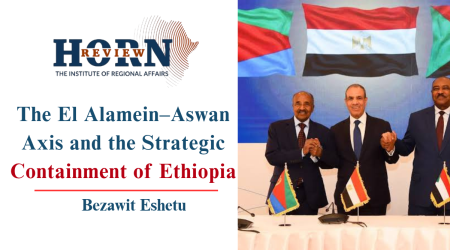
Both demands would require extensive reform and honest introspection from Isaias Afwerki’s regime. The present conundrum is itself the culmination of an escalatory trajectory taken up by Asmara, one that reflects a policy of antagonism and prickliness marking Eritrea’s relations chiefly with Ethiopia and, more or less consistently, with its other neighbours.
Since seceding from Ethiopia in 1993, Eritrea might reasonably have approached its far more powerful and populous neighbour with good neighbourliness, aligning policies and interests for mutual benefit and regional integration. Asmara instead sought geopolitical weight, aiming to overpower Ethiopia and to dominate the Horn of Africa at large, shaping the politics of its neighbours along the way. The decision to go to war with Ethiopia in 1998, and to fight its other neighbours, Sudan, Djibouti and Yemen among them, embodied that quest.
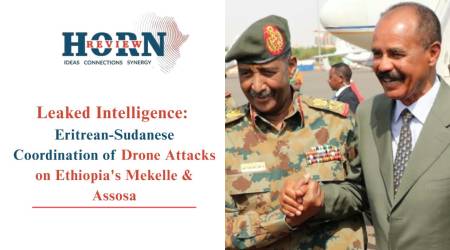
That strategy became the biggest factor in the isolated, militarised and harshly authoritarian structure that Eritrea eventually came to embody, that of a garrison state. The condition held from approximately 2001 until Ethiopia’s diplomatic push after Abiy took office in 2018, a fact he cited in his remarks to parliament. The rapprochement allowed Asmara to emerge from isolation and rekindle its ties across the Horn, yet reform never followed, according to Abiy, and Asmara’s entrenched foreign policy returned to the fore. It did not take long for Eritrea to become involved, militarily as well, in Ethiopia’s politics as well as in those of Sudan, which was undergoing upheaval of its own in 2019.
Eritrea remains locked into the same combative foreign policy culture across its neighbourhood. Its involvement in Ethiopia’s internal politics has taken the form of mobilising Ethiopian rebel groups as proxies, and the foremost of them, the Tigray People’s Liberation Front, has now, after Ethiopia’s battlefield victory inside Tigray, crossed into Eritrea and found safe haven there, as the prime minister himself has stated.
Ethiopia’s position nonetheless signals a desire for a diplomatic solution to the standoff. It encourages the international community, chiefly those working to avert a war, to act to defuse tensions between Ethiopia and Eritrea, which would mainly involve deterring the Eritrean government from its present course and encouraging it to enter dialogue with Addis Ababa.
A diplomatic solution remains possible, yet the alternative of the two countries sliding into war would be costly. According to the prime minister, Ethiopia is guaranteed to emerge victorious, a claim that likely reflects the superior military capability Ethiopia has built up exponentially in recent years. That assurance sharpens the diplomatic imperative, for Eritrea more than for Ethiopia.
By Mahder Nesibu, Researcher, Horn Review