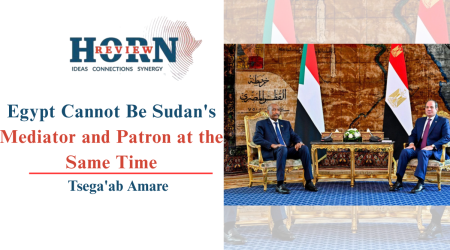
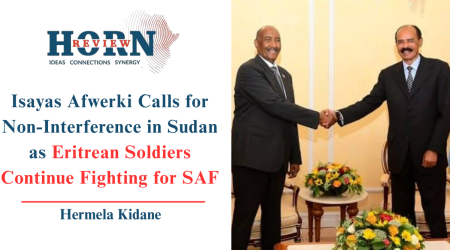
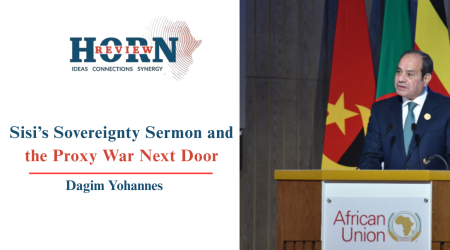
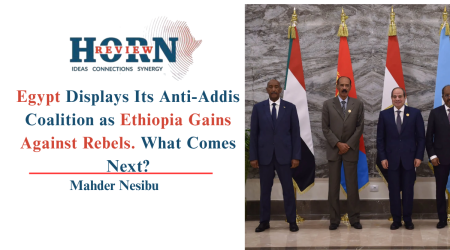
The Alamein Declaration functions less as a coherent framework for regional water governance than as a political instrument assembled around overlapping interests and its language invokes principles associated with international water law with consultation, prior notification, avoidance of harm and protection of existing uses while the political composition behind it raises the more fundamental question of whether those principles are being used selectively to advance the interests of downstream states at Ethiopia’s expense. Somalia’s signature is particularly revealing because Somalia is neither a Nile riparian state nor a Red Sea littoral state so its participation cannot be explained by direct hydrological interest in the Nile provisions or direct littoral interest in the Red Sea provisions and it must be explained politically.
That political explanation points toward a transactional reading of Somalia’s alignment and the declaration gave an opportunity to obtain diplomatic language concerning issues central to its sovereignty and security interests, particularly Somaliland and the future of the African Union Support and Stabilization Mission in Somalia and in return Somalia joined a regional statement whose Nile language aligns with the interests of Egypt and Sudan and whose broader positioning strengthens diplomatic coalition. The central concern is therefore not simply whether the declaration invokes recognizable principles of international water law but whether those principles are being framed in a manner that preserves downstream advantages while constraining Ethiopia’s legitimate interests as an upstream state.
The precise form of the bargain may be disputed but the structure is difficult to ignore when Somalia’s signature attaches its sovereign diplomatic weight to questions in which its direct material stake is limited while simultaneously advancing positions that matter to other signatories. This is the cost of treating diplomatic alignment as a commodity and once a state demonstrates that its signature can be attached to issues outside its immediate national interests in exchange for support on matters it considers more important, the signature acquires a market value and other powers can then ask what Somalia’s alignment costs, what it can purchase and what competing interests are willing to offer.
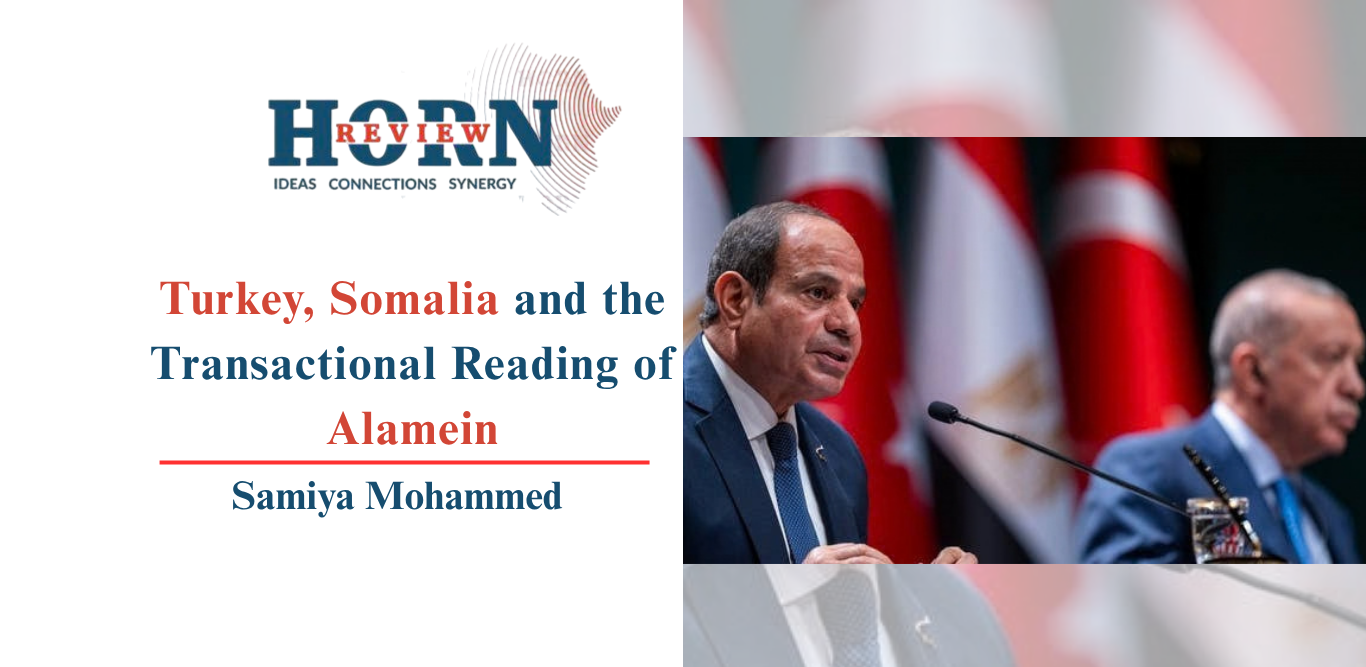
That is where Turkey enters the picture though Turkey is not another party to the Nile coalition represented by the Alamein Declaration, nor should interests be confused with Egypt’s. Turkey does not share Egypt’s downstream position on the Nile, does not possess a riparian claim to the Blue Nile, and did not need Somalia to endorse a downstream veto over Ethiopian development and there is no basis for claiming that Turkey drove the Nile language or that the declaration represents a Turkish strategy for constraining Ethiopia. However if Somalia’s diplomatic alignment has a price, who else is willing to pay for it and what does another buyer want?
Turkey’s interests in Somalia are directly connected to its existing military, security and economic arrangements, which depend upon recognition of the Federal Government of Somalia as the sovereign authority capable of entering into such agreement. Turkish interests therefore depend upon the continued international recognition and practical authority of the Somali state which gives Turkey a structural interest in the preservation of Somalia’s formal sovereignty and territorial integrity and the issue is not simply diplomatic symbolism because sovereignty is the legal foundation on which foreign military basing, security cooperation and resource agreements rest. But the existence of a legal basis for Turkish agreements with the Somali government does not by itself establish the legitimacy or desirability of expanding Turkish influence within Somalia. Nor does Turkey’s interest in Somali sovereignty provide any independent justification for Egypt’s attempt to strengthen its regional position against Ethiopia.
The Somaliland question consequently matters to Turkey for reasons that differ from those of Egypt. Turkey does not need Somalia to endorse Egypt’s Nile position in order to protect its own interests but what Turkey Turkey’s strategic position benefits from a Somali sovereign framework within which its existing agreements can remain legally effective. That interest however should not be mistaken for a neutral commitment to Somali sovereignty and it is also connected to the preservation of Turkey’s own strategic position. This is where the parallel market becomes visible. Turkey’s interest also creates a second requirement because preserving the Somali state is one matter and preserving Turkey’s relative position inside that state is another. Turkey has a strong interest in preventing competing external actors from converting the same sovereign framework into an alternative sphere of influence. This reinforces the broader point that Somali sovereignty is being contested not only as a legal principle but also as a strategic resource by external powers.
That competition changes the meaning of the Alamein Declaration because from Egypts perspective, from somalia perspective alignment can generate diplomatic support on issues it considers existential but from turkey perspective, the same development can be read as evidence that Somalia has become a competitive market in which outside powers are negotiating access and influence. from Ethiopia’s perspective, however, the same coalition can represent an attempt to transform Egypt’s downstream preferences into a broader regional position that increases political pressure on Ethiopia. If Egypt’s political and security presence in Somalia expands then Egypt becomes another actor operating inside a sovereign arrangement in which Turkey already possesses interests so the competition is who gains influence within Somalia, who shapes its security institutions, who obtains economic opportunities and who becomes indispensable.
Egypt wants Somalia to remain sovereign and territorially intact while also using Somali diplomatic weight to strengthen a regional position directed at Ethiopia. So Somalia’s sovereignty is useful to Egypt because the Somali state can lend its diplomatic authority to positions beyond the immediate Somali hydrological interest while the same sovereignty is useful to Turkey because it provides the legal basis for military, security and economic agreements. Somalia in this reading becomes the platform rather than the principle. States routinely build coalitions because their interests overlap and diplomatic statements frequently contain language designed to satisfy several parties simultaneously. The stronger argument is when a state with no direct Nile stake signs onto a declaration whose Nile provisions materially favour downstream positions, the political explanation deserves as much attention as the legal language and the same is true of the Red Sea language since the declaration invokes regional principles concerning a maritime domain in which Somalia is not a Red Sea littoral state. Somalia’s geographic position is different from possessing a coastline on the Red Sea itself and the distinction matters because the declaration’s language invokes littoral state interests while relying on the signature of a state whose coastline lies outside the Red Sea proper.
The Alamein Declaration demonstrates that Egypt can convert political alignment into regional diplomatic capital while Turkey’s position demonstrates that the same Somali platform can be valuable for entirely different reasons. The political utility of Somalia’s signature, however, cannot substitute for the legal analysis of Ethiopia’s rights as an upstream state. A declaration does not become a neutral statement of international water law just because several states endorse it. This return to the central problem with the declaration’s water language with the issue is not simply whether its principles are individually recognizable in international water law but how those principles are assembled, who benefits from their application, and why states without direct hydrological interests are willing to attach their signatures to them.
A principle applied selectively ceases to function as a neutral principle and when downstream existing uses are emphasized while the upstream state’s development interests receive little attention, the language risks becoming an instrument for preserving an established distribution of advantage and when states without direct Nile interests endorse that formula as part of a wider political arrangement, the declaration becomes still harder to interpret as a purely hydrological consensus. Turkey’s role makes the transactional dimension clearer not because turkey authored the Nile language but because its separate relationship with Somalia demonstrates that the country occupies a wider geopolitical market in which Egypt seeks alignment, Turkey seeks access and strategic protection and Somalia seeks diplomatic support for its sovereignty and security priorities so different actors can attach different prices to the same sovereign platform.
The water language remains the instrument through which one of those transactions is presented as regional principle and that is ultimately the structural weakness of the Alamein Declaration. its language presents itself as a framework of principle but the political composition behind that language reveals a more complicated reality in which Somalia’s signature cannot be understood solely through the Nile or the Red Sea but has to be understood through the broader costs and benefits of diplomatic alignment. The declaration therefore demonstrates how regional politics can use water language as an instrument with Somalia’s signature giving that instrument additional diplomatic weight, Egypt gaining another aligned voice and Turkey watching the same sovereign platform from a different position. The market is wider than the four signatories and that is precisely why the water language matters and it is not the entire transaction but the instrument through which the transaction acquires the appearance of principle.
By Samiya Mohammed, Researcher, Horn Review