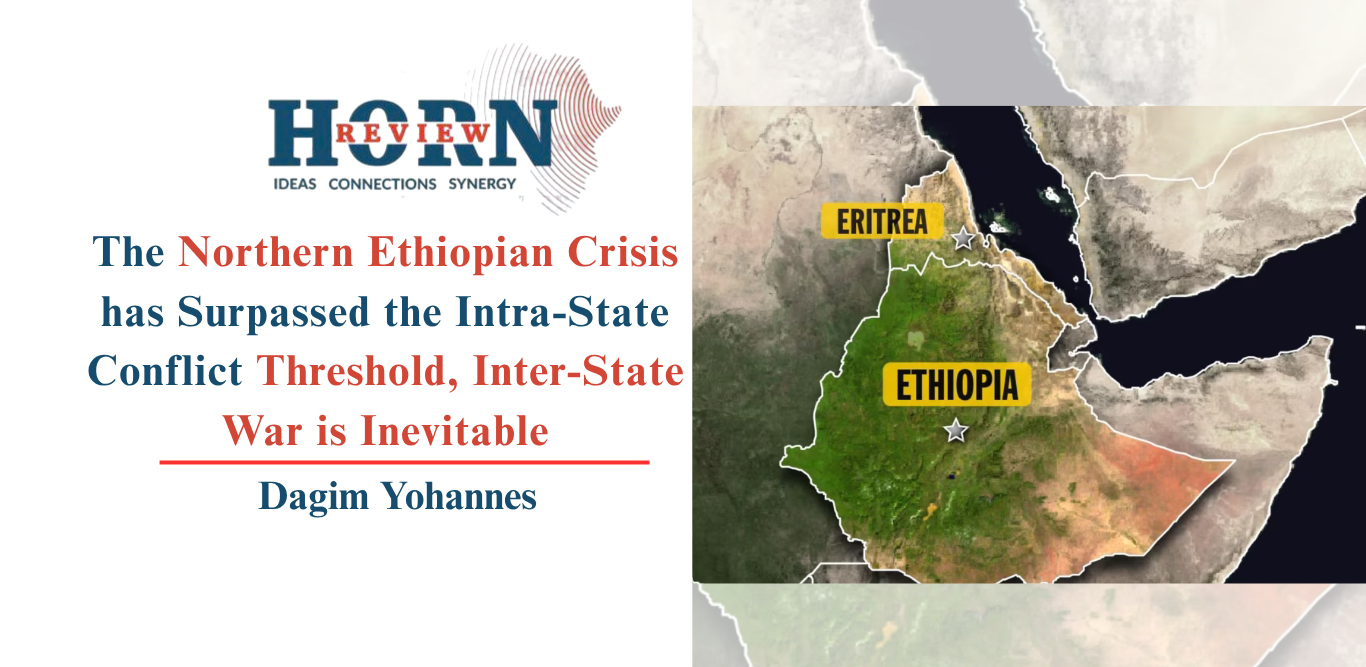
The Eritrean regime and its newly allied TPLF hardliners share one overriding strategic interest: keeping the wars they fight as far as possible from their own hinterlands, forcing the destruction onto Tigrayan and neighbouring regions. The logic of this strategy becomes clearer when examining the 1998–2000 Ethio-Eritrean War .Ethiopian forces not only expelled Eritrean troops from Ethiopian territory but broke through Eritrea’s defensive lines, crossed deep into Eritrean territory, captured Barentu and Senafe, and advanced to positions roughly 50 kilometres from Asmara. According to then-President of FDRE Negasso Gidada (PhD), the Ethiopian army had a clear opportunity to advance on Asmara and seize Assab. Senior officers and the majority of the EPRDF Central Committee supported pressing the advantage, arguing that because Eritrea had initiated the invasion, the only way to prevent perpetual harassment by the PFDJ was to eliminate its capacity to threaten Ethiopia. Three routes were discussed: through Keren, through Zalambessa, and by first securing Assab before moving on Massawa and Asmara. Military assessments reportedly judged all three feasible. Yet the EPRDF Political elite ordered a retreat, arguing that entering Eritrea would violate its sovereignty and invite international pressure. The United States reinforced that position with direct warnings that aid would be cut if Ethiopia refused a ceasefire. The result was the Algiers Agreement, which Negasso later called a great mistake and which General Tsadkan Gebretensae, then Chief of the General Staff, has repeatedly described as a failure to convert military success into lasting strategic gain. Ethiopia remained landlocked, Assab stayed under Eritrean control, and the Eritrean regime survived intact, leaving Ethiopia exposed to renewed strategic pressure.
That missed opportunity has produced a mutuality of strategic regret that continues to shape Ethiopian statecraft. Decision-makers of the time, and many who have studied the war since, rue the failure to finish the job, alter the political geography of the Horn, and create permanent deterrence by removing the Shabia regime’s capacity to project force. Prime Minister Abiy Ahmed has, over the last four years, consistently framed the independence of Eritrea and the decision to cede the Red Sea coast as a catastrophe for the Ethiopian nation and state, a strategic blunder that must be corrected. The present crisis is therefore not merely another border flare-up; it is the latest chapter in a long-deferred reckoning with that original failure.
The newly started confrontation between the TPLF, allied forces and the federal government has already crossed the threshold from an internal conflict into a full interstate war. Clear and accumulating evidence shows that Eritrean forces are once again operating beyond their border, both deep inside Tigray and in Afar, where regional officials have reported Eritrean troops crossing to fight alongside the opposition alliance. This is not distant proxy support or residual border posturing; it is direct military projection by a neighbouring state onto Ethiopian territory under a new tactical alignment with TPLF hardliners. The distinction is decisive. An internal rebellion can be contained, negotiated, or managed within the framework of domestic sovereignty. Once a neighbouring state’s regular forces enter Ethiopian territory and take part in combat operations, the conflict acquires an international character that fundamentally alters both the legal and strategic calculus. Ethiopia is no longer dealing solely with a domestic insurgency; it is confronting an external actor that has chosen to externalise its own security dilemmas onto Ethiopian soil while carefully insulating its own hinterland. This shift removes any remaining justification for treating Tigray as the exclusive and permanent theatre of operations. It converts the war from a problem of internal order into a question of national self-defence against a hostile neighbour that has repeatedly demonstrated its willingness to fight every conflict on Ethiopian land.
The same regime is once more projecting force beyond the border. In the 2020–2022 war Eritrean Defence Forces operated deep inside Tigray, controlling towns far from the frontier, remaining long after the Pretoria Agreement required their withdrawal, and committing atrocities documented by multiple independent investigations. As fighting has resumed, Ethiopian officials accuse Eritrea of supporting opposition alliances. Shabia’s core interest remains simple and ruthless. Isaias Afwerki’s regime has survived by ensuring that every major confrontation with Ethiopia takes place on Ethiopian territory. Tigray functions as a buffer zone. As long as the war stays north of the Mereb, the Eritrean state apparatus, its conscript army, and the ruling clique in Asmara remain insulated. Eritrean ports, the Red Sea coastline, and the regime’s internal control structures are never placed at direct risk. This is not defensive posture; it is deliberate externalisation of violence. Elements of the TPLF have historically played a complementary game. When pressure mounts inside Tigray, the incentive is to push the fighting into Amhara or Afar territory, turning these regions into new buffers so that Tigrayan heartlands can be preserved as a rear base. The recent round confrontation also indicates similar patterns with TPLFs offensives started on the North wollo and Afar. Both actors, for different reasons, treat neighbouring regions as expendable terrain. The result is a structural injustice: one Ethiopian region is permanently designated the arena in which regional power struggles are settled.
This is no longer a purely internal civil war. When a neighbouring state’s regular forces conduct sustained operations deep inside another country, and when that neighbour is credibly accused of arming and directing groups that seek to fragment the Ethiopian state, the conflict has already crossed the threshold from internal civil war into an internationalised confrontation. Article 51 of the UN Charter preserves the inherent right of self-defence when an armed attack occurs. The threshold is high, but sustained military operations by a foreign army on another state’s territory, combined with active support for armed groups seeking to fragment that state, meets the gravity required. Ethiopia is not obliged to treat its northern regions as a permanent free-fire zone while the source of the external force remains protected behind an international border. Sovereignty is not the right to manage one’s own destruction; it is the right to end the source of the threat.
The present moment is therefore not simply another round of fighting to be contained inside Tigray. It is a rare strategic opening created by the collapse of the previous Addis–Asmara alliance, the open severance of diplomatic ties, and the regime’s own overextension into Ethiopian internal politics. Twenty-five years ago Ethiopia possessed both the military capacity and the legal justification to finish the job and chose instead to stop at the border. That choice left the Eritrean regime free to rebuild, to intervene again in 2020, and to threaten Ethiopia once more today. Analytical clarity requires stating the obvious: the Isaias regime is the primary structural driver of recurrent northern conflict. It is a personalist dictatorship that has maintained power through indefinite national service, mass conscription, and the systematic externalisation of violence. Its foreign policy has consistently treated Ethiopia’s northern regions as a strategic depth to be exploited rather than a neighbouring population to be left in peace. As long as this regime remains intact, every future crisis will be channelled back into Tigray and the surrounding Ethiopian lowlands.
Addressing the root of the recurring conflict requires a fundamental change in the incentive structure that has long driven the Eritrean leadership. As long as the current regime in Asmara remains in place, it will continue to view Ethiopia’s northern regions as a convenient buffer and external battlefield. A political transition in Eritrea, whatever form it eventually takes, would remove the structural motivation to externalise conflict onto Ethiopian soil. The present moment offers a rare opening: the regime is overextended, its previous alignment with Addis Ababa has collapsed, and decades of militarisation have left its own population exhausted. Allowing the fighting to remain confined to Tigray would simply preserve the existing arrangement, in which Ethiopian civilians, Tigrayan, Amhara and Afar continue to bear the human cost while the source of the pressure remains insulated. True and lasting stability in the north depends on ending the cycle that treats Ethiopian territory as the permanent arena for Eritrea’s security dilemmas.
Ethiopia has the right, the capacity, and now the opening to refuse this arrangement. The war should not remain only in Tigray because Tigray is not the source of the problem. The source sits in Asmara. Using the present moment to bring about a fundamental change in Eritrea’s political direction is not escalation for its own sake. It is the necessary correction of a historical mistake that Negasso Gidada and General Tsadkan both recognised at the time, that Abiy Ahmed has openly named a catastrophe, and that Ethiopia has paid for ever since. It is the only way to ensure that the next generation of northern Ethiopians is not forced to live on a permanent front line.
By Dagim Yohannes, Researcher, Horn Review