
The African Union’s Retreat for Egypt Exposes a Deeper Institutional Weakness
On October 1, African Union Commission Chairperson Mahmoud Ali Youssouf issued an official declaration calling upon Egypt, Eritrea, and Ethiopia to exercise restraint amid mounting geopolitical tensions across the Horn of Africa. Three days later, following formal objections from Cairo, the Commission published a clarification fundamentally altering the character of continental engagement. This secondary document explicitly disclaimed attributing responsibility to any neighboring state while providing individualized political reassurances to Egypt.
The Commission highlighted Cairo’s foundational status within the Organization of African Unity and emphasized its special relationship with the continental body. The timing of this statement coincided precisely with the opening of the eighth Mid-Year Coordination Meeting in New Alamein, hosted by Egyptian President Abdel Fattah el-Sisi on October 4, 2026. This rapid diplomatic retreat reveals a profound structural vulnerability within the executive organ of the Union. The issuance of an official apology for requesting restraint from an influential member state demonstrates how formal principles yield to diplomatic leverage. The clarification exposes a widening gap between the formal pledge of sovereign equality and the unequal political networking dictating institutional behavior.
The normative architecture of the African Union was designed to rectify the historical vulnerabilities of the post-colonial African state. Article 4 of the Constitutive Act establishes sovereign equality, the principle of non-interference, and the prohibition of the threat or use of force as absolute legal requirements. These statutory provisions exist to guarantee that every sovereign entity maintains equal legal standing within continental governance. The October 2026 clarification undermines this foundational pledge by institutionalizing an informal political hierarchy.
Citing founding status and special relationships as a shield against neutral institutional calls for caution creates a double standard system of continental accountability. When the Commission offers customized political reassurance to one state while remaining entirely silent on the legitimate security concerns of neighboring nations, it converts universally binding norms into conditional privileges subject to diplomatic maneuvering. This selective application of rules erodes the credibility of the African Union as a neutral arbiter of peace and transforms the Commission into a mechanism for political validation.
This contemporary deference stands in sharp contrast to the institutional precedent set in July 2013 under former Commission Chairperson Nkosazana Dlamini-Zuma. Following the removal of Egyptian President Mohamed Morsi, the Peace and Security Council invoked Article 30 of the Constitutive Act, suspending Egypt from all continental activities due to an unconstitutional change of government. Despite intense diplomatic pressure and formal protests from Cairo, Dlamini-Zuma maintained the suspension and deployed a High-Level Panel led by former Malian President Alpha Oumar Konaré to manage engagement through established legal channels. That historical episode demonstrated that close diplomatic engagement with a highly networked member state remains fully compatible with institutional independence. The current orientation under Chairperson Youssouf indicates a clear departure from that standard, shifting the institutional center of gravity away from accountability toward continuous political accommodation.
The professional trajectory of Chairperson Youssouf provides essential context for understanding this shift in institutional behavior. Youssouf served as Djibouti’s ambassador to Egypt and permanent representative to the League of Arab States from 1997 to 2001, prior to his two-decade tenure as Djibouti’s Minister of Foreign Affairs. This extensive diplomatic background establishes a long professional familiarity with Cairo’s foreign policy apparatus. The implications of this background become evident when observed alongside the Commission’s swift political accommodation of Sudan’s military leadership under General Abdel Fattah al-Burhan.
The Sudanese Armed Forces receive substantial strategic backing from Egypt, creating a complex web of regional alignments. After the Sudanese Armed Forces recaptured Khartoum following sustained urban fighting, Burhan’s government appointed civilian Prime Minister Kamil Idris in May 2025. Youssouf immediately welcomed the appointment as a step toward inclusive governance. Subsequently, the Chairperson publicly endorsed the Port Sudan initiative at the United Nations Security Council. The transitional authorities of the Sudanese Armed Forces authored this exact initiative.
Aligning the statements of the Commission within the political sequencing of the Sudanese Armed Forces rather than maintaining an equidistant humanitarian framing reflects a profound institutional drift. As analyzed in contemporary scholarly frameworks regarding the representation of voice and mandate within the African Union, this posture validates the political maneuvers of one belligerent party during an active conflict. The mandate for the enhancement of peace and security within the African Union requires impartial conflict engagement, consistent respect for humanitarian norms, and the protection of civilian. Endorsing the diplomatic sequencing of an Egypt-backed military faction raises fundamental questions regarding the independence of the institution. These developments signal a broader institutional shift toward prioritizing the preferences of specific regional coalitions over the strict enforcement of continental peacebuilding standards.
The continental body frequently relies on generic condemnation as an operational mechanism to avoid assigning direct accountability to member states deploying extensive diplomatic leverage. The African Union regularly issues broad statements denouncing external interference while systematically withholding the identities of the foreign state actors involved. The handling of the conflict in Sudan illuminates this procedural paralysis with clarity. In June 2024, the Peace and Security Council mandated its institutional mechanisms to identify foreign entities providing military, financial, and political support to Sudanese belligerents. Progress on this mandate remained completely stalled for nearly two years despite continuous, catastrophic violence across the country.
On February 1, 2026, extensive investigative reporting published by the New York Times presented concrete evidence of state-backed military drone operations originating from the East Oweinat airbase in southwestern Egypt into Sudanese territory. On February 12, 2026, the Peace and Security Council convened to deliberate on the escalating Sudanese crisis. Egyptian Foreign Minister Badr Abdelatty served as President of the Peace and Security Council during that exact month, wielding significant agenda-setting authority. Rather than formally addressing the investigative findings or naming the state operating the East Oweinat airbase, the Council issued another broad declaration condemning external interference while instructing its delayed mechanism to expedite its work.
Within this broader continental framework, Ethiopia occupies a distinctive position as a founding state of the Organization of African Unity, the host of the continent’s principal diplomatic institutions, and a longstanding centre of Pan-African diplomacy. Its historical association with anti-colonial sovereignty and its extensive contribution to African peace and security have given Ethiopia a deep institutional stake in continental stability. As a major African state, Ethiopia remains bound by the Constitutive Act and is entitled to expect its provisions to be applied through consistent institutional standards rather than political exceptions shaped by the interests of individual states.
As a sovereign state, Ethiopia possesses the internationally recognized rights to protect its territorial integrity, preserve its political independence, and defend itself against external armed attack or unlawful interference. International law distinguishes the exercise of self-defense from the initiation of aggression, with Article 51 of the UN Charter recognizing the inherent right of individual and collective self-defense in response to an armed attack.
The African Union’s own framework similarly places respect for sovereignty, territorial integrity, non-interference, and the peaceful resolution of conflicts at the centre of its peace and security architecture. AU conflict management therefore requires careful differentiation between a state exercising legitimate defensive rights and external actors seeking to alter the regional balance through military, political, or proxy mechanisms. Treating these situations as functionally equivalent can undermine the credibility of continental mediation by obscuring the underlying direction of coercion and placing disproportionate political burdens on the state responding to external pressure.
Institutional neutrality requires rigorous, evidence-based investigation. Mediation must always complement accountability, ensuring that respect for non-interference applies equally across all member states regardless of their diplomatic maneuvering or historical weight. The root of this institutional weakness stems directly from structural dependencies within the governance framework of the African Union. The Commission operates under significant political and resource constraints, leaving its executive leadership highly susceptible to targeted diplomatic lobbying.
The election of the Chairperson relies heavily on regional voting coalitions and backroom agreements, creating structural incentives for political compromise. Furthermore, The procedural architecture of the Peace and Security Council contains safeguards against direct participation by a state in deliberations concerning a conflict to which it is a party, yet it leaves significant room for political influence through Council membership, rotating chairmanship, agenda-setting, and coalition-building. A member state directly implicated in a regional dispute may therefore remain embedded within the institution shaping the broader political environment in which that dispute is addressed, even when formally excluded from deliberations on the specific case. This creates a structural vulnerability in which formal procedural neutrality can coexist with substantial political influence over the Union’s wider conflict-management process. The October 2026 backtracking on the Horn of Africa statement represents a direct symptom of this deeper architectural flaw.
The wider consequences of this selective enforcement threaten the long-term viability of the Pan-African security architecture. When member states perceive that continental rules fluctuate based on targeted diplomatic leverage and individualized political reassurance, confidence in multilateral governance rapidly erodes. States will increasingly bypass continental structures entirely, seeking bilateral security pacts with external global powers and regional blocs to protect their sovereign interests. This bottom-up fragmentation threatens to dismantle the collective security system established by the Constitutive Act, returning the continent to an era of unchecked proxy conflicts and foreign spheres of influence. To restore its legitimacy, the African Union must eliminate the gap between its statutory principles and its political practice, ensuring that sovereign equality and legal accountability apply uniformly across the continent.
By Bezawit Eshetu, Researcher, Horn Review

RELATED
Posts
4
Oct
Eritrea's Buffer is Collapsing: What Comes Next?
Ethiopian National Defense Force’s capture of Mekelle, if sustained, may...
4
Oct
Hassan Sheikh’s Sea Access Remarks: The Ankara Formula Restated, Not a Concession
President Hassan Sheikh Mohamud’s remarks on 3 October 2026 that...
4
Oct
Egyptian Airpower and the GERD: From Strike Capability to Strategic Limits
The Grand Ethiopian Renaissance Dam is within the theoretical reach...
4
Oct
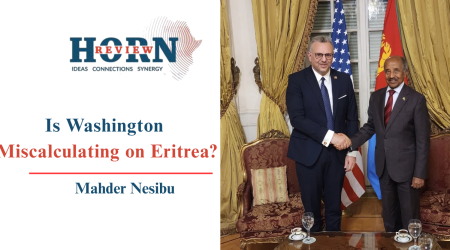
Is Washington Miscalculating on Eritrea?
The United States is attempting a precarious balancing act in...
3
Oct
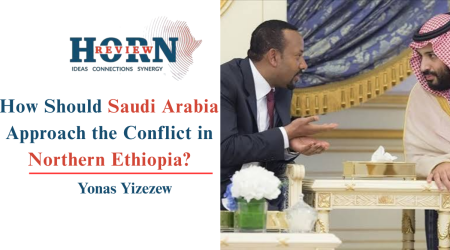
How Should Saudi Arabia Approach the Conflict in Northern Ethiopia?
Saudi Arabia’s position toward the renewed conflict in northern Ethiopia...

2
Oct
The possibility of Sudan’s War Converging with Ethiopia’s Renewed Conflict
Ethiopia’s renewed conflict has changed the security significance of its...
2
Oct
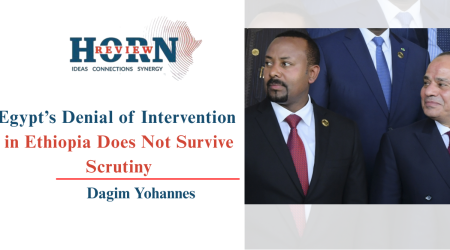
Egypt’s Denial of Intervention in Ethiopia Does Not Survive Scrutiny
Egypt’s Foreign Ministry has answered Ethiopian charges of external...

2
Oct
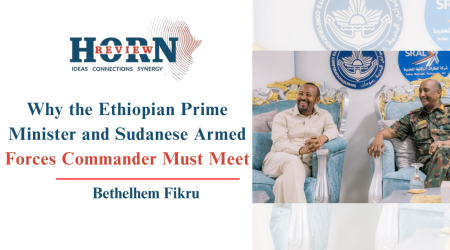
Why the Ethiopian Prime Minister and Sudanese Armed Forces Commander Must Meet
A direct meeting between Ethiopian Prime Minister Abiy Ahmed and...
30
Sep
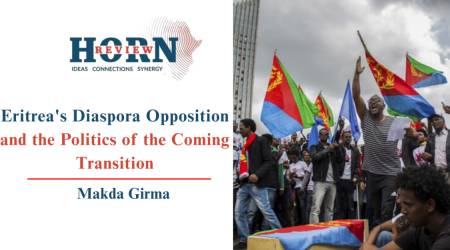
Eritrea's Diaspora Opposition and the Politics of the Coming Transition
Something is changing in Eritrean opposition politics, but it is...