
Eritrea’s Diaspora Opposition and the Politics of the Coming Transition
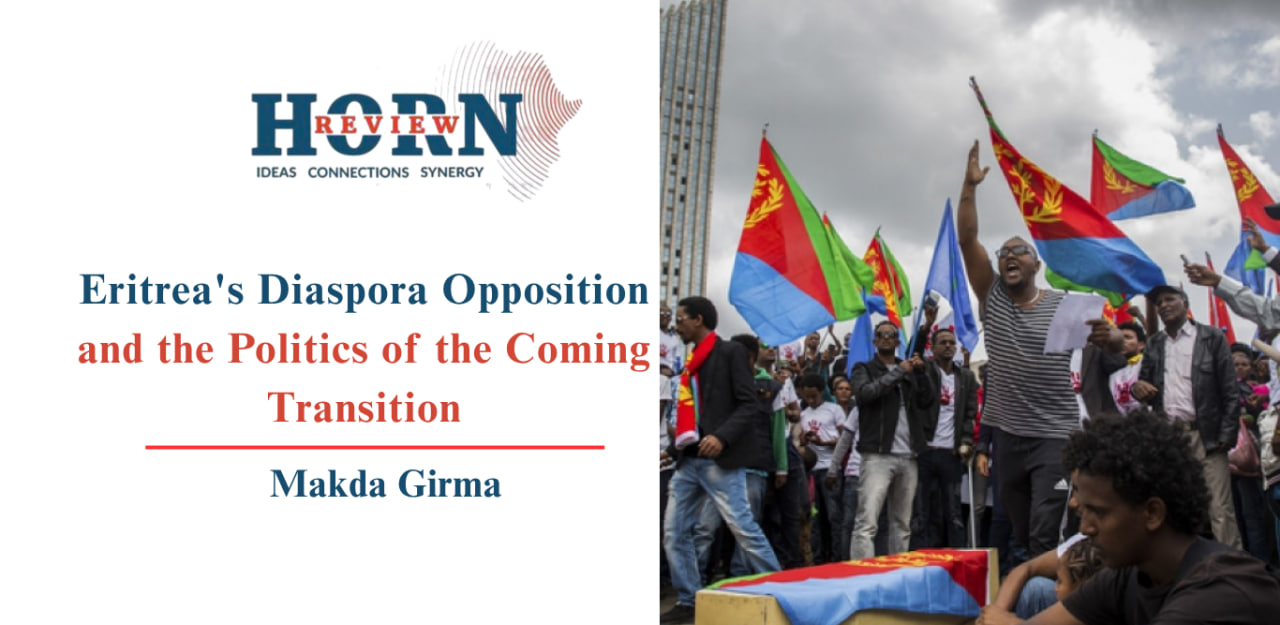
Something is changing in Eritrean opposition politics, but it is not yet happening inside Eritrea. It is happening in Tel Aviv, Frankfurt, Washington, London, Addis Ababa and across the much larger political geography created by three decades of Eritrean migration.
For years, this opposition existed without becoming a serious political alternative. Eritrea produced one of Africa’s largest diasporas relative to its population, yet the political forces outside the country remained divided by generation, ideology, ethnicity, religion and the unresolved history of the liberation struggle. Opposition to President Isaias Afwerki was widespread abroad, but opposition alone did not produce an organization capable of contesting power. The significance of the present moment is therefore not that Eritreans have suddenly turned against Isaias. It is that sections of the diaspora are beginning to ask a different question: how does an exile movement prepare itself for the political order that comes after him?
The latest activity surrounding Brigade N’Hamedu illustrates the shift. Reporting from Israel describes a movement trying to move beyond street confrontation and construct an international political structure. Eritreans in 17 locations reportedly participated in selecting a 51 member international council. Around 1,300 people took part in the Israeli vote, while organizers have been discussing finance, diplomacy, communications, contacts with Eritreans inside the country and the possibility of establishing a presence in Ethiopia. Its leaders also claim contacts within Eritrean state and military structures, although those claims have not been independently established.
The numbers themselves are less important than the direction of travel. The diaspora opposition is attempting to convert anger into organization.
This has been a missing element in Eritrean politics. The government in Asmara has always possessed one enormous advantage over its opponents: the state exists inside Eritrea while most organized opposition exists outside it. Isaias controls the central institutions of government, while the military remains an important part of the political structure. His opponents have social networks, money, international access and a large refugee population, but little demonstrable organizational presence inside the country. Even today that imbalance remains decisive.
What has changed is the scale of the external political constituency. According to UN figures cited by the Special Rapporteur, more than 679,000 Eritrean refugees and asylum seekers were recorded globally by the end of 2025. Indefinite national service, arbitrary detention and restrictions on fundamental rights were among the conditions identified in the report as continuing to drive people out of the country. A diaspora of that size eventually becomes more than a humanitarian story. It becomes a political arena.
The younger generation is particularly important. Many Eritreans now active abroad have little investment in the political mythology that sustained the post independence state. Some left Eritrea themselves; others grew up in Europe, North America or Israel. Their political experience was formed less by the liberation war than by national service, migration, refugee politics and confrontation with Eritrean government networks abroad. The emotional authority of the liberation generation is therefore weaker among them than it was among their parents.
Brigade N’Hamedu emerged from this environment. Its confrontational politics made it visible, but also created serious liabilities. In Germany, federal prosecutors arrested two alleged members of the German branch this September and accused them of membership in what prosecutors classify as a domestic terrorist organization connected to violence at Eritrean events. Even though these allegations were made to specific defendants and individuals this case has demonstrated the central dilemma facing the opposition: the same militancy that gave it visibility can make the construction of international political legitimacy considerably harder.
Israel reveals this contradiction better than almost anywhere else. South Tel Aviv has become one of the most politically active spaces of the Eritrean diaspora. The confrontation there in September 2023, when supporters and opponents of the Eritrean government fought around an embassy organized event, left more than one hundred people injured and brought Israeli police directly into an Eritrean political conflict taking place thousands of kilometres from Asmara.
Three years later, Tel Aviv has not disappeared from this story. It has become one of the places where opposition activists are trying to build political organisations. That makes Israel’s position unusually complicated. The Israeli state has detained Eritreans involved in violence and has treated parts of the community primarily as an immigration and public order question. Israeli legislation has also moved toward distinguishing Eritreans claiming protection from Asmara from people openly supporting the government they supposedly require protection from. A 2025 law gave the Interior Minister authority, under specified conditions, to revoke the residency permit of a migrant considered a supporter of the government in his country of origin.
Yet Israel is also hosting one of the most active concentrations of anti Isaias politics outside Eritrea. There is therefore no simple Israeli position of either supporting or suppressing the Eritrean opposition.
Nor should the existence of opposition organizing in Israel be confused with evidence of Israeli sponsorship. Public evidence for such sponsorship has not emerged. What can be said is that Eritrea sits on a coastline that matters greatly to Israeli security calculations. The Red Sea, Bab el Mandeb, Yemen and the maritime approaches to Eilat have become even more strategically important as conflict around the Red Sea has intensified. Eritrea’s geography consequently gives it significance far beyond the size of its economy or population.
This is where Eritrean opposition politics begins to intersect with a much larger regional contest.
An exile movement seeking international support will naturally look toward governments that possess interests in the Red Sea. Its activists have already sought international political contacts, including in Washington. The Eritrean Blue Revolution Front retained representation there in 2026, according to material filed under the US Foreign Agents Registration Act. This does not establish American government backing. It shows instead that the movement is beginning to think in terms of diplomacy and international recognition rather than diaspora mobilization alone.
The strategic map around it is becoming more crowded. Egypt, Ethiopia, Israel, Saudi Arabia, the UAE, Turkey and Qatar all have interests touching the Red Sea and the Horn, although those interests should not be mistaken for a single regional alignment. Reuters reported earlier this year that the Saudi Emirati rivalry, which developed partly through Yemen, is increasingly being felt across the Horn.
Eritrea’s own government understands the importance of this changing environment. Asmara has been strengthening relations with Egypt. In May 2026, Egypt and Eritrea signed a maritime transport agreement intended to expand logistics, trade and economic cooperation between the two Red Sea states.
More revealing were the comments made in September by Eritrean Foreign Minister Osman Saleh. He portrayed the UAE’s expanding port network as more strategic than commercial and described what Asmara sees as a growing convergence between the UAE, Israel and Ethiopia. That interpretation should be understood as the Eritrean government’s reading of the regional balance rather than proof that the three countries are operating as a coordinated bloc. Still, it tells us something important about how Asmara increasingly views Ethiopia’s Red Sea ambitions: not as an isolated Ethiopian issue, but as part of a larger struggle over ports, alliances and external influence in the Horn.
For Ethiopia, this changes the meaning of the Eritrean diaspora question.
Addis Ababa is no longer looking at Eritrean opposition politics from the relatively comfortable position created by the 2018 rapprochement. The relationship between the two governments has deteriorated sharply. In February, Ethiopian Foreign Minister Gedion Timothewos accused Eritrea of military aggression and support for armed groups operating inside Ethiopia. Eritrea rejected the accusations. Ethiopia simultaneously indicated that it remained prepared to discuss bilateral questions, including maritime access through Assab.
The security environment became even more complicated in September with the formation of an alliance involving seven Ethiopian armed organizations. The Ethiopian government has accused Eritrea of supporting members of the coalition; Asmara has denied Ethiopian allegations of destabilization. The important point is not to treat the accusation as an established fact, but to recognize the return of a familiar Horn of Africa security logic: domestic insurgencies and interstate rivalry are again becoming difficult to separate.
Geography makes Ethiopia almost unavoidable for any Eritrean movement imagining eventual political activity inside Eritrea. No European or North American diaspora centre can substitute for a neighboring state with a long border, large Eritrean refugee communities and direct political, commercial and security interests in what happens in Asmara. Brigade N’Hamedu opened an office in Addis Ababa in 2025, and its representatives publicly discussed a much larger future role for their Ethiopian presence. The broader claims they made about their relationship with Ethiopian authorities have not been independently confirmed.
But proximity cuts both ways.
Ethiopia potentially offers Eritrean opposition actors political space and access that cannot be replicated in Washington or Tel Aviv. At the same time, visible dependence on Ethiopia would carry a historical burden inside Eritrea. Eritrean nationalism was constructed through a thirty year struggle against Ethiopian rule. Whatever Eritreans think about Isaias, suspicion of Ethiopian intentions can survive him. An opposition movement seen as an Ethiopian instrument could therefore gain external capacity while losing precisely the domestic legitimacy it needs to govern.
This is one of the paradoxes Addis Ababa has to account for when assessing developments north of the border. The weakening of Isaias does not automatically translate into the strengthening of Ethiopia’s strategic position.
A post Isaias Eritrea could seek economic normalization with Ethiopia, reopen trade routes and reconsider the commercial possibilities of Assab. It could equally produce a leadership determined to demonstrate its nationalist credentials by maintaining distance from Addis Ababa. A contested succession could generate something more dangerous: rivalry among military, party and diaspora networks, each looking for external patrons. None of these outcomes follows automatically from the disappearance of one leader.
For Ethiopia, the distinction between the Eritrean state and the Isaias government is consequently important. Ethiopia’s long term interests are affected not simply by who occupies the presidential office in Asmara, but by whether Eritrea remains territorially coherent, whether its ports become instruments of regional competition, whether armed groups operate across the common frontier, and whether the northern border becomes a commercial corridor or another militarized fault line.
The same reasoning applies to the diaspora opposition. Its growing organization deserves attention, but organization abroad is not the same thing as political power at home. The decisive unanswered question is whether the networks visible in Tel Aviv, Germany, the United States and Ethiopia have meaningful connections with constituencies inside Eritrea. Without that bridge, diaspora politics can become highly sophisticated while remaining external to the society it hopes to govern.
There is nevertheless a reason the present development should not be dismissed. Eritrea has no tested public mechanism for political succession. No national elections have been held since independence, the 1997 constitution remains unimplemented, the PFDJ remains the only legal political party, and formal political institutions have been largely subordinated to the presidency and a narrow governing structure.
That makes succession unusually opaque. The diaspora is organizing in the knowledge that political openings, whenever they come, can be brief and that movements which begin organizing only after a transition has started may find themselves overtaken by actors already positioned inside the state.
The result is an unusual race between two political realities. Inside Eritrea stands a centralized state whose internal succession arrangements remain opaque. Outside Eritrea stands a vast but fragmented population now experimenting with councils, fundraising, diplomacy and international coordination. Neither side should be mistaken for the whole of Eritrean society.
The emergence of a more organized diaspora opposition is therefore important not because it proves that Isaias Afwerki is about to fall. There is no reliable evidence for such a conclusion. It matters because the political struggle over what eventually follows the present order has begun to acquire institutions outside Eritrea before a transition has occurred inside it.
Tel Aviv’s warehouses, diaspora councils, German court cases, Washington lobbying and discussions about Ethiopia may appear disconnected. They are better understood as early pieces of the same problem: Eritrean politics is gradually escaping the territorial boundaries within which the state has contained it for three decades.
For Ethiopian strategic thinking, the central question is consequently larger than whether the diaspora opposition succeeds or fails. It is what kind of Eritrean political order eventually emerges on Ethiopia’s northern frontier, how independent that order will be from competing external patrons, and whether the next chapter in relations between the two states reproduces the familiar cycle of isolation, proxy competition and military confrontation or opens space for a different regional relationship.
That question will outlast Isaias Afwerki. It will also outlast the organizations currently positioning themselves for the political struggle that follows him.
By Makda Girma, Researcher, Horn Review

RELATED
Posts
30
Sep
Structural Reading of the Somali President visit in Ethiopia
Somali President Hassan Sheikh Mohamud held a one day...
28
Sep
What Strategy Should the Eritrean Opposition Pursue Against the PFDJ?
In September 2026 a Haaretz feature described Brigade Nhamedu...
28
Sep
The Horn of Africa Should Not Become an Arena for External Rivalries
By Inshar Mohamed Dolal
The Horn of Africa is entering another...
28
Sep
The Structural Sovereignty and Mediation in IGAD and Sudan
IGAD's engagement with the conflict in Sudan illustrates a structural...

28
Sep
The AI Disinformation War in the Horn and the Economics of Digital Conflict
In September, Marc Owen Jones, an Associate Professor of...
28
Sep
What a Quiet Somalia and Somaliland Contact Would Actually Reveal
Reports circulating from New York claim that Somalia’s Foreign...
26
Sep
Interview with Ambassador General Bacha Debele on Current Developments in Northern Ethiopia, and Eritrea
Blen Mamo, Executive Director of Horn Reviews, sat down with...
25
Sep
The United States’ Shifting Sudan Strategy and the Limits of Coercive Leverage
Washington's approach to Sudan's civil war has shifted in character...
25
Sep
Intelligence Report Details the Deep Crisis inside the TPLF & Eritrea's Subsequent Calculation
The central mystery of the present Tigray crisis is not...
24
Sep
Ethiopia’s Tigray Crisis in Context
Download the Pdf version below
Ethiopia’s Tigray Crisis in...