In various settings, the line between formal and informal economic life is often less clear than institutional models suggest. In places where access to courts, banks, and state financial systems is uneven, people develop informal arrangements to move money, enforce obligations, and secure basic needs. These systems are often more accessible and efficient than formal alternatives. Nonetheless, they also operate with limited oversight and weak legal protection.
When these sorts of informal economies are linked to diaspora communities and foreign welfare systems, they become part of larger transnational circuits. Remittances, benefits and other cross‑border flows travel through channels that are hard to monitor and easy to exploit. The same networks that help families survive can also be used by criminal groups and armed movements to extract resources. These environments are further shaped by external powers through their security partnerships, investment projects, and political recognition. Competition among regional and global actors can strengthen some authorities while weakening others, often expanding the spaces where informal and predatory arrangements thrive. The result is a complex mix of resilience, risk, and strategic calculation that cannot be understood by looking at any single element in isolation.
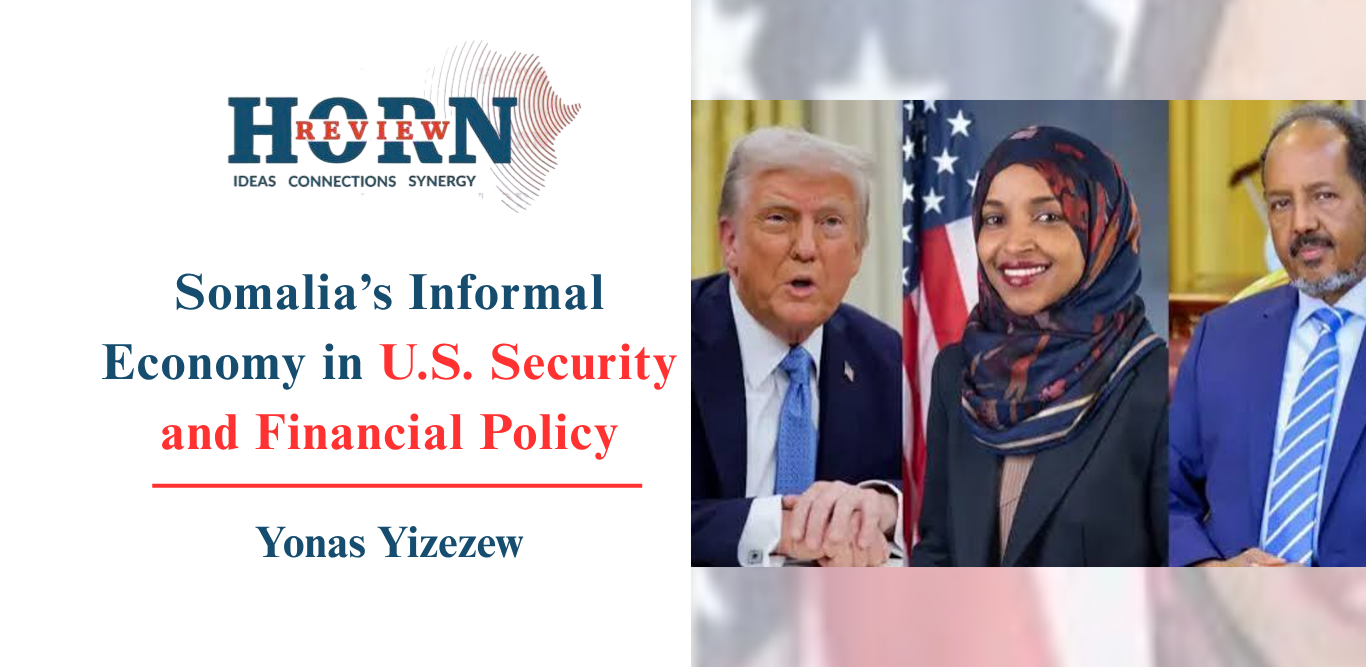
In a recent investigative style analysis of recent Fox News reporting on Somalia’s informal financial networks and the pervasive influence of militant groups on daily existence, the interplay between household survival mechanisms, transnational money flows, American domestic governance, and regional power competition in the Horn of Africa emerges with particular clarity. The reporting centers on the hawala system—a trust-based method of value transfer refined over centuries—and on the ways al-Shabaab and related groups shape economic and social life even as pockets of commercial activity persist in the capital.
This trust-based method of value transfer allows a sender abroad to entrust funds to a local agent who instructs a counterpart in Somalia to disburse the equivalent sum from local reserves. Settlements occur later through trade offsets or private arrangements, leaving minimal formal records. For the Somali diaspora the arrangement remains essential. Official data now show remittances reaching approximately 6.8 billion dollars recently, equivalent under some measures to half of GDP and routinely surpassing both official development assistance and the federal budget. American-based Somalis supply a significant share of those flows, sustaining household consumption, education, healthcare, and small enterprise across a territory still marked by institutional fragility.
The same efficiency that makes hawala indispensable also creates political vulnerability. Al-Shabaab has constructed a parallel fiscal order concentrated in south-central regions. Through checkpoints, levies on agricultural produce and livestock, business licenses, import duties, and coercive zakat collections, the group extracts an estimated 100 to 200 million dollars annually. Payment often follows the logic of business, where survival can matter more than ideological alignment. Remittances entering these circuits can be taxed or diverted, converting private family support into resources that underwrite militant governance. The geography of daily life therefore tracks the geography of control. Commercial activity persists in sections of Mogadishu even amid intermittent high-casualty attacks, while rural districts confront roadblocks, clan competition, and the imposition of militant norms. Civilian harm comes from multiple sources, including militant attacks, inter-clan violence, and military operations by state and external forces.
These transnational circuits acquired domestic political salience in the United States when large-scale irregularities in Minnesota’s public-benefit systems came under sustained investigation. The state hosts the largest Somali-American population, estimated between 80,000 and more than 100,000. Federal and state probes have documented schemes involving nutrition assistance, Medicaid-linked housing services, and related programs, with documented losses in major cases reaching hundreds of millions of dollars and broader assessments extending into the billions. A substantial proportion of defendants have been of Somali descent. Proceeds were frequently converted to cash, expended on vehicles and real estate, or transmitted overseas through operators that interface with informal channels. Official scrutiny has focused on the possibility that a portion of those funds, once inside Somalia, entered environments subject to al-Shabaab taxation. The Treasury Department opened a formal inquiry and congressional committees followed. Prosecutors in the principal cases have emphasized personal enrichment and clear evidence of intentional material support for designated terrorist organizations has remain to be investigated. The distinction between structural leakage through contested territory and deliberate financing therefore retains both analytical and political significance.
Policy responses operate at the intersection of domestic accountability and foreign security. The tempo of United States airstrikes in Somalia has risen sharply, exceeding previous annual records and targeting both al-Shabaab infrastructure and the smaller Islamic State presence in the northeast. The campaign aims to degrade external-attack capacity while reinforcing partner ground forces, yet militant recruitment and revenue extraction have demonstrated notable durability. Inside the United States the Minnesota cases have intensified contests over immigration policy, the design of welfare administration, and the political integration of communities that maintain dense transnational obligations.
These domestic and security strands intersect with the strategic competition now unfolding across the Horn of Africa. Federal authorities in Mogadishu seek to consolidate control while relations with regional administrations remain contested and the de-facto independent Somaliland continues to pursue external recognition. Turkey has positioned itself as a principal partner of the federal government through military training, equipment, and infrastructure investment. The United Arab Emirates has expanded engagement with Puntland and Somaliland via port development and security assistance. China has reinforced support for Somalia’s territorial integrity while deepening both military and economic ties. Israel’s formal recognition of Somaliland introduced an additional layer of complexity adjacent to the Bab el-Mandeb chokepoint, through which a substantial share of global commerce passes. In this environment remittance flows and informal finance function as instruments of both household resilience and strategic risk, while external partnerships interact with the same governance deficits that enable militant taxation of commercial life.
The pattern that emerges is one of interlocking political economies that reinforce one another. Institutional weakness inside Somalia creates space for informal finance and for militant extraction. Reports of administrative gaps in American public-benefit systems create openings for organized fraud concerns. Transnational kinship networks move large volumes of capital through channels resistant to comprehensive monitoring. Regional rivalries condition the security environment in which these processes unfold. The analytical task is to map these connections without collapsing them into conspiracy or coincidence.
The political dimensions of these interlocking dynamics have grown more pronounced under the current U.S. administration. Heightened scrutiny of welfare administration in Minnesota, intensified enforcement around money-transfer channels linking the diaspora to Somalia, and a sustained air campaign against al-Shabaab reflect a broader prioritization of domestic fiscal accountability and counter-terrorism objectives. Officials have framed the Minnesota cases as evidence of systemic vulnerabilities in public-benefit programs that require tighter oversight.
From a strategic perspective, the administration’s dual-track approach—combining kinetic pressure in Somalia with regulatory and investigative measures at home—seeks to disrupt potential leakage of resources into contested spaces while reinforcing partner forces on the ground. Yet the durability of al-Shabaab’s parallel fiscal structures and the continued centrality of remittances to household resilience illustrate the limits of purely security-driven instruments. Effective policy must therefore navigate a delicate balance in safeguarding the integrity of public programs and financial channels without unduly restricting the legitimate transnational obligations that sustain families across fragile environments, and pairing military efforts with longer-term investments in Somali institutional capacity capable of reducing the spaces available for coercive extraction.
In this light, the underlying challenge remains political as much as operational. Constructing more accountable governance both in Somalia and within domestic administrative systems offers the most durable path toward contracting the opportunities that informal networks and predatory actors currently exploit. Until progress on that front advances, the circuits that enable household resilience will continue to intersect with those that sustain contestation, keeping questions of power, predation, and transnational flows at the center of both domestic politics and regional security calculations.
By Yonas Yizezew, Researcher, Horn Review