
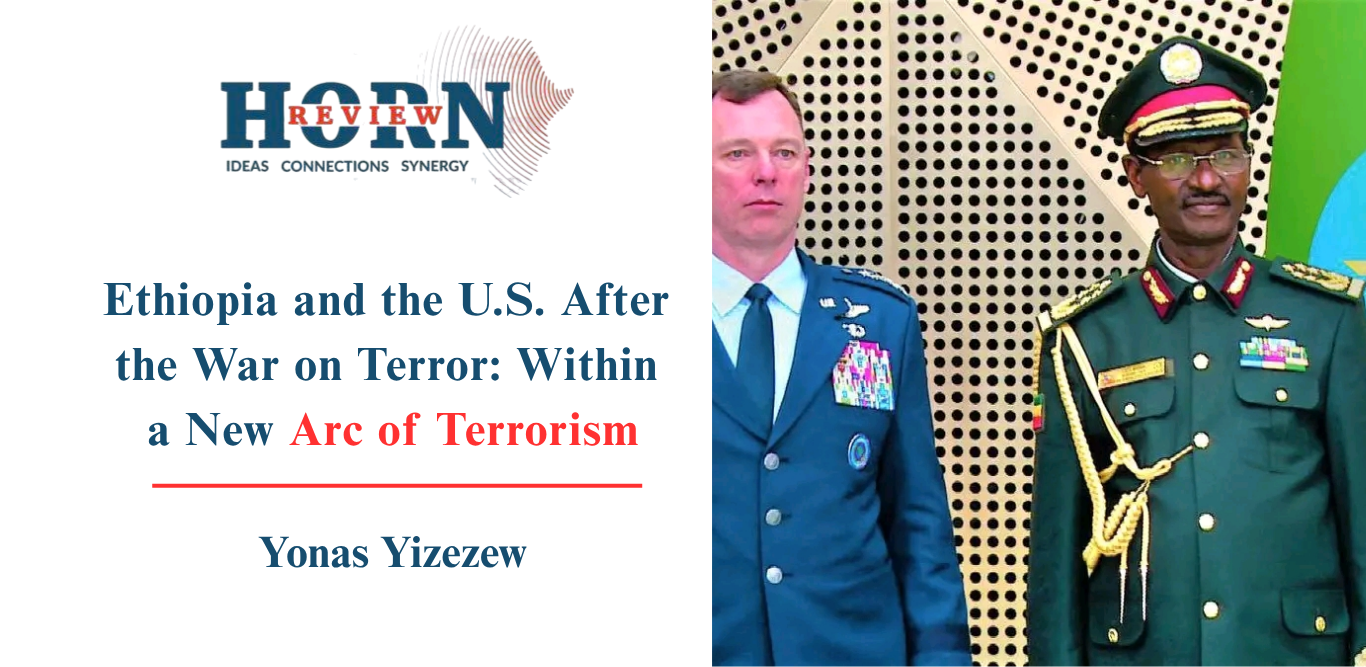
Ethiopia and the U.S. After the War on Terror: Within a New Arc of Terrorism
The War on Terror began as a direct response to the shock of the 11 September 2001 attacks. The attacks showed that a non-state group could use safe havens, international financial networks, global communications, and trained operatives to carry out a major attack at the center of American power. In response, Washington used a combination of military operations, intelligence efforts, partnerships with other countries, financial sanctions, international law enforcement, and political pressure on governments accused of supporting terrorist groups.
That campaign disrupted al-Qaeda’s original structure. Its leadership was targeted, its Afghan sanctuary was dismantled, and its ability to carry out large-scale attacks declined. The organization’s survival came through adaptation. Al-Qaeda’s center became weaker while its regional affiliates gained greater importance. The movement shifted from a centralized organization directing global operations to a dispersed network that embedded itself in local conflicts.
This transformation created a paradox. The War on Terror achieved significant tactical successes against the leadership and infrastructure of al-Qaeda. Yet the broader political conditions sustaining jihadist movements remained unresolved. Military interventions removed governments and destroyed territorial sanctuaries, but they frequently left behind fragmented institutions, unresolved communal disputes and armed networks capable of exploiting the resulting disorder.
Twenty-five years after 9/11, the trajectory of U.S. policy has changed substantially across multiple dimensions. After Trump came to power, the U.S. counterterrorism strategy, along with its national security strategy, has changed course significantly. The U.S. increasingly redefined its priorities, threat perceptions, and allocation of strategic attention. For instance, in its counter terrorism strategy, Narcotics cartels have increasingly emerged as a central security concern. Meanwhile, the decades-long emphasis on radical Islamism and jihadism has receded from the forefront of U.S. counterterrorism priorities, with the latter categorized as “Legacy Islamist Terrorists.”
In addition, the U.S. is shifting its strategic focus toward the Western Hemisphere, placing greater emphasis on regional security, transnational crime, narcotics trafficking, border security, and the growing influence of external powers in the Americas. At the same time, the geography of terrorist activity has been changing with the principal theaters of jihadist violence moving beyond the regions that defined the post-9/11 period. The center of gravity has shifted from the Middle East and North Africa to the Sahel, making the region a principal area of contemporary jihadist violence. The region has become the principal place in which jihadist organizations combine ideology, insurgency, criminal economies and local governance. The shift was already becoming visible during the War on Terror. In a 2015 U.S. House Homeland Security hearing on terrorism in Africa, lawmakers and experts warned that terrorist groups across the continent were becoming an increasingly important threat to U.S. interests.
In the Sahel, porous borders, weak state presence, and cross-border communities have allowed armed groups to fill local governance gaps, linking terrorism with banditry, trafficking, and local politics. Al-Qaeda’s African affiliates show how the movement adapted after the loss of its original sanctuary. In this regard, JNIM and others in the Sahel and al-Shabaab in Somalia maintain ideological links to al-Qaeda while operating according to local political and economic conditions.
JNIM’s creation in 2017 brought several al-Qaeda-aligned factions into a wider coalition. Its resilience comes from its ability to bridge local social divisions, form alliances with armed groups and exploit disputes over land, livelihoods and protection. The organization operates as a military force, political broker and sometimes as a shadow authority. Its expansion has been assisted by coups, weakened regional cooperation, the withdrawal of foreign forces and public distrust of national security institutions. JNIM’s significance also extends beyond the Sahel. The United Nations has identified links between JNIM and other al-Qaeda affiliates, including Somalia’s al-Shabaab and Al-Qaida in the Arabian Peninsula, illustrating the wider transnational architecture connecting jihadist movements across Africa and beyond.
Al-Shabaab follows a related pattern in Somalia, while remaining embedded in the country’s distinct clan, political and economic environment. It has survived repeated military offensives because it remains connected to local grievances, clan politics, taxation systems and rural economies. These capabilities complement Somalia’s state fragility and other factors, where limited state presence and weak institutions allow the group to expand its influence, collect taxes, and maintain authority in areas with limited government control. Reflecting this transnational threat, the United States has shifted from broader military engagements toward more selective, intelligence-centric approach to strikes against groups operating in West Africa and Somalia. This same pattern of overlapping, broker-mediated networks also draws in other actors across the region, including al-Qaeda in the Arabian Peninsula and Islamic State Somalia, whose logistics, financing and operational links further thicken the transnational architecture of armed groups stretching from the Red Sea to the Horn and beyond. The emergence of these organizations means that terrorism’s center of gravity has moved from the question of global command to the question of local authority. The decisive contest takes place in borderlands, rural districts, trade corridors and communities where state legitimacy is weakest.
A continuous chain of insecurity now stretches from the Sahel to the Horn of Africa, binding jihadist expansion, porous borderlands, and weak state authority into an interconnected regional system. At the center of this chain sits Sudan. Its western regions open the corridor from Darfur into Chad and the wider Sahel; its eastern territories and Red Sea coastline link the Nile Valley to Eritrea, Ethiopia and the Arabian Peninsula; and its southern borderlands extend the same continuum toward South Sudan and the Great Lakes. In this position, Sudan is more than a country between two conflict zones. It has become a critical link connecting instability, armed networks, and local power struggles across the region. The U.S. counterterrorism strategy also identifies Sudan among the countries where terrorist groups and transnational criminal networks pose a growing security concern, reinforcing the country’s importance within this emerging regional security chain.
The Sudanese civil war has intensified these connections by weakening border controls and expanding demand for weapons, vehicles, recruits and political support. Competing armed authorities depend on external networks, while foreign governments and commercial intermediaries pursue their own interests. Gold, arms and transport have become components of a war economy extending beyond Sudan.
Sudan also revives an older historical connection. During the 1990s, the country served as a base for Osama bin Laden and other al-Qaeda militants. Sudan’s political environment enabled militants to establish businesses, build relationships and support operations linked to East Africa. The present conflict differs from that period, yet the strategic lesson remains relevant in which when Sudan’s central authority fragments, its geography can connect militant movements and political patrons across regions.
Libya provides a second precedent. The collapse of the Libyan state released weapons across the Sahara, strengthening armed groups and contributing to the crisis in northern Mali. Weapons from collapsed arsenals travelled through commercial and smuggling networks that crossed national boundaries. The same logic of fragmentation and opportunistic networking that once linked Sudan to East African militancy and later carried Libyan weapons into the Sahel now finds its maritime expression in the Red Sea, where the conflicts in Yemen, Somalia and Sudan increasingly intersect through arms routes, coastal networks and foreign involvement.
The relationship between the Houthis and al-Shabaab illustrates the emerging pattern. The two movements have different ideological foundations and political aims but their cooperation can still develop around practical interests. Al-Shabaab may seek weapons, drones, maritime access and technical knowledge. The Houthis may benefit from Somali intermediaries, African smuggling routes and influence across the Gulf of Aden. Reports have indicated weapons transfers, intelligence exchanges and technical cooperation between the two movements With the Houthis’ recent advances around Bab el-Mandeb, this security arc could further expand, deepening the connection between the Red Sea, the Gulf of Aden and the wider Horn of Africa and by extension to the Sahel.
The reported relationship between the Houthis and elements linked to the Sudanese Armed Forces belongs to the same broader pattern. Arms and technical assistance can move through brokers who serve several clients. A network supporting one conflict can provide infrastructure for another. The relationship may remain informal and opportunistic, while its cumulative effects still alter the regional balance.
In essence, the emerging links among the Houthis, al-Shabaab and elements of the Sudanese Armed Forces could create a connected security network stretching from Sudan through the Red Sea and Bab el-Mandeb to Somalia. Such a network would facilitate the movement of weapons, technology, intelligence and illicit finance, while allowing actors in separate conflicts to reinforce one another indirectly.
By collapsing the traditional barriers of distance and time, technology—ranging from artificial intelligence and advanced drones to encrypted communications and digital logistics platforms—allows tactical innovations, operational doctrines and adaptive techniques developed in one place to migrate almost instantaneously to another. Armed actors no longer need formal alliances, shared command structures or sustained physical presence to influence one another. The mere circulation of knowledge, methods and technical capabilities is enough to produce cumulative effects across the entire arc.
Although the United States has retreated from some of its previous counterterrorism commitments, its interests cannot be fully insulated from the terrorist threats emerging across this expanding arc. The very technologies that now allow tactical knowledge, weapons components and operational methods to migrate rapidly from Yemen to Somalia or from the Sahel through Sudan also lower the barriers for distant instability to reach American partners and global shipping lanes. In this regard, the United States and other state actors still committed to confronting terrorism will require capable regional partners able to operate across the full length of the new continuum—partners with the geographic position, operational experience and institutional weight to manage threats that no longer respect the old boundaries between the Sahel, the Horn and the Red Sea.
Ethiopia previously filled precisely this role. During the height of the War on Terror, it served as a key anchor state in the Horn of Africa, providing the geographic position, military capacity and sustained operational engagement, particularly against al-Shabaab, that enabled Washington and its partners to project influence and contain jihadist expansion across the region. That role was rooted in Ethiopia’s strategic position between the major conflict zones of the Horn, its demographic and institutional weight, and its willingness to act as a frontline security actor.
That legacy of partnership is relevant in the current American strategic thinking. The U.S. appears to continue engaging Ethiopia as an important partner in the region, including on counterterrorism, with recent policy discussions and bilateral frameworks reflecting its renewed strategic relevance. Its position at the intersection of Sudan, South Sudan and Somalia places it along the emerging insecurity chain. Its decades long operational engagement against al-Shabaab have given Addis Ababa extensive practical knowledge of how jihadist networks operate within local social, political and economic structures. Its proximity to the Red Sea and Gulf of Aden further connects Ethiopia to the maritime security environment influenced by Houthi activity and expanding cross-border networks. Combined with its demographic weight, institutional reach and military capacity, these factors make Ethiopia a significant regional partner as Washington reassesses its counterterrorism posture.
The revival of the long-standing United States–Ethiopia security relationship therefore offers a practical instrument for engaging the entire continuum rather than addressing its western and eastern segments as disconnected problems. As older multilateral commitments have frayed or grown uncertain, a renewed bilateral framework—centered on intelligence coordination, capacity support and joint attention to Red Sea and Horn stability—provides one of the few available means of matching the adaptive, technology-enabled character of the emerging threat.
Yonas Yizezew, Researcher, Horn Review

RELATED
Posts

16
Sep
Why the Abraham Accords Will Not Expand Yet
The claim that Israel is unlikely to find an...
16
Sep
The Real Houthi Weapon Was Mobilization, Not Missiles
Fatima Abo Alasrar frames the Houthi ground strategy as...
16
Sep
The Houthis Reached Zuqar Island: Can Eritrea Be a Neutral Observer?
The island of Zuqar sits in the southern Red Sea,...
15
Sep
What the UN’s Darfur Sanctions Rollover Reveals About the Next Phase of Sudan’s War
On paper, Resolution 2828 is a housekeeping measure. It...
14
Sep
Eritrea Can’t Secure the Red Sea. Here Is Why
When Saudi Arabia formed a coalition of states in...
14
Sep
Shadow Competition in the Horn, Saudi Training and Emirati Surveillance
The Horn is experiencing a shift in the character of...
14
Sep
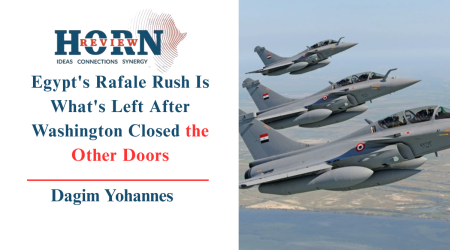
Egypt's Rafale Rush Is What's Left After Washington Closed the Other Doors
Egypt is nearing a new deal with French company...

14
Sep
Why Has Ethiopia Become Egypt’s Exception on the Nile?
Egyptian officials have repeatedly made a revealing distinction about the...
14
Sep
The Houthi Advance and the Changing Strategic Geography of Bab el-Mandeb
The Red Sea crisis has largely been understood as a...
14
Sep
Egypt’s Diminished Regional Hegemony and the Structural Realities of the Saudi-Egyptian Axis
The geopolitics of the modern Middle East is frequently interpreted...